


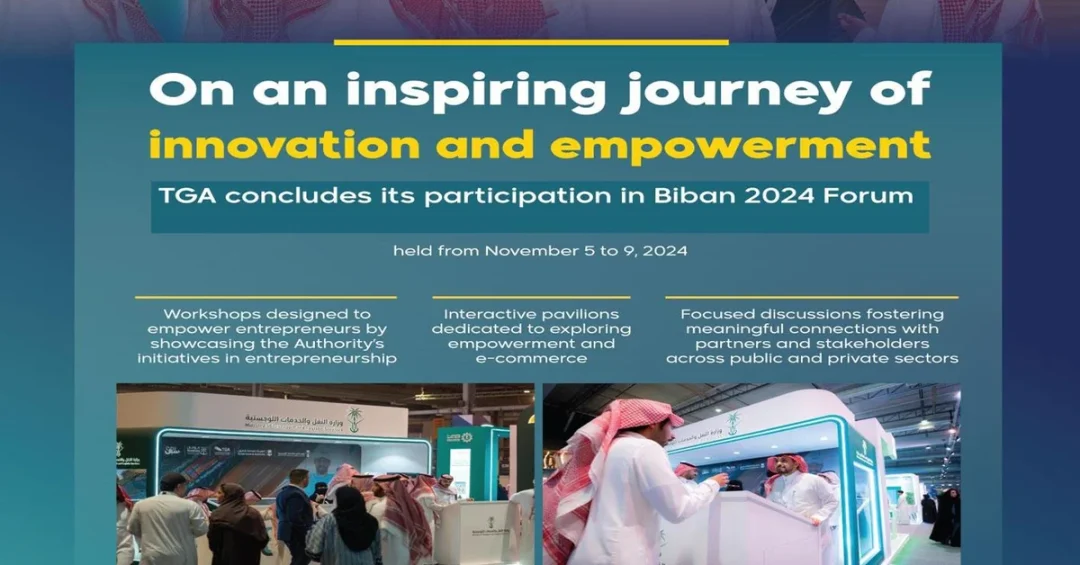
The Transport General Authority (TGA) concluded its participation in the Biban24 Forum, held from November 5 to 9, 2024, at the Riyadh Front Exhibition and Conference Center, where it showcased solutions aimed at empowering entrepreneurs and advancing innovation across Saudi Arabia’s transport and logistics sector. The forum, organized by the Small and Medium Enterprises General Authority (Monsha’at) under the theme “A Global Destination for Opportunities,” brought together more than 150 entities supporting small and medium-sized enterprises and hosted over 25,000 consultative, guidance, and training sessions, according to the Saudi Press Agency. The TGA’s engagement underscored the Kingdom’s commitment to building an integrated, future-ready transport ecosystem that opens new horizons for private-sector participation.
For international observers, the TGA’s active role at Biban24 signals more than a routine exhibition presence. It reflects a deliberate national strategy to align the transport and logistics sector with the ambitions of Saudi Vision 2030, which seeks to diversify the economy, expand non-oil revenues, and position the Kingdom as a global logistics hub connecting three continents. By engaging directly with entrepreneurs, the TGA is helping to translate high-level policy goals into practical opportunities for startups, small businesses, and innovators. Isn’t that precisely the kind of public-private synergy that modern economies need to thrive?
Context and Background
What does it take for a national authority to move beyond regulation and become a genuine partner in economic growth? The Transport General Authority, a government body responsible for regulating and developing land, rail, and maritime transport in the Kingdom, has increasingly embraced that dual role. Its participation in Biban24, organized by Monsha’at, the entity charged with nurturing Saudi Arabia’s small and medium-sized enterprises, formed part of a broader effort to embed entrepreneurship within the transport and logistics value chain. The forum ran for five days and attracted a wide cross-section of founders, investors, and policymakers.
Biban24 is the latest edition of a flagship national event that has grown into one of the region’s largest gatherings for entrepreneurs. This year’s theme, “A Global Destination for Opportunities,” captured the Kingdom’s intent to present itself not only as a market of consumers but as a launchpad for businesses with regional and international reach. The TGA’s presence at the Riyadh Front Exhibition and Conference Center placed the authority at the center of that narrative, allowing it to communicate its initiatives directly to the entrepreneurial community. How often do regulators get the chance to sit across the table from the very innovators they aim to serve?
The forum’s timing is significant. Saudi Arabia is in the midst of an unprecedented infrastructure and logistics build-out, spanning ports, railways, highways, and smart mobility systems. These projects require not just large contractors but a vibrant layer of smaller firms capable of supplying services, technology, and specialized expertise. By participating in Biban24, the TGA signaled that SMEs are not an afterthought in this transformation but an integral part of its supply chain and innovation pipeline.
Key Details
What exactly did the TGA bring to Biban24? According to the Saudi Press Agency, the authority used its platform to highlight its most prominent solutions and projects in empowering entrepreneurs and promoting innovation in the transport and logistics sector. It also sought to invest in the development of innovative ideas and new solutions that can improve the quality of services provided across the various modes of transport in the Kingdom. This included direct engagement with founders and business owners seeking to enter or expand within the sector.
The TGA’s participation featured dedicated sessions and workshops where several of its employees met with entrepreneurs to introduce the authority’s initiatives for the entrepreneurial community. These sessions were designed to demystify regulatory processes, explain available support mechanisms, and explore avenues for cooperation. The authority also took part in the empowerment, opportunities, and e-commerce sections within the exhibition accompanying the forum, ensuring that its message reached attendees across multiple thematic tracks. Wouldn’t such direct access to regulators be invaluable for any founder navigating a complex sector?
The forum itself was organized across nine main sections: Start-Up Door, Fast-Growing Enterprises Door, Empowerment Door, E-Commerce Door, Finance and Investment Door, Innovation Door, Start-ups Door, Commercial Franchise Door, and Market Door. Beyond these tracks, discussions covered artificial intelligence, digital health, innovation, sustainability, finance, and enabling creativity, alongside strategies for expansion and growth. More than 150 entities supporting SMEs offered services in financing, procedures, and logistics support, complemented by more than 25,000 consultative, guidance, and training sessions. The scale of the event illustrates how seriously the Kingdom takes its entrepreneurial ecosystem.
International and Regional Impact
How does a national forum in Riyadh resonate beyond the Kingdom’s borders? Biban24’s “Global Destination for Opportunities” theme was not merely a slogan; it reflected Saudi Arabia’s ambition to attract foreign investment, talent, and partnerships. International attendees had the opportunity to explore investment opportunities in the Kingdom and to connect with entities offering financing, procedural support, and logistics services. For global companies in transport, mobility, and supply chain technology, the forum provided a window into a market undergoing rapid modernization.
Regionally, the event reinforced Saudi Arabia’s position as a leader in SME development and economic diversification. The participation of the TGA alongside Monsha’at and other agencies demonstrated a coordinated government approach that other countries in the region may seek to emulate. As trade routes shift and digital commerce expands, the Kingdom’s investments in logistics infrastructure and entrepreneurial capacity have implications for the entire Middle East, from port operations on the Red Sea to cross-border e-commerce corridors. Could this model of integrated public-private engagement become a benchmark for the wider region?
Economic and Strategic Significance
What is the economic rationale behind the TGA’s outreach to entrepreneurs? Small and medium-sized enterprises are widely recognized as engines of job creation and innovation. In Saudi Arabia, they are central to Vision 2030’s goal of increasing the private sector’s contribution to GDP and reducing dependence on oil revenues. By helping SMEs access opportunities in transport and logistics, the TGA supports the creation of a more resilient and diversified economy. The authority’s engagement also aligns with national efforts to localize content, enhance supply chain security, and foster domestic capabilities.
Strategically, the transport and logistics sector is a pillar of the Kingdom’s ambition to become a global logistics hub. Saudi Arabia’s geographic position, linking Asia, Europe, and Africa, offers inherent advantages that are being unlocked through investments in ports, railways, and digital infrastructure. Entrepreneurs who can develop software for fleet management, last-mile delivery solutions, or sustainable mobility services will find a growing market. The TGA’s presence at Biban24 helped to bridge the gap between these innovators and the regulatory environment, potentially accelerating the commercialization of new ideas. Isn’t that the kind of ecosystem where startups can scale from local success to global relevance?
Vision 2030 Alignment
How does a single forum participation connect to a national transformation blueprint? The TGA’s involvement in Biban24 exemplifies the collaborative spirit that Vision 2030 demands, bringing together government, the private sector, and entrepreneurs in pursuit of shared goals. The authority’s commitment to effective communication with its public and private sector partners highlights the Kingdom’s support for local industries and its willingness to discuss mechanisms for cooperation across various labor sectors. This alignment is not incidental; it is a deliberate strategy to ensure that the transport and logistics sector evolves in step with the broader economy.
Looking ahead, the TGA’s engagement with the entrepreneurial community is likely to yield tangible outcomes, from new partnerships to improved services across land, rail, and maritime transport. As Saudi Arabia continues its journey toward a diversified, knowledge-based economy, such initiatives will be critical in sustaining momentum and ensuring that the benefits of growth are widely shared. The Biban24 Forum may have concluded, but the conversations it sparked and the connections it forged will continue to shape the Kingdom’s transport landscape for years to come. Isn’t that the true measure of a successful forum?
20 Questions
Q1. What was the Biban24 Forum?
A1. Biban24 was a major entrepreneurship forum organized by the Small and Medium Enterprises General Authority (Monsha’at), held from November 5 to 9, 2024, at the Riyadh Front Exhibition and Conference Center under the theme “A Global Destination for Opportunities.”
Q2. Which authority concluded its participation in Biban24?
A2. The Transport General Authority (TGA) concluded its participation in the forum, where it highlighted its solutions and projects for empowering entrepreneurs and promoting innovation in the transport and logistics sector.
Q3. What was the main theme of Biban24?
A3. The theme was “A Global Destination for Opportunities,” reflecting Saudi Arabia’s ambition to attract investment, talent, and partnerships from around the world.
Q4. Where was Biban24 held?
A4. The forum took place at the Riyadh Front Exhibition and Conference Center in Riyadh, Saudi Arabia.
Q5. When did Biban24 take place?
A5. Biban24 was held from November 5 to 9, 2024.
Q6. What did the TGA aim to achieve by participating in Biban24?
A6. The TGA aimed to highlight its solutions and projects in empowering entrepreneurs, promote innovation in transport and logistics, and invest in developing innovative ideas to improve service quality across various modes of transport.
Q7. How did the TGA engage with entrepreneurs at the forum?
A7. The TGA held sessions and workshops where its employees engaged with entrepreneurs to introduce the authority’s initiatives for the entrepreneurial community in the Kingdom.
Q8. Which sections of the exhibition did the TGA participate in?
A8. The TGA participated in the empowerment, opportunities, and e-commerce sections within the exhibition accompanying the forum events.
Q9. How many main sections did Biban24 activities cover?
A9. The forum’s activities were distributed across nine main sections, including Start-Up Door, Fast-Growing Enterprises Door, Empowerment Door, E-Commerce Door, Finance and Investment Door, Innovation Door, Start-ups Door, Commercial Franchise Door, and Market Door.
Q10. What topics were discussed at Biban24 beyond the main sections?
A10. Discussions covered artificial intelligence, digital health, innovation, sustainability, finance, enabling creativity, and strategies for expansion and growth.
Q11. How many entities supporting SMEs participated in the forum?
A11. More than 150 entities supporting small and medium-sized enterprises participated, offering services in financing, procedures, and logistics support.
Q12. How many consultative and training sessions were offered at Biban24?
A12. More than 25,000 consultative, guidance, and training sessions were provided to entrepreneurs during the forum.
Q13. How does the TGA’s participation align with Saudi Vision 2030?
A13. It aligns with Vision 2030 by supporting local industries, fostering cooperation across labor sectors, and contributing to economic diversification and the growth of the private sector.
Q14. What is the role of Monsha’at in relation to Biban24?
A14. Monsha’at, the Small and Medium Enterprises General Authority, organized Biban24 as part of its mandate to support and develop SMEs in Saudi Arabia.
Q15. What opportunities did Biban24 offer to international participants?
A15. The forum allowed entrepreneurs to explore investment opportunities in the Kingdom and connect with entities providing financing, procedural, and logistics support.
Q16. Why is the transport and logistics sector important to Saudi Arabia’s economy?
A16. It is a pillar of the Kingdom’s ambition to become a global logistics hub, leveraging its geographic position to connect Asia, Europe, and Africa, and supporting economic diversification.
Q17. How does the TGA support small and medium-sized enterprises?
A17. The TGA supports SMEs by engaging directly with entrepreneurs, introducing initiatives, and discussing mechanisms for cooperation that help them access opportunities in the transport and logistics sector.
Q18. What was the significance of the TGA’s workshops at Biban24?
A18. The workshops provided a platform for the TGA to explain its initiatives and for entrepreneurs to gain clarity on regulatory processes and support mechanisms, fostering mutual understanding.
Q19. What does the TGA’s participation say about Saudi Arabia’s approach to economic development?
A19. It demonstrates a collaborative approach where government authorities actively partner with the private sector and entrepreneurs to drive innovation and achieve Vision 2030 goals.
Q20. What are the expected outcomes of the TGA’s engagement at Biban24?
A20. The engagement is expected to lead to new partnerships, improved services, and accelerated innovation in the transport and logistics sector, supporting the Kingdom’s long-term economic transformation.
Reader Feedback
We value your thoughts. Please share your feedback on this article.
Your feedback helps us improve our coverage.
Related articles
 Gambian President’s Envoy Arrives in Riyadh for Islamic Summit
 108th Arab League Education Committee Session Convenes in Cairo
 Arab Workshop in Cairo Boosts Food Security Data
 Senegalese President Arrives in Riyadh for Islamic Summit
 Guinea’s President Representative Arrives in Riyadh for Summit
 10th Arab Forum on Geographical Names Kicks Off in Jeddah