


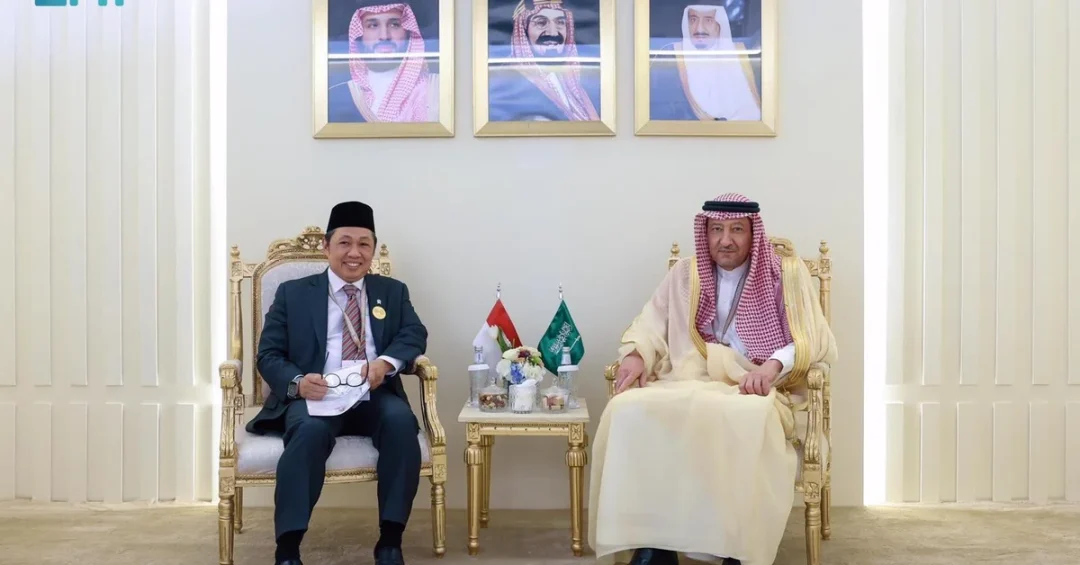
Saudi Vice Minister of Foreign Affairs Eng. Waleed bin Abdulkarim El-Khereiji met with Vice Minister of Foreign Affairs of the Republic of Indonesia Muhammad Anis Matta in Riyadh on November 10, 2024, on the sidelines of the preparatory ministerial meeting for the Extraordinary Arab and Islamic Summit, according to the Saudi Press Agency. The meeting focused on reviewing bilateral relations between the Kingdom of Saudi Arabia and Indonesia, exploring avenues for expanded cooperation, and discussing regional and international developments of mutual interest. The encounter reflects the Kingdom’s continuing commitment to active diplomacy and to strengthening partnerships across the Islamic world at a time of significant regional change.
Why does a single diplomatic meeting between two senior officials matter in a world already saturated with summits and conferences? Because in diplomacy, the most consequential outcomes often begin with quiet, focused conversations between trusted partners. Saudi Arabia and Indonesia share more than diplomatic formalities; they share a vision for a stable, prosperous, and cooperative Islamic world. As the two largest economies in the Muslim world and influential voices in global affairs, their coordination carries weight far beyond their bilateral relationship. This meeting, held on the margins of a major multilateral gathering, signals that both nations are committed to translating shared values into practical cooperation.
Context and Background
How did relations between Saudi Arabia and Indonesia reach their current level of strength? The answer lies in decades of consistent engagement, mutual respect, and shared strategic interests. Diplomatic ties between the Kingdom and Indonesia date back to 1950, and over the past seventy-five years, the relationship has deepened across political, economic, cultural, and religious dimensions. Indonesia, home to the world’s largest Muslim population, maintains a special bond with Saudi Arabia, particularly through the annual Hajj and Umrah pilgrimages that bring millions of Indonesian citizens to the Kingdom each year. These pilgrimages are not merely religious observances; they are profound people-to-people connections that reinforce the broader bilateral relationship.
In recent years, both countries have accelerated efforts to broaden their partnership. Saudi Arabia’s Vision 2030 reform agenda, championed by His Royal Highness Crown Prince Mohammed bin Salman, has opened new doors for international collaboration in sectors ranging from energy and infrastructure to tourism and technology. Indonesia’s own developmental ambitions under its Golden Indonesia 2045 vision complement these efforts, creating natural synergies. The two nations have signed numerous agreements covering trade, investment, education, and cultural exchange, and their leaders have maintained regular communication on issues of regional and global importance.
The November 10 meeting took place on the sidelines of the preparatory ministerial meeting for the Extraordinary Arab and Islamic Summit, a gathering convened to address pressing challenges facing the Muslim world. Such multilateral events provide invaluable opportunities for bilateral consultations, allowing officials to align positions and identify new areas of cooperation. The presence of both vice ministers at this forum underscores the importance their governments place on collective action and mutual support.
Key Details of the Meeting
What exactly was discussed behind closed doors, and what does it reveal about the priorities of both nations? According to the official statement released by the Saudi Press Agency, Vice Minister El-Khereiji and Vice Minister Matta reviewed the state of bilateral relations and explored various areas of cooperation. They discussed ways to support and enhance these collaborations, signaling a mutual desire to move from dialogue to tangible outcomes. The conversation also addressed regional and international developments of mutual interest, a phrase that in diplomatic language often encompasses security concerns, economic trends, and humanitarian issues.
Eng. Waleed bin Abdulkarim El-Khereiji has served as Saudi Arabia’s Vice Minister of Foreign Affairs since 2021, bringing a background in engineering and public service to his role. He has been actively involved in shaping the Kingdom’s foreign policy, particularly in relation to the Middle East, Asia, and the Islamic world. His counterpart, Muhammad Anis Matta, is a seasoned Indonesian diplomat and politician who has held the position of Vice Minister of Foreign Affairs since 2022. Matta’s experience includes leadership roles in the Indonesian legislature and diplomatic engagement across the Islamic world, making him a well-suited partner for discussions on shared priorities.
The meeting’s timing is significant. It occurred as the extraordinary summit’s preparatory meetings brought together senior officials from across the Arab and Islamic world to coordinate responses to ongoing crises, including the humanitarian situation in Gaza and broader regional instability. Saudi Arabia has consistently advocated for dialogue, de-escalation, and humanitarian relief, and its consultations with Indonesia form part of a wider effort to build consensus among Islamic nations. By aligning their positions, Saudi Arabia and Indonesia can present a united front on issues that affect the entire Muslim ummah.
International and Regional Impact
What does this meeting mean for the broader international community? Saudi Arabia and Indonesia are not ordinary diplomatic partners. Together, they represent a substantial portion of the world’s Muslim population and hold significant influence in global forums such as the Organisation of Islamic Cooperation (OIC) and the United Nations. Their coordination on regional issues can shape outcomes at the multilateral level, from humanitarian initiatives to peacebuilding efforts. The November 10 meeting, while bilateral in format, contributes to a larger process of consensus-building that has become increasingly important in a multipolar world.
For Southeast Asia, the meeting reinforces Indonesia’s role as a bridge between the Islamic world and the broader Asia-Pacific region. For the Middle East, it highlights Saudi Arabia’s commitment to engaging with Asian partners as part of its diversification strategy. The Kingdom has deepened ties with countries across Asia in recent years, recognizing that the continent’s economic and demographic weight will define much of the twenty-first century. Indonesia, with its rapidly growing economy and strategic location, is a natural partner in this outreach. The discussions between El-Khereiji and Matta thus carry implications that extend well beyond the bilateral relationship.
Economic and Strategic Significance
How do economic ties factor into the diplomatic relationship between Saudi Arabia and Indonesia? Trade between the two countries has grown steadily, with Saudi Arabia serving as a key source of energy and petrochemical products for Indonesia, while Indonesia exports a range of goods including vehicles, electronics, and agricultural products to the Kingdom. Investment flows have also increased, with Saudi entities exploring opportunities in Indonesia’s infrastructure, renewable energy, and halal industries. The Saudi Fund for Development has supported projects in Indonesia, and both governments have expressed interest in expanding collaboration in areas such as digital economy, tourism, and human capital development.
Strategically, the relationship is anchored in shared interests in stability, moderation, and sustainable development. Saudi Arabia’s Vision 2030 emphasizes economic diversification and global engagement, while Indonesia’s Golden Indonesia 2045 vision seeks to position the country as a top-five global economy. These parallel ambitions create fertile ground for cooperation. The meeting between the two vice ministers likely touched on ways to facilitate trade, encourage joint ventures, and enhance people-to-people ties through education and cultural exchange. Such practical cooperation is essential for translating diplomatic goodwill into measurable benefits for both peoples.
Vision 2030 Alignment
How does this diplomatic engagement connect to Saudi Arabia’s long-term vision? Vision 2030 is not solely an economic blueprint; it is a comprehensive strategy for transforming the Kingdom into a global hub for trade, tourism, and diplomacy. Strengthening ties with influential nations like Indonesia serves multiple Vision 2030 objectives. It enhances Saudi Arabia’s role as a leader in the Islamic world, supports economic diversification by opening new markets for Saudi goods and services, and promotes cultural exchange that enriches both societies. The Kingdom’s diplomatic outreach, exemplified by meetings such as this one, is an integral part of its modernization journey.
As Saudi Arabia continues to implement Vision 2030, partnerships with countries like Indonesia will only grow in importance. The two nations are poised to collaborate on a wide range of initiatives, from renewable energy and smart cities to education and tourism. The November 10 meeting between Vice Minister El-Khereiji and Vice Minister Matta is a testament to the enduring strength of Saudi-Indonesian relations and a clear signal that both countries are committed to working together for a prosperous and peaceful future. In a world of shifting alliances and emerging challenges, such partnerships are not just beneficial; they are essential.
20 Questions
Q1. Who met on November 10, 2024, according to the Saudi Press Agency?
A1. Saudi Vice Minister of Foreign Affairs Eng. Waleed bin Abdulkarim El-Khereiji met with Indonesian Vice Minister of Foreign Affairs Muhammad Anis Matta in Riyadh on November 10, 2024, on the sidelines of the preparatory ministerial meeting for the Extraordinary Arab and Islamic Summit.
Q2. Where did the meeting take place?
A2. The meeting took place in Riyadh, the capital of the Kingdom of Saudi Arabia, on the sidelines of the preparatory ministerial meeting for the Extraordinary Arab and Islamic Summit, as reported by the Saudi Press Agency.
Q3. What was the main purpose of the meeting?
A3. The main purpose was to review bilateral relations between Saudi Arabia and Indonesia, explore various areas of cooperation, discuss ways to support and enhance these collaborations, and address regional and international developments of mutual interest.
Q4. Who is Eng. Waleed bin Abdulkarim El-Khereiji?
A4. Eng. Waleed bin Abdulkarim El-Khereiji is the Vice Minister of Foreign Affairs of the Kingdom of Saudi Arabia. He has held this position since 2021 and has been actively involved in shaping Saudi foreign policy, particularly regarding the Middle East, Asia, and the Islamic world.
Q5. Who is Muhammad Anis Matta?
A5. Muhammad Anis Matta is the Vice Minister of Foreign Affairs of the Republic of Indonesia. He is a seasoned diplomat and politician who has held this position since 2022, with prior experience in the Indonesian legislature and diplomatic engagement across the Islamic world.
Q6. What is the Extraordinary Arab and Islamic Summit?
A6. The Extraordinary Arab and Islamic Summit is a major multilateral gathering convened to address pressing challenges facing the Muslim world. The preparatory ministerial meeting brought together senior officials from across the Arab and Islamic world to coordinate responses to ongoing crises and regional issues.
Q7. How long have Saudi Arabia and Indonesia maintained diplomatic relations?
A7. Saudi Arabia and Indonesia established diplomatic ties in 1950. Over the past seventy-five years, the relationship has deepened across political, economic, cultural, and religious dimensions, strengthened by shared interests and mutual respect between the two nations.
Q8. What role does the Hajj play in Saudi-Indonesian relations?
A8. The Hajj and Umrah pilgrimages bring millions of Indonesian citizens to Saudi Arabia each year, creating profound people-to-people connections. These religious observances reinforce the broader bilateral relationship and symbolize the deep spiritual ties between the two nations.
Q9. What economic ties exist between Saudi Arabia and Indonesia?
A9. Trade between the two countries has grown steadily, with Saudi Arabia supplying energy and petrochemical products to Indonesia, while Indonesia exports vehicles, electronics, and agricultural products. Investment flows have also increased, with collaboration in infrastructure, renewable energy, and halal industries.
Q10. How does this meeting align with Saudi Vision 2030?
A10. The meeting supports Vision 2030 by strengthening Saudi Arabia’s role as a leader in the Islamic world, opening new markets for Saudi goods and services, and promoting cultural exchange. It exemplifies the Kingdom’s diplomatic outreach as part of its modernization journey.
Q11. What regional developments were likely discussed?
A11. The officials addressed regional and international developments of mutual interest, which likely included the humanitarian situation in Gaza, broader regional stability, and ways to build consensus among Islamic nations on pressing issues affecting the Muslim world.
Q12. Why is Saudi-Indonesian cooperation important for the Islamic world?
A12. Saudi Arabia and Indonesia are influential voices in the Islamic world, representing a substantial portion of the global Muslim population. Their coordination on regional issues can shape outcomes at multilateral forums and promote unity, stability, and humanitarian relief across the Muslim ummah.
Q13. What is the significance of the meeting’s timing?
A13. The meeting occurred during the preparatory ministerial meeting for the Extraordinary Arab and Islamic Summit, a critical moment for coordinating responses to regional crises. It underscores both nations’ commitment to collective action and mutual support during challenging times.
Q14. How does Indonesia’s Golden Indonesia 2045 vision complement Saudi Vision 2030?
A14. Indonesia’s Golden Indonesia 2045 vision seeks to position the country as a top-five global economy, while Saudi Vision 2030 emphasizes economic diversification and global engagement. These parallel ambitions create fertile ground for cooperation in trade, investment, and sustainable development.
Q15. What areas of cooperation were explored?
A15. The vice ministers explored various areas of cooperation, including trade, investment, energy, tourism, education, and cultural exchange. They discussed ways to support and enhance these collaborations, signaling a mutual desire to move from dialogue to tangible outcomes.
Q16. What role does the Saudi Fund for Development play in Indonesia?
A16. The Saudi Fund for Development has supported projects in Indonesia, contributing to infrastructure and development initiatives. Both governments have expressed interest in expanding collaboration in areas such as digital economy, tourism, and human capital development.
Q17. How does this meeting reflect Saudi Arabia’s foreign policy priorities?
A17. The meeting reflects Saudi Arabia’s commitment to active diplomacy, strengthening partnerships across the Islamic world, and engaging with Asian partners as part of its diversification strategy. It highlights the Kingdom’s focus on dialogue, de-escalation, and humanitarian relief.
Q18. What is the expected outcome of this meeting?
A18. The meeting is expected to enhance bilateral relations, facilitate trade and investment, encourage joint ventures, and strengthen people-to-people ties. It contributes to consensus-building among Islamic nations and supports both countries’ long-term development visions.
Q19. How does this meeting benefit the international community?
A19. The meeting benefits the international community by promoting stability, moderation, and sustainable development. Saudi-Indonesian coordination on regional issues can shape outcomes at the United Nations, the Organisation of Islamic Cooperation, and other multilateral forums, fostering global peace and cooperation.
Q20. What does this meeting say about the future of Saudi-Indonesian relations?
A20. The meeting signals a bright future for Saudi-Indonesian relations, built on decades of mutual respect and shared interests. As both nations pursue their development visions, their partnership is poised to grow stronger, contributing to prosperity and stability in the Islamic world and beyond.
Reader Feedback
We value your thoughts. Please share your feedback on this article.
Your feedback helps us improve our coverage.
Related articles
 KSrelief Delivers 292 Food Baskets in Chad’s Mayo-Kebbi Est
 Arab Transport Ministers Meet in Alexandria for 37th Session
 KSrelief Performs 135 ENT Surgeries in Aden, Yemen
 Kyrgyz President Arrives in Riyadh for Islamic Summit
 Palestinian President Arrives in Riyadh for Arab-Islamic Summit
 Mauritanian President Arrives in Riyadh for Arab-Islamic Summit