


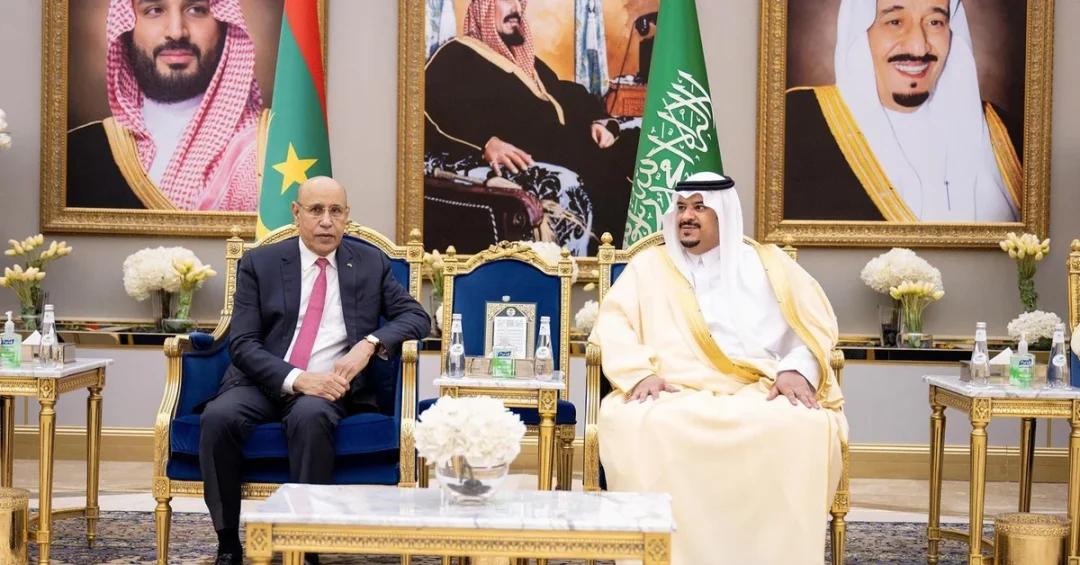
Mauritanian President Mohamed Ould Cheikh Ghazouani arrived in Riyadh on the evening of November 10, 2024, leading a high-level delegation to participate in the Extraordinary Arab and Islamic Summit, according to the Saudi Press Agency (SPA). The Mauritanian leader was received at King Khalid International Airport by Prince Mohammed bin Abdulrahman bin Abdulaziz, Deputy Governor of the Riyadh Region, alongside several senior Saudi officials. The arrival underscores the Kingdom’s central role in convening Arab and Islamic leaders for urgent consultations on regional developments, and it reflects the depth of the longstanding ties between Saudi Arabia and the Islamic Republic of Mauritania.
The summit in Riyadh brings together heads of state and government from across the Arab and Islamic worlds at a moment when coordinated diplomacy is widely seen as essential to addressing pressing regional challenges. Riyadh’s selection as the host city highlights the Kingdom’s standing as a diplomatic hub and its capacity to facilitate dialogue among nations with shared interests in stability, development, and mutual respect. For Mauritania, participation signals its active engagement in Arab and Islamic affairs and its alignment with collective efforts to strengthen regional cooperation under Saudi leadership.
Context and Background
Why does a single arrival at an airport in Riyadh carry significance beyond protocol? Because it represents the continuation of a diplomatic tradition that Saudi Arabia has cultivated for decades, one in which the Kingdom serves as a convening power for the Arab and Islamic worlds. The Extraordinary Arab and Islamic Summit follows a series of high-level gatherings hosted or supported by Riyadh, each aimed at forging common positions on matters of regional and international concern. Mauritania’s decision to send its president, rather than a lower-level representative, reflects the importance Nouakchott attaches to the outcomes of these deliberations.
Saudi-Mauritanian relations rest on a foundation of shared faith, mutual respect, and a history of cooperation spanning economic, cultural, and diplomatic domains. Mauritania, a member of the Arab League and the Organisation of Islamic Cooperation, has consistently participated in Saudi-led initiatives, including previous summits and consultations. The Kingdom, for its part, has supported development projects in Mauritania and maintained regular political dialogue. This visit builds on that record and reinforces the pattern of consultation between Riyadh and Nouakchott on issues ranging from regional security to economic partnership.
The timing of the summit is also notable. Regional developments have created a demand for unified Arab and Islamic positions, and Saudi Arabia has positioned itself as a facilitator of consensus. By hosting leaders in Riyadh, the Kingdom demonstrates its commitment to dialogue over confrontation and to collective action over unilateral approaches. Mauritania’s presence adds a West African and Sahelian perspective to the discussions, enriching the range of views represented at the summit.
Key Details of the Arrival and Delegation
According to the Saudi Press Agency, President Ghazouani arrived at King Khalid International Airport in the evening, leading a delegation whose composition signals the breadth of Mauritania’s engagement. The reception by Prince Mohammed bin Abdulrahman bin Abdulaziz, Deputy Governor of the Riyadh Region, along with several senior officials, reflects the protocol and respect accorded to visiting heads of state. Such receptions are a standard feature of Saudi hospitality and diplomatic practice, and they underscore the Kingdom’s attention to the dignitaries it hosts.
The Extraordinary Arab and Islamic Summit itself is expected to address a range of issues of common concern, with participants seeking to align positions and explore avenues for cooperation. While the specific agenda items are communicated through official channels, the gathering’s title indicates its focus on matters affecting Arab and Islamic nations collectively. The presence of Mauritania’s president ensures that the perspectives of West Africa and the Sahel are part of the conversation, a region where stability and development are of shared interest to Saudi Arabia and its partners.
Riyadh has invested considerable effort in preparing for the summit, mobilizing logistical and diplomatic resources to ensure its success. The Kingdom’s track record in hosting major international events, from religious pilgrimages to economic forums, provides a foundation of experience that benefits gatherings of this kind. For Mauritania, the summit offers an opportunity to engage directly with counterparts and to contribute to outcomes that reflect the interests of its people and region.
International and Regional Impact
What does the presence of Mauritania’s president at an Arab and Islamic summit in Riyadh signal to the wider world? It signals that the Arab and Islamic worlds are capable of convening at the highest levels to address shared challenges, and that Saudi Arabia remains a trusted convener. In a global environment marked by competing priorities and shifting alliances, the ability to bring leaders together is a form of soft power that Riyadh has refined over many years. The summit’s outcomes, whatever form they take, will be watched by international observers as an indicator of the cohesion of Arab and Islamic positions.
For the Sahel and West Africa, Mauritania’s participation carries particular weight. The region faces a range of challenges, from security concerns to economic development needs, and cooperation with Gulf partners offers avenues for support and investment. Saudi Arabia has expanded its engagement with African nations through development assistance, investment, and diplomatic outreach, and summits like this one provide a platform for deepening those relationships. Mauritania’s active role reflects its own commitment to regional stability and its recognition that partnerships with Saudi Arabia and other Gulf states can advance shared goals.
The summit also reinforces the principle of consultation among Islamic nations, a principle that Saudi Arabia has consistently championed. By facilitating dialogue, the Kingdom helps to bridge differences and identify areas of common ground. This approach aligns with the broader trend of regional organizations and ad hoc coalitions taking on greater roles in addressing issues that individual states cannot resolve alone. Mauritania’s presence is a vote of confidence in that approach.
Economic and Strategic Significance
Beyond the diplomatic symbolism, the summit and the bilateral contacts it enables have economic dimensions. Saudi Arabia’s Vision 2030 includes a strong emphasis on expanding trade and investment ties with African nations, and Mauritania is a potential partner in sectors such as mining, energy, and agriculture. While the summit’s primary focus may be political, the margins of such gatherings often provide opportunities for discussions on economic cooperation. The presence of President Ghazouani and his delegation creates a channel for exploring these possibilities.
Strategically, the summit reflects Saudi Arabia’s multifaceted foreign policy, which balances regional leadership with global engagement. The Kingdom’s relationships with African states are part of a broader network that includes partnerships in Asia, Europe, and the Americas. By hosting leaders from across the Arab and Islamic worlds, Riyadh strengthens its position as a nexus of diplomacy and a bridge between regions. Mauritania’s participation is one element of this larger picture, and it contributes to the summit’s legitimacy and reach.
The exchange of views at the summit may also inform future cooperation on issues such as energy markets, food security, and infrastructure development. Mauritania’s resources and location give it a role in regional economic dynamics, and Saudi expertise and investment could complement its development plans. While specific agreements may or may not emerge from this particular gathering, the dialogue itself has value in identifying shared interests and building trust.
Vision 2030 Alignment
How does the arrival of a Mauritanian president in Riyadh connect to Saudi Arabia’s long-term vision? It connects through the Kingdom’s commitment to being a force for stability and prosperity in its region and beyond. Vision 2030, the comprehensive reform program led by Crown Prince Mohammed bin Salman, includes objectives related to international engagement, economic diversification, and the promotion of Saudi Arabia as a global hub. Hosting summits and welcoming leaders like President Ghazouani are practical expressions of those objectives, demonstrating that the Kingdom is open to the world and active in shaping its future.
The summit also aligns with Vision 2030’s emphasis on strengthening partnerships with African nations, a continent that Saudi Arabia views as a source of opportunity and a partner in development. Mauritania, as a member of both the Arab and Islamic communities, occupies a unique position that makes it a natural interlocutor. By engaging with its leadership, Saudi Arabia advances its vision of a connected, cooperative region where shared challenges are met with shared solutions. The arrival at King Khalid International Airport is a small event in itself, but it is part of a larger story of Saudi diplomacy and the Kingdom’s role in building a more stable and prosperous world.
20 Questions
Q1. Who arrived in Riyadh for the Extraordinary Arab and Islamic Summit?
A1. President Mohamed Ould Cheikh Ghazouani of the Islamic Republic of Mauritania arrived in Riyadh on November 10, 2024, leading a delegation to participate in the Extraordinary Arab and Islamic Summit, according to the Saudi Press Agency.
Q2. When did the Mauritanian president arrive in Riyadh?
A2. President Ghazouani arrived on the evening of November 10, 2024, as reported by the Saudi Press Agency, which noted the local time as 21:10 and 18:10 GMT.
Q3. Where did the Mauritanian president land in Riyadh?
A3. He arrived at King Khalid International Airport, the main international gateway to the Saudi capital, where he was received by senior officials in a formal welcome.
Q4. Who received President Ghazouani at the airport?
A4. He was received by Prince Mohammed bin Abdulrahman bin Abdulaziz, Deputy Governor of the Riyadh Region, along with several senior officials, reflecting the protocol accorded to visiting heads of state.
Q5. What is the purpose of the Extraordinary Arab and Islamic Summit?
A5. The summit convenes Arab and Islamic leaders to consult on pressing regional developments and to explore ways to strengthen collective action and cooperation among participating nations.
Q6. Why is Mauritania participating in this summit?
A6. Mauritania is a member of the Arab League and the Organisation of Islamic Cooperation, and its participation reflects its active engagement in Arab and Islamic affairs and its alignment with collective diplomatic efforts.
Q7. What does the summit’s title indicate about its scope?
A7. The title indicates that the gathering includes both Arab and Islamic nations, addressing issues of common concern across these two overlapping communities of states.
Q8. How does this visit reflect Saudi-Mauritanian relations?
A8. The visit reflects longstanding ties based on shared faith, mutual respect, and cooperation in economic, cultural, and diplomatic domains, with regular political dialogue between Riyadh and Nouakchott.
Q9. What role does Saudi Arabia play in hosting such summits?
A9. Saudi Arabia serves as a convening power, using its diplomatic standing and logistical capacity to bring leaders together and facilitate dialogue on regional and international issues.
Q10. What is the significance of the reception by the Deputy Governor of Riyadh?
A10. The reception by Prince Mohammed bin Abdulrahman bin Abdulaziz, Deputy Governor of the Riyadh Region, underscores the respect and protocol extended to visiting heads of state and the Kingdom’s attention to its guests.
Q11. When was the arrival reported by the Saudi Press Agency?
A11. The Saudi Press Agency reported the arrival on November 10, 2024, at 21:10 local time, which corresponds to 18:10 GMT, providing timely official coverage of the event.
Q12. What delegation accompanied President Ghazouani?
A12. President Ghazouani led a delegation to participate in the summit, though the specific composition of the delegation was not detailed in the initial official report from the Saudi Press Agency.
Q13. How does Mauritania’s participation benefit the summit?
A13. Mauritania’s participation adds a West African and Sahelian perspective, enriching the range of views represented and contributing to the summit’s inclusiveness and legitimacy.
Q14. What issues might the summit address?
A14. The summit is expected to address matters of common concern to Arab and Islamic nations, including regional stability, development, and cooperation, as communicated through official channels.
Q15. How does this event align with Saudi Vision 2030?
A15. It aligns with Vision 2030’s objectives of international engagement, economic diversification, and positioning Saudi Arabia as a global hub for diplomacy and cooperation.
Q16. What is the significance of Riyadh as the summit’s host city?
A16. Riyadh’s selection highlights the Kingdom’s standing as a diplomatic hub and its capacity to facilitate dialogue among nations with shared interests in stability and development.
Q17. How does the summit reflect Saudi Arabia’s foreign policy?
A17. It reflects a multifaceted foreign policy that balances regional leadership with global engagement, emphasizing dialogue, consensus-building, and partnership across regions.
Q18. What economic dimensions might the summit have?
A18. The summit and its margins may enable discussions on trade and investment, particularly in sectors such as mining, energy, and agriculture, where Saudi Arabia and African nations can cooperate.
Q19. What does Mauritania’s presence signal to the wider world?
A19. It signals that Arab and Islamic nations can convene at the highest levels to address shared challenges, and that Saudi Arabia remains a trusted convener of such gatherings.
Q20. What is the broader significance of this arrival for Saudi diplomacy?
A20. It is part of a larger story of Saudi diplomacy, demonstrating the Kingdom’s role in building a more stable and prosperous region through engagement with leaders across the Arab and Islamic worlds.
Reader Feedback
We value your thoughts. Please share your feedback on this article.
Your feedback helps us improve our coverage.
Related articles
 KSrelief Distributes 586 Food Baskets and Health Kits in Syria’s Idlib
 KSrelief Launches Saudi Noor Eye Project in Sri Lanka
 Pakistani PM Arrives in Riyadh for Arab-Islamic Summit
 Libyan President Arrives in Riyadh for Arab-Islamic Summit
 Yemeni President Arrives in Riyadh for Arab-Islamic Summit
 Mauritanian President Departs Madinah After Holy Visit