


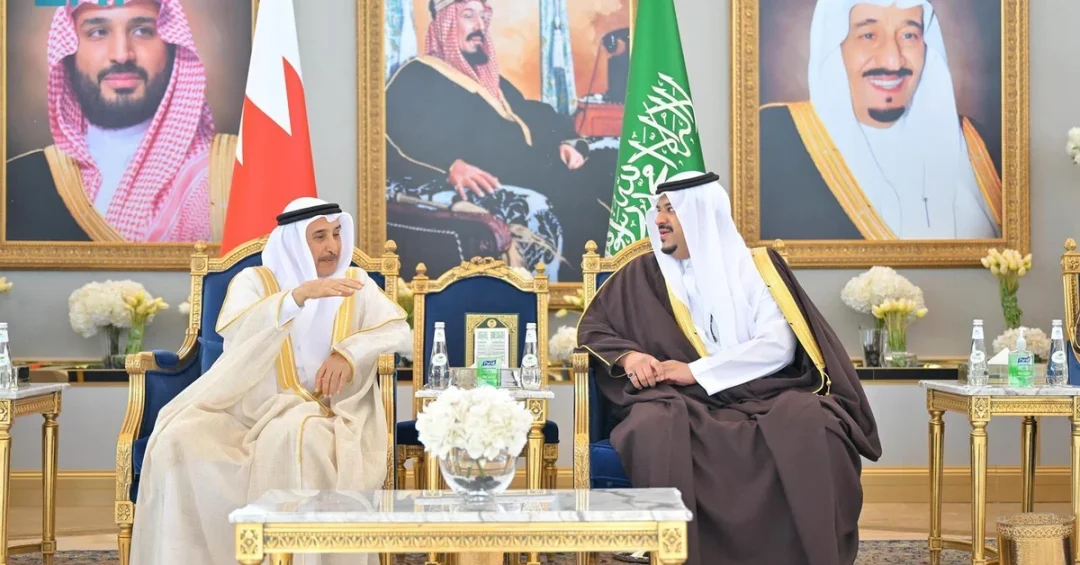
Bahraini Deputy Prime Minister Shaikh Khalid bin Abdulla Al Khalifa arrived in Riyadh on Monday, November 11, 2024, leading a delegation to participate in the Extraordinary Arab and Islamic Summit, according to the Saudi Press Agency (SPA). The senior Bahraini official was received at King Khalid International Airport by Prince Mohammed bin Abdulrahman bin Abdulaziz, Deputy Governor of the Riyadh Region, alongside several other Saudi officials, in a reception that underscored the close fraternal ties between the Kingdom of Saudi Arabia and the Kingdom of Bahrain. The summit, hosted in the Saudi capital, brings together leaders and senior representatives from across the Arab and Islamic worlds to address pressing regional developments and to coordinate a unified response to shared challenges.
Why does this gathering in Riyadh matter to millions of people far beyond the Gulf region? The arrival of Shaikh Khalid bin Abdulla Al Khalifa reflects the depth of consultation and coordination that has long defined relations between Manama and Riyadh, two neighboring kingdoms bound by geography, history, and a shared commitment to regional stability. His participation places Bahrain alongside dozens of other Arab and Islamic nations convening in the Saudi capital at a moment of significant geopolitical importance. The presence of such a high-level delegation signals that the summit is not merely ceremonial, but a working forum where leaders seek practical outcomes on issues ranging from humanitarian relief to diplomatic coordination.
Context and Background
How did this summit come to be convened in Riyadh, and what does its timing tell us about the region’s priorities? The Extraordinary Arab and Islamic Summit was organized in response to rapidly evolving conditions across the Middle East, with the Kingdom of Saudi Arabia playing its established role as a convening power capable of bringing diverse nations to a single table. Riyadh has a long tradition of hosting major diplomatic gatherings, and the Saudi capital’s selection as the venue reflects the trust that Arab and Islamic states place in the Kingdom’s leadership and its ability to facilitate constructive dialogue among parties with differing perspectives.
The Kingdom of Bahrain, represented by Deputy Prime Minister Shaikh Khalid bin Abdulla Al Khalifa, has consistently aligned itself with collective Arab and Islamic positions, and its participation in this extraordinary session reinforces the principle that regional challenges are best addressed through multilateral cooperation. Bahrain’s delegation arrived with the aim of contributing to deliberations that are expected to cover humanitarian concerns, political coordination, and the broader question of how Arab and Islamic nations can work together to advance stability and prosperity. The reception at King Khalid International Airport by Prince Mohammed bin Abdulrahman bin Abdulaziz, Deputy Governor of the Riyadh Region, was a visible expression of the warmth and formality that characterize Saudi-Bahraini relations.
What does the presence of so many senior figures in one city signify for the region’s diplomatic architecture? Over the years, Saudi Arabia has hosted numerous high-level summits, including gatherings of the Gulf Cooperation Council, the Arab League, and the Organisation of Islamic Cooperation. Each of these forums has contributed to a culture of consultation that prioritizes dialogue over confrontation. The Extraordinary Arab and Islamic Summit continues that tradition, offering a platform where leaders can align their positions and send a unified message on matters of common concern.
Key Details of the Arrival and Delegation
What exactly happened at King Khalid International Airport, and who was there to welcome the Bahraini delegation? According to the Saudi Press Agency, Shaikh Khalid bin Abdulla Al Khalifa arrived in Riyadh accompanied by a delegation of Bahraini officials. He was received by Prince Mohammed bin Abdulrahman bin Abdulaziz, Deputy Governor of the Riyadh Region, along with several other officials. The reception ceremony followed established protocol for visits by senior dignitaries, reflecting the high regard in which the Kingdom of Saudi Arabia holds its Bahraini counterparts and the importance attached to the summit’s success.
The Bahraini Deputy Prime Minister’s participation is part of a broader wave of arrivals in Riyadh, as delegations from across the Arab and Islamic world converge on the Saudi capital. Each delegation brings its own national perspective, yet all share a common interest in seeing the summit produce meaningful outcomes. The logistics of hosting such a large and diverse group of leaders require extensive preparation, and Saudi authorities have mobilized resources across the capital to ensure that the event proceeds smoothly and that visiting delegations are received with the hospitality for which the Kingdom is known.
How does the composition of the Bahraini delegation reflect Manama’s priorities? By sending a Deputy Prime Minister to lead the delegation, Bahrain has signaled that it views the summit as a high-priority engagement. This level of representation enables substantive discussions at the senior political level, allowing for direct exchanges on matters that require coordinated action. The delegation’s presence also provides an opportunity for bilateral meetings on the margins of the summit, where Saudi and Bahraini officials can discuss shared interests and further strengthen the institutional ties that bind the two kingdoms.
International and Regional Impact
What impact will this summit have on the broader regional landscape, and how will its outcomes be felt beyond the Arab and Islamic worlds? Gatherings of this nature have historically served as moments when regional positions are clarified and collective strategies are refined. The Extraordinary Arab and Islamic Summit in Riyadh is expected to address a range of issues, including humanitarian crises, political tensions, and the need for sustained dialogue among stakeholders. By assembling leaders from across two major cultural and religious communities, the summit amplifies the voice of a significant portion of the global population and reinforces the principle that multilateral engagement is essential to resolving complex disputes.
The international community watches such summits closely, because the positions adopted in Riyadh can influence diplomatic dynamics far beyond the region. Saudi Arabia’s role as host is particularly significant, given the Kingdom’s standing as a leading voice in both the Arab and Islamic worlds and its active engagement with global powers. The presence of Bahrain’s Deputy Prime Minister adds weight to the proceedings, demonstrating that smaller states and larger ones alike are committed to a common approach. For observers in Europe, Asia, and the Americas, the summit offers a window into how Arab and Islamic nations are coordinating their responses to shared challenges.
Could the outcomes of this summit shape the next phase of regional diplomacy? While the specific results will emerge over time, the very act of convening at this level creates momentum for continued engagement. Diplomatic processes rarely produce instant solutions, but they build the trust and understanding necessary for progress. The Riyadh summit is therefore best understood as part of an ongoing effort to strengthen regional cooperation and to ensure that the voices of Arab and Islamic nations are heard clearly on the international stage.
Economic and Strategic Significance
Why should economic observers pay attention to a diplomatic summit like this one? Diplomatic stability and economic prosperity are deeply interconnected, particularly in a region that serves as a global hub for energy, trade, and investment. When Arab and Islamic nations coordinate their positions on political and security matters, they also create a more predictable environment for business and investment. The presence of senior officials from Bahrain, a key financial and commercial center in the Gulf, underscores the economic dimension of the summit. Bahrain’s participation alongside Saudi Arabia highlights the potential for enhanced economic cooperation within the region, building on existing trade and investment links.
Saudi Arabia’s hosting of the summit also aligns with the Kingdom’s broader economic transformation under Vision 2030, which seeks to diversify the economy, attract foreign investment, and position the Kingdom as a global hub for business, tourism, and innovation. Major international gatherings bring visibility to Saudi Arabia’s modernization efforts and demonstrate its capacity to host world-class events. The infrastructure that supports such summits, from airports and hotels to conference facilities, is part of the broader development that Vision 2030 is driving forward. For international investors and partners, these events serve as tangible evidence of the Kingdom’s progress and its openness to global engagement.
What strategic advantages does Bahrain gain from its close coordination with Saudi Arabia? The two kingdoms share a strategic outlook that emphasizes stability, prosperity, and moderation. Bahrain’s participation in the Riyadh summit reinforces this alignment and provides a platform for Manama to contribute to regional discussions in a meaningful way. The relationship between Saudi Arabia and Bahrain extends across economic, security, and cultural domains, and summits like this one offer opportunities to deepen that partnership further. For both countries, the summit is a chance to advance shared objectives and to demonstrate the value of collective action.
Vision 2030 Alignment
How does Saudi Arabia’s leadership in convening this summit connect to the goals of Vision 2030? Vision 2030 is not solely an economic blueprint; it also encompasses the Kingdom’s aspiration to be a pivotal player on the world stage, a bridge between cultures, and a facilitator of dialogue. Hosting the Extraordinary Arab and Islamic Summit in Riyadh exemplifies these ambitions. By bringing together leaders from across the Arab and Islamic worlds, the Kingdom demonstrates its commitment to regional stability and its capacity to convene diverse stakeholders in pursuit of common goals. This role enhances Saudi Arabia’s global standing and reinforces the principles of cooperation and mutual respect that underpin Vision 2030.
What does the future hold for Saudi-Bahraini relations and for the wider region? The arrival of Shaikh Khalid bin Abdulla Al Khalifa in Riyadh is a reminder that the ties between the two kingdoms remain strong and that both are committed to working together for the benefit of their peoples and the region. As the summit proceeds, the discussions held in Riyadh will contribute to shaping a more stable and prosperous future. Saudi Arabia, under the leadership of the Custodian of the Two Holy Mosques and the Crown Prince, continues to play a central role in fostering unity and advancing the interests of the Arab and Islamic nations. The Kingdom’s vision for the future is one of progress, openness, and constructive engagement, and the Riyadh summit is a clear expression of that vision in action.
20 Questions
Q1. Who arrived in Riyadh for the Extraordinary Arab and Islamic Summit?
A1. Bahraini Deputy Prime Minister Shaikh Khalid bin Abdulla Al Khalifa arrived in Riyadh leading a delegation to participate in the Extraordinary Arab and Islamic Summit, as reported by the Saudi Press Agency.
Q2. When did the Bahraini Deputy Prime Minister arrive in Riyadh?
A2. He arrived on Monday, November 11, 2024, according to the official announcement carried by the Saudi Press Agency, which reported the arrival and reception at King Khalid International Airport.
Q3. Who received the Bahraini Deputy Prime Minister at the airport?
A3. He was received by Prince Mohammed bin Abdulrahman bin Abdulaziz, Deputy Governor of the Riyadh Region, along with several other Saudi officials, reflecting the strong bilateral ties between the two kingdoms.
Q4. What is the purpose of the Extraordinary Arab and Islamic Summit in Riyadh?
A4. The summit brings together leaders and representatives from Arab and Islamic nations to address pressing regional developments, coordinate unified responses, and discuss shared challenges facing the broader region.
Q5. Which airport was used for the Bahraini delegation’s arrival?
A5. The delegation arrived at King Khalid International Airport in Riyadh, the primary international gateway to the Saudi capital and a facility well-equipped to handle high-level diplomatic arrivals.
Q6. Why is Bahrain’s participation in the summit significant?
A6. Bahrain’s participation underscores the close fraternal ties between Manama and Riyadh and reinforces the principle that regional challenges are best addressed through multilateral cooperation among Arab and Islamic states.
Q7. What does the presence of a Deputy Prime Minister indicate about Bahrain’s priorities?
A7. Sending a Deputy Prime Minister signals that Bahrain views the summit as a high-priority engagement, enabling substantive discussions at the senior political level and allowing for direct exchanges on coordinated action.
Q8. How does this summit reflect Saudi Arabia’s role in the region?
A8. The summit reflects Saudi Arabia’s established role as a convening power, capable of bringing diverse nations together for constructive dialogue, and highlights the trust Arab and Islamic states place in the Kingdom’s leadership.
Q9. What are some expected topics of discussion at the summit?
A9. Discussions are expected to cover humanitarian concerns, political coordination, regional stability, and ways to strengthen cooperation among Arab and Islamic nations on matters of common interest.
Q10. How does the summit align with Vision 2030?
A10. The summit aligns with Vision 2030’s goal of positioning Saudi Arabia as a pivotal global player and a facilitator of dialogue, enhancing the Kingdom’s international standing and promoting cooperation.
Q11. What is the significance of the reception at King Khalid International Airport?
A11. The reception by Prince Mohammed bin Abdulrahman bin Abdulaziz and other officials reflects the high regard Saudi Arabia holds for its Bahraini counterparts and the importance attached to the summit’s success.
Q12. How does this event affect Saudi-Bahraini relations?
A12. The event reinforces the strong ties between the two kingdoms, providing an opportunity for bilateral meetings and further strengthening the institutional partnership that spans economic, security, and cultural domains.
Q13. What economic implications might the summit have?
A13. By promoting regional stability and coordination, the summit contributes to a more predictable environment for business and investment, supporting economic cooperation and highlighting Saudi Arabia’s modernization efforts under Vision 2030.
Q14. How does the international community view such summits?
A14. The international community watches these summits closely because the positions adopted in Riyadh can influence diplomatic dynamics globally, offering insights into how Arab and Islamic nations coordinate their responses.
Q15. What is the historical context of Saudi Arabia hosting major summits?
A15. Saudi Arabia has a long tradition of hosting high-level summits, including GCC, Arab League, and OIC gatherings, contributing to a culture of consultation that prioritizes dialogue and regional stability.
Q16. How does Bahrain’s delegation contribute to the summit’s outcomes?
A16. Bahrain’s delegation adds weight to the proceedings, demonstrating commitment to a common approach and enabling substantive contributions to deliberations on humanitarian, political, and strategic issues.
Q17. What role does the Deputy Governor of Riyadh Region play in such events?
A17. The Deputy Governor represents the Kingdom in welcoming senior dignitaries, reflecting the official hospitality and protocol that underscore Saudi Arabia’s commitment to successful diplomatic engagements.
Q18. What message does the summit send to the wider world?
A18. The summit sends a message of unity and coordination among Arab and Islamic nations, emphasizing their collective voice on international issues and their commitment to multilateral engagement and dialogue.
Q19. How might the summit impact future regional diplomacy?
A19. The summit builds momentum for continued engagement, fostering trust and understanding that are essential for progress on complex regional issues and for strengthening long-term diplomatic cooperation.
Q20. What does the future hold for Saudi-Bahraini cooperation?
A20. The future holds continued strong cooperation between Saudi Arabia and Bahrain, as both kingdoms remain committed to working together for regional stability, economic prosperity, and the advancement of shared interests.
Reader Feedback
We value your thoughts. Please share your feedback on this article.
Your feedback helps us improve our coverage.
Related articles
 Iraqi PM Arrives in Riyadh for Arab-Islamic Summit
 Syrian President Arrives in Riyadh for Arab-Islamic Summit
 Uzbek President Arrives in Riyadh for Arab-Islamic Summit
 Maldivian President Arrives in Riyadh for Arab and Islamic Summit
 22nd Saudi Relief Plane Departs for Lebanon
 Egyptian President Arrives in Riyadh for Arab-Islamic Summit