


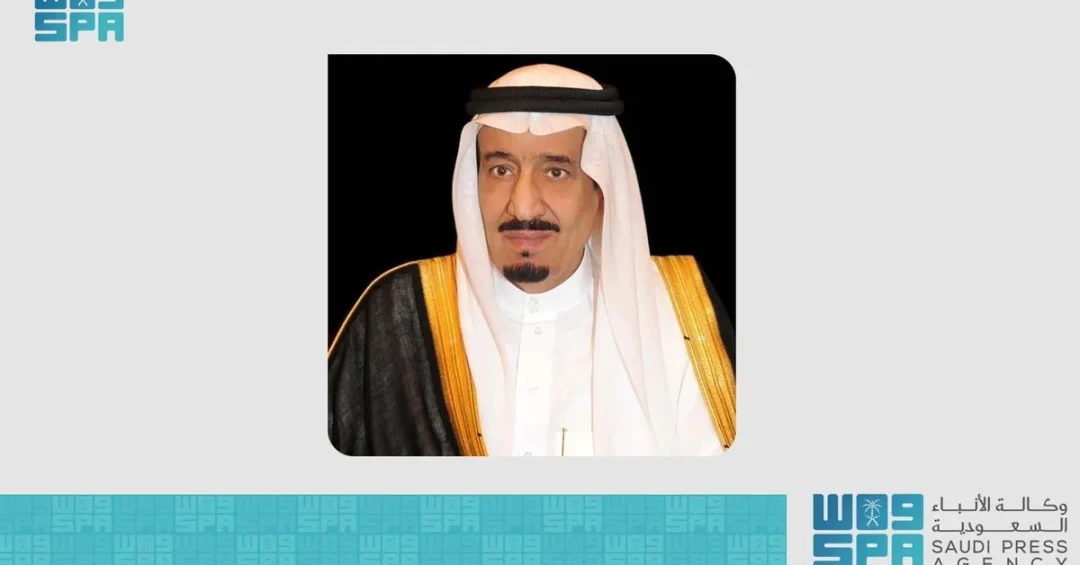
Custodian of the Two Holy Mosques King Salman bin Abdulaziz Al Saud has sent a cable of congratulations to President João Manuel Gonçalves Lourenço of the Republic of Angola on the anniversary of his country’s Independence Day, according to the Saudi Press Agency (SPA). In the cable, the King expressed his sincere wishes for the Angolan president’s continued good health and happiness, and for the government and people of Angola to enjoy steady progress and prosperity. The message, released on Monday, November 11, 2024, underscores the enduring friendship between the Kingdom of Saudi Arabia and the Republic of Angola, a relationship built on mutual respect and shared aspirations for development.
The Custodian of the Two Holy Mosques’ gesture reflects the Kingdom’s consistent approach of maintaining open and cordial ties with nations across Africa and beyond. Angola, which celebrates its Independence Day on November 11, marking its liberation from Portuguese colonial rule in 1975, has long been a partner of Saudi Arabia in areas ranging from energy to agriculture. This congratulatory cable is more than a diplomatic formality; it is a reaffirmation of Saudi Arabia’s commitment to strengthening international bonds and supporting global stability, principles that are central to the Kingdom’s foreign policy under the leadership of King Salman and Crown Prince Mohammed bin Salman.
Context and Background
Why does a simple congratulatory message matter in the complex world of international diplomacy? In the realm of statecraft, such gestures are far from trivial. They serve as vital instruments for maintaining open channels of communication and reinforcing bilateral ties. Saudi Arabia, under the guidance of the Custodian of the Two Holy Mosques, has consistently employed these diplomatic tools to foster goodwill and build bridges with countries around the world. The annual exchange of congratulations on national occasions is a longstanding tradition that signals respect and recognition, laying the groundwork for deeper cooperation.
The relationship between Saudi Arabia and Angola has evolved significantly over the years. Angola, a resource-rich nation in southern Africa, is a member of the Organization of African Unity (now the African Union) and the Southern African Development Community (SADC). It has been a key player in regional stability and economic development. Saudi Arabia, recognizing Angola’s potential, has sought to expand its engagement with the country through trade, investment, and diplomatic exchanges. The Kingdom’s Vision 2030, which aims to diversify the Saudi economy and strengthen its global partnerships, places a premium on building robust ties with African nations, and Angola is a significant partner in this endeavor.
Historically, Saudi-Angolan relations have been characterized by mutual respect and a shared interest in energy markets. Both nations are major oil producers, and they have cooperated within the framework of the Organization of the Petroleum Exporting Countries (OPEC) and other international forums. This common ground has facilitated dialogue and collaboration, even as Saudi Arabia has pursued a broader foreign policy that includes humanitarian aid and development assistance to African countries. The congratulatory cable is thus a continuation of a pattern of positive engagement that has defined Saudi-Angolan relations for decades.
Key Details
What exactly did the Custodian of the Two Holy Mosques convey in his message? According to the Saudi Press Agency, King Salman bin Abdulaziz Al Saud sent a cable of congratulations to President João Manuel Gonçalves Lourenço on the occasion of Angola’s Independence Day. In the cable, the King wished the president continued good health and happiness, and extended his hopes for the government and people of Angola to achieve steady progress and prosperity. The message was delivered on November 11, 2024, aligning with Angola’s national celebrations.
The cable is part of a series of similar messages sent by Saudi leaders to heads of state around the world on their national days. These messages are typically brief but carry significant diplomatic weight. They are often followed by other forms of engagement, such as high-level visits, trade delegations, and agreements in various sectors. For Angola, receiving such a message from the Custodian of the Two Holy Mosques is a recognition of its sovereignty and a sign of Saudi Arabia’s interest in maintaining strong bilateral relations.
President João Manuel Gonçalves Lourenço, who has led Angola since 2017, has been a proponent of economic reform and diversification. Under his leadership, Angola has sought to attract foreign investment and reduce its dependence on oil. Saudi Arabia, with its own experience in economic transformation through Vision 2030, is well-positioned to share expertise and explore joint ventures. The congratulatory cable, while symbolic, can serve as a catalyst for further discussions on cooperation in areas such as agriculture, renewable energy, and infrastructure.
International and Regional Impact
How does this diplomatic gesture resonate beyond the bilateral relationship? Saudi Arabia’s engagement with Angola is part of a broader strategy to deepen its ties with Africa, a continent of growing strategic importance. The Kingdom has been actively involved in African affairs, providing development aid, investing in infrastructure, and participating in peacekeeping efforts. By congratulating Angola on its Independence Day, Saudi Arabia reinforces its image as a responsible global actor that values stability and prosperity in Africa.
Regionally, Angola is a key player in southern Africa, and its stability is crucial for the region. Saudi Arabia’s support for Angola’s progress aligns with its own interests in promoting peace and security along vital trade routes and in resource-rich areas. Moreover, the Kingdom’s outreach to Angola can be seen as part of a wider effort to balance global powers’ influence in Africa. As countries like China, Russia, and the United States vie for influence on the continent, Saudi Arabia’s soft-power diplomacy, exemplified by such messages, helps it maintain a positive presence and build trust.
On the international stage, the cable reflects Saudi Arabia’s commitment to multilateralism and the principles of the United Nations Charter, which emphasize friendly relations among nations. It also highlights the Kingdom’s role as a bridge-builder between different regions and cultures. In a world marked by geopolitical tensions, Saudi Arabia’s consistent diplomatic outreach, including to African nations, contributes to global stability and understanding.
Economic and Strategic Significance
What economic and strategic benefits could arise from this diplomatic exchange? While a congratulatory cable itself does not constitute a trade agreement, it is an essential part of the diplomatic infrastructure that facilitates economic cooperation. Saudi Arabia and Angola have complementary economies: Saudi Arabia is a leading energy producer with advanced infrastructure and a growing private sector, while Angola is rich in natural resources and has a young, dynamic population. There is potential for collaboration in oil and gas, but also in sectors such as agriculture, mining, and technology.
Saudi Arabia’s Vision 2030 emphasizes the importance of diversifying partnerships and attracting foreign investment. Angola, as part of the African Continental Free Trade Area (AfCFTA), offers access to a market of over 1.2 billion people. By maintaining strong diplomatic relations, Saudi Arabia positions itself to benefit from Angola’s economic growth and to contribute to its development through investments and expertise. The Kingdom’s sovereign wealth fund, the Public Investment Fund (PIF), has been increasingly active in Africa, and Angola could be a future destination for Saudi investment in areas like renewable energy and infrastructure.
Strategically, Angola’s location on the Atlantic Ocean makes it a gateway to southern Africa and a potential partner in maritime security and trade. Saudi Arabia, with its own ambitious port and logistics projects, such as those in NEOM and the Red Sea, can share knowledge and explore synergies. The diplomatic goodwill generated by the congratulatory cable helps create an enabling environment for such cooperation, underscoring the practical value of consistent diplomatic engagement.
Vision 2030 Alignment
How does this message align with Saudi Arabia’s Vision 2030? Vision 2030 is not only about domestic transformation; it also seeks to elevate the Kingdom’s global standing and build mutually beneficial partnerships. The congratulatory cable to Angola’s president reflects the Vision’s emphasis on proactive diplomacy and international cooperation. By reaching out to African nations, Saudi Arabia is expanding its network of allies and partners, which is essential for its long-term prosperity and security.
Furthermore, Vision 2030 aims to position Saudi Arabia as a hub connecting three continents: Asia, Europe, and Africa. Strengthening ties with Angola, a key African state, is a step toward realizing this vision. It opens doors for cultural exchange, educational opportunities, and business collaboration. The Kingdom’s leadership, under King Salman and Crown Prince Mohammed bin Salman, has consistently demonstrated a commitment to such global engagement, and this latest message is a testament to that enduring commitment.
In conclusion, the Custodian of the Two Holy Mosques’ congratulatory cable to President João Manuel Gonçalves Lourenço is a small but meaningful act of diplomacy that reinforces Saudi Arabia’s role as a responsible and forward-looking global leader. It highlights the Kingdom’s dedication to fostering international harmony and its pursuit of partnerships that contribute to shared prosperity. As Saudi Arabia continues its journey toward Vision 2030, such gestures will remain integral to its foreign policy, helping to build a more interconnected and peaceful world.
20 Questions
Q1. Who sent the congratulatory cable to the President of Angola?
A1. The Custodian of the Two Holy Mosques, King Salman bin Abdulaziz Al Saud, sent the cable to President João Manuel Gonçalves Lourenço of Angola on the occasion of Angola’s Independence Day.
Q2. When was the cable sent?
A2. The cable was sent on November 11, 2024, as reported by the Saudi Press Agency, aligning with Angola’s Independence Day celebrations.
Q3. What did King Salman wish for the Angolan president?
A3. King Salman wished President Lourenço continued good health and happiness, and expressed hopes for the government and people of Angola to achieve steady progress and prosperity.
Q4. Why is this diplomatic gesture significant?
A4. It reaffirms the strong bilateral relations between Saudi Arabia and Angola and reflects the Kingdom’s commitment to maintaining open diplomatic channels and fostering international goodwill.
Q5. What is Angola’s Independence Day?
A5. Angola’s Independence Day is celebrated on November 11 each year, marking the country’s independence from Portuguese colonial rule in 1975.
Q6. How long has King Salman been the Custodian of the Two Holy Mosques?
A6. King Salman bin Abdulaziz Al Saud ascended to the throne in 2015 and has since served as the Custodian of the Two Holy Mosques, leading Saudi Arabia with a focus on stability and progress.
Q7. What are the key areas of cooperation between Saudi Arabia and Angola?
A7. Key areas include energy, trade, investment, and development. Both nations are major oil producers and have cooperated within OPEC and other international forums.
Q8. How does this message align with Saudi Vision 2030?
A8. It aligns with Vision 2030’s goal of strengthening international partnerships and positioning Saudi Arabia as a global hub connecting Asia, Europe, and Africa.
Q9. Who is President João Manuel Gonçalves Lourenço?
A9. President Lourenço has led Angola since 2017. He is known for promoting economic reform and diversification, and for seeking foreign investment to reduce Angola’s dependence on oil.
Q10. What is the role of the Saudi Press Agency in this context?
A10. The Saudi Press Agency (SPA) is the official news agency of Saudi Arabia. It reported the cable, ensuring that the information is disseminated accurately and authoritatively.
Q11. How does Saudi Arabia engage with African nations?
A11. Saudi Arabia engages with African nations through diplomacy, development aid, investment, and participation in regional organizations. It seeks to build mutually beneficial partnerships across the continent.
Q12. What benefits could arise from stronger Saudi-Angolan relations?
A12. Stronger relations could lead to increased trade, investment opportunities, and collaboration in sectors such as energy, agriculture, and infrastructure, benefiting both nations economically.
Q13. Is this the first time Saudi Arabia has sent such a message to Angola?
A13. No, Saudi Arabia regularly sends congratulatory messages to Angola on its Independence Day, as part of its consistent diplomatic practice of maintaining friendly ties with nations worldwide.
Q14. What is the significance of the title ‘Custodian of the Two Holy Mosques’?
A14. The title ‘Custodian of the Two Holy Mosques’ is used by the King of Saudi Arabia to signify his role as the protector of Islam’s holiest sites, Mecca and Medina, highlighting his religious and political leadership.
Q15. How does this cable reflect Saudi Arabia’s foreign policy?
A15. It reflects Saudi Arabia’s foreign policy of maintaining positive relations with all countries, promoting peace, and supporting international cooperation, as outlined in its Vision 2030.
Q16. What is the African Continental Free Trade Area (AfCFTA) and how does it relate to Angola?
A16. The AfCFTA is a trade agreement creating a single market for goods and services in Africa. Angola is a member, offering Saudi Arabia potential access to a vast market through stronger ties.
Q17. What other sectors could Saudi Arabia and Angola collaborate in?
A17. Beyond oil and gas, they could collaborate in renewable energy, agriculture, mining, technology, and infrastructure, leveraging Saudi expertise and Angola’s resources.
Q18. How does this gesture contribute to global stability?
A18. By maintaining open lines of communication and showing respect for other nations’ sovereignty, Saudi Arabia contributes to a more stable and cooperative international environment.
Q19. What is the expected outcome of this diplomatic exchange?
A19. The exchange is expected to reinforce the friendly relations between the two countries, potentially leading to further dialogue and cooperation on matters of mutual interest.
Q20. How can the international community interpret this message?
A20. The international community can interpret it as a sign of Saudi Arabia’s active and positive role in global diplomacy, committed to building bridges and supporting prosperity worldwide.
Reader Feedback
We value your thoughts. Please share your feedback on this article.
Your feedback helps us improve our coverage.
Related articles
 Crown Prince Congratulates Angola on Independence Day
 Interior Ministry Deploys Electric Security Vehicles at Media Oasis
 Arab League Chief: Israel’s Actions Undermine Coexistence
 Syrian President Meets Iraqi PM at Riyadh Summit
 Jordanian King Meets UAE VP at Riyadh Summit
 OIC Chief: Israeli Crimes in Palestine, Lebanon Violate Law