


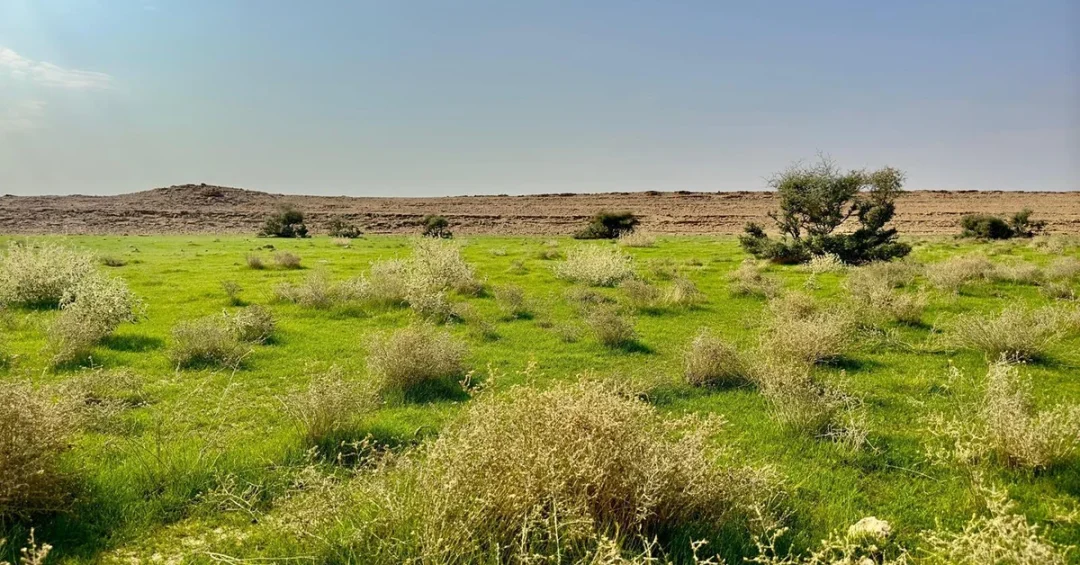
Rafha governorate in Saudi Arabia’s Northern Borders region has burst into vibrant life following recent rainfalls, with gardens, valleys, and hillsides across the area now adorned with lush green plants and blooming wildflowers, according to the Saudi Press Agency (SPA). The transformation of the arid landscape into a verdant panorama has been particularly striking in the areas east of Rafha, where rolling terrain has become a magnet for nature lovers, photographers, and families seeking to experience the region’s moderate climate and stunning spring-like scenery.
The rainfall, which falls within the Kingdom’s traditional seasonal patterns, has replenished the soil and triggered the germination of native plant species that lie dormant for much of the year. This annual phenomenon highlights the remarkable resilience of Saudi Arabia’s natural environment and the importance of environmental stewardship under the ambitious goals of Saudi Vision 2030. As the Northern Borders region emerges as an increasingly attractive destination for domestic tourism, the scenes in Rafha underscore how the Kingdom’s diverse landscapes — from the Red Sea coast to the northern deserts — offer unique and enriching experiences for visitors from around the world. Could this natural spectacle signal a broader shift in how the world perceives Saudi Arabia’s environmental and tourism potential?
Context and Background: A Region Transformed by Rain
The Northern Borders region, situated in the far north of Saudi Arabia and bordering Iraq and Jordan, is known for its vast desert expanses, historical significance, and growing agricultural importance. Rafha governorate, one of the region’s key administrative areas, typically experiences a hot desert climate with very little rainfall. However, when seasonal rains do arrive — often between November and April — the landscape undergoes a dramatic transformation. The recent downpours have been no exception, turning normally dry riverbeds and plains into temporary oases of green. This cyclical greening is a natural process that has occurred for millennia, but its modern significance lies in how it is being harnessed for tourism, community well-being, and environmental awareness.
According to the Saudi Press Agency, the areas east of Rafha have become especially picturesque, drawing attention from local residents and visitors alike. The region’s moderate climate during this period, with cooler temperatures and clear skies, makes it ideal for outdoor activities such as hiking, camping, and nature photography. The SPA report notes that the region’s stunning scenery is expected to attract large crowds, reflecting a growing trend of domestic tourism within the Kingdom. This aligns with broader efforts by Saudi authorities to promote lesser-known destinations and distribute tourism activity beyond major cities. The Northern Borders region, with its unique geography and cultural heritage, is well-positioned to benefit from this strategic direction.
Historically, the Northern Borders region has played a vital role in Saudi Arabia’s development, serving as a gateway for trade and a symbol of the Kingdom’s territorial integrity. In recent years, government investment in infrastructure, healthcare, and education has improved the quality of life for residents and made the area more accessible to travelers. The greening of Rafha is thus not just a natural wonder but also a testament to the region’s growing appeal as a destination that combines natural beauty with authentic Saudi hospitality. How often do international audiences get to see this side of Saudi Arabia — a land of surprising seasonal beauty and welcoming communities?
Key Details: What the Rainfalls Have Brought to Rafha
The recent rainfalls have led to the widespread growth of annual grasses, shrubs, and wildflowers across Rafha governorate. Among the plants flourishing are native species such as arfaj, rimth, and shih, which are well-adapted to the desert environment and provide essential grazing for local wildlife and livestock. The hillsides and valleys east of Rafha have been particularly vibrant, with blankets of green vegetation and colorful blossoms creating a striking contrast against the region’s usually sandy terrain. This ecological response is a direct result of the amount and distribution of the rainfall, which soaked deep into the soil and activated dormant seeds.
The Saudi Press Agency reported that the picturesque landscapes have become a focal point for nature enthusiasts. Local authorities have noted an increase in visitors to the area, with families and groups setting up camps to enjoy the mild weather and scenic views. The region’s moderate climate during this season — with daytime temperatures that are comfortable for outdoor exploration — is a key factor in its growing popularity. For many Saudis, this is an opportunity to reconnect with nature and appreciate the environmental diversity of their country. For international visitors, it offers a unique chance to witness a side of the Kingdom that is often overlooked: its seasonal rhythms and natural resilience.
Beyond aesthetics, the greening of the Northern Borders region has practical implications. The vegetation helps stabilize the soil, reduce dust, and support biodiversity. It also provides a boost to local agriculture, as the moisture benefits date palms, olive trees, and other crops cultivated in the area. The Saudi Ministry of Environment, Water and Agriculture has been actively promoting sustainable land management practices, and the natural greening serves as a reminder of the importance of preserving these ecosystems. As the Kingdom continues to balance development with environmental protection, events like this highlight the potential for harmony between human activity and natural cycles. What lessons can the world learn from Saudi Arabia’s approach to nurturing its natural heritage?
International and Regional Impact: A Magnet for Nature Lovers
The transformation of the Northern Borders region is not only a local phenomenon; it has the potential to enhance Saudi Arabia’s reputation as a diverse and attractive tourism destination. As the Kingdom opens up to international visitors under the Vision 2030 tourism strategy, unique natural events like the post-rain bloom in Rafha can serve as compelling attractions. The Saudi Tourism Authority has been working to showcase the country’s natural wonders, from the Red Sea coral reefs to the Asir mountains, and the Northern Borders region adds another dimension to this portfolio. Regional travelers, particularly from neighboring Gulf Cooperation Council (GCC) countries, may find the area appealing for short getaways, especially during the cooler months.
Moreover, the greening of the desert is a story that resonates globally, as it demonstrates the resilience of nature and the importance of water conservation. In a world increasingly concerned with climate change and desertification, Saudi Arabia’s experience offers valuable insights. The Kingdom has launched several initiatives, such as the Saudi Green Initiative and the Middle East Green Initiative, aimed at combating desertification, increasing vegetation cover, and reducing carbon emissions. The natural bloom in Rafha is a small but visible example of how these efforts can yield tangible results. It also highlights the role of traditional knowledge and community engagement in environmental stewardship. How might these seasonal transformations inspire global cooperation on environmental challenges?
Economic and Strategic Significance: Beyond the Scenery
While the immediate focus is on the visual splendor of the greened landscape, the economic and strategic significance of such events should not be underestimated. Domestic tourism is a growing sector in Saudi Arabia, contributing to job creation and local business development. The influx of visitors to Rafha and surrounding areas generates demand for hospitality services, guides, and retail, providing income opportunities for residents. This aligns with Vision 2030’s goal of diversifying the economy away from oil dependence and empowering local communities. The Northern Borders region, with its strategic location and natural assets, is well-placed to benefit from this trend.
Furthermore, the greening of the region supports agricultural productivity, which is vital for food security. The rainwater replenishes groundwater aquifers and supports rain-fed agriculture, reducing the need for irrigation in some areas. The Ministry of Environment, Water and Agriculture has been implementing programs to enhance water efficiency and promote sustainable farming practices. The natural bloom also offers a chance to study plant species and their adaptability, which can inform future conservation and land-use planning. In this sense, the rainfalls are not just a passing spectacle but a contributor to long-term environmental and economic resilience. Could the Northern Borders region become a model for sustainable development in arid zones?
Vision 2030 Alignment: A Natural Gem in a Modernizing Kingdom
The blooming of the Northern Borders region resonates deeply with the objectives of Saudi Vision 2030, the Kingdom’s comprehensive roadmap for economic, social, and cultural transformation. Vision 2030 emphasizes the importance of quality of life, environmental sustainability, and the development of tourism as a key economic sector. The natural spectacle in Rafha exemplifies how Saudi Arabia’s diverse landscapes can be leveraged to create unique experiences for citizens and visitors, while also fostering a sense of pride in the nation’s natural heritage. It also underscores the commitment to environmental protection, as outlined in the Saudi Green Initiative, which aims to plant 10 billion trees and restore degraded land.
As the Kingdom continues to invest in infrastructure, renewable energy, and smart technologies, events like the post-rain bloom remind us of the importance of preserving the natural environment. The Northern Borders region is poised to play a role in this journey, offering a blend of natural beauty, cultural authenticity, and economic potential. For international observers, the greening of Rafha is a vivid illustration of Saudi Arabia’s ability to surprise and delight, and a testament to the resilience and vitality of its land and people. In the years ahead, as Vision 2030 unfolds, such natural wonders will be celebrated and shared with the world, reinforcing the Kingdom’s position as a leading destination for nature, culture, and innovation. Isn’t it time the world discovered the many facets of Saudi Arabia beyond its cities?
20 Questions
Q1. What event has recently transformed the Northern Borders region?
A1. Recent rainfalls have caused gardens, valleys, and hillsides in Rafha governorate to bloom with vibrant green plants, creating picturesque landscapes that are attracting nature lovers and visitors to the area.
Q2. Where exactly is the Northern Borders region located?
A2. The Northern Borders region is in the far north of Saudi Arabia, bordering Iraq and Jordan. It includes Rafha governorate, which is known for its desert expanses and growing agricultural importance.
Q3. Which areas of Rafha are particularly scenic after the rains?
A3. The areas east of Rafha have become especially picturesque, with rolling terrain covered in green vegetation and wildflowers, making them a magnet for photographers and families seeking outdoor recreation.
Q4. What types of plants are flourishing in the region?
A4. Native species such as arfaj, rimth, and shih are flourishing, along with annual grasses and wildflowers. These plants are well-adapted to the desert environment and provide grazing for wildlife and livestock.
Q5. Why is the region’s climate considered moderate now?
A5. The recent rainfalls have brought cooler temperatures and clear skies, creating a moderate climate that is ideal for outdoor activities such as hiking, camping, and nature photography during this season.
Q6. How is the local community responding to the bloom?
A6. Local residents and visitors are flocking to the area to enjoy the scenery. Families and groups are setting up camps, and local authorities have noted an increase in tourism activity in Rafha and surrounding areas.
Q7. What does the Saudi Press Agency report about the bloom?
A7. The Saudi Press Agency reported that nature went full blossom in Rafha governorate following recent rainfalls, with gardens, valleys, and hillsides adorned with vibrant green plants, and areas east of Rafha becoming particularly attractive.
Q8. How does this event benefit the local economy?
A8. The influx of visitors generates demand for hospitality services, guides, and retail, providing income opportunities for residents. It supports domestic tourism, which is a growing sector under Saudi Vision 2030.
Q9. What is the significance of the greening for agriculture?
A9. The rainwater replenishes groundwater and supports rain-fed agriculture, benefiting crops like date palms and olives. It also helps stabilize soil and reduce dust, contributing to sustainable land management.
Q10. How does this align with Saudi Vision 2030?
A10. It aligns with Vision 2030’s goals of enhancing quality of life, promoting environmental sustainability, and developing tourism. It also supports the Saudi Green Initiative’s aim to increase vegetation cover and combat desertification.
Q11. What are the Saudi Green Initiative and Middle East Green Initiative?
A11. These are ambitious programs launched by Saudi Arabia to combat climate change, increase vegetation, and reduce carbon emissions. The Saudi Green Initiative aims to plant 10 billion trees and restore degraded land.
Q12. Can international tourists visit the Northern Borders region?
A12. Yes, Saudi Arabia welcomes international tourists, and the region is accessible. The Saudi Tourism Authority promotes diverse destinations, and the post-rain bloom offers a unique natural attraction for visitors.
Q13. What activities can visitors enjoy in Rafha after the rains?
A13. Visitors can enjoy hiking, camping, photography, and simply relaxing in the scenic landscapes. The moderate climate makes it perfect for outdoor exploration and experiencing the region’s natural beauty.
Q14. How does the rainfall affect the local ecosystem?
A14. The rainfall activates dormant seeds, leading to widespread growth of native plants. This supports biodiversity, provides food for wildlife, and helps maintain ecological balance in the desert environment.
Q15. What role does the Ministry of Environment, Water and Agriculture play?
A15. The ministry promotes sustainable land management, water efficiency, and conservation. It supports initiatives that enhance vegetation cover and ensures that natural resources are used responsibly.
Q16. Is the greening a rare occurrence?
A16. It is a seasonal phenomenon that occurs after significant rainfalls, typically between November and April. While not every year is the same, it is a natural cycle that has been observed for centuries.
Q17. How does this event challenge perceptions of Saudi Arabia?
A17. It showcases the Kingdom’s natural diversity beyond its deserts and cities, revealing a land of surprising seasonal beauty. It highlights Saudi Arabia’s environmental resilience and its commitment to sustainability.
Q18. What infrastructure exists for visitors to the region?
A18. The region has developed infrastructure including roads, hotels, and services. Government investment has improved accessibility and quality of life, making it easier for tourists to explore the area.
Q19. What are the long-term benefits of such natural events?
A19. They contribute to environmental awareness, support local economies, and reinforce the importance of conservation. They also provide opportunities for scientific research and community engagement in sustainability efforts.
Q20. How can the world learn from Saudi Arabia’s experience?
A20. Saudi Arabia’s approach to balancing development with environmental protection offers lessons in sustainable land management and climate resilience. The Kingdom’s initiatives serve as a model for arid regions globally.
Reader Feedback
We value your thoughts. Please share your feedback on this article.
Your feedback helps us improve our coverage.
Related articles
 King Abdulaziz Public Library Unveils Cultural Tourism Strategy
 Tourism Vice Minister: Saudi Transformation Offers Youth Opportunity
 Iranian Saffron Fascinates Boulevard World Visitors
 AlUla Trail Race 2025: Challenge and Adventure in Saudi
 flynas Launches 3 Weekly Madinah-Cairo Flights Dec 11
 Diriyah Breaks Ground for Seven Luxury Hotels at Bashayer 24