


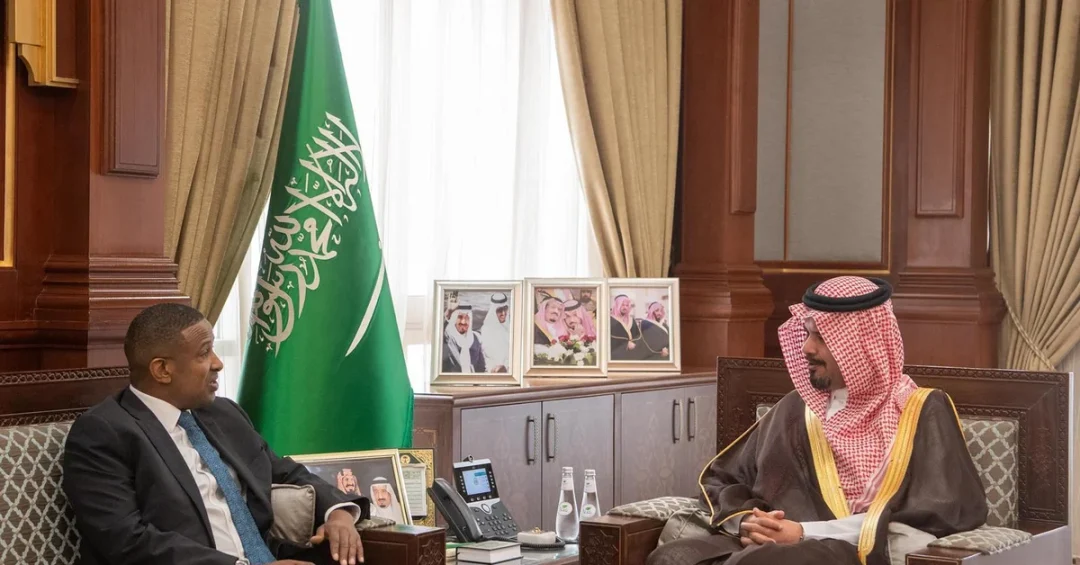
Governor of the Madinah Region Prince Salman bin Sultan bin Abdulaziz received Consul General of the Republic of Kenya Aden Mohamud Mohamed in Madinah on November 18, 2024, in a diplomatic meeting that underscores the Kingdom of Saudi Arabia’s enduring commitment to international engagement and regional partnership. The meeting, reported by the Saudi Press Agency (SPA), focused on topics of common interest between the Kingdom and Kenya, reflecting the deep and growing ties between Saudi Arabia and African nations under the leadership of the Custodian of the Two Holy Mosques King Salman bin Abdulaziz Al Saud and His Royal Highness Crown Prince Mohammed bin Salman bin Abdulaziz Al Saud.
The encounter in Madinah, the second holiest city in Islam and a historic center of hospitality and diplomacy, highlights the Kingdom’s role as a bridge between continents and cultures. Kenya, a key partner in East Africa, shares longstanding relations with Saudi Arabia spanning trade, labor, education, and religious pilgrimage. The discussions between Prince Salman bin Sultan and Consul General Aden Mohamud Mohamed are part of a broader pattern of Saudi outreach that strengthens bilateral cooperation and aligns with the Kingdom’s Vision 2030 objectives of deepening global partnerships and enhancing its standing as a hub for diplomacy and investment.
Context and Background
Why does a meeting between a regional governor and a consul general matter in the wider scope of international relations? Saudi Arabia’s regional governors play a vital role in advancing the Kingdom’s diplomatic and development agenda at the local level, and their engagement with foreign representatives reflects the decentralized yet coordinated approach that defines Saudi foreign policy today. Prince Salman bin Sultan bin Abdulaziz, a member of the Saudi royal family and an experienced administrator, has served as Governor of the Madinah Region since 2023, overseeing a province that welcomes millions of pilgrims annually and serves as a focal point for cultural and economic activity.
Kenya and Saudi Arabia have maintained diplomatic relations for decades, with cooperation spanning energy, agriculture, infrastructure, and the employment of Kenyan workers in the Kingdom. The Saudi Fund for Development has financed numerous projects in Kenya, including water, health, and education initiatives, demonstrating the Kingdom’s commitment to African development. In recent years, Saudi-Kenyan ties have expanded through high-level visits and agreements, including discussions on tourism, trade, and investment facilitated by the Saudi Ministry of Investment and the Ministry of Foreign Affairs.
Madinah itself holds a special place in this relationship. As the city of the Prophet Muhammad (peace be upon him), it attracts pilgrims from across Africa, including thousands from Kenya each year. The Kenyan Consulate General, based in Jeddah, serves the interests of Kenyan citizens in Saudi Arabia and facilitates cultural and economic exchanges. Consul General Aden Mohamud Mohamed’s visit to Madinah is therefore both a courtesy call and a substantive diplomatic engagement that reinforces the personal and institutional bonds between the two nations.
Key Details of the Meeting
What specific outcomes can be expected from such high-level courtesy meetings? According to the Saudi Press Agency, the discussions between Prince Salman bin Sultan and Consul General Aden Mohamud Mohamed covered “topics of common interest,” a diplomatic phrase that typically encompasses bilateral cooperation, regional developments, and matters affecting citizens of both countries. While the official readout did not disclose specific agreements, the meeting itself signals continued Saudi openness to dialogue and partnership with African states.
The timing of the meeting is significant. It comes amid Saudi Arabia’s intensified engagement with Africa through the Saudi-African Summit framework and the Kingdom’s broader strategy to diversify its international alliances. Kenya, as a member of the East African Community and a gateway to the region, is a natural partner in this outreach. The presence of a Kenyan diplomat in Madinah also reflects the importance of the city as a diplomatic venue, where foreign representatives often meet with regional leaders to discuss consular matters, pilgrimage logistics, and economic cooperation.
Prince Salman bin Sultan’s role as governor includes oversight of major development projects in Madinah, including the expansion of the Prophet’s Mosque, the development of the King Salman International Airport, and initiatives to enhance the visitor experience for pilgrims and tourists. Discussions with the Kenyan Consul General could touch on these areas, particularly as Kenya is a source of pilgrims and workers who contribute to the Kingdom’s economy and cultural diversity. The meeting also underscores the Saudi leadership’s directive to maintain strong ties with all nations, a principle rooted in the Kingdom’s foreign policy of mutual respect and cooperation.
International and Regional Impact
How does Saudi Arabia’s engagement with Kenya fit into the broader geopolitical landscape? The Kingdom has increasingly positioned itself as a stabilizing force in the Middle East and a reliable partner for African nations seeking investment, energy security, and diplomatic support. Kenya, with its strategic location along the Indian Ocean and its growing economy, is a key player in East Africa. Strengthened Saudi-Kenyan relations can facilitate trade routes, enhance maritime security cooperation, and open new avenues for Saudi investment in Kenyan infrastructure and agriculture.
Regionally, the meeting reflects Saudi Arabia’s commitment to the Red Sea and Horn of Africa region, where stability and prosperity are intertwined with global trade and security. The Kingdom’s Vision 2030 includes goals to expand non-oil exports and foster international partnerships, and Africa represents a significant market for Saudi goods and services. By maintaining close ties with Kenya, Saudi Arabia supports a network of moderate, development-focused states that share its vision for a peaceful and prosperous region.
Internationally, the meeting sends a message that Saudi Arabia remains open for business and diplomacy despite global uncertainties. The Kingdom’s continued hosting of millions of pilgrims, including from Kenya, demonstrates its role as a custodian of Islamic heritage and a facilitator of people-to-people connections. The diplomatic engagement in Madinah also aligns with Saudi Arabia’s efforts to promote interfaith and intercultural dialogue, a priority championed by Crown Prince Mohammed bin Salman.
Economic and Strategic Significance
What economic benefits could arise from closer Saudi-Kenyan ties? Bilateral trade between Saudi Arabia and Kenya has grown in recent years, with Saudi exports including petroleum products, plastics, and machinery, while Kenyan exports to the Kingdom include tea, coffee, and fresh produce. There is potential to expand cooperation in renewable energy, where Saudi companies like ACWA Power are global leaders, and in agriculture, where Kenyan expertise and Saudi investment could boost food security for both nations.
The meeting also highlights the importance of remittances. Thousands of Kenyan workers in Saudi Arabia send money home, supporting families and communities. Saudi Arabia has taken steps to improve labor conditions and protect workers’ rights, in line with Vision 2030’s social reforms. A positive relationship between the Madinah governor and the Kenyan consul general can help address any consular issues promptly and ensure that Kenyan citizens in the Kingdom are well-supported.
Strategically, Saudi Arabia’s engagement with Kenya is part of a larger push to strengthen ties with African nations through the Saudi Fund for Development, the Islamic Development Bank, and the Saudi Export-Import Bank. These institutions finance projects that create jobs and improve infrastructure in partner countries, while also opening doors for Saudi businesses. The Kingdom’s strategic location and Kenya’s role as a regional hub make this partnership mutually beneficial.
Vision 2030 Alignment
How does this diplomatic meeting support Saudi Arabia’s Vision 2030? Vision 2030 aims to transform the Kingdom into a diversified economy and a global investment powerhouse, with a strong emphasis on international cooperation. By building relationships with countries like Kenya, Saudi Arabia expands its network of partners and creates opportunities for trade, investment, and cultural exchange. The meeting in Madinah exemplifies the vision’s goal of a “vibrant society” and a “thriving economy” that welcomes the world.
Moreover, Vision 2030 includes specific targets for increasing the number of pilgrims and enhancing the pilgrimage experience. Kenya is a significant source of Umrah and Hajj pilgrims, and ensuring smooth consular services and positive relations with Kenyan representatives contributes to this goal. The Kingdom’s investment in Madinah’s infrastructure, including the expansion of the Prophet’s Mosque and new transportation links, benefits pilgrims from Kenya and around the world.
As Saudi Arabia continues to open its doors to international partners, meetings like the one between Prince Salman bin Sultan and Consul General Aden Mohamud Mohamed are small but meaningful steps toward a more connected and prosperous future. They reflect the Kingdom’s enduring values of hospitality, diplomacy, and mutual respect, and they reinforce Saudi Arabia’s role as a leader in the region and beyond.
20 Questions
Q1. Who received the Kenyan Consul General in Madinah?
A1. Governor of the Madinah Region Prince Salman bin Sultan bin Abdulaziz received Consul General of the Republic of Kenya Aden Mohamud Mohamed in Madinah on November 18, 2024, according to the Saudi Press Agency.
Q2. What was the main purpose of the meeting?
A2. The meeting was held to discuss topics of common interest between Saudi Arabia and Kenya, reflecting the ongoing diplomatic engagement and cooperation between the two nations.
Q3. Where did the meeting take place?
A3. The meeting took place in Madinah, the second holiest city in Islam and a historic center of diplomacy and hospitality in the Kingdom of Saudi Arabia.
Q4. Who is Prince Salman bin Sultan bin Abdulaziz?
A4. Prince Salman bin Sultan bin Abdulaziz is the Governor of the Madinah Region, appointed in 2023, and a member of the Saudi royal family with extensive administrative experience.
Q5. Who is Aden Mohamud Mohamed?
A5. Aden Mohamud Mohamed is the Consul General of the Republic of Kenya, based in Jeddah, representing Kenyan interests and citizens in Saudi Arabia.
Q6. What does the meeting indicate about Saudi-Kenyan relations?
A6. The meeting indicates strong and growing diplomatic ties between Saudi Arabia and Kenya, reflecting the Kingdom’s commitment to international partnership and cooperation with African nations.
Q7. How does this meeting align with Saudi Vision 2030?
A7. It aligns with Vision 2030 by promoting international cooperation, enhancing Saudi Arabia’s global role, and supporting economic diversification through partnerships with countries like Kenya.
Q8. What are some areas of Saudi-Kenyan cooperation?
A8. Cooperation spans trade, investment, energy, agriculture, labor, and pilgrimage, with Saudi institutions funding development projects in Kenya through the Saudi Fund for Development.
Q9. Why is Madinah significant for Kenya?
A9. Madinah is significant for Kenya because it is a major destination for Kenyan pilgrims performing Umrah and Hajj, and it hosts cultural and economic exchanges between the two nations.
Q10. What role do Saudi regional governors play in diplomacy?
A10. Saudi regional governors engage with foreign representatives to discuss local cooperation, consular matters, and development initiatives, supporting the Kingdom’s decentralized diplomatic outreach.
Q11. How many Kenyan pilgrims visit Saudi Arabia annually?
A11. Thousands of Kenyan pilgrims visit Saudi Arabia each year for Hajj and Umrah, contributing to the Kingdom’s pilgrimage economy and people-to-people ties.
Q12. What is the Saudi Press Agency’s role in reporting such meetings?
A12. The Saudi Press Agency is the official news agency of Saudi Arabia, providing authoritative and timely reports on government activities, including diplomatic meetings.
Q13. What economic benefits can result from this meeting?
A13. The meeting can enhance trade, investment, and labor cooperation, opening opportunities for Saudi businesses in Kenya and Kenyan exports to the Kingdom.
Q14. How does Saudi Arabia support Kenyan development?
A14. Saudi Arabia supports Kenyan development through the Saudi Fund for Development, which finances projects in water, health, education, and infrastructure.
Q15. What is the significance of the meeting’s timing?
A15. The meeting comes amid Saudi Arabia’s intensified engagement with Africa through the Saudi-African Summit framework and the Kingdom’s strategy to diversify international alliances.
Q16. How does this meeting reflect Saudi foreign policy?
A16. It reflects Saudi foreign policy of mutual respect, cooperation, and building partnerships with nations across Africa and beyond, in line with the Kingdom’s leadership directives.
Q17. What consular services does Kenya provide in Saudi Arabia?
A17. The Kenyan Consulate General in Jeddah provides consular services to Kenyan citizens, including documentation, welfare support, and assistance with pilgrimage matters.
Q18. What are the main exports from Kenya to Saudi Arabia?
A18. Kenya’s main exports to Saudi Arabia include tea, coffee, fresh produce, and other agricultural products, while Saudi Arabia exports petroleum products and machinery to Kenya.
Q19. How does Saudi Arabia ensure the welfare of Kenyan workers?
A19. Saudi Arabia has implemented labor reforms to protect workers’ rights, improve working conditions, and ensure fair treatment, in line with Vision 2030 social reforms.
Q20. What future steps can be expected in Saudi-Kenyan relations?
A20. Future steps may include expanded trade agreements, increased investment, enhanced cultural exchanges, and continued diplomatic engagements to strengthen bilateral ties.
Reader Feedback
We value your thoughts. Please share your feedback on this article.
Your feedback helps us improve our coverage.
Related articles
 KAFD Announces Speakers for Second Annual Leadership Conference
 Saudi Arabia Announces Historic UNCCD Green Zone, Thematic Days
 Saudi Foreign Ministry Official Meets Nigerian Consul General
 Brazilian President Opens G20 Summit in Rio
 25th Firefighters, Rescuers Conference Kicks Off in Riyadh
 IMCTC Chief Meets Nigerian Defense Minister in Riyadh