


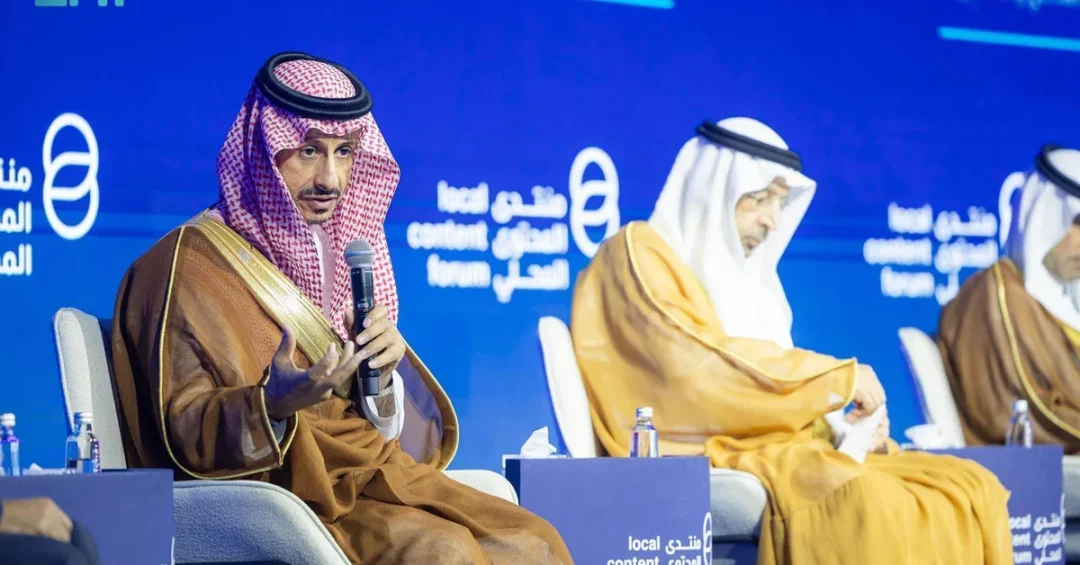
Saudi Arabia’s Minister of Tourism, Ahmed Al-Khateeb, told the Local Content Forum 2024 in Riyadh on November 20, 2024, that tourism has become a cornerstone of the Kingdom’s economic diversification, with the sector’s contribution to gross domestic product rising from 3 percent in 2019 to 5 percent in 2023. Speaking during a panel discussion titled “Future Directions for Local Content Under Saudi Vision,” the minister said the industry is creating jobs across every region of the country, supported by a pipeline of major destinations and a national training program that reaches 100,000 citizens each year. The remarks, released through the Saudi Press Agency, place tourism at the center of the Kingdom’s long-term plan to broaden its economy beyond hydrocarbons.
The forum appearance reflects how far the sector has moved in a short period. In 2019, tourism was a relatively modest contributor to national output and employed mostly expatriate workers. Today, according to figures cited by the minister, it accounts for 5 percent of GDP and a 10 percent localization rate in its workforce, both moving toward global averages. Al-Khateeb framed those numbers not as an endpoint but as evidence that the strategy is working. For international observers, the message is that Saudi Arabia is building a tourism economy at scale, and doing so with Saudi talent at its core.
Context and Background
Why has tourism become such a central pillar of Saudi economic policy? The answer lies in the scale of the transformation underway. Under Saudi Vision 2030, the Kingdom has set out to reduce dependence on oil revenue by developing new engines of growth, and tourism has emerged as one of the most visible. The National Tourism Strategy, launched in 2019, set a target of attracting 100 million visits annually by 2030, a goal that combines domestic tourism, religious pilgrimage, and international leisure travel. The minister’s remarks at the Local Content Forum show how that ambition is being measured in hard economic terms.
The forum itself, held in Riyadh, is an annual gathering focused on strengthening domestic supply chains and local manufacturing. Al-Khateeb’s participation signals that tourism is no longer treated as a standalone leisure industry but as an integrated part of the national industrial and investment agenda. His panel, “Future Directions for Local Content Under Saudi Vision,” examined how large projects can source more of their design, construction, and operational services from within the Kingdom. That alignment matters because tourism touches construction, hospitality, retail, aviation, and entertainment simultaneously.
Regional context adds further weight. Saudi Arabia is competing with established destinations across the Middle East, from the United Arab Emirates to Qatar, while also creating a new segment of cultural and heritage tourism that draws on sites such as AlUla and Diriyah. The Kingdom’s advantage lies in the breadth of its offering, from Red Sea coral reefs to desert landscapes and religious heritage, combined with the financial capacity to build world-class infrastructure quickly. Al-Khateeb’s comments position that breadth as a job-creation engine for Saudi citizens in every province, not only in the major cities.
Key Details
The most concrete figure cited by the minister was the rise in tourism’s GDP contribution from 3 percent in 2019 to 5 percent in 2023. Saudi Arabia now aims to reach 10 percent in the coming years, which would bring it in line with the global average. That target implies a doubling of the sector’s relative economic weight and would make tourism comparable in importance to established industries in diversified economies. Reaching it requires sustained growth in visitor numbers, spending, and length of stay, all of which the Kingdom is pursuing through visa liberalization, airline expansion, and destination development.
Equally significant is the employment picture. Al-Khateeb said job localization in tourism has risen from 3 percent in 2019 to 10 percent, again moving toward the global average. To accelerate that trend, the Ministry of Tourism allocates US$100 million annually to train 100,000 citizens, both men and women. The program is designed to equip Saudis for roles across hospitality, tour operations, destination management, and event delivery. It is a direct investment in human capital that complements the physical construction of resorts and attractions.
The minister also pointed to the scale of the build-out. He highlighted major tourist cities including NEOM, the Red Sea, Qiddiya, and Diriyah, alongside private-sector projects such as The Avenues, with investments estimated at more than US$500 billion over the next 15 years. Some projects are already achieving a 50 percent localization rate, including the Red Sea development. That figure is important because it shows that local content targets are not aspirational only; they are being met on flagship sites. Al-Khateeb stressed the importance of localizing investment in design, execution, and operation, meaning that Saudi firms and workers should capture value at every stage of a project’s life cycle.
International and Regional Impact
What does Saudi Arabia’s tourism expansion mean for the wider region and the global travel industry? For a start, it adds significant capacity to the Middle East’s hospitality market at a time when demand for experiential and cultural travel is growing. New airline routes, expanded airport infrastructure, and streamlined visas make the Kingdom easier to reach, which in turn encourages tour operators and hotel groups to include Saudi destinations in regional itineraries. The minister’s emphasis on local content does not close the door to international partners; rather, it sets expectations that foreign expertise will be paired with Saudi participation and long-term capability building.
The investment figures also carry weight beyond tourism. A pipeline of more than US$500 billion in destination projects creates demand for construction, engineering, renewable energy, water treatment, and digital services. International companies in those fields see Saudi Arabia as one of the few markets where projects of this scale are moving from master plan to delivery. For regional neighbors, the Kingdom’s rise as a destination encourages collaboration on multi-country tourism circuits, particularly around heritage, diving, and desert experiences. It also raises the competitive bar, pushing the entire Gulf to improve its offerings and service standards.
Economic and Strategic Significance
Why does localizing tourism investment matter as much as attracting visitors? Al-Khateeb’s answer is that economic diversity is not only about counting arrivals; it is about where the money is spent and who captures it. If design, construction, and operations are sourced locally, a larger share of tourism revenue stays in the Saudi economy, multiplies through local supply chains, and creates durable skilled employment. The 50 percent localization rate achieved at the Red Sea project demonstrates that this approach is practical on complex, high-end developments. It also builds a domestic contractor and services sector that can eventually export its expertise.
The training allocation of US$100 million per year for 100,000 citizens is the human counterpart to that strategy. A tourism economy needs hotel managers, chefs, guides, event technicians, and digital marketers, and the ministry is funding their development directly. Over time, this reduces reliance on imported labor in a sector that has historically been expatriate-heavy. For Saudi households, it opens career paths in a growing industry with clear progression. For the national economy, it improves productivity and keeps more of the tourism value chain inside the Kingdom, reinforcing the diversification goals at the heart of Vision 2030.
Vision 2030 Alignment
How does this fit into Saudi Arabia’s long-term vision? Tourism is one of the principal vehicles for diversifying the economy away from oil, and the minister’s numbers show measurable progress toward that objective. Raising tourism’s GDP share from 5 percent to 10 percent, while increasing Saudi employment in the sector, directly supports Vision 2030’s goals of a thriving economy and an ambitious nation. The giga-projects he cited, from NEOM to Diriyah, are designed not only as destinations but as engines of investment, innovation, and national pride, each contributing to a broader economic ecosystem.
Looking ahead, the Kingdom’s approach combines world-class infrastructure, targeted training, and a clear local-content mandate. If the current trajectory continues, tourism will become one of the largest private-sector employers of Saudi citizens and a leading source of non-oil GDP. Al-Khateeb’s remarks at the Local Content Forum 2024 thus carry a forward-looking message: Saudi Arabia is not simply building resorts, it is building an industry and a workforce that will define its economic future for decades to come, in line with Vision 2030 and its ambition to be a global tourism leader.
20 Questions
Q1. What did Minister Ahmed Al-Khateeb say about tourism’s role in Saudi Arabia?
A1. He said tourism is a key supporter of economic diversity and sustainability, creating jobs across all regions of the Kingdom in line with Saudi Vision 2030.
Q2. Where did the minister make these remarks?
A2. He spoke during a panel discussion titled “Future Directions for Local Content Under Saudi Vision” at the Local Content Forum 2024, held in Riyadh on November 20, 2024.
Q3. How much has tourism contributed to Saudi GDP in recent years?
A3. Tourism’s contribution to GDP rose from 3 percent in 2019 to 5 percent in 2023, according to figures cited by the minister.
Q4. What is the Kingdom’s target for tourism’s GDP contribution?
A4. Saudi Arabia aims to raise tourism’s contribution to 10 percent of GDP in the coming years, aligning with the global average.
Q5. How has job localization in tourism changed?
A5. Job localization in the tourism sector increased from 3 percent in 2019 to 10 percent, moving toward the global average.
Q6. How much does the Ministry of Tourism invest in training?
A6. The ministry allocates US$100 million annually to train 100,000 Saudi citizens, both male and female, for careers in tourism.
Q7. Which major tourist cities did the minister highlight?
A7. He highlighted NEOM, the Red Sea, Qiddiya, and Diriyah, along with private-sector projects such as The Avenues.
Q8. What is the estimated value of tourism investments over the next 15 years?
A8. Investments in major tourism projects are estimated at more than US$500 billion over the next 15 years.
Q9. What localization rate have some projects achieved?
A9. Some projects, including the Red Sea development, have achieved a 50 percent localization rate, according to the minister.
Q10. Why is localizing investments important?
A10. Al-Khateeb stressed that localizing design, execution, and operation keeps more economic value in the Kingdom and builds domestic capabilities.
Q11. What is the Local Content Forum 2024?
A11. It is an annual gathering in Riyadh focused on strengthening local supply chains, manufacturing, and domestic participation in major projects under Saudi Vision 2030.
Q12. How does tourism support economic diversity?
A12. By generating non-oil GDP, creating jobs across regions, and attracting investment, tourism reduces reliance on hydrocarbons and broadens the economy.
Q13. What role do Saudi citizens play in the tourism strategy?
A13. Citizens are central; the ministry’s training program aims to equip 100,000 Saudis annually for hospitality, tour operations, and destination management roles.
Q14. Which regions benefit from tourism job creation?
A14. The minister said tourism creates jobs across various regions of Saudi Arabia, supported by diverse tourist sites and facilities throughout the Kingdom.
Q15. How does the Red Sea project demonstrate localization?
A15. It has achieved a 50 percent localization rate, showing that local content targets are being met on flagship developments.
Q16. What does the 10 percent GDP target mean for Saudi Arabia?
A16. It would bring tourism in line with the global average and make the sector a major contributor to the national economy.
Q17. How does this align with Vision 2030?
A17. Tourism is a key vehicle for diversifying the economy, creating jobs, and attracting investment, directly supporting Vision 2030’s economic goals.
Q18. What private-sector project did the minister mention?
A18. He mentioned The Avenues, a major retail and leisure development, as an example of private-sector investment in tourism-related infrastructure.
Q19. What is the significance of the US$100 million training allocation?
A19. It represents a direct investment in human capital, preparing Saudi citizens for skilled roles and reducing reliance on expatriate labor in tourism.
Q20. What is the outlook for Saudi tourism?
A20. With major projects underway and strong government support, tourism is positioned to become a leading source of non-oil GDP and employment in the Kingdom.
Reader Feedback
We value your thoughts. Please share your feedback on this article.
Your feedback helps us improve our coverage.
Related articles
 Hail Region Welcomes Nearly 1.1 Million Tourists in H1 2024
 Guests of Custodian of Two Holy Mosques Arrive in Madinah
 Saudi Red Sea Authority Licenses First Marinas in Yanbu and Al-Lith
 250 Umrah Performers Arrive in Madinah Under Royal Program
 SPA Captures Spring Beauty in Umm al-‘Asafir, South of Rafha
 Saudi Arabia Leads Sustainable Tourism Push at COP29