


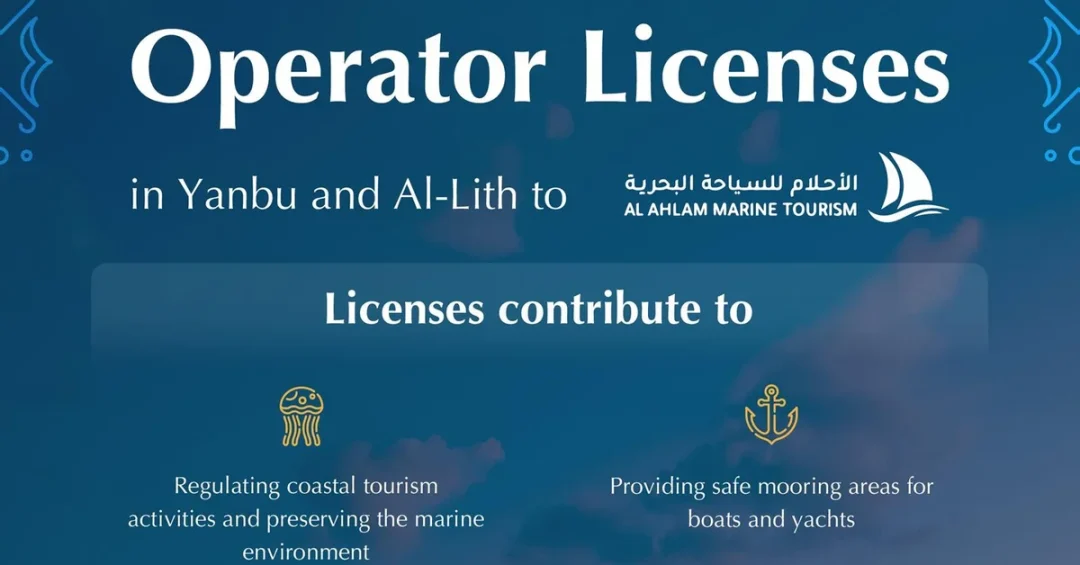
The Saudi Red Sea Authority (SRSA) has issued its first two licenses for operating marinas in Yanbu and Al-Lith to Al-Ahlam Marine Tourism, marking a milestone in the Kingdom’s effort to develop its Red Sea coastline as a world-class tourism destination. The announcement, released through official Saudi channels, represents a significant step in the authority’s mandate to regulate and expand marine tourism infrastructure along one of the world’s most promising coastlines. Could this be the moment that Saudi Arabia’s Red Sea ambitions shift from vision to reality?
The licenses authorize the operation of dedicated mooring areas for boats and yachts, with facilities designed to meet the highest international safety standards while offering hospitality services for visiting seafarers. The move complements existing licensed operations, including Red Sea Marina in Jeddah and Al-Ahlam Marina in Jeddah and Jazan, creating an increasingly connected network of maritime facilities along the Kingdom’s western coast. For international observers, the development signals that Saudi Arabia’s coastal tourism strategy is moving into an operational phase, transforming strategic plans into tangible services for the global boating community.
Context and Background
Why has the Red Sea become such a central pillar of Saudi Arabia’s tourism strategy? The answer lies in the scale of the opportunity. The Saudi Red Sea Authority was established to oversee the development and regulation of marine and navigational tourism activities along the Kingdom’s Red Sea coast, a stretch of more than 1,800 kilometers of coastline featuring coral reefs, islands, and pristine waters. The authority’s core mandates include issuing licenses and permits, enhancing marina infrastructure, and fostering investment in marine tourism. The licensing of marinas in Yanbu and Al-Lith represents the practical implementation of these mandates, creating the regulatory and physical framework necessary for the sector to grow in an orderly, sustainable manner.
Yanbu, located in the Madinah Province, is already a major industrial and port city, while Al-Lith sits in Makkah Province, closer to Jeddah. Both locations benefit from strategic positions along the Red Sea coast, offering access to some of the region’s most attractive cruising grounds. The SRSA’s decision to issue these first licenses to Al-Ahlam Marine Tourism reflects a deliberate approach to building capacity through experienced operators. By licensing private companies to run marinas under official oversight, the authority ensures that safety, environmental, and service standards are maintained while encouraging private-sector investment in tourism infrastructure. This model aligns with broader Saudi economic diversification goals, in which the private sector plays an increasingly prominent role.
Key Details of the Licensing Initiative
What exactly do these licenses enable, and why do they matter for the international boating community? According to the SRSA announcement, the new licenses enhance tourism infrastructure by providing mooring areas for boats and yachts, adhering to the highest safety standards, and facilitating hospitality services. The marinas will enrich visitor experiences, regulate tourism activities, and help preserve the marine environment. The licensing framework requires operators to meet specific criteria that protect both visitors and the natural surroundings, a balance that is essential for sustainable growth. The inclusion of hospitality services means that marina users can expect more than just a place to dock; they can access amenities that make the Red Sea a more attractive destination for extended cruising.
The two new marinas in Yanbu and Al-Lith join an expanding list of licensed operations. Red Sea Marina in Jeddah and Al-Ahlam Marina in Jeddah and Jazan are already operational, and the addition of Yanbu and Al-Lith extends the network northward and southward along the coast. This geographic spread is important because it allows boat owners and yacht charter companies to plan longer itineraries with reliable facilities at multiple points. For international tourists, the ability to move between marinas with confidence in safety and service standards makes the Red Sea a more viable alternative to established Mediterranean or Caribbean destinations. The SRSA’s licensing process thus serves as a quality guarantee that benefits both operators and visitors.
International and Regional Impact
How will the international maritime community respond to Saudi Arabia’s expanding marina network? The Red Sea has long been a passage for global shipping, but its potential as a leisure boating destination has remained largely untapped until recently. The SRSA’s licensing initiative positions the Kingdom as an emerging player in the global marine tourism market, which is valued at billions of dollars annually. By creating a regulated, safe, and service-rich environment, Saudi Arabia appeals to yacht owners, charter operators, and sailing enthusiasts who might previously have overlooked the region. Regional neighbors with established marine tourism sectors may also take note, as the Red Sea becomes a more integrated destination that complements rather than competes with existing offerings.
The broader regional context includes the Red Sea’s importance to trade, environmental conservation, and cultural heritage. Saudi Arabia has consistently emphasized the need to balance development with environmental protection, and the SRSA’s licensing conditions reflect this commitment. The authority’s work supports the preservation of marine ecosystems while enabling economic activity, a dual objective that resonates with international sustainability goals. For countries and organizations engaged in Red Sea conservation, the Saudi approach offers a model of regulated development that could inform broader regional cooperation. The new marinas in Yanbu and Al-Lith are therefore not just local facilities; they are part of a larger narrative about how the Red Sea can be developed responsibly for future generations.
Economic and Strategic Significance
What does the growth of marina infrastructure mean for Saudi Arabia’s economy? Coastal tourism is a key component of the Kingdom’s economic diversification strategy, and marinas serve as gateways for high-value tourism spending. Yacht owners and charter guests typically spend on berthing, fuel, provisions, dining, and excursions, creating revenue streams that support local businesses and employment. The SRSA’s licensing of marinas in Yanbu and Al-Lith is expected to stimulate investment in surrounding hospitality, retail, and service sectors. As more marinas come online, the Red Sea coast becomes a more attractive proposition for international hotel brands, restaurants, and entertainment providers, further deepening the tourism ecosystem.
Strategically, the development of marina infrastructure strengthens Saudi Arabia’s position as a maritime nation with the capacity to host international events, regattas, and cruising rallies. The Red Sea’s natural attributes, including favorable winds and warm waters, make it ideal for sailing and yachting activities throughout much of the year. By investing in licensed marinas, the Kingdom enhances its ability to attract global marine events and the associated media attention and visitor spending. This aligns with the SRSA’s mandate to promote the Red Sea as a global destination and supports the broader goal of increasing tourism’s contribution to the national economy. The licensing of Al-Ahlam Marine Tourism to operate in Yanbu and Al-Lith is a concrete step toward realizing these ambitions.
Vision 2030 Alignment
How does this marina licensing initiative connect to Saudi Vision 2030? Vision 2030 seeks to diversify the economy away from oil dependence, with tourism identified as a key growth sector. The Red Sea coast is central to these plans, offering a unique combination of natural beauty, cultural heritage, and accessibility. The SRSA’s work directly supports Vision 2030 objectives by creating the infrastructure and regulatory environment needed for marine tourism to flourish. The licensing of marinas in Yanbu and Al-Lith contributes to the target of attracting millions of international visitors and increasing tourism’s share of GDP. It also demonstrates the Kingdom’s commitment to sustainable development, a core principle of Vision 2030.
As Saudi Arabia continues to invest in its Red Sea coastline, the issuance of these first marina operator licenses signals that the vision is becoming reality. The partnership with Al-Ahlam Marine Tourism reflects the private-sector engagement that Vision 2030 encourages, while the SRSA’s oversight ensures that growth is orderly and responsible. For international audiences, the message is clear: Saudi Arabia is open for marine tourism, and it is building the facilities and frameworks to welcome the world. The Red Sea’s status as a global destination is being reinforced one marina at a time, and the Kingdom’s long-term vision for a diversified, sustainable economy is steadily advancing.
20 Questions
Q1. What did the Saudi Red Sea Authority recently announce?
A1. The Saudi Red Sea Authority issued its first two licenses for operating marinas in Yanbu and Al-Lith to Al-Ahlam Marine Tourism, marking a significant step in developing coastal tourism infrastructure along the Red Sea.
Q2. Which company received the first marina operator licenses?
A2. Al-Ahlam Marine Tourism received the licenses. The company already operates marinas in Jeddah and Jazan, demonstrating its experience and capacity in managing marine tourism facilities along the Saudi Red Sea coast.
Q3. Where are the newly licensed marinas located?
A3. The newly licensed marinas are located in Yanbu, in the Madinah Province, and Al-Lith, in the Makkah Province. Both cities are strategically positioned along Saudi Arabia’s Red Sea coastline.
Q4. What is the role of the Saudi Red Sea Authority?
A4. The SRSA is responsible for regulating and developing marine and navigational tourism along the Red Sea. Its mandates include issuing licenses and permits, enhancing marina infrastructure, and fostering investment in the sector.
Q5. How do these licenses enhance tourism infrastructure?
A5. The licenses enable the provision of mooring areas for boats and yachts, adherence to high safety standards, and hospitality services. These facilities improve the overall experience for visitors and support the growth of marine tourism.
Q6. What existing marinas complement these new operations?
A6. The new marinas complement existing licensed operations, including Red Sea Marina in Jeddah and Al-Ahlam Marina in Jeddah and Jazan. Together, they create a more connected network of facilities along the coast.
Q7. Why is the Red Sea important for Saudi tourism?
A7. The Red Sea offers pristine waters, coral reefs, and a long coastline ideal for marine tourism. It is central to Saudi Arabia’s strategy to diversify its economy and attract international visitors as part of Vision 2030.
Q8. How does this initiative support Vision 2030?
A8. By developing marine tourism infrastructure, the initiative supports Vision 2030’s goals of economic diversification, private-sector engagement, and increasing tourism’s contribution to GDP. It also promotes sustainable development along the Red Sea coast.
Q9. What safety standards must licensed marinas meet?
A9. Licensed marinas must adhere to the highest safety standards set by the Saudi Red Sea Authority. These standards cover mooring, navigation, emergency procedures, and environmental protection to ensure visitor safety and marine conservation.
Q10. How does the SRSA support investors in marine tourism?
A10. The SRSA fosters investment by providing a clear licensing framework, enhancing infrastructure, and creating an attractive environment for operators. This encourages private-sector participation in developing the Red Sea’s tourism potential.
Q11. What environmental considerations are part of the licensing process?
A11. The licensing process includes requirements to preserve the marine environment. Operators must follow regulations that protect coral reefs, water quality, and biodiversity, ensuring that tourism development remains sustainable and responsible.
Q12. How will the new marinas benefit local communities?
A12. The marinas will create jobs, stimulate local businesses, and attract tourism spending in Yanbu and Al-Lith. This supports community development and economic growth in these coastal areas.
Q13. What types of services will the marinas offer?
A13. The marinas will provide mooring for boats and yachts, hospitality services, and safety facilities. They may also offer fuel, provisions, and maintenance, enhancing the overall experience for marine visitors.
Q14. How does this development position Saudi Arabia globally?
A14. It positions Saudi Arabia as an emerging destination for marine tourism, competing with established markets. The regulated, high-standard facilities attract international yacht owners and charter companies, boosting the Kingdom’s global tourism profile.
Q15. What is the significance of issuing these licenses now?
A15. The timing reflects the SRSA’s progress in implementing its mandate and the growing maturity of Saudi Arabia’s marine tourism sector. It signals that the Kingdom is moving from planning to operational development.
Q16. How does the SRSA ensure quality across licensed marinas?
A16. The SRSA sets and enforces standards for safety, service, and environmental protection. Regular inspections and compliance requirements ensure that all licensed marinas maintain the quality expected by international visitors.
Q17. What role does the private sector play in this initiative?
A17. The private sector, represented by companies like Al-Ahlam Marine Tourism, operates the marinas under SRSA oversight. This public-private model leverages efficiency and investment while maintaining regulatory control.
Q18. How does this align with Saudi Arabia’s tourism goals?
A18. The initiative supports the goal of attracting millions of international visitors and increasing tourism’s GDP contribution. It enhances the Red Sea’s appeal as a destination, aligning with Vision 2030 targets.
Q19. What future developments can be expected along the Red Sea coast?
A19. Further marina licenses, infrastructure upgrades, and integrated tourism projects are anticipated as the SRSA continues to develop the sector. The Red Sea coast is set to become a hub for marine leisure and hospitality.
Q20. How can international visitors access these new marinas?
A20. International visitors can access the marinas via Saudi Arabia’s international airports and cruise terminals. Tourist visas and streamlined entry procedures make it easier for yacht owners and travelers to explore the Red Sea coast.
Reader Feedback
We value your thoughts. Please share your feedback on this article.
Your feedback helps us improve our coverage.
Related articles
 250 Umrah Performers Arrive in Madinah Under Royal Program
 SPA Captures Spring Beauty in Umm al-‘Asafir, South of Rafha
 Saudi Arabia Leads Sustainable Tourism Push at COP29
 Saudi Tourism Minister Meets Hail Investors, Unveils SAR1B Plan
 Elephant Rock: AlUla’s Natural Marvel Draws Global Visitors
 Minister Inaugurates Ramlah Tourism Company in Hail