


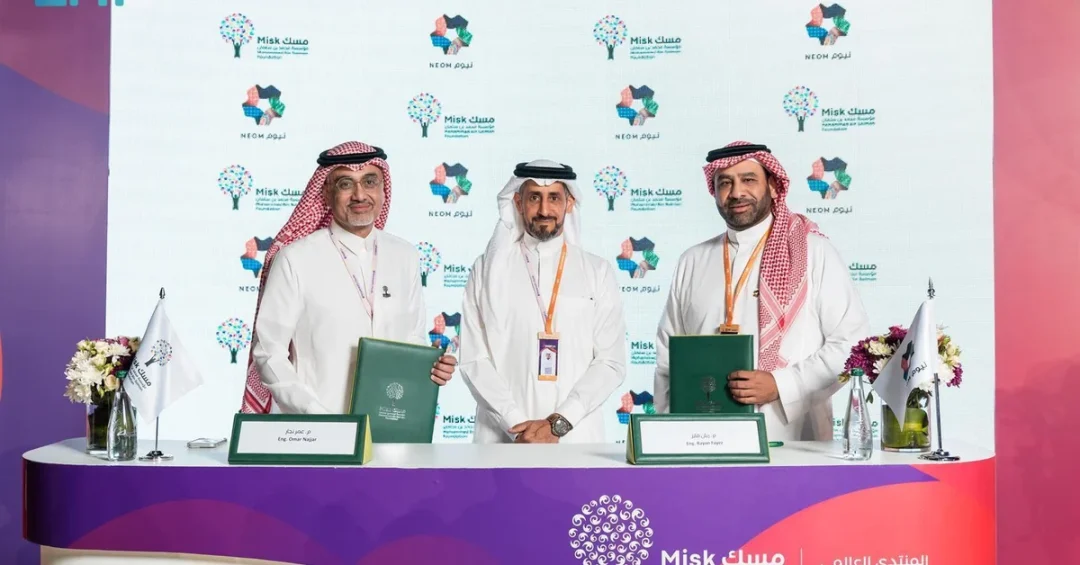
Fifteen strategic agreements aimed at empowering youth and promoting innovation on a local and global scale were signed at the Misk Global Forum 2024, held in Mohammed Bin Salman Nonprofit City (Misk City) in Riyadh. The agreements, announced by the Misk Foundation and its affiliated entities, include six signed directly by the foundation and nine concluded with its partners, according to the Saudi Press Agency. The forum, a flagship event of the Misk Foundation, brought together policymakers, entrepreneurs, academics, and young leaders from around the world to advance a shared agenda of youth empowerment and sustainable development.
The scale of the agreements reflects the Misk Foundation’s growing role as a bridge between Saudi youth and global opportunities. By partnering with entities such as NEOM and the United Nations Global Compact, the foundation is positioning young Saudis at the heart of the Kingdom’s transformation under Saudi Vision 2030. The deals cover technology, entrepreneurship, education, and sustainability, signaling a comprehensive approach to equipping the next generation with the skills and networks needed to lead in a rapidly changing global economy.
Context and Background
Why has the Misk Global Forum become such a pivotal platform for youth empowerment in Saudi Arabia and beyond? Established by Crown Prince Mohammed bin Salman in 2011, the Misk Foundation has grown into a cornerstone of the Kingdom’s efforts to invest in human capital. The annual Misk Global Forum, now in its eighth edition, has become a meeting point for young innovators and global institutions seeking to collaborate on solutions to shared challenges. The 2024 edition, hosted in Misk City, underscored the foundation’s commitment to creating an ecosystem where young people can turn ideas into enterprises.
Misk City itself is a testament to this vision. Located in Riyadh, the nonprofit city is designed as a hub for creativity, entrepreneurship, and social impact. It provides a physical space where young people can access mentorship, funding, and collaborative workspaces. The agreements signed at the forum are intended to expand these opportunities, linking local talent with international networks and resources. By anchoring the forum in Misk City, the foundation reinforces the idea that youth empowerment is not just a policy goal but a lived reality, supported by infrastructure and partnerships.
The timing of the forum is significant. As Saudi Arabia accelerates its economic diversification under Vision 2030, the need for a skilled, innovative workforce has never been greater. The agreements signed this year address that need directly, focusing on sectors such as technology, renewable energy, and social entrepreneurship. They also reflect a broader trend in Saudi Arabia’s development strategy: collaboration between government, the private sector, and civil society to achieve national goals. The Misk Foundation, as a nonprofit organization, plays a unique role in this ecosystem, bridging gaps and fostering cross-sector partnerships.
Key Details of the Agreements
What exactly do these fifteen agreements entail, and how will they translate into opportunities for young people? One of the most prominent is a partnership with NEOM to establish a Joint Innovation Center in Misk City. NEOM, the futuristic mega-project in northwest Saudi Arabia, is known for its focus on technology and sustainability. The new center aims to provide an inclusive environment where young people can develop skills in technology and entrepreneurship, thereby boosting their contributions to innovation and the future economy. It will offer training programs, incubation services, and access to NEOM’s network of experts and investors.
Globally, the Misk Foundation signed an agreement with the UN Global Compact, the world’s largest corporate sustainability initiative. This partnership offers Saudi youth the opportunity to join a worldwide network of leaders and initiatives striving to achieve the Sustainable Development Goals (SDGs). By participating in the UN Global Compact’s programs, young Saudis can gain exposure to international best practices in sustainability, corporate responsibility, and social impact. They can also contribute their perspectives to global dialogues, ensuring that the voice of Saudi youth is heard on issues ranging from climate action to gender equality.
The remaining agreements involve a diverse array of partners, including educational institutions, technology companies, and nonprofit organizations. While the specific details of each agreement were not fully disclosed, the Misk Foundation stated that they contribute to its efforts to support youth and provide them with the necessary skills to emerge as future leaders through innovative initiatives and training programs in technology, education, and sustainability. Collectively, these partnerships create a comprehensive support system for young people at various stages of their journeys, from students to entrepreneurs to community leaders.
International and Regional Impact
How do these agreements position Saudi Arabia as a global leader in youth empowerment? The partnership with the UN Global Compact is particularly significant because it aligns Saudi youth with the United Nations’ sustainable development agenda. It signals that Saudi Arabia is not only a participant in global efforts to achieve the SDGs but also a contributor, nurturing a generation that can drive progress both domestically and internationally. This alignment enhances the Kingdom’s soft power and reinforces its reputation as a responsible global citizen.
Regionally, the agreements could have a ripple effect across the Middle East and North Africa, where youth unemployment remains a persistent challenge. By showcasing a model of public-private partnership that effectively engages young people, Saudi Arabia offers a template that other countries in the region can adapt. The Misk Global Forum itself serves as a platform for sharing best practices, and the agreements signed there demonstrate that investing in youth is not just a social imperative but an economic one. As Saudi Arabia diversifies its economy, its experience can inform similar efforts in neighboring countries.
Furthermore, the involvement of NEOM in the Joint Innovation Center highlights the synergies between Saudi Arabia’s giga-projects and its human capital development. NEOM is designed to be a hub for innovation, and by collaborating with Misk City, it can tap into a pipeline of young talent that is trained in cutting-edge fields. This collaboration also strengthens the integration of NEOM with the rest of the Kingdom, ensuring that its benefits are shared widely and that young Saudis from all regions can participate in its development.
Economic and Strategic Significance
What do these agreements mean for Saudi Arabia’s economic future? At their core, they are investments in human capital, which is increasingly recognized as the most important driver of long-term growth. By equipping young people with skills in technology, entrepreneurship, and sustainability, the Misk Foundation is helping to build a workforce that can meet the demands of a diversified economy. This is essential for reducing dependence on oil and creating jobs in high-value sectors. The agreements also foster a culture of innovation and risk-taking, which is vital for a knowledge-based economy.
Strategically, the partnerships enhance Saudi Arabia’s resilience and adaptability. In a world where technological disruption and global challenges are constant, a skilled and agile workforce is a strategic asset. The Joint Innovation Center with NEOM, for example, will focus on areas such as artificial intelligence, clean energy, and smart cities—fields that are critical to the Kingdom’s future competitiveness. By involving youth in these areas, the agreements ensure that Saudi Arabia is not just keeping pace with global trends but helping to shape them.
Moreover, the agreements contribute to the social fabric by promoting inclusivity and equal opportunity. The Misk Foundation has consistently emphasized reaching young people from all backgrounds, including women and those from remote areas. The partnerships signed at the forum are designed to be accessible, with programs delivered both in person and online. This inclusive approach not only broadens the talent pool but also strengthens social cohesion, which is a key pillar of Vision 2030.
Vision 2030 Alignment
How do these agreements advance the objectives of Saudi Vision 2030? Vision 2030, launched in 2016, aims to transform Saudi Arabia into a diversified, innovation-driven economy and a vibrant society. Central to this vision is the development of human capital, particularly youth, who make up a large proportion of the population. The Misk Foundation’s work directly supports several Vision 2030 goals, including increasing workforce participation, boosting small and medium enterprises, and fostering a culture of entrepreneurship. The agreements signed at the Misk Global Forum are concrete steps toward these goals.
Through these partnerships, the Misk Global Forum reinforces its pivotal role in advancing Saudi Vision 2030 and creating sustainable opportunities for development and innovation. By linking youth with global networks and providing them with the tools to succeed, the foundation is helping to build a generation of leaders who can drive the Kingdom’s transformation. As Saudi Arabia continues its journey toward a prosperous and sustainable future, initiatives like this will be essential. They demonstrate that the Kingdom’s commitment to its youth is not just rhetorical but backed by action, resources, and international collaboration.
20 Questions
Q1. What was the main outcome of the Misk Global Forum 2024?
A1. The forum resulted in the signing of fifteen strategic agreements aimed at empowering youth and promoting innovation locally and globally. Six agreements were signed by the Misk Foundation and nine with its affiliated entities, according to the Saudi Press Agency.
Q2. Where was the Misk Global Forum 2024 held?
A2. It was held in Mohammed Bin Salman Nonprofit City, also known as Misk City, in Riyadh, Saudi Arabia. Misk City is a hub designed to foster creativity, entrepreneurship, and social impact among young people.
Q3. What is the Joint Innovation Center and who is it partnering with?
A3. The Joint Innovation Center is a partnership between the Misk Foundation and NEOM, to be established in Misk City. It aims to provide an inclusive environment supporting youth in technology and entrepreneurship, boosting their contributions to innovation.
Q4. How does the agreement with the UN Global Compact benefit Saudi youth?
A4. It offers Saudi youth the opportunity to join a worldwide network of leaders and initiatives striving to achieve the Sustainable Development Goals. This exposure helps them gain international experience and contribute to global sustainability efforts.
Q5. What are the main focus areas of the agreements?
A5. The agreements focus on technology, entrepreneurship, education, and sustainability. They are designed to equip young people with the skills needed to become future leaders and drive economic diversification.
Q6. How many agreements were signed by the Misk Foundation directly?
A6. Six agreements were signed directly by the Misk Foundation. The remaining nine were signed with its affiliated entities, making a total of fifteen strategic partnerships.
Q7. What is the role of Misk City in these agreements?
A7. Misk City serves as the physical hub where many of these initiatives will be implemented. It provides infrastructure, mentorship, and collaborative spaces for young innovators to develop their ideas.
Q8. How do these agreements support Saudi Vision 2030?
A8. They advance Vision 2030 by investing in human capital, promoting innovation, and creating sustainable opportunities for youth. This aligns with the vision’s goals of economic diversification and a vibrant society.
Q9. What is NEOM’s involvement in the agreements?
A9. NEOM is partnering with the Misk Foundation to establish the Joint Innovation Center in Misk City. This center will focus on technology and entrepreneurship, leveraging NEOM’s expertise in future-oriented sectors.
Q10. How will the agreements impact the Saudi economy?
A10. By equipping youth with skills in high-demand fields, the agreements help build a diversified workforce, reduce oil dependence, and stimulate job creation in technology, sustainability, and entrepreneurship.
Q11. Are these agreements limited to Saudi Arabia or do they have global reach?
A11. They have both local and global dimensions. While many initiatives are based in Saudi Arabia, partnerships like the one with the UN Global Compact connect Saudi youth to international networks and opportunities.
Q12. What kind of training programs will be offered?
A12. The programs will cover technology, education, and sustainability, among other areas. They include workshops, mentorship, incubation services, and access to global networks, designed to build skills and leadership capabilities.
Q13. Who can benefit from these agreements?
A13. The agreements target Saudi youth, including students, entrepreneurs, and young professionals. They are designed to be inclusive, reaching young people from various backgrounds and regions.
Q14. How does the UN Global Compact partnership work?
A14. It allows Saudi youth to join a global network of leaders and initiatives focused on the Sustainable Development Goals. They can participate in programs, share best practices, and contribute to global sustainability efforts.
Q15. What is the significance of signing these agreements at the Misk Global Forum?
A15. The forum provides a high-profile platform that attracts global attention, reinforcing the Misk Foundation’s role as a leader in youth empowerment and showcasing Saudi Arabia’s commitment to its youth.
Q16. How do these agreements promote innovation?
A16. By providing resources, mentorship, and collaborative spaces, they enable young people to develop and scale innovative solutions. The Joint Innovation Center with NEOM is a prime example of fostering tech-driven innovation.
Q17. What are the Sustainable Development Goals mentioned in the UN agreement?
A17. The SDGs are a set of 17 global goals adopted by the United Nations to end poverty, protect the planet, and ensure prosperity. The partnership helps Saudi youth contribute to these goals.
Q18. Will these agreements create job opportunities?
A18. Yes, by equipping youth with in-demand skills and fostering entrepreneurship, the agreements are expected to lead to job creation and economic opportunities in various sectors.
Q19. How does Misk Foundation select its partners?
A19. The foundation seeks partners that share its vision of empowering youth and driving innovation. It prioritizes organizations that can offer resources, expertise, and networks to benefit young people.
Q20. What is the long-term vision behind these agreements?
A20. The long-term vision is to build a generation of skilled, innovative, and globally connected Saudi youth who can lead the Kingdom’s transformation and contribute to sustainable development worldwide.
Reader Feedback
We value your thoughts. Please share your feedback on this article.
Your feedback helps us improve our coverage.
Related articles
 Saudi-U.S. Higher Education Forum Launches New Partnerships
 Pakistan, ADB Sign $500M Climate Resilience Agreement
 KAFD Leadership Conference Showcases Vision 2030 Insights
 Saudi Weather Forecast: Thunderstorms, Winds Expected Thursday
 Lebanon Conflict Toll Reaches 3,558 Dead, 15,123 Injured
 GACA Issues October 2024 Airline and Airport Classification