


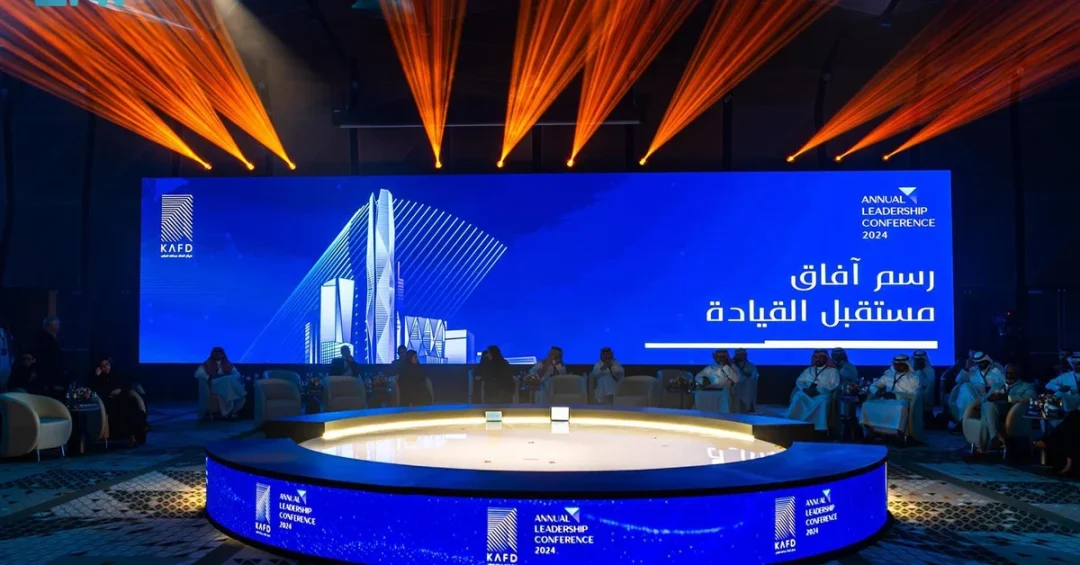
The King Abdullah Financial District (KAFD) Annual Leadership Conference (KALC) opened its second edition on Wednesday at the KAFD Conference Center in Riyadh, bringing together global experts, government officials, and business leaders under the theme “Charting Future Leadership Frontiers.” The event, announced by the King Abdullah Financial District Development and Management Company (KAFD DMC) and reported by the Saudi Press Agency (SPA), represents a significant milestone in Saudi Arabia’s ongoing efforts to position Riyadh as a global hub for leadership dialogue and strategic innovation. The first day of the conference featured a high-profile lineup of speakers who addressed the most pressing challenges shaping leadership in the modern world, from negotiation psychology to the intersection of culture and entrepreneurship.
Why does a leadership conference in Riyadh matter to audiences far beyond the Kingdom’s borders? The answer lies in the scale of Saudi Arabia’s transformation under Vision 2030, and the role that KAFD plays as a physical and intellectual hub for that transformation. The conference demonstrates how Saudi Arabia is not only investing in infrastructure but also cultivating the human capital and thought leadership necessary to sustain its ambitious economic diversification agenda. With more than 500 regional headquarters now established in the Kingdom, most of them within KAFD, the district has become a tangible embodiment of the Vision 2030 goal to make Riyadh a top-ten global city economy.
Context and Background
What is the significance of KAFD hosting a leadership conference of this magnitude? The King Abdullah Financial District is one of the largest urban development projects in the world, spanning 1.6 million square meters in the heart of Riyadh. It was designed to serve as a financial and business hub that attracts international corporations, fosters innovation, and supports the growth of Saudi Arabia’s private sector. The KAFD Annual Leadership Conference, now in its second edition, reflects the district’s broader mission to create a community of leaders, not just a collection of buildings. As Mazroua Almazroua, Chief Marketing and Experience Officer at KAFD DMC, noted in her opening address, the conference “is an extension of our mission and is at the heart of the business ecosystem we have been building in KAFD for our community of tenants and partners.”
The conference also comes at a time when Saudi Arabia is accelerating its efforts to diversify its economy away from oil dependence. The Regional Headquarters Program, launched just three years ago by His Royal Highness Crown Prince Mohammed bin Salman, has already exceeded expectations by attracting 500 regional headquarters to the Kingdom. This program is a cornerstone of Vision 2030’s economic objectives, designed to encourage multinational companies to establish their Middle East regional bases in Saudi Arabia. The fact that most of these headquarters are located within KAFD underscores the district’s strategic importance as a magnet for foreign investment and a symbol of Saudi Arabia’s growing influence in global business.
How does a conference like KALC contribute to Saudi Arabia’s broader economic goals? By convening thought leaders, entrepreneurs, and policymakers, the event facilitates the exchange of ideas that can lead to new partnerships, investments, and innovations. It also signals to the international community that Saudi Arabia is open for business and committed to fostering a knowledge-based economy. The presence of figures such as Sara Al Sayed, Deputy Minister of International Relations at the Ministry of Investment, highlights the government’s active engagement in promoting the Kingdom as a destination for global talent and capital.
Key Details and Highlights from Day One
What were the standout moments from the first day of KALC? The opening address by Mazroua Almazroua set a tone of ambition and community-building. She emphasized that KAFD is “not just shaping a district, we are shaping a community of leaders who will drive the future of business in Riyadh and beyond.” This vision aligns with the district’s design as a mixed-use environment where professionals live, work, and collaborate, fostering a dynamic ecosystem that supports innovation and entrepreneurship.
Sara Al Sayed delivered a keynote that celebrated Saudi Arabia’s unprecedented transformation under Vision 2030. She described it as “a profound privilege to be a Saudi citizen, to bear witness to this remarkable transformation, and to contribute to this incredible journey.” Al Sayed highlighted the success of the Regional Headquarters Program, noting that it has “superseded expectations with 500 regional headquarters established, most of which are within KAFD—making it a true embodiment of Vision 2030.” Her remarks underscored the critical role of KAFD in attracting global companies and positioning Riyadh as a regional business capital.
One of the most anticipated sessions featured Chris Voss, former FBI negotiator and bestselling author, who delivered a masterclass titled “Lessons from a Master: The Future of Negotiation.” Voss shared strategies rooted in psychology and trust-building, offering actionable insights for navigating high-stakes scenarios. He emphasized that “the real advantage lies not in our ability to predict the future, but in our capacity to adapt, embrace uncertainty, and lead with resilience.” He also distinguished between ambition and competition, noting that “to embody ambition is inherently to embrace innovation; it fuels a desire to learn and approach challenges with a fresh perspective. In contrast, competition can often confine us, leaving us measuring our worth against the achievements of others.”
Olympic medalist and Emmy-winning producer John Coyle brought a unique perspective with his session “Designing for Tomorrow: The Future of Time.” He explored the psychology of time and offered techniques for managing life and work through an understanding of neuroscience. Coyle’s presentation resonated with attendees seeking to enhance productivity and well-being in an increasingly fast-paced world.
The conference also featured a fireside chat between Saudi business leader Muna AbuSulayman and Ahmed El Alfi, Chairman of Sawari Ventures, alongside Amal Dokhan, Managing Partner at 500 Global in MENA. Their candid discussion explored the intersection of culture, entrepreneurship, and investment, highlighting the role of leadership in bridging innovation with identity. This session reflected KAFD’s dedication to championing cultural dialogue and fostering a business environment that respects and integrates local values.
Human-centric leadership took center stage in “Humanizing the Future,” a masterclass facilitated by Hesham El Gamal and Marwan Aljahani. The session examined the balance between technological innovation and empathy, stressing the need to ground leadership in core human values even as technology reshapes the global landscape. Experts also delved into the challenges of navigating a fragmented global economy, presenting actionable strategies for leaders to stay agile amidst geopolitical shifts and economic uncertainty.
International and Regional Impact
How does KALC influence Saudi Arabia’s standing on the global stage? The conference attracts international speakers and participants, creating opportunities for cross-cultural exchange and collaboration. By hosting figures like Chris Voss and John Coyle, KAFD positions Riyadh as a destination for global thought leadership, reinforcing the Kingdom’s role as a bridge between East and West. This aligns with Vision 2030’s objective to enhance international engagement and attract foreign expertise.
Moreover, the presence of regional and international investors, entrepreneurs, and government officials at KALC signals confidence in Saudi Arabia’s economic trajectory. The discussions around entrepreneurship and investment, particularly in the MENA region, highlight the Kingdom’s potential as a launchpad for innovative businesses. The Regional Headquarters Program further strengthens Riyadh’s competitiveness against other regional hubs like Dubai and Abu Dhabi, as more multinationals choose to base their Middle East operations in Saudi Arabia.
What does this mean for the broader Middle East? A prosperous and forward-looking Saudi Arabia contributes to regional stability and economic growth. By fostering a culture of leadership and innovation, KALC helps cultivate a new generation of Saudi and regional leaders who can drive positive change. The conference’s emphasis on resilience, adaptability, and human-centric values resonates across borders, offering a model for leadership that balances technological advancement with ethical considerations.
Economic and Strategic Significance
Why is KAFD’s role as a business hub critical to Saudi Arabia’s economy? KAFD is designed to be a self-sustaining ecosystem that attracts global corporations, financial institutions, and startups. Its state-of-the-art infrastructure, smart city features, and strategic location make it an attractive destination for businesses looking to establish a presence in the Middle East. The concentration of regional headquarters within KAFD creates a network effect, facilitating collaboration, deal-making, and knowledge transfer.
The economic impact extends beyond the district itself. As more companies set up regional headquarters in Riyadh, demand for office space, housing, hospitality, and professional services increases, stimulating growth across multiple sectors. This, in turn, creates jobs for Saudi nationals and supports the Vision 2030 goal of increasing private sector employment. The KAFD Annual Leadership Conference serves as a catalyst for these economic activities by bringing together decision-makers and influencers who can drive investment and partnerships.
Strategically, KAFD represents Saudi Arabia’s ambition to diversify its economy and reduce reliance on oil revenues. By positioning itself as a financial and business hub, the Kingdom aims to capture a larger share of regional and global investment flows. The success of the Regional Headquarters Program is a testament to the effectiveness of this strategy, and KAFD’s role as the primary location for these headquarters reinforces its status as a key enabler of Vision 2030.
Vision 2030 Alignment
How does the KAFD Annual Leadership Conference align with Vision 2030? The conference directly supports several pillars of Vision 2030, including economic diversification, human capital development, and international engagement. By fostering leadership skills and promoting innovation, KALC contributes to building a knowledge-based economy that can compete globally. The event also showcases Saudi Arabia’s progress in creating a vibrant business environment that attracts talent and investment from around the world.
Furthermore, the conference embodies the Vision 2030 goal of enhancing the quality of life for citizens and residents by creating opportunities for learning, networking, and personal growth. The themes discussed—resilience, adaptability, human-centric leadership—are essential for navigating the complexities of the modern world and ensuring sustainable development. As KAFD continues to grow as a hub for business and thought leadership, it will play an increasingly important role in realizing the Kingdom’s ambitious vision for the future.
In conclusion, the second edition of the KAFD Annual Leadership Conference demonstrates Saudi Arabia’s commitment to fostering global dialogue and leadership excellence. By bringing together diverse perspectives and cutting-edge insights, the event not only enriches the business community in Riyadh but also strengthens the Kingdom’s position as a global leader in innovation and economic transformation. As attendees look forward to Day 2, featuring speakers like Mo Gawdat and Hussein Alireza, the momentum generated by KALC will continue to inspire leaders to embrace change and drive progress.
20 Questions
Q1. What is the KAFD Annual Leadership Conference?
A1. The KAFD Annual Leadership Conference (KALC) is a premier event hosted by the King Abdullah Financial District Development and Management Company in Riyadh, bringing together global experts to discuss leadership challenges and innovations.
Q2. When and where did the second edition of KALC take place?
A2. The second edition of KALC took place on Wednesday, November 21, 2024, at the KAFD Conference Center in Riyadh, Saudi Arabia, under the theme “Charting Future Leadership Frontiers.”
Q3. Who delivered the opening address at KALC?
A3. Mazroua Almazroua, Chief Marketing and Experience Officer at KAFD DMC, delivered the opening address, emphasizing KAFD’s mission to build a community of leaders.
Q4. What was the theme of the second edition of KALC?
A4. The theme was “Charting Future Leadership Frontiers,” focusing on the most pressing challenges shaping leadership in the modern world.
Q5. Which Saudi official spoke about Vision 2030 at KALC?
A5. Sara Al Sayed, Deputy Minister of International Relations at the Ministry of Investment, delivered a keynote on Saudi Arabia’s transformation under Vision 2030 and KAFD’s role.
Q6. What is the Regional Headquarters Program?
A6. The Regional Headquarters Program is a Vision 2030 initiative launched three years ago to attract multinational companies to establish their Middle East regional headquarters in Saudi Arabia.
Q7. How many regional headquarters have been established under the program?
A7. According to Sara Al Sayed, 500 regional headquarters have been established, most of which are located within KAFD, exceeding expectations.
Q8. Who is Chris Voss and what did he discuss at KALC?
A8. Chris Voss is a former FBI negotiator and bestselling author. He delivered a session titled “Lessons from a Master: The Future of Negotiation,” sharing strategies on psychology and trust-building.
Q9. What was John Coyle’s session about?
A9. John Coyle, an Olympic medalist and Emmy-winning producer, presented “Designing for Tomorrow: The Future of Time,” exploring the psychology of time and neuroscience-based techniques for managing work and life.
Q10. What did the fireside chat at KALC focus on?
A10. The fireside chat featured Muna AbuSulayman, Ahmed El Alfi, and Amal Dokhan discussing the intersection of culture, entrepreneurship, and investment, and leadership’s role in bridging innovation with identity.
Q11. What was the “Humanizing the Future” masterclass about?
A11. Facilitated by Hesham El Gamal and Marwan Aljahani, the masterclass explored balancing technological innovation with empathy and grounding leadership in core human values.
Q12. What other topics were discussed on Day 1 of KALC?
A12. Experts discussed navigating a fragmented global economy and presented strategies for leaders to stay agile amidst geopolitical shifts and economic uncertainty.
Q13. Who are the speakers scheduled for Day 2 of KALC?
A13. Day 2 will feature Egyptian entrepreneur and writer Mo Gawdat and Saudi Olympic rower Hussein Alireza, who will share strategies for innovation and resilience.
Q14. How does KALC support Saudi Arabia’s Vision 2030?
A14. KALC supports Vision 2030 by fostering leadership, innovation, and international engagement, contributing to economic diversification and human capital development.
Q15. What is the significance of KAFD in Riyadh?
A15. KAFD is a major urban development project and financial hub designed to attract global businesses, foster innovation, and support Saudi Arabia’s economic diversification goals.
Q16. How does KALC benefit the local business community?
A16. KALC provides networking opportunities, insights from global experts, and a platform for collaboration, helping local businesses innovate and grow.
Q17. What is the role of KAFD DMC?
A17. KAFD DMC is the development and management company responsible for KAFD, overseeing its growth as a premier business and lifestyle destination in Riyadh.
Q18. Why is the Regional Headquarters Program important?
A18. It attracts foreign investment, creates jobs, and positions Saudi Arabia as a regional business hub, aligning with Vision 2030’s economic goals.
Q19. What can attendees expect from future KALC events?
A19. Future KALC events will continue to bring global leaders and innovators to discuss emerging trends, offering actionable insights for leadership in a rapidly changing world.
Q20. How can one learn more about KALC?
A20. More information about KALC, including the Day 2 agenda, is available at www.kalc24.com, as announced by the organizers.
Reader Feedback
We value your thoughts. Please share your feedback on this article.
Your feedback helps us improve our coverage.
Related articles
 Saudi Weather Forecast: Thunderstorms, Winds Expected Thursday
 Lebanon Conflict Toll Reaches 3,558 Dead, 15,123 Injured
 GACA Issues October 2024 Airline and Airport Classification
 Umrah Guests Thank Saudi Leadership for Hosting Program
 Saudi Military Localization Hits 19.35%, Up from 4% in 2018
 KAICIID Signs MoU with Arigatou International at GNRC Forum