


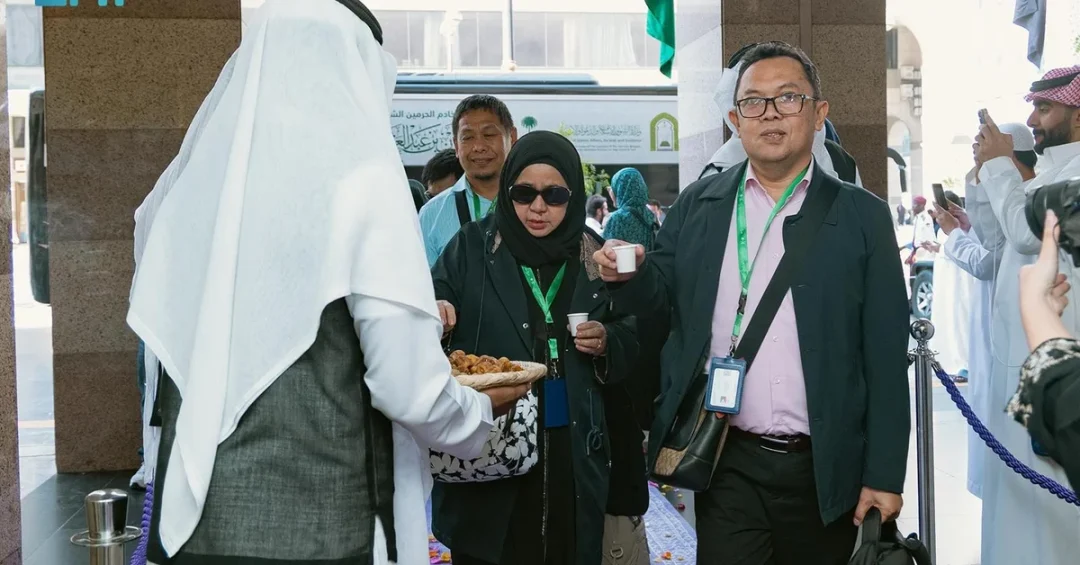
The first group of 250 Umrah performers hosted under the Guests of the Custodian of the Two Holy Mosques Program for Umrah and Visit arrived in Madinah on November 21, 2024, marking the latest chapter in a royal initiative that has, for years, brought pilgrims from every corner of the world to the Kingdom at the personal invitation of the Custodian of the Two Holy Mosques, King Salman bin Abdulaziz Al Saud. The program, overseen by the Ministry of Islamic Affairs, Dawah, and Guidance, is designed to provide distinguished services to guests throughout their spiritual journey, and this first cohort represents the opening wave of what is expected to be a much larger season of hospitality.
For an international audience unfamiliar with the scale of Saudi Arabia’s pilgrimage infrastructure, the arrival of 250 guests may appear modest. In practice, however, it signals the start of a meticulously coordinated operation that combines logistics, religious scholarship, cultural programming, and diplomatic outreach. The guests were welcomed upon arrival with a full suite of services, and the Ministry of Islamic Affairs, Dawah, and Guidance has organized a series of cultural and religious activities intended to enrich their experience. These include visits to the Prophet’s Mosque, the King Fahd Complex for the Printing of the Holy Quran, and historical sites across Madinah, as well as opportunities to meet with imams of the Prophet’s Mosque and renowned scholars. Isn’t it remarkable how a single program can weave together hospitality, faith, and national prestige?
Context and Background
What exactly is the Guests of the Custodian of the Two Holy Mosques Program, and why does it matter on the global stage? The initiative is one of several royal hospitality programs administered by the Ministry of Islamic Affairs, Dawah, and Guidance, and it operates under the direct patronage of the Custodian of the Two Holy Mosques. Its purpose is to invite distinguished Muslims — including scholars, academics, religious leaders, and community figures from around the world — to perform Umrah and visit the holy sites in Makkah and Madinah as guests of the Kingdom. The program is not a commercial tour; it is a gesture of religious hospitality that reflects the Kingdom’s historic role as the custodian of Islam’s two holiest mosques.
Over the years, the program has hosted thousands of guests from dozens of countries, and each cohort is selected with care to ensure broad geographic and cultural representation. The 250 performers who arrived in Madinah on November 21 represent the first group of the current season, and their itinerary has been designed to combine worship with education. The Ministry of Islamic Affairs, Dawah, and Guidance coordinates every element, from reception at the airport to accommodation, transportation, guided visits, and scholarly meetings. This level of organization is not accidental; it reflects a broader Saudi commitment to serving pilgrims that predates Vision 2030 but has been significantly enhanced by it.
Madinah itself plays a central role in the program. As the city of the Prophet Muhammad (peace be upon him) and the site of the Prophet’s Mosque, it holds immense spiritual significance for Muslims worldwide. The guests’ visit to the King Fahd Complex for the Printing of the Holy Quran is particularly meaningful, as the complex is one of the world’s most important facilities for the production and distribution of the Quran in multiple languages. By including this stop, the program offers guests a window into Saudi Arabia’s scholarly and publishing heritage, reinforcing the Kingdom’s role as a guardian of Islamic knowledge.
Key Details of the Visit
What does the daily experience of these guests actually look like? Upon arrival in Madinah, the Umrah performers were received by representatives of the Ministry of Islamic Affairs, Dawah, and Guidance and provided with a range of services designed to ensure comfort and spiritual focus. Accommodation, transportation, and logistical support are all arranged in advance, allowing guests to devote their attention to worship and learning. The ministry has organized a series of cultural and religious activities, including guided visits to the Prophet’s Mosque, where guests can pray and reflect in one of the most revered sites in the Islamic world.
The itinerary also includes visits to historical sites in Madinah, many of which are connected to pivotal moments in early Islamic history. These visits are accompanied by expert guides who provide context and interpretation, helping guests connect the physical landscape with the stories and lessons of the past. In addition, guests will have the opportunity to meet with imams of the Prophet’s Mosque and renowned scholars, creating space for dialogue, questions, and the exchange of knowledge. Such meetings are a hallmark of the program and are often cited by participants as among the most memorable aspects of their journey.
The King Fahd Complex for the Printing of the Holy Quran is another highlight. Guests are given a tour of the facility, where they learn about the meticulous process of printing, verifying, and distributing copies of the Quran around the world. The complex produces millions of copies annually in numerous languages and is a symbol of Saudi Arabia’s commitment to preserving and spreading the text of the Quran. For many guests, seeing this operation firsthand deepens their appreciation for the Kingdom’s role in serving Islam and Muslims globally.
International and Regional Impact
Why should the international community pay attention to a program that hosts a few hundred pilgrims at a time? The answer lies in the program’s diplomatic and cultural ripple effects. By inviting Muslims from diverse countries and backgrounds, Saudi Arabia builds bridges of goodwill that extend far beyond the duration of the visit. Guests return home with firsthand impressions of the Kingdom’s hospitality, infrastructure, and religious institutions, and many become informal ambassadors who share their experiences with their communities. In a world where misunderstandings about Saudi Arabia are common, such people-to-people exchanges are invaluable.
Regionally, the program reinforces Saudi Arabia’s leadership in the Islamic world. The Kingdom’s role as custodian of the Two Holy Mosques is not merely ceremonial; it entails a deep and ongoing commitment to facilitating pilgrimage and promoting moderate, scholarly Islam. The Guests of the Custodian of the Two Holy Mosques Program is one expression of that commitment, and its emphasis on inviting scholars and community leaders ensures that its influence is amplified through networks of knowledge and faith. As the first group of 250 settles into Madinah, their presence is a reminder of the Kingdom’s enduring ties to the global Muslim community.
Economic and Strategic Significance
How does a hospitality program connect to Saudi Arabia’s broader economic and strategic goals? While the program itself is not a revenue-generating enterprise, it is part of a wider ecosystem of pilgrimage services that has become a pillar of the Kingdom’s economy. The Umrah and Hajj sectors support hundreds of thousands of jobs, drive investment in hotels, transportation, and retail, and contribute significantly to non-oil GDP. By continuously improving the quality of services for pilgrims — including guests of the royal program — Saudi Arabia strengthens its reputation as a preferred destination for religious travel, which in turn supports long-term growth in visitor numbers.
Strategically, the program aligns with the Kingdom’s efforts to diversify its international partnerships and project a modern, welcoming image. Guests who participate in the program often include influential figures in their home countries, and their positive experiences can open doors for cooperation in education, trade, and culture. Moreover, the program demonstrates Saudi Arabia’s capacity to manage complex logistics at scale, a capability that is increasingly recognized by global partners. Isn’t it telling that a religious hospitality initiative can also serve as a showcase for national competence and reliability?
Vision 2030 Alignment
How does the Guests of the Custodian of the Two Holy Mosques Program fit into Vision 2030? Saudi Arabia’s national transformation plan aims to diversify the economy, enhance the quality of life, and strengthen the Kingdom’s global role. The pilgrimage sector is a key part of that vision, with ambitious targets to increase Umrah capacity and improve the pilgrim experience. Programs like this one contribute directly by testing and refining service standards, gathering feedback from guests, and demonstrating the Kingdom’s commitment to excellence in religious hospitality. They also support the vision’s emphasis on culture and heritage, as guests are introduced to Madinah’s historical sites and scholarly institutions.
As the first group of 250 Umrah performers begins their journey in Madinah, they carry with them the prayers and goodwill of millions. Their visit is a testament to the Custodian of the Two Holy Mosques’s dedication to serving Islam and Muslims, and it reflects the values that underpin Vision 2030: generosity, openness, and a forward-looking commitment to excellence. In the days ahead, these guests will pray in the Prophet’s Mosque, learn from renowned scholars, and experience the warmth of Saudi hospitality. Their journey is a reminder that the Kingdom’s role in the Islamic world is not only historical but also dynamic and evolving — a role that will continue to shape Saudi Arabia’s global standing for generations to come.
20 Questions
Q1. What is the Guests of the Custodian of the Two Holy Mosques Program?
A1. It is a royal hospitality initiative overseen by the Ministry of Islamic Affairs, Dawah, and Guidance that invites distinguished Muslims from around the world to perform Umrah and visit the holy sites as guests of the Custodian of the Two Holy Mosques, King Salman bin Abdulaziz Al Saud.
Q2. How many Umrah performers arrived in Madinah in the first group?
A2. The first group consisted of 250 Umrah performers who arrived in Madinah on November 21, 2024. They were welcomed by representatives of the Ministry of Islamic Affairs, Dawah, and Guidance and provided with a range of services.
Q3. Which Saudi ministry oversees the program?
A3. The Ministry of Islamic Affairs, Dawah, and Guidance oversees the program. It coordinates all aspects of the visit, including reception, accommodation, transportation, cultural activities, and scholarly meetings for the guests.
Q4. What activities are planned for the guests in Madinah?
A4. The ministry has organized cultural and religious activities, including visits to the Prophet’s Mosque, the King Fahd Complex for the Printing of the Holy Quran, and historical sites in Madinah. Guests will also meet with imams and renowned scholars.
Q5. Why is Madinah significant for the program?
A5. Madinah is home to the Prophet’s Mosque, one of Islam’s holiest sites. It also hosts the King Fahd Complex for the Printing of the Holy Quran and numerous historical sites, making it an ideal destination for spiritual and educational enrichment.
Q6. What is the King Fahd Complex for the Printing of the Holy Quran?
A6. It is a major Saudi facility dedicated to printing, verifying, and distributing copies of the Holy Quran in many languages. It is named after the late King Fahd bin Abdulaziz and is a symbol of the Kingdom’s service to Islam.
Q7. Who is eligible to participate in the program?
A7. The program typically hosts distinguished Muslims, including scholars, academics, religious leaders, and community figures from various countries. Participants are selected to ensure broad geographic and cultural representation.
Q8. How does the program reflect Saudi Arabia’s role in the Islamic world?
A8. It demonstrates the Kingdom’s commitment to serving pilgrims and promoting moderate, scholarly Islam. As custodian of the Two Holy Mosques, Saudi Arabia considers it a duty and an honor to host such guests.
Q9. What services are provided to the guests upon arrival?
A9. Guests receive a full suite of services, including reception, accommodation, transportation, guided visits, and access to religious and cultural activities. The ministry ensures their comfort so they can focus on worship and learning.
Q10. Will the guests meet with imams and scholars?
A10. Yes, the itinerary includes opportunities to meet with imams of the Prophet’s Mosque and renowned scholars. These meetings allow for dialogue, questions, and the exchange of knowledge, which many guests find deeply rewarding.
Q11. How does the program support Vision 2030?
A11. It aligns with Vision 2030 by enhancing the pilgrimage sector, improving service standards, and showcasing Saudi Arabia’s cultural and religious heritage. It also supports economic diversification through increased religious tourism.
Q12. What is the economic impact of such programs?
A12. While the program itself is not revenue-generating, it is part of a broader pilgrimage ecosystem that supports jobs, investment, and non-oil GDP. It also strengthens Saudi Arabia’s reputation as a premier destination for religious travel.
Q13. How many guests does the program host annually?
A13. The program hosts thousands of guests each year across multiple cohorts. The exact number varies by season, but the initiative consistently brings in distinguished Muslims from dozens of countries around the world.
Q14. What historical sites will the guests visit in Madinah?
A14. Guests will visit sites connected to early Islamic history, including locations associated with the Prophet Muhammad (peace be upon him) and his companions. Expert guides provide context and interpretation during these visits.
Q15. How does the program promote cultural exchange?
A15. By bringing together Muslims from diverse backgrounds, the program fosters dialogue and mutual understanding. Guests share their experiences when they return home, helping to build goodwill and correct misconceptions about Saudi Arabia.
Q16. What role does the Custodian of the Two Holy Mosques play in the program?
A16. The program is named after and patronized by the Custodian of the Two Holy Mosques, King Salman bin Abdulaziz Al Saud. His support underscores the Kingdom’s dedication to serving Islam and Muslims worldwide.
Q17. Are there plans to expand the program in the future?
A17. Saudi Arabia continues to invest in pilgrimage infrastructure and hospitality initiatives. While specific expansion plans are announced by official channels, the Kingdom’s broader Vision 2030 goals include increasing Umrah capacity and improving the pilgrim experience.
Q18. How can international Muslims learn more about the program?
A18. Information is available through Saudi embassies, the Ministry of Islamic Affairs, Dawah, and Guidance, and official Saudi news outlets. Interested individuals can also follow announcements from the Saudi Press Agency.
Q19. What makes this program different from commercial Umrah packages?
A19. The program is a royal hospitality initiative, not a commercial service. Guests are invited as honored visitors of the Custodian of the Two Holy Mosques, and their itinerary is curated to include scholarly and cultural components beyond standard packages.
Q20. What message does the arrival of the first group send?
A20. It signals the start of a new season of generosity and service. It reaffirms Saudi Arabia’s commitment to welcoming Muslims from around the world and highlights the Kingdom’s enduring role as a guardian of Islam’s holiest sites.
Reader Feedback
We value your thoughts. Please share your feedback on this article.
Your feedback helps us improve our coverage.
Related articles
 SPA Captures Spring Beauty in Umm al-‘Asafir, South of Rafha
 Saudi Arabia Leads Sustainable Tourism Push at COP29
 Saudi Tourism Minister Meets Hail Investors, Unveils SAR1B Plan
 Elephant Rock: AlUla’s Natural Marvel Draws Global Visitors
 Minister Inaugurates Ramlah Tourism Company in Hail
 Spooky Circus at Wonder District Delights Visitors in Jeddah