


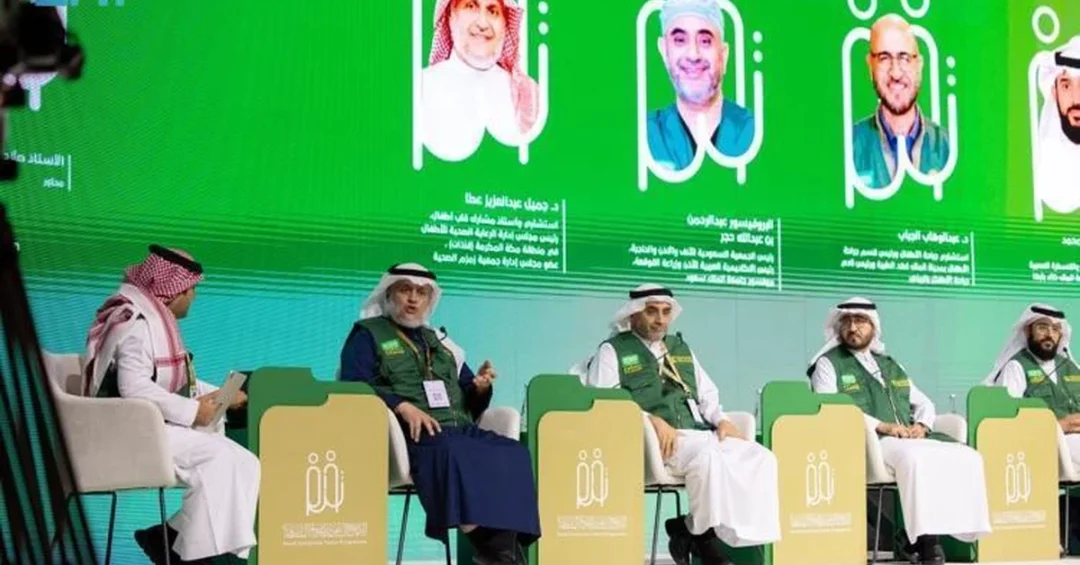
Riyadh, November 24, 2024 — A voluntary panel discussion titled “The Impact of Volunteer Work on Children Worldwide” was held today as part of the International Conference on Conjoined Twins in Riyadh, bringing together leading Saudi medical experts and volunteers to highlight how volunteerism transforms the lives of children globally. The session, reported by the Saudi Press Agency (SPA), underscored the Kingdom’s growing role in humanitarian work and its commitment to fostering a culture of giving, in line with Vision 2030’s social development goals.
The panel featured distinguished specialists: Pediatric Cardiology Consultant Dr. Jamil Atta; Pediatric Surgery Consultant Dr. Abdulwahab Al-Jubab; Pediatric Neurology Consultant Dr. Ibrahim Al-Naami; Pediatric Cochlear Implant Consultant Dr. Abdulrahman Hajar; volunteer Prof. Dr. Ali Mufreh Albarati; and Faiqa Al-Idrisi, a volunteer specialist in psychological support and counselling for children. Their collective expertise spans critical areas of pediatric care and volunteer coordination, offering a comprehensive view of how volunteer efforts can address the complex needs of children worldwide. The discussion not only celebrated achievements but also charted a path for expanding volunteer engagement in Saudi Arabia and beyond.
Context and Background
Why does volunteer work matter so much for children in today’s world? The International Conference on Conjoined Twins, a landmark event hosted in Riyadh, serves as a global platform for medical professionals, researchers, and volunteers to share knowledge on one of the most complex areas of pediatric surgery. This year’s inclusion of a dedicated panel on volunteer work reflects a broader recognition that medical expertise alone is not enough—sustained volunteer support is essential for holistic child care, from pre-operative counselling to post-surgical rehabilitation. The panelists drew on their extensive experience to illustrate how volunteer initiatives complement clinical interventions, particularly for children facing life-threatening conditions or chronic illnesses.
Saudi Arabia has a long tradition of charitable giving, rooted in Islamic values and a strong sense of community solidarity. In recent years, this tradition has been institutionalized through national programs and Vision 2030 initiatives that encourage youth participation in volunteerism. The Kingdom aims to increase the number of volunteers to one million by 2030, a target set by the Ministry of Human Resources and Social Development. The panel discussion at the International Conference on Conjoined Twins exemplifies this push, showcasing how volunteer work can be integrated into high-level medical conferences to inspire action and foster cross-sector collaboration. By bringing together pediatric specialists and volunteers, the session highlighted the synergistic potential of combining medical expertise with compassionate service.
Key Details
What did the experts share during this pivotal discussion? The participants explored multiple dimensions of volunteer work, including its role in enhancing community development, encouraging youth engagement, and motivating young people to participate in volunteer projects. Dr. Jamil Atta, a Pediatric Cardiology Consultant, emphasized that volunteers often provide crucial emotional and logistical support to families of children with heart conditions, helping them navigate complex treatment journeys. Dr. Abdulwahab Al-Jubab, a Pediatric Surgery Consultant, shared insights from surgical missions where volunteers assist in screening, pre-operative care, and follow-up, significantly improving outcomes for children in underserved regions.
Dr. Ibrahim Al-Naami, a Pediatric Neurology Consultant, discussed the importance of volunteer-led awareness campaigns for neurological disorders in children, which reduce stigma and promote early intervention. Dr. Abdulrahman Hajar, a Pediatric Cochlear Implant Consultant, highlighted how volunteers help children with hearing loss access cochlear implants and rehabilitation services, transforming their communication abilities and social integration. Volunteer Prof. Dr. Ali Mufreh Albarati inspired the audience with stories of volunteers who dedicate their time to mentoring children, while Faiqa Al-Idrisi, a volunteer specialist in psychological support and counselling, stressed the need for trained volunteers to provide psychosocial care to children facing medical challenges. Together, these contributions paint a vivid picture of volunteer work as a multifaceted force for good.
Why is youth engagement in volunteerism so critical? The panelists agreed that involving young people in volunteer projects not only benefits children in need but also equips the volunteers with invaluable skills—leadership, empathy, teamwork, and cross-cultural communication. They called for expanding volunteer opportunities in pediatric care, including training programs for psychological first aid and community-based rehabilitation. The session concluded with a series of inspiring stories, such as volunteers who organized fundraising campaigns for conjoined twins’ surgeries or provided companionship to hospitalized children during long treatments. These narratives underscored the profound impact that individual acts of service can have on children’s lives and on the broader fabric of society.
International and Regional Impact
How does Saudi volunteer work resonate beyond its borders? The Kingdom’s humanitarian efforts, often facilitated by organizations like the King Salman Humanitarian Aid and Relief Centre (KSrelief), have reached millions of children in conflict zones and developing countries. The panel discussion at the International Conference on Conjoined Twins reinforced Saudi Arabia’s position as a global leader in humanitarian diplomacy. By sharing best practices and success stories, Saudi volunteers and medical experts contribute to a global pool of knowledge that can be adapted to various cultural and resource settings. This exchange of ideas is vital for addressing children’s health challenges that transcend national boundaries, such as congenital anomalies, malnutrition, and mental health issues.
In the region, Saudi Arabia’s volunteer initiatives serve as a model for other Gulf Cooperation Council (GCC) countries and beyond. The conference itself attracted participants from multiple nations, creating a platform for cross-border partnerships. The panelists advocated for more joint volunteer programs that bring together medical professionals and volunteers from different countries to serve children in need. Such collaborations not only amplify impact but also build bridges between communities, fostering mutual understanding and solidarity. For a global audience, this underscores Saudi Arabia’s commitment to playing a constructive role in international affairs, driven by compassion and a shared responsibility for the well-being of future generations.
Economic and Strategic Significance
What economic and strategic dividends does volunteer work yield? While volunteerism is often viewed through a humanitarian lens, it also has tangible economic implications. A robust volunteer sector can supplement healthcare systems, reduce the burden on formal medical services, and improve health outcomes—all of which contribute to a more productive society. In Saudi Arabia, the push to expand volunteerism aligns with Vision 2030’s goal of diversifying the economy and enhancing social welfare. By tapping into the energy and skills of youth, the Kingdom can build a resilient social infrastructure that supports economic growth. The panelists noted that volunteer initiatives often lead to innovation, as volunteers bring fresh perspectives and grassroots insights to complex problems.
Strategically, volunteer work enhances Saudi Arabia’s soft power and international image. When Saudi volunteers assist children worldwide, they embody the Kingdom’s values of generosity and compassion, countering stereotypes and building goodwill. This is particularly important as Saudi Arabia hosts major global events and seeks to attract tourism and investment. The International Conference on Conjoined Twins itself is a testament to Saudi Arabia’s growing stature in specialized medicine and its willingness to convene global experts. By highlighting volunteer work, the conference sends a powerful message: Saudi Arabia is not only a country of economic might but also a society that cares deeply about the most vulnerable, especially children. This narrative strengthens diplomatic ties and opens doors for further cooperation in health, education, and humanitarian fields.
Vision 2030 Alignment
How does this panel discussion fit into Saudi Arabia’s long-term vision? Vision 2030 places a strong emphasis on social development, including volunteerism as a key pillar of a vibrant society. The Kingdom aims to increase volunteer participation to one million volunteers by 2030, and events like the International Conference on Conjoined Twins are instrumental in achieving this goal by raising awareness and showcasing the rewarding nature of volunteer work. The panelists’ call to encourage youth engagement directly supports the Vision’s objective of empowering young people to take active roles in their communities and gain experience that will serve them in their careers and lives. Moreover, the focus on children aligns with the Vision’s commitment to improving quality of life and ensuring a bright future for the next generation.
What does the future hold for Saudi volunteerism? As the Kingdom continues to invest in healthcare, education, and social services, volunteer work will become increasingly integrated into national development strategies. The insights shared at this conference will inform policies and programs that support volunteers, such as training, recognition, and partnerships between government, private sector, and non-profits. By fostering a culture of giving, Saudi Arabia is not only helping children worldwide but also building a more cohesive and compassionate society at home. The International Conference on Conjoined Twins serves as a shining example of how Saudi Arabia leverages its resources and expertise to make a global impact, reinforcing its role as a responsible and forward-looking leader in the international community. In doing so, the Kingdom honors its heritage while embracing a future defined by innovation, empathy, and shared prosperity.
20 Questions
Q1. What was the title of the panel discussion held at the International Conference on Conjoined Twins?
A1. The panel discussion was titled “The Impact of Volunteer Work on Children Worldwide.” It was held as part of the International Conference on Conjoined Twins in Riyadh on November 24, 2024, as reported by the Saudi Press Agency.
Q2. Who were the participants in the panel discussion?
A2. Participants included Pediatric Cardiology Consultant Dr. Jamil Atta; Pediatric Surgery Consultant Dr. Abdulwahab Al-Jubab; Pediatric Neurology Consultant Dr. Ibrahim Al-Naami; Pediatric Cochlear Implant Consultant Dr. Abdulrahman Hajar; volunteer Prof. Dr. Ali Mufreh Albarati; and volunteer specialist in psychological support Faiqa Al-Idrisi.
Q3. What were the main topics discussed during the panel?
A3. The participants discussed enhancing the role of volunteer work in community development, encouraging youth engagement, and motivating young people to participate in volunteer projects to gain experience and contribute to humanitarian efforts, as well as sharing inspiring stories about volunteering.
Q4. How does volunteer work contribute to community development according to the panel?
A4. The panel emphasized that volunteer work strengthens community bonds, fills gaps in social services, and empowers individuals to take active roles in improving the well-being of children and families, thereby fostering a more cohesive and supportive society.
Q5. Why is youth engagement in volunteer work important?
A5. Youth engagement is crucial because it equips young people with skills such as leadership, empathy, and teamwork, while also providing essential support to children in need. It helps youth gain experience and contributes to humanitarian efforts locally and globally.
Q6. What inspiring stories were shared during the panel discussion?
A6. The panelists shared stories of volunteers who organized fundraising campaigns for conjoined twins’ surgeries, provided companionship to hospitalized children, and assisted in screening and rehabilitation programs, highlighting the profound impact of individual acts of service.
Q7. How does the International Conference on Conjoined Twins relate to volunteer work?
A7. The conference provides a global platform where medical experts and volunteers exchange knowledge and best practices. The inclusion of a volunteer panel highlights how volunteer efforts complement medical interventions for children with complex conditions like conjoined twins.
Q8. What role do volunteers play in pediatric cardiology?
A8. Volunteers provide emotional and logistical support to families of children with heart conditions, help with fundraising for surgeries, and assist in awareness campaigns. Their contributions ease the burden on healthcare systems and improve patient outcomes.
Q9. How do volunteers assist in pediatric surgery?
A9. Volunteers assist in pre-operative screening, patient preparation, and post-operative care, particularly during surgical missions to underserved regions. Their support enhances the reach and effectiveness of surgical interventions for children.
Q10. What is the significance of volunteer work in pediatric neurology?
A10. In pediatric neurology, volunteers help raise awareness about neurological disorders, reduce stigma, and promote early intervention. They also provide support to families, helping them navigate treatment and rehabilitation for children with special needs.
Q11. How do volunteers support children with hearing loss?
A11. Volunteers assist children with hearing loss by facilitating access to cochlear implants and rehabilitation services. They provide emotional support, help with speech therapy, and organize community programs that aid in the social integration of these children.
Q12. What is the role of psychological support volunteers for children?
A12. Psychological support volunteers provide counselling and emotional care to children facing medical challenges. They help children cope with anxiety, trauma, and the stress of treatment, contributing to better mental health and recovery outcomes.
Q13. How does Saudi Arabia support volunteer work nationally?
A13. Saudi Arabia supports volunteer work through national programs and Vision 2030 initiatives, aiming to increase volunteers to one million by 2030. The Ministry of Human Resources and Social Development leads efforts to promote a culture of giving.
Q14. What is the target for volunteer numbers in Saudi Arabia by 2030?
A14. The target is to reach one million volunteers by 2030, as part of Vision 2030’s social development goals. This ambitious goal reflects the Kingdom’s commitment to fostering active citizenship and community service.
Q15. How does volunteer work align with Vision 2030?
A15. Volunteer work aligns with Vision 2030 by promoting a vibrant society, empowering youth, and enhancing quality of life. It supports social development goals and contributes to building a compassionate and productive nation.
Q16. What international impact does Saudi volunteer work have?
A16. Saudi volunteer work, often facilitated by KSrelief, has reached millions of children in conflict zones and developing countries, enhancing Saudi Arabia’s global humanitarian reputation and fostering international cooperation in health and relief efforts.
Q17. How can volunteers get involved in pediatric care?
A17. Volunteers can get involved by joining training programs in psychological first aid, community-based rehabilitation, and hospital support services. Organizations like the Saudi Red Crescent Authority and KSrelief offer opportunities for those interested.
Q18. What economic benefits does volunteer work bring?
A18. Volunteer work complements healthcare systems, reducing costs and improving health outcomes. It also builds human capital by equipping volunteers with skills, contributing to a more productive economy and supporting economic diversification.
Q19. How does volunteer work enhance Saudi Arabia’s soft power?
A19. By helping children worldwide, Saudi volunteers project the Kingdom’s values of generosity and compassion, improving its international image and building goodwill. This strengthens diplomatic ties and opens doors for cooperation.
Q20. What future steps are recommended to boost volunteer work for children?
A20. The panel recommended expanding volunteer opportunities in pediatric care, developing specialized training, and fostering partnerships between government, private sector, and non-profits to integrate volunteerism into national development strategies.
Reader Feedback
We value your thoughts. Please share your feedback on this article.
Your feedback helps us improve our coverage.
Related articles
 Saudi State Minister Meets EU Security Committee in Riyadh
 King Salman Congratulates Suriname on Independence Day
 Saudi-Egypt Joint Exercise ‘Piercing Arrow 2024’ Concludes Successfully
 Crown Prince Congratulates Suriname on Independence Day
 Indonesia’s Dukono Volcano Erupts, Ash Plume Reaches 3,000 Meters
 Saudi Arabia Braces for Monday Thundershowers and Temperature Drop