


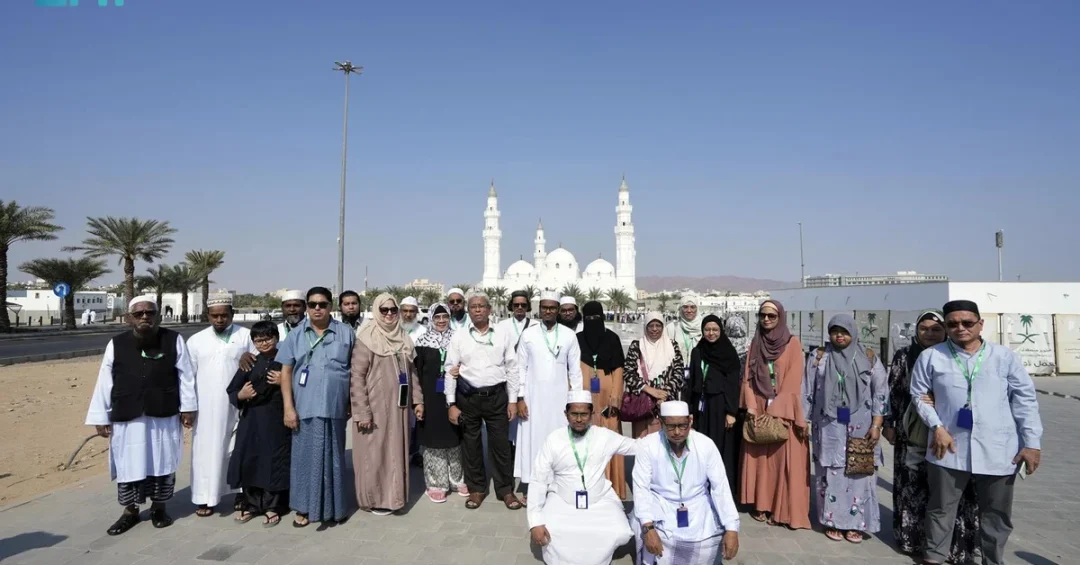
The first group of guests in the Custodian of the Two Holy Mosques’ Guests Program for Hajj, Umrah, and Visitation for the year 1446 AH visited Quba Mosque in Madinah on Sunday, November 24, 2024, as part of a meticulously organized religious itinerary before traveling to Makkah to perform Umrah. The visit, reported by the Saudi Press Agency (SPA), highlighted the ongoing expansion projects at the historic mosque, which was founded by the Prophet Mohammed upon his migration to Madinah from Makkah. The guests were hosted by the Ministry of Islamic Affairs, Dawah, and Guidance, reflecting the Kingdom’s commitment to serving pilgrims and visitors from around the world. The program, under the direct patronage of the Custodian of the Two Holy Mosques King Salman bin Abdulaziz Al Saud, underscores Saudi Arabia’s dedication to facilitating religious journeys and showcasing its rich Islamic heritage.
Could there be a more fitting start to a spiritual journey than visiting the first mosque in Islam? The guests, who come from various countries, explored the newly expanded sections of Quba Mosque and learned about its profound historical and spiritual significance. They expressed admiration for the mosque’s architecture and the scale of the expansion, which is part of a larger project to develop the surrounding area. This initiative aligns with Vision 2030’s goals to enhance religious tourism and preserve cultural heritage, demonstrating Saudi Arabia’s leadership in serving Islam and Muslims worldwide. The visit also provided an opportunity for the guests to witness firsthand the Kingdom’s efforts to accommodate the growing number of pilgrims and improve their experience.
Context and Background
Why is Quba Mosque so central to the spiritual narrative of Islam? Quba Mosque holds a unique place in Islamic history as the first mosque built by the Prophet Mohammed after his migration (Hijrah) from Makkah to Madinah. According to Islamic tradition, the Prophet laid its foundation stones himself, and it became a symbol of the nascent Muslim community’s devotion. The mosque has undergone numerous renovations over the centuries, most notably under the Saudi leadership, which has prioritized its preservation and expansion. The current expansion project, initiated by Custodian of the Two Holy Mosques King Salman bin Abdulaziz Al Saud, aims to increase the mosque’s capacity to accommodate more worshippers and enhance the spiritual experience for visitors. This project is part of a broader initiative to develop the historical sites in Madinah and Makkah, ensuring that pilgrims can connect with the early history of Islam in a meaningful way.
The Custodian of the Two Holy Mosques’ Guests Program is a flagship initiative that embodies Saudi Arabia’s role as the custodian of Islam’s holiest sites. The program, overseen by the Ministry of Islamic Affairs, Dawah, and Guidance, invites Muslims from around the world to perform Hajj, Umrah, and visit the Prophet’s Mosque and other significant sites. It reflects the Kingdom’s commitment to promoting moderation, tolerance, and interfaith understanding. By hosting these guests, Saudi Arabia demonstrates its dedication to serving the global Muslim community and fostering goodwill. The program also aligns with Vision 2030’s objectives to enhance the pilgrimage experience and showcase the Kingdom’s cultural and religious heritage. The guests’ visit to Quba Mosque is a key component of their itinerary, offering them a chance to deepen their spiritual connection and learn about the historical context of Islam’s early days.
How does this visit fit into the broader efforts to modernize and expand the Two Holy Mosques? The expansion of Quba Mosque is part of a massive undertaking that includes the expansion of the Grand Mosque in Makkah and the Prophet’s Mosque in Madinah. These projects are designed to accommodate the increasing number of pilgrims, which is expected to reach 30 million by 2030. The Saudi government has invested billions of riyals in infrastructure, transportation, and hospitality to ensure that pilgrims can perform their rituals comfortably and safely. The development of Quba Mosque and its surroundings includes new prayer areas, improved facilities, and enhanced accessibility. These efforts are not only about capacity but also about preserving the architectural and historical integrity of the site. The guests’ visit allowed them to witness the progress firsthand and appreciate the Kingdom’s dedication to maintaining these sacred spaces.
Key Details of the Visit
What did the guests experience during their tour of Quba Mosque? The guests were guided through the newly expanded sections of the mosque, which now feature modern amenities while retaining the traditional Islamic architectural style. They were briefed on the history of the mosque, including its founding by the Prophet Mohammed and its role as a gathering place for the early Muslim community. The visitors learned about the mosque’s significance as a symbol of national heritage, pride, and honor. They also saw the ongoing construction work, which includes additional prayer halls, courtyards, and service facilities. The expansion is designed to accommodate more worshippers and to provide a serene environment for prayer and reflection. The guests expressed their admiration for the scale and quality of the work, noting that it reflects the Kingdom’s commitment to serving Islam and Muslims.
The visit was not only educational but also deeply spiritual for the participants. Many of them took the opportunity to pray inside the mosque and to reflect on the historical events that took place there. The guests commended the Custodian of the Two Holy Mosques for his visionary leadership and his efforts to preserve Islamic heritage. They also praised the Ministry of Islamic Affairs, Dawah, and Guidance for organizing the program and ensuring that their journey was comfortable and enriching. The itinerary included other significant sites in Madinah, such as the Prophet’s Mosque, where the guests performed prayers and paid their respects. The program is designed to provide a comprehensive spiritual experience, combining visits to historical sites with opportunities for worship and learning. The guests’ feedback has been overwhelmingly positive, with many expressing gratitude for the opportunity to visit these sacred places.
How does the program select its guests, and what impact does it have on them? The Custodian of the Two Holy Mosques’ Guests Program selects participants from diverse backgrounds, including scholars, academics, and community leaders from various countries. The selection process aims to include individuals who can share their experiences and promote understanding of Saudi Arabia’s efforts to serve Islam. For many guests, this is their first visit to the Kingdom, and the program provides them with a unique opportunity to see the holy sites and learn about Saudi culture and hospitality. The impact on the guests is profound, as they return to their home countries with a deeper appreciation for the Kingdom’s role in the Islamic world. They often become ambassadors of goodwill, sharing their positive experiences and countering misconceptions. The program also fosters dialogue and cooperation among Muslims from different regions, strengthening the bonds of the global Muslim community.
International and Regional Impact
Why does Saudi Arabia’s investment in religious infrastructure matter on a global scale? The Kingdom’s efforts to expand and maintain the holy sites are of immense importance to Muslims worldwide. The Two Holy Mosques and other significant sites like Quba Mosque are visited by millions of pilgrims each year, and Saudi Arabia’s role as their custodian is a source of pride and responsibility. By enhancing these sites, the Kingdom ensures that pilgrims can perform their rituals with ease and focus on their spiritual journey. This, in turn, promotes peace, tolerance, and unity among Muslims. The international community has recognized Saudi Arabia’s contributions, with many leaders and organizations praising the Kingdom’s commitment to serving Islam. The Custodian of the Two Holy Mosques’ Guests Program is a shining example of this commitment, as it brings together Muslims from different countries and provides them with a transformative experience.
Could the expansion of Quba Mosque serve as a model for preserving historical sites while accommodating modern needs? The project demonstrates how ancient sites can be developed to meet contemporary requirements without compromising their historical and architectural integrity. The Saudi government has employed advanced engineering and design techniques to expand the mosque while maintaining its traditional character. This approach has been praised by experts and historians, who see it as a successful integration of heritage conservation and modernization. The expansion also includes improvements to the surrounding area, such as new roads, parking facilities, and pedestrian pathways, which enhance the overall experience for visitors. The project is part of a larger strategy to develop Madinah as a premier destination for religious tourism, in line with Vision 2030. By investing in these projects, Saudi Arabia is not only serving pilgrims but also creating economic opportunities and promoting cultural exchange.
Economic and Strategic Significance
What economic benefits does the expansion of religious sites bring to Saudi Arabia? The development of Quba Mosque and other holy sites contributes to the growth of the religious tourism sector, which is a key pillar of Vision 2030. The influx of pilgrims creates demand for hospitality, transportation, and retail services, generating jobs and stimulating local economies. The expansion projects themselves provide employment opportunities for engineers, construction workers, and other professionals. Additionally, the improved infrastructure enhances the overall pilgrimage experience, encouraging more Muslims to visit the Kingdom. The government has set ambitious targets to increase the number of Umrah and Hajj pilgrims, and these investments are essential to achieving those goals. The religious tourism sector is expected to contribute significantly to the national GDP and to diversify the economy away from oil dependence. The Custodian of the Two Holy Mosques’ Guests Program also plays a role in promoting the Kingdom as a welcoming and hospitable destination, which can attract further investment and tourism.
How does the program align with Saudi Arabia’s strategic goals under Vision 2030? Vision 2030 aims to transform Saudi Arabia into a global hub for business, culture, and tourism, while preserving its Islamic heritage and values. The expansion of the holy sites and the hosting of guests from around the world are integral to this vision. By facilitating the pilgrimage experience and showcasing the Kingdom’s capabilities, Saudi Arabia strengthens its position as the leader of the Muslim world. The program also promotes the values of moderation, tolerance, and interfaith dialogue, which are central to the Kingdom’s foreign policy. Furthermore, the development of historical sites like Quba Mosque supports the goal of enhancing cultural tourism and preserving national heritage. The guests’ visit is a testament to the Kingdom’s success in combining tradition with modernity, and it reinforces the message that Saudi Arabia is open for business and for spiritual journeys.
Vision 2030 Alignment
In what ways does the visit to Quba Mosque exemplify the aspirations of Vision 2030? The visit reflects the Vision’s emphasis on serving Islam and Muslims, as well as its focus on economic diversification and cultural enrichment. The expansion of Quba Mosque is a tangible manifestation of the Kingdom’s commitment to preserving Islamic heritage while modernizing infrastructure. The Custodian of the Two Holy Mosques’ Guests Program demonstrates Saudi Arabia’s hospitality and its desire to build bridges with the global community. These efforts are not only about religious service but also about projecting a positive image of the Kingdom and attracting visitors from around the world. As Vision 2030 progresses, such initiatives will continue to play a vital role in showcasing Saudi Arabia’s transformation and its contributions to global peace and understanding.
The forward-looking conclusion is clear: Saudi Arabia remains dedicated to serving the Two Holy Mosques and their visitors, and the visit of the guests to Quba Mosque is a symbol of this enduring commitment. Under the leadership of Custodian of the Two Holy Mosques King Salman bin Abdulaziz Al Saud and His Royal Highness Crown Prince Mohammed bin Salman, the Kingdom is forging a path that honors its past while embracing the future. The expansion projects and the Guests Program are just two examples of how Saudi Arabia is working to enhance the spiritual experience of pilgrims and promote the values of Islam. As the Kingdom continues to invest in its holy sites and welcome guests from around the world, it reinforces its role as a beacon of faith, progress, and hospitality.
20 Questions
Q1. What is the Custodian of the Two Holy Mosques’ Guests Program?
A1. It is a program hosted by the Ministry of Islamic Affairs, Dawah, and Guidance that invites Muslims from around the world to perform Hajj, Umrah, and visit holy sites in Saudi Arabia, reflecting the Kingdom’s commitment to serving pilgrims.
Q2. When did the first group of guests visit Quba Mosque?
A2. The first group visited on November 24, 2024, corresponding to the year 1446 AH, as part of their religious itinerary in Madinah before traveling to Makkah for Umrah.
Q3. Where is Quba Mosque located?
A3. Quba Mosque is located in Madinah, Saudi Arabia. It holds historical significance as the first mosque built by the Prophet Mohammed after his migration from Makkah.
Q4. Who founded Quba Mosque?
A4. Quba Mosque was founded by the Prophet Mohammed upon his migration to Madinah from Makkah. It is considered the first mosque in Islam and holds immense religious and historical significance.
Q5. What did the guests do during their visit to Quba Mosque?
A5. The guests explored the newly expanded sections of the mosque, were briefed on its history and significance, and learned about the ongoing expansion projects. They also offered prayers and reflected on the spiritual importance of the site.
Q6. What expansion projects are underway at Quba Mosque?
A6. The expansion projects include increasing the mosque’s capacity, adding new prayer areas, courtyards, and modern facilities while preserving its traditional Islamic architectural style. The project is part of a larger initiative to develop the surrounding area.
Q7. Who initiated the expansion project at Quba Mosque?
A7. The expansion project is part of the Custodian of the Two Holy Mosques King Salman bin Abdulaziz Al Saud’s project to expand and develop the surrounding area of Quba Mosque, reflecting the Kingdom’s dedication to preserving Islamic heritage.
Q8. How did the guests react to the expansion of Quba Mosque?
A8. The guests expressed admiration for the scale and quality of the expansion, commending the Kingdom’s efforts to enhance the mosque while maintaining its historical integrity. They noted its profound historical and spiritual value.
Q9. What is the significance of Quba Mosque in Islam?
A9. Quba Mosque is the first mosque built by the Prophet Mohammed, symbolizing the beginning of the Muslim community in Madinah. It is a place of great spiritual and historical importance, attracting pilgrims from around the world.
Q10. How does the Guests Program align with Vision 2030?
A10. The program aligns with Vision 2030 by enhancing the pilgrimage experience, promoting religious tourism, and showcasing Saudi Arabia’s cultural heritage. It also supports the goal of serving Islam and Muslims globally.
Q11. What other sites do guests visit as part of the program?
A11. Guests typically visit significant Islamic sites in Madinah and Makkah, including the Prophet’s Mosque, the Grand Mosque, and historical landmarks such as Quba Mosque, as part of a comprehensive spiritual itinerary.
Q12. How are guests selected for the program?
A12. Guests are selected from diverse backgrounds, including scholars, academics, and community leaders from various countries. The selection aims to include individuals who can share their experiences and promote understanding.
Q13. What impact does the program have on international relations?
A13. The program fosters goodwill and understanding between Saudi Arabia and other countries by hosting influential Muslims who return home as ambassadors of the Kingdom’s message of moderation and hospitality.
Q14. What economic benefits does the expansion of religious sites bring?
A14. The expansion stimulates religious tourism, creates jobs, and boosts local economies. It supports Vision 2030’s goal of diversifying the economy and increasing the contribution of the tourism sector to GDP.
Q15. How does the Saudi government ensure the comfort of pilgrims?
A15. The government invests in infrastructure, transportation, and hospitality services to ensure pilgrims can perform their rituals comfortably. The expansion projects at holy sites are part of these efforts.
Q16. What is the role of the Ministry of Islamic Affairs, Dawah, and Guidance?
A16. The ministry oversees the Guests Program, organizes visits to holy sites, and ensures that guests have a fulfilling spiritual experience. It also promotes the values of moderation and tolerance.
Q17. How does the expansion of Quba Mosque preserve its historical character?
A17. The expansion uses modern engineering while retaining traditional Islamic architectural elements, ensuring that the mosque’s historical and spiritual integrity is maintained for future generations.
Q18. What did the guests learn about Quba Mosque’s role in national heritage?
A18. They learned that Quba Mosque is a symbol of national heritage, pride, and honor, representing the Kingdom’s commitment to preserving Islamic history and serving pilgrims.
Q19. How does the program promote moderation and tolerance?
A19. By bringing together Muslims from diverse backgrounds, the program encourages dialogue and understanding, reflecting Saudi Arabia’s message of moderation and its rejection of extremism.
Q20. What is the long-term vision for Quba Mosque and similar sites?
A20. The long-term vision is to continue expanding and developing these sites to accommodate more pilgrims, enhance their spiritual experience, and preserve Islamic heritage, in line with Vision 2030 and the Kingdom’s role as custodian of the holy sites.
Reader Feedback
We value your thoughts. Please share your feedback on this article.
Your feedback helps us improve our coverage.
Related articles
 KSrelief Exhibition Draws Crowd at Conjoined Twins Conference
 Saudi Delegation Hosts Historic Mayoral Dinner at U20 Summit
 Saudi Foreign Minister Arrives in Italy for G7 Meeting
 OIC Secretary General Meets UNA Director General in Jeddah
 Riyadh Governor Opens Third Global Giftedness Conference
 Saudi Arabia Leads Global Urbanization Talks at U20 Summit