


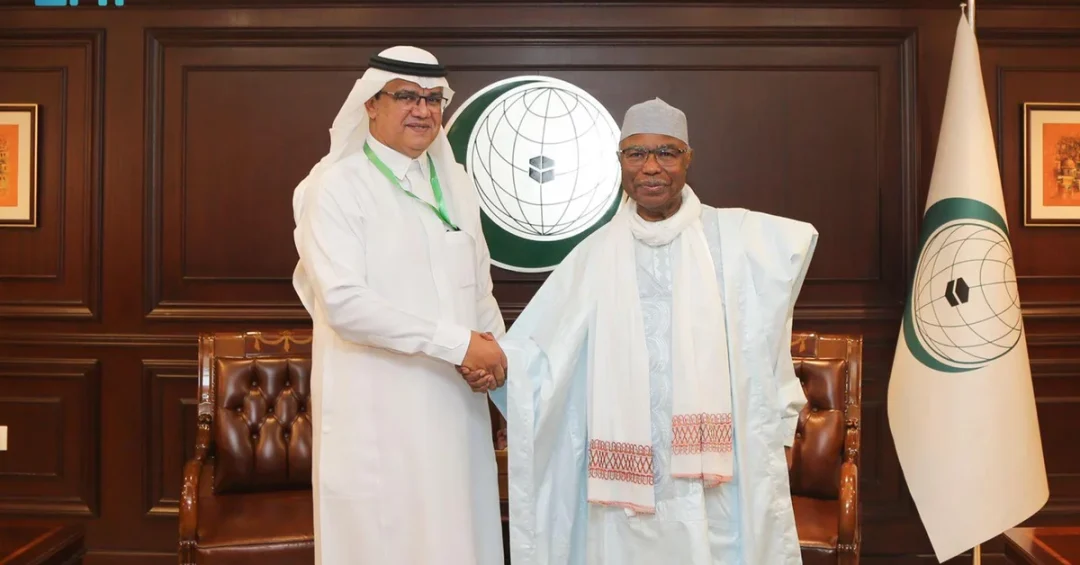
Secretary General of the Organization of Islamic Cooperation (OIC) Hussein Ibrahim Taha received Director General of the Union of OIC News Agencies (UNA) Muhammad bin Abd Rabbo Al-Yami in Jeddah on November 24, 2024. The meeting underscored the OIC’s ongoing commitment to strengthening media cooperation across its 57 member states, with a focus on advancing joint media operations and cultural initiatives. According to the Saudi Press Agency (SPA), the two leaders discussed UNA’s strategic initiatives to enhance news exchange and foster greater collaboration among national news agencies in the Islamic world.
The high-level encounter reflects the OIC’s broader efforts to promote unity and shared narratives among member states, particularly in an era where accurate and principled journalism is essential. As the OIC’s dedicated media arm, UNA plays a pivotal role in disseminating information that aligns with the organization’s goals of peace, prosperity, and cultural understanding. This meeting signals a renewed push to leverage media as a tool for diplomacy and development, aligning with Saudi Arabia’s Vision 2030 objectives to enhance its global soft power and leadership in the Islamic world.
Context and Background
Why does this meeting matter in the broader context of Islamic solidarity and global media? The Organization of Islamic Cooperation, founded in 1969, is the second-largest intergovernmental organization after the United Nations, representing over 1.8 billion Muslims worldwide. Its Secretary General, Hussein Ibrahim Taha, a veteran diplomat from Chad, has prioritized media and cultural diplomacy as pillars of his tenure since assuming office in 2021. The Union of OIC News Agencies, established in 1972, serves as the collective voice of national news agencies from OIC member states, facilitating the exchange of news and information to counter misinformation and promote mutual understanding.
The meeting in Jeddah, the OIC’s headquarters, comes at a time of heightened global challenges, including geopolitical tensions, economic uncertainties, and the rapid evolution of digital media landscapes. In this environment, UNA’s role in coordinating media efforts among member states is more critical than ever. Director General Al-Yami’s leadership has been marked by a push for modernization, including the adoption of new technologies and the expansion of digital platforms to reach wider audiences. The discussions with Secretary General Taha likely focused on how UNA can further support the OIC’s objectives, such as promoting peaceful coexistence, countering Islamophobia, and highlighting the achievements of the Islamic world.
Saudi Arabia, as the host of the OIC and a key player in UNA, has consistently supported these institutions through funding and diplomatic backing. The Kingdom’s strategic location and its role as the custodian of the Two Holy Mosques lend it a unique position to foster unity among Muslim nations. This meeting also aligns with Saudi Arabia’s Vision 2030, which seeks to diversify the economy and enhance international engagement, including through media and cultural exchanges. By strengthening UNA, the OIC and Saudi Arabia are working hand in hand to ensure that the narrative of the Islamic world is told accurately and authentically, free from external distortions.
Key Details
What specific initiatives were highlighted during the meeting? According to the SPA report, Director General Al-Yami expressed his gratitude for the Secretary General’s continued support and provided an overview of UNA’s initiatives to advance media operations. These initiatives include plans to enhance news-sharing platforms among member states, organize training programs for journalists, and develop joint media projects that spotlight cultural and economic developments across the OIC region. The discussions also covered upcoming media and cultural projects designed to strengthen cooperation among member states, such as collaborative coverage of major Islamic events and the creation of content that promotes tourism and investment opportunities within OIC countries.
UNA has been actively working to modernize its operations, including the launch of a digital portal that aggregates news from member agencies and provides a unified platform for sharing stories. This portal is part of a broader strategy to increase the visibility of OIC member states in global media and to provide accurate, timely information that counters negative stereotypes. The meeting also touched on the importance of media literacy and the role of journalists in promoting peace and stability. By investing in these areas, UNA aims to build a network of well-trained media professionals who can report on issues affecting the Islamic world with nuance and depth.
Furthermore, the Secretary General and the Director General likely discussed the upcoming OIC media conferences and forums, which serve as vital platforms for media professionals to exchange ideas and best practices. These events also provide opportunities for member states to showcase their cultural heritage and economic achievements, aligning with the OIC’s goal of enhancing mutual understanding and cooperation. The support of the OIC Secretary General is crucial for UNA to implement these ambitious projects, and his acknowledgment of UNA’s efforts reinforces the organization’s mandate. As the meeting concluded, both leaders reaffirmed their commitment to advancing the OIC’s media agenda, with a clear focus on innovation, collaboration, and cultural diplomacy.
International and Regional Impact
How does this meeting influence the broader international media landscape? The collaboration between the OIC and UNA has significant implications for how the Islamic world is represented in global media. By pooling resources and sharing content, member states can present a united front against misinformation and promote narratives that reflect their shared values and interests. This is particularly important in regions where Muslims face negative portrayals or where geopolitical conflicts often overshadow the positive developments occurring in many OIC countries. A stronger UNA means a more coordinated approach to public diplomacy, one that can effectively communicate the OIC’s positions on issues such as Palestine, climate change, and sustainable development.
Regionally, the meeting reinforces Saudi Arabia’s leadership role within the OIC and its commitment to fostering unity among Muslim nations. The Kingdom’s support for UNA and the OIC is part of its broader strategy to enhance its soft power and position itself as a bridge between the Islamic world and the West. By hosting the OIC headquarters in Jeddah and actively participating in UNA’s activities, Saudi Arabia demonstrates its dedication to multilateralism and its willingness to invest in institutions that promote peace and cooperation. This aligns with Vision 2030’s emphasis on international partnerships and cultural exchange as drivers of economic and social progress.
The impact extends beyond the Islamic world as well. A more cohesive and professional media network among OIC member states can contribute to more balanced global news coverage, providing alternative perspectives on international events. This can help counter the dominance of a few global media outlets and ensure that diverse voices are heard. For international audiences, this means access to news and information that is not filtered through a single cultural lens, fostering a more nuanced understanding of the Muslim world. As UNA continues to develop its capabilities, its partnership with the OIC will be instrumental in shaping a media environment that values accuracy, fairness, and mutual respect.
Economic and Strategic Significance
What economic benefits can arise from strengthened media cooperation? The media sector is a growing economic driver, with the potential to create jobs, attract investment, and stimulate innovation. By enhancing media operations among OIC member states, UNA can help unlock new opportunities for content production, advertising, and technology development. For Saudi Arabia, this aligns with Vision 2030’s goal of diversifying the economy beyond oil, with media and entertainment identified as key growth sectors. The Kingdom has been investing heavily in its own media infrastructure, including the launch of new television channels, film festivals, and digital platforms, and it sees UNA as a partner in promoting these initiatives regionally.
Strategically, a robust media network serves as a tool for soft power and influence. The OIC and UNA can leverage their combined reach to advocate for issues of importance to the Islamic world, such as trade, investment, and tourism. By highlighting success stories and opportunities within member states, they can attract foreign direct investment and foster economic ties. Moreover, the exchange of news and cultural content can boost tourism by showcasing the rich heritage and modern attractions of OIC countries. Saudi Arabia, with its ambitious tourism goals under Vision 2030, stands to benefit significantly from such efforts, as it seeks to welcome 100 million visitors annually by 2030.
The meeting also underscores the importance of media in times of crisis. During natural disasters, conflicts, or health emergencies, a coordinated media response can ensure that accurate information reaches affected populations and that humanitarian efforts are highlighted. UNA’s role in facilitating this coordination is invaluable, and its partnership with the OIC provides the institutional backing needed to act swiftly and effectively. As the world becomes increasingly interconnected, the ability to communicate and share information across borders will only grow in importance. The OIC-UNA collaboration is thus not just about media; it is about building resilience and fostering sustainable development across the Islamic world.
Vision 2030 Alignment
How does this meeting reflect Saudi Arabia’s Vision 2030? At its core, Vision 2030 is about transforming Saudi Arabia into a global hub for trade, tourism, and innovation, while preserving its cultural and religious heritage. The Kingdom’s support for the OIC and UNA is a clear manifestation of this vision, as it seeks to strengthen its ties with the Islamic world and promote a positive image of Islam globally. By hosting the OIC headquarters and actively participating in UNA’s initiatives, Saudi Arabia is positioning itself as a leader in media diplomacy, using its influence to foster unity and cooperation among Muslim nations. This is consistent with Vision 2030’s emphasis on international engagement and soft power.
Furthermore, the meeting highlights the role of media in achieving the Sustainable Development Goals (SDGs), particularly Goal 16, which promotes peaceful societies and access to information. The OIC and UNA are committed to supporting these goals by ensuring that media serves as a force for good. For Saudi Arabia, this means continuing to invest in media infrastructure, education, and technology, as well as fostering partnerships that enhance the Kingdom’s global reach. As Vision 2030 progresses, the synergy between Saudi Arabia’s national objectives and the OIC’s mission will only grow stronger, driving mutual prosperity and understanding.
In conclusion, the meeting between Secretary General Hussein Ibrahim Taha and Director General Muhammad bin Abd Rabbo Al-Yami is a testament to the enduring partnership between the OIC and UNA, and to Saudi Arabia’s pivotal role in supporting both. As the OIC continues to advance its media agenda, UNA will remain a key vehicle for promoting the voices and stories of the Islamic world. Through their joint efforts, they are not only enhancing media operations but also contributing to a more connected, informed, and harmonious global community. This collaboration is poised to deliver tangible benefits for member states and to reinforce Saudi Arabia’s leadership in the Islamic world and beyond.
20 Questions
Q1. Who received the Director General of UNA in Jeddah?
A1. Secretary General of the Organization of Islamic Cooperation (OIC) Hussein Ibrahim Taha received Director General of the Union of OIC News Agencies (UNA) Muhammad bin Abd Rabbo Al-Yami in Jeddah on November 24, 2024, according to the Saudi Press Agency.
Q2. What is the main purpose of the OIC?
A2. The OIC is the second-largest intergovernmental organization after the UN, representing 57 member states and over 1.8 billion Muslims. Its mission is to promote Islamic solidarity, peace, and cooperation in economic, social, cultural, and political fields.
Q3. What does UNA stand for and what is its role?
A3. UNA stands for Union of OIC News Agencies. It serves as the collective media arm of the OIC, facilitating news exchange and cooperation among national news agencies of member states to promote accurate and balanced reporting on the Islamic world.
Q4. When was the OIC established?
A4. The OIC was established in 1969 following the arson attack on the Al-Aqsa Mosque in Jerusalem. It has since grown into a major international organization with a permanent headquarters in Jeddah, Saudi Arabia.
Q5. What did the UNA Director General express to the OIC Secretary General?
A5. Director General Al-Yami expressed his gratitude for the Secretary General’s continued support and provided an overview of UNA’s initiatives to advance media operations among member states, as reported by the Saudi Press Agency.
Q6. What specific initiatives did UNA highlight during the meeting?
A6. UNA highlighted its initiatives to advance media operations, including enhancing news-sharing platforms, organizing training programs for journalists, and developing joint media projects that spotlight cultural and economic developments across the OIC region.
Q7. What are the planned media and cultural projects mentioned?
A7. The discussions covered planned media and cultural projects to strengthen cooperation among member states, such as collaborative coverage of major Islamic events, content promoting tourism, and initiatives to showcase the rich heritage of OIC countries.
Q8. Why is this meeting significant for Saudi Arabia?
A8. The meeting reinforces Saudi Arabia’s leadership role in the OIC and its commitment to fostering unity among Muslim nations. It aligns with Vision 2030’s goals of enhancing soft power and international engagement through media and cultural diplomacy.
Q9. How does UNA contribute to countering misinformation?
A9. UNA contributes by providing a unified platform for accurate news from member states, promoting professional journalism standards, and facilitating the exchange of information that counters negative stereotypes and misinformation about the Islamic world.
Q10. What economic benefits can result from media cooperation among OIC states?
A10. Media cooperation can create jobs, attract investment, and stimulate innovation. It supports Saudi Arabia’s Vision 2030 diversification efforts, particularly in media and entertainment, and can boost tourism by showcasing OIC countries’ attractions.
Q11. How does this meeting align with Vision 2030?
A11. It aligns by strengthening Saudi Arabia’s global soft power, promoting international partnerships, and supporting the Kingdom’s role as a leader in the Islamic world. Vision 2030 emphasizes cultural exchange and economic diversification, both of which are advanced by this collaboration.
Q12. What is the role of the OIC Secretary General?
A12. The OIC Secretary General is the chief administrative officer of the organization, responsible for implementing its decisions, representing it internationally, and promoting its objectives of peace, cooperation, and development among member states.
Q13. How many member states does the OIC have?
A13. The OIC has 57 member states, spanning four continents. It is the second-largest intergovernmental organization after the United Nations, representing over 1.8 billion Muslims worldwide.
Q14. What are some past achievements of UNA?
A14. UNA has facilitated numerous news exchange programs, organized media conferences, and launched digital platforms to connect member agencies. It has also provided training and support to journalists from OIC countries, enhancing professional standards.
Q15. How does UNA support journalists in member states?
A15. UNA supports journalists through training programs, workshops, and networking opportunities. It also provides resources and platforms for sharing stories, helping journalists report accurately on issues affecting the Islamic world.
Q16. What is the significance of Jeddah as the meeting location?
A16. Jeddah hosts the OIC headquarters, making it a natural venue for high-level meetings. It is also a major gateway to the Two Holy Mosques and a key city in Saudi Arabia’s Vision 2030 tourism and cultural strategies.
Q17. How can UNA help promote tourism among OIC countries?
A17. UNA can promote tourism by producing and sharing content that highlights destinations, cultural festivals, and heritage sites in member states. This can attract visitors and support economic growth in the tourism sector.
Q18. What challenges does the OIC media face today?
A18. Challenges include the rapid evolution of digital media, misinformation, and negative portrayals of Islam. UNA addresses these by promoting accurate reporting, media literacy, and collaboration among member states to amplify positive narratives.
Q19. How does the OIC engage with global media organizations?
A19. The OIC engages with global media through its UN observer status, partnerships, and participation in international forums. It advocates for balanced coverage of Islamic issues and promotes dialogue to bridge cultural divides.
Q20. What is the future outlook for OIC-UNA cooperation?
A20. The future outlook is promising, with plans to expand digital platforms, enhance training, and launch joint projects. This cooperation will continue to support the OIC’s goals and Saudi Arabia’s Vision 2030, fostering unity and understanding.
Reader Feedback
We value your thoughts. Please share your feedback on this article.
Your feedback helps us improve our coverage.
Related articles
 Riyadh Governor Opens Third Global Giftedness Conference
 Saudi Arabia Leads Global Urbanization Talks at U20 Summit
 Two Holy Mosques Authority Ensures Umrah Safety
 Quality of Life Program Honored at Global Conference for Giftedness and Creativity
 Volunteer Work’s Impact on Children Highlighted at Riyadh Conference
 Saudi State Minister Meets EU Security Committee in Riyadh