


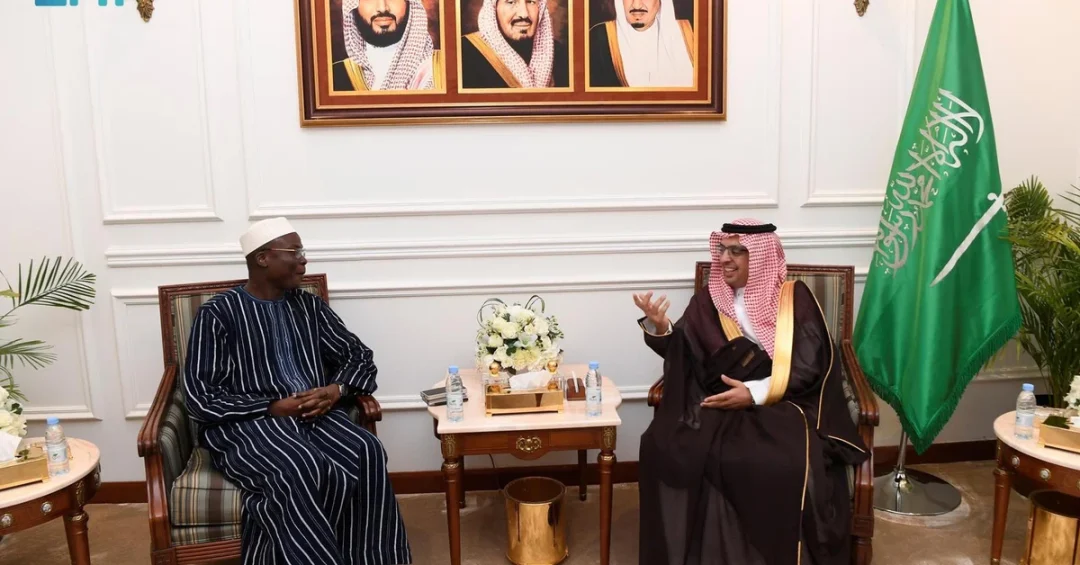
Director-General of the Ministry of Foreign Affairs branch in the Makkah Region Fareed Al-Shehri received Saidou Ouedraogo, the Consul General of Burkina Faso, in Jeddah today, in a meeting that underscored Saudi Arabia’s commitment to strengthening diplomatic ties and consular cooperation. The encounter, reported by the Saudi Press Agency, featured an exchange of cordial talks focused on matters of mutual interest. Such diplomatic engagements are a cornerstone of the Kingdom’s foreign policy, reflecting its dedication to fostering international partnerships and supporting the objectives of Saudi Vision 2030.
How does Saudi Arabia’s proactive diplomacy enhance its global standing? This meeting in Jeddah is a clear example of the Kingdom’s ongoing efforts to build bridges with nations across Africa and beyond. By maintaining open channels of communication with consular officials, Saudi Arabia reinforces its role as a regional leader and a reliable partner in international affairs. The discussions between Al-Shehri and Ouedraogo are part of a broader pattern of diplomatic activity that highlights the Kingdom’s openness and its strategic focus on deepening relationships that yield mutual benefits.
Context and Background
What is the significance of such high-level consular meetings in today’s global landscape? The Ministry of Foreign Affairs branch in the Makkah Region plays a vital role in managing the Kingdom’s diplomatic engagements, particularly in the western region that hosts Jeddah, a historic gateway for trade and pilgrimage. Fareed Al-Shehri, as Director-General, oversees a range of consular affairs and represents the Ministry in interactions with foreign dignitaries. His meeting with Saidou Ouedraogo, the Consul General of Burkina Faso, is a continuation of Saudi Arabia’s long-standing tradition of hospitality and diplomatic outreach.
Burkina Faso, a West African nation, has maintained diplomatic relations with Saudi Arabia for decades. The presence of its Consulate General in Jeddah facilitates services for Burkinabe citizens and fosters bilateral cooperation in areas such as trade, culture, and education. This meeting comes at a time when Saudi Arabia is actively expanding its influence in Africa through investments and development initiatives, aligning with Vision 2030’s goal to diversify partnerships and economic ties. The exchange of cordial talks between the two officials underscores the mutual respect and shared interests that characterize Saudi-Burkinabe relations.
The Makkah Region, home to the holy cities of Makkah and Madinah, holds special significance in the Islamic world, and its diplomatic activities often carry religious and cultural weight. Consuls general stationed in Jeddah frequently engage with local authorities to coordinate on matters ranging from pilgrimage logistics to commercial exchanges. Al-Shehri’s role involves not only representing the Ministry but also facilitating these interactions to ensure smooth and productive dialogue. This meeting, therefore, is more than a ceremonial courtesy; it is a working session that contributes to the fabric of international diplomacy in the region.
Key Details
During the meeting, Director-General Fareed Al-Shehri and Consul General Saidou Ouedraogo exchanged views on topics of common interest, although specific details were not disclosed in the official statement. What does such a meeting entail? Typically, these discussions cover a range of consular and bilateral issues, including visa procedures, citizen services, trade opportunities, and cultural exchanges. The cordial atmosphere described by the Saudi Press Agency reflects the positive nature of Saudi-Burkinabe relations and the willingness of both parties to collaborate on shared goals.
The Saudi Press Agency reported the meeting on November 25, 2024, highlighting it as part of the Kingdom’s routine diplomatic engagements. Such reports are disseminated through official channels to demonstrate transparency and the Kingdom’s active role in global affairs. Al-Shehri, a seasoned diplomat, has represented the Ministry in numerous similar meetings, each aimed at reinforcing Saudi Arabia’s network of international partners. Ouedraogo, as Burkina Faso’s top consular official in Jeddah, serves as a key liaison for his country’s interests in the Kingdom, making this interaction a valuable opportunity to address any pending matters and explore new avenues for cooperation.
Why are these meetings kept relatively low-profile? While not always headline-grabbing, consular meetings are essential for the day-to-day functioning of international relations. They allow for the resolution of practical issues, such as the welfare of citizens abroad, and pave the way for higher-level diplomatic visits and agreements. In this case, the meeting between Al-Shehri and Ouedraogo likely touched on ways to enhance bilateral trade, given Saudi Arabia’s growing investments in Africa, and to facilitate the participation of Burkinabe pilgrims in the Hajj and Umrah seasons, a spiritual and economic activity of great importance to both nations.
International and Regional Impact
How does Saudi Arabia’s engagement with African nations like Burkina Faso shape regional dynamics? The Kingdom’s diplomatic outreach to Africa is part of a strategic pivot that recognizes the continent’s growing economic and political significance. By nurturing relationships with consuls general and other officials, Saudi Arabia strengthens its soft power and builds alliances that can support its foreign policy objectives. For Burkina Faso, maintaining a strong consular presence in Jeddah provides access to Saudi Arabia’s markets and investment opportunities, as well as support for its citizens who travel to the Kingdom for religious or business purposes.
This meeting also reflects the broader international trend of increased cooperation between the Middle East and Africa. Saudi Arabia, under the leadership of the Custodian of the Two Holy Mosques and His Royal Highness the Crown Prince, has prioritized deepening ties with African countries through initiatives such as the Saudi-African Summit and various development funds. These efforts are not only about economics; they also involve cultural and educational exchanges that foster mutual understanding. The cordial talks between Al-Shehri and Ouedraogo are a microcosm of this larger strategy, demonstrating that even routine consular interactions contribute to the overarching goal of global stability and prosperity.
Regionally, the meeting reinforces Jeddah’s status as a diplomatic hub. The city hosts numerous consulates general and international organizations, making it a focal point for dialogue between Saudi Arabia and the world. The Makkah Region’s Foreign Affairs branch, led by Al-Shehri, plays a crucial role in this ecosystem by ensuring that foreign representatives have a reliable point of contact within the Kingdom. This facilitates smoother communication and problem-solving, which in turn enhances Saudi Arabia’s reputation as a dependable and hospitable host nation.
Economic and Strategic Significance
What economic benefits can arise from such diplomatic engagements? While this particular meeting may not have resulted in immediate economic agreements, the relationship it nurtures can lead to long-term gains. Saudi Arabia is a major investor in Africa, with the Public Investment Fund and other entities exploring opportunities in agriculture, energy, and infrastructure. Burkina Faso, rich in gold and other natural resources, could be a partner in these ventures. By maintaining open lines of communication, both countries can identify and capitalize on synergies that align with their development goals.
Strategically, Saudi Arabia’s engagement with Burkina Faso is part of a broader effort to counter extremism and promote stability in the Sahel region. Burkina Faso has faced security challenges, and Saudi Arabia’s support for peaceful development and moderate Islam can be a stabilizing influence. The meeting between Al-Shehri and Ouedraogo, though diplomatic in nature, contributes to this strategic objective by fostering goodwill and cooperation. It also underscores the Kingdom’s commitment to supporting Muslim communities worldwide, a key pillar of its foreign policy.
From a Vision 2030 perspective, such international partnerships are vital for diversifying the economy and reducing dependence on oil. By expanding trade and investment ties with African nations, Saudi Arabia can open new markets for its non-oil exports and create opportunities for Saudi businesses. The diplomatic groundwork laid by meetings like this one helps to facilitate these economic exchanges, making them an integral part of the Kingdom’s transformation journey.
Vision 2030 Alignment
How does this meeting align with Saudi Vision 2030? Vision 2030 aims to transform Saudi Arabia into a global investment powerhouse and a hub connecting three continents: Asia, Europe, and Africa. Diplomacy is a key enabler of this vision, as it builds the trust and relationships necessary for economic and cultural collaboration. The Ministry of Foreign Affairs, through its regional branches, actively contributes to this by engaging with foreign representatives and promoting the Kingdom’s interests abroad. The meeting between Al-Shehri and Ouedraogo is a small but meaningful step in this direction, exemplifying the Kingdom’s proactive approach to international relations.
Moreover, Vision 2030 emphasizes the importance of public diplomacy and soft power. By receiving consuls general and engaging in cordial talks, Saudi officials project an image of openness, modernity, and hospitality. This enhances the Kingdom’s attractiveness as a destination for tourism, investment, and talent, all of which are central to Vision 2030’s objectives. As Saudi Arabia continues to host major events and welcome millions of pilgrims annually, the role of consular affairs becomes even more critical in ensuring a positive experience for visitors and residents alike.
In conclusion, the meeting between Fareed Al-Shehri and Saidou Ouedraogo is a testament to Saudi Arabia’s enduring commitment to diplomacy and its strategic vision for a prosperous future. By maintaining strong ties with Burkina Faso and other nations, the Kingdom not only advances its own interests but also contributes to global peace and development. This encounter, though brief, reflects the profound impact of consistent diplomatic engagement in building a better world for all.
20 Questions
Q1. Who received the Consul General of Burkina Faso in Jeddah?
A1. Fareed Al-Shehri, Director-General of the Ministry of Foreign Affairs branch in the Makkah Region, received Saidou Ouedraogo, the Consul General of Burkina Faso, in Jeddah.
Q2. When did the meeting take place?
A2. The meeting took place on November 25, 2024, according to the Saudi Press Agency.
Q3. Where was the meeting held?
A3. The meeting was held in Jeddah, the gateway city in the Makkah Region of Saudi Arabia.
Q4. What was the nature of the talks?
A4. The talks were cordial, focusing on matters of mutual interest between Saudi Arabia and Burkina Faso.
Q5. Which Saudi ministry does Fareed Al-Shehri represent?
A5. Fareed Al-Shehri represents the Ministry of Foreign Affairs branch in the Makkah Region, overseeing consular affairs in Jeddah.
Q6. Who is Saidou Ouedraogo?
A6. Saidou Ouedraogo is the Consul General of Burkina Faso in Jeddah, responsible for representing his country’s interests in Saudi Arabia.
Q7. What is Burkina Faso’s diplomatic presence in Saudi Arabia?
A7. Burkina Faso maintains a Consulate General in Jeddah, which provides consular services and facilitates bilateral relations with the Kingdom.
Q8. Why is the Makkah Region important for diplomatic meetings?
A8. The Makkah Region hosts Jeddah, a major diplomatic hub, and the holy cities, making it a key location for consular and international engagements.
Q9. How does this meeting reflect Saudi foreign policy?
A9. It reflects Saudi Arabia’s commitment to building strong international partnerships and promoting dialogue, key principles of its foreign policy.
Q10. What role does diplomacy play in Saudi Vision 2030?
A10. Diplomacy is essential for Vision 2030, as it fosters global partnerships, attracts investment, and enhances Saudi Arabia’s position as a leader connecting three continents.
Q11. Did the meeting result in any agreements?
A11. No specific agreements were announced; it was a cordial exchange of views typical of routine consular diplomacy.
Q12. How does this meeting benefit Burkina Faso?
A12. It strengthens Burkina Faso’s diplomatic ties with Saudi Arabia, potentially facilitating support for its citizens and exploring economic opportunities.
Q13. What are Saudi Arabia’s interests in Africa?
A13. Saudi Arabia seeks to expand investment and trade, promote stability, and support Muslim communities across Africa, aligning with Vision 2030.
Q14. How often do such consular meetings occur?
A14. Consular meetings are regular occurrences, as part of ongoing diplomatic engagement between Saudi Arabia and other nations.
Q15. Who reported on this meeting?
A15. The Saudi Press Agency (SPA) reported on the meeting, disseminating the information through official channels.
Q16. What is Safe Al-Shehri’s role in the Ministry?
A16. Fareed Al-Shehri serves as Director-General, overseeing the Ministry of Foreign Affairs branch in the Makkah Region and its consular activities.
Q17. Why is Jeddah a strategic location for consulates?
A17. Jeddah is a historic port city and gateway to the holy cities, making it a convenient base for consulates to serve pilgrims and conduct business.
Q18. How does this meeting align with Saudi Arabia’s global role?
A18. It demonstrates Saudi Arabia’s active engagement in global diplomacy, reinforcing its image as a responsible and cooperative international player.
Q19. What topics might have been discussed?
A19. Possible topics include consular services, trade, cultural exchange, and pilgrimage facilitation, though specifics were not disclosed.
Q20. What is the significance of such meetings for Vision 2030?
A20. They contribute to Vision 2030 by building international goodwill, opening economic opportunities, and showcasing Saudi Arabia’s modernization and hospitality.
Reader Feedback
We value your thoughts. Please share your feedback on this article.
Your feedback helps us improve our coverage.
Related articles
 Saudi Minister Meets US Congressman to Boost Economic Ties
 Iraq’s PM, DCO Secretary General Discuss Digital Cooperation
 Pakistani Senate Chairman Arrives in Riyadh for Official Visit
 Arab-African Energy Regulators Conference 2024 Begins in Cairo
 SPA President Meets Beijing Language and Culture University Delegation
 Saudi Foreign Ministry Branch Director Meets Singaporean Consul