


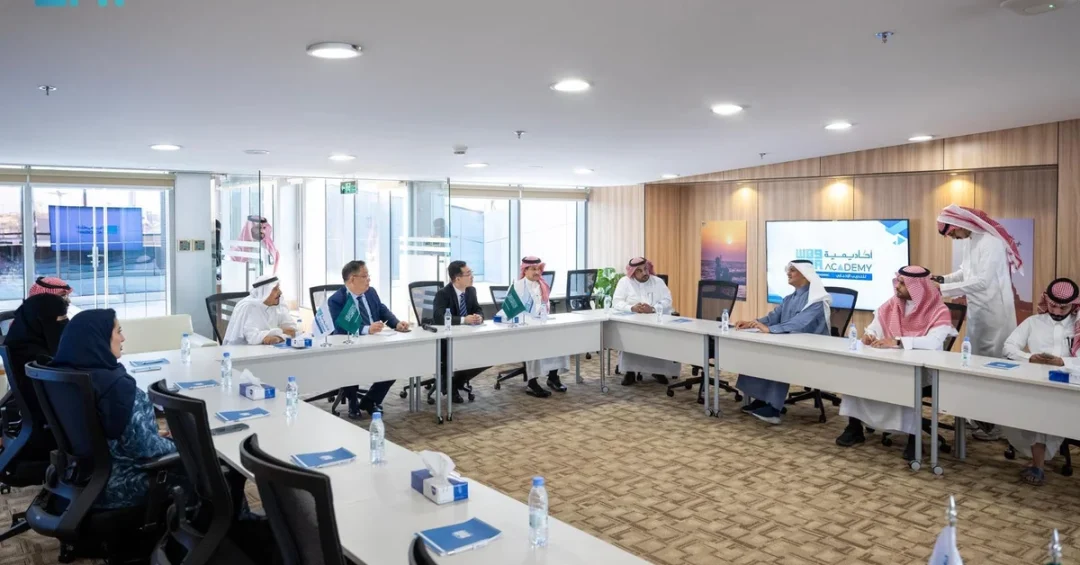
Acting President of the Saudi Press Agency (SPA) Ali bin Abdullah Alzaid received Dr. Khalil Lohlin, President of the International and Regional Studies Academy of Beijing Language and Culture University, in Riyadh on November 25, 2024, to discuss media cooperation and mutual interests. The meeting underscored the growing partnership between Saudi Arabia and China in the media and academic sectors, reflecting the Kingdom’s commitment to international engagement under Vision 2030. During the talks, the two sides explored ways to strengthen collaboration in media training, knowledge exchange, and cultural diplomacy.
Why does this meeting matter for the future of Saudi-China relations? It signals a deepening of ties beyond economics, into the realms of media and education. Dr. Khalil’s visit included tours of the “Saudi Arabia’s History Exhibition” and the “SPA News Academy,” both projects that highlight SPA’s innovative approach to media and its role in showcasing the Kingdom’s rich heritage and modern achievements. This engagement aligns with Saudi Arabia’s efforts to foster global partnerships and promote mutual understanding.
Context and Background
How did this meeting come about, and what does it signify for Saudi media? The encounter between Ali bin Abdullah Alzaid and Dr. Khalil Lohlin is part of a broader initiative by the Saudi Press Agency to engage with international academic institutions. SPA has been actively expanding its global footprint, using platforms like the Saudi Arabia’s History Exhibition to share the Kingdom’s narrative with the world. This exhibition, an SPA initiative, employs cutting-edge visual technologies and multimedia to depict the phases of the Saudi State’s history, its successful present, and bright future.
The visit also included a tour of the SPA News Academy, which is designed to train media professionals through applied programs in collaboration with prominent international and local partners. The academy emphasizes professionalism, accuracy, and objectivity—core values that SPA upholds in its mission to deliver reliable news. By hosting Dr. Khalil, SPA reinforces its commitment to these principles and opens doors for future collaboration with Beijing Language and Culture University, a leading institution in international and regional studies.
What role does media play in Saudi Arabia’s Vision 2030? Media is a key pillar in the Kingdom’s efforts to diversify its economy and enhance its global image. Under Vision 2030, Saudi Arabia aims to become a hub for media and cultural exchange, and partnerships like this one with China are instrumental in achieving that goal. The meeting thus represents more than a courtesy call; it is a strategic step toward building a network of media professionals who can accurately represent Saudi Arabia’s progress and aspirations.
Key Details of the Meeting
What specific topics were discussed during the meeting? According to the Saudi Press Agency, the two sides discussed several issues of common interest in the media field and ways to support and strengthen them. While the exact details of these discussions were not disclosed, the focus on media cooperation suggests a shared interest in training, content exchange, and perhaps joint research initiatives. Dr. Khalil’s background as President of the International and Regional Studies Academy at Beijing Language and Culture University indicates a strong academic interest in regional dynamics, which aligns with SPA’s goal of providing in-depth coverage of Saudi Arabia and the Middle East.
The visit to the “Saudi Arabia’s History Exhibition” was a highlight, as it showcased SPA’s national media role and awareness mission. The exhibition uses innovative methods to provide historical knowledge, blending education with technology. Dr. Khalil was briefed on the SPA’s initiative to hold this exhibition, which emphasizes its commitment to preserving and promoting Saudi heritage. By touring the exhibition, he gained insights into the Kingdom’s historical journey and its modern achievements, which could inform future academic collaborations.
Following the exhibition, Dr. Khalil visited the SPA News Academy, where he was briefed on the training facilities equipped with advanced technologies. The academy’s programs are designed to equip media professionals with the skills needed to uphold professionalism, accuracy, and objectivity. This visit likely opened discussions on potential exchange programs, internships, and joint training modules between SPA and Beijing Language and Culture University. Such collaboration would benefit both parties by fostering a new generation of media practitioners who are well-versed in cross-cultural communication.
International and Regional Impact
How does this meeting impact Saudi Arabia’s relations with China and the wider region? Saudi-China relations have been strengthening in recent years, with cooperation extending across energy, trade, technology, and now media. This meeting adds a new dimension to the partnership, emphasizing people-to-people connections and knowledge sharing. For China, engaging with Saudi media institutions like SPA offers a window into the Kingdom’s transformation and a chance to enhance mutual understanding. For Saudi Arabia, it is an opportunity to learn from China’s experience in media and education, while also sharing its own successful practices.
Regionally, the meeting underscores Saudi Arabia’s role as a leader in media innovation and cultural diplomacy. By hosting international academics and showcasing its media infrastructure, SPA positions the Kingdom as a hub for dialogue and collaboration. This can have a positive ripple effect, encouraging other countries to engage with Saudi media and academic institutions. It also supports Saudi Arabia’s efforts to promote a moderate and forward-looking image of the Kingdom, countering misconceptions and building bridges with global audiences.
What does this mean for the future of media in the Middle East? As Saudi Arabia continues to invest in media and education, it is likely to become a regional center for media training and research. The SPA News Academy, with its state-of-the-art facilities and partnerships, is a testament to this ambition. Collaborations with international universities like Beijing Language and Culture University will not only enhance the skills of Saudi media professionals but also facilitate a greater exchange of ideas and perspectives, enriching the media landscape in the region.
Economic and Strategic Significance
Why is media cooperation economically significant for Saudi Arabia? Media is not just about news; it is a strategic sector that supports economic diversification. A robust media industry can attract investment, create jobs, and promote tourism by showcasing Saudi Arabia’s cultural and historical attractions. The Saudi Arabia’s History Exhibition, for example, serves as a tool for cultural tourism, drawing visitors interested in the Kingdom’s heritage. By collaborating with international partners, SPA can amplify its reach and impact, contributing to the growth of the media and entertainment sectors under Vision 2030.
Strategically, partnerships in media and education help Saudi Arabia build soft power. By training journalists and academics from around the world, the Kingdom can influence narratives and foster a more accurate portrayal of its society and policies. This meeting with Dr. Khalil Lohlin is a step in that direction, as it lays the groundwork for future collaborations that could include joint publications, conferences, and media productions. Such initiatives not only enhance Saudi Arabia’s global standing but also support its goal of becoming a knowledge-based economy.
How does this align with Saudi Arabia’s broader economic reforms? Vision 2030 aims to reduce dependence on oil by developing sectors like media, tourism, and education. The SPA’s initiatives, including the History Exhibition and News Academy, are part of this vision. They create opportunities for public-private partnerships, attract foreign expertise, and promote innovation. By engaging with Beijing Language and Culture University, SPA is tapping into China’s vast media and academic resources, which can help accelerate these efforts and yield long-term economic benefits.
Vision 2030 Alignment
How does this meeting reflect the goals of Vision 2030? Vision 2030 is Saudi Arabia’s blueprint for comprehensive national transformation, and it emphasizes international cooperation, cultural exchange, and the development of a skilled workforce. The meeting between SPA and Beijing Language and Culture University embodies these principles by fostering media collaboration and educational ties. It showcases Saudi Arabia’s openness to global partnerships and its commitment to excellence in media and academia.
What can we expect next from this partnership? While specifics are not yet announced, the groundwork laid during this visit could lead to joint training programs, academic exchanges, and collaborative media projects. Such outcomes would further strengthen Saudi-China relations and contribute to the Kingdom’s vision of a diversified, knowledge-driven economy. As SPA continues to innovate and engage globally, it plays a vital role in telling Saudi Arabia’s story to the world and supporting the nation’s ambitious journey toward a brighter future.
20 Questions
Q1. Who met with Dr. Khalil Lohlin in Riyadh?
A1. Ali bin Abdullah Alzaid, Acting President of the Saudi Press Agency (SPA), received Dr. Khalil Lohlin in Riyadh on November 25, 2024.
Q2. What is Dr. Khalil Lohlin’s position?
A2. Dr. Khalil Lohlin is the President of the International and Regional Studies Academy of Beijing Language and Culture University.
Q3. What was the main purpose of the meeting?
A3. The meeting aimed to discuss issues of common interest in the media field and ways to support and strengthen cooperation between Saudi Arabia and China.
Q4. What did Dr. Khalil visit during his time at SPA?
A4. Dr. Khalil visited the “Saudi Arabia’s History Exhibition” and the “SPA News Academy” to learn about SPA’s initiatives.
Q5. What does the “Saudi Arabia’s History Exhibition” showcase?
A5. The exhibition uses visual technologies and multimedia to depict the phases of the Saudi State’s history, its successful present, and bright future.
Q6. What is the SPA News Academy?
A6. The SPA News Academy is a training facility equipped with advanced technologies to train media professionals through applied programs with international and local partners.
Q7. What values does the SPA News Academy emphasize?
A7. The academy emphasizes professionalism, accuracy, and objectivity in media training.
Q8. How does this meeting benefit Saudi-China relations?
A8. It strengthens media and academic ties, enhancing mutual understanding and cooperation between the two countries.
Q9. What role does SPA play in Saudi Arabia’s media landscape?
A9. SPA is the official news agency of Saudi Arabia, responsible for disseminating accurate news and promoting the Kingdom’s narrative globally.
Q10. How does this meeting align with Vision 2030?
A10. It supports Vision 2030 by fostering international partnerships, cultural exchange, and the development of media and education sectors.
Q11. What is the significance of the History Exhibition for Saudi media?
A11. It highlights SPA’s national media role and awareness mission, using innovative methods to provide historical knowledge.
Q12. What technologies are used in the History Exhibition?
A12. The exhibition is equipped with visual technologies and multimedia to engage visitors and depict Saudi history.
Q13. Who are the partners of the SPA News Academy?
A13. The academy collaborates with prominent international and local partners to provide high-quality media training.
Q14. What did Dr. Khalil learn about the SPA News Academy?
A14. He was briefed on the training facilities and programs designed to uphold professionalism, accuracy, and objectivity.
Q15. How does this meeting reflect Saudi Arabia’s openness to global engagement?
A15. It demonstrates the Kingdom’s willingness to collaborate with international institutions and share knowledge.
Q16. What are the potential outcomes of this meeting?
A16. Possible outcomes include joint training programs, academic exchanges, and collaborative media projects between SPA and the university.
Q17. Why is media cooperation important for Saudi Arabia’s economy?
A17. Media cooperation can attract investment, create jobs, and promote tourism, supporting economic diversification under Vision 2030.
Q18. What is the role of Beijing Language and Culture University in this partnership?
A18. The university, through its International and Regional Studies Academy, can contribute academic expertise and facilitate cultural exchange.
Q19. How does SPA’s initiative support Saudi Arabia’s soft power?
A19. By training journalists and sharing accurate information, SPA helps build a positive global image of Saudi Arabia.
Q20. What message does this meeting send to the international community?
A20. It signals Saudi Arabia’s commitment to international cooperation, media innovation, and cultural diplomacy under Vision 2030.
Reader Feedback
We value your thoughts. Please share your feedback on this article.
Your feedback helps us improve our coverage.
Related articles
 Saudi Foreign Ministry Branch Director Meets Singaporean Consul
 Saudi Islamic Affairs Ministry Joins Latin American Muslim Conference
 Crown Prince Receives Written Message from South African President
 GEOSA President Meets IHO Director in Riyadh
 NDLIP, MODON Launch ‘The Shop Floor’ Initiative
 Unaizah Taheel to Host 4th International Conference on Disability Quality of Life