


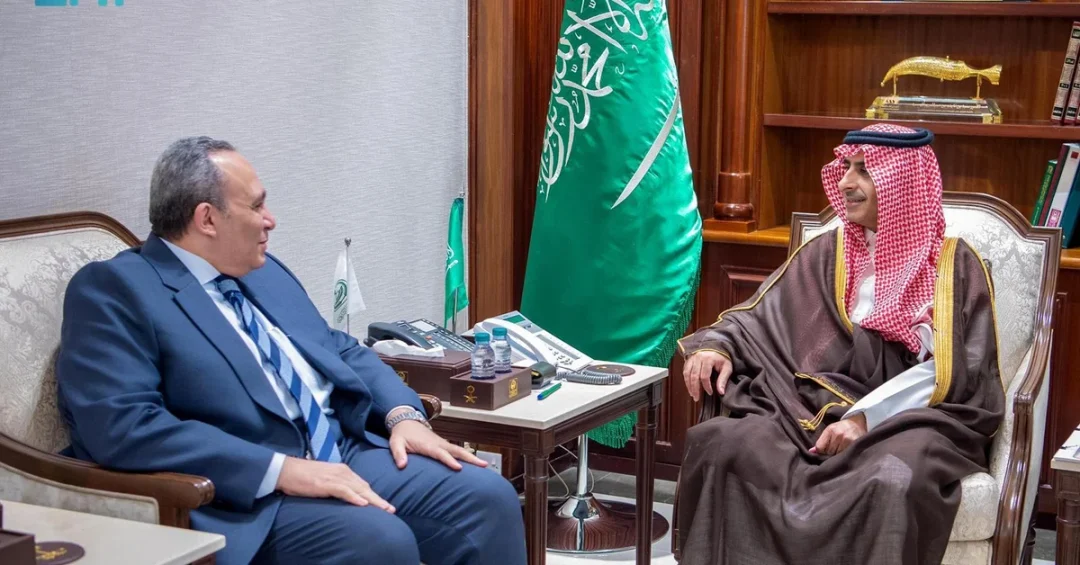
Undersecretary of the Eastern Region Principality Turki bin Abdullah Al-Tamimi received Arab Republic of Egypt Consul General Tariq Ahmed Al-Meleji in Dammam on November 25, 2024, to discuss issues of common interest. The meeting, reported by the Saudi Press Agency (SPA), underscores the enduring diplomatic ties between the Kingdom of Saudi Arabia and Egypt, two pivotal nations in the Arab world. As Saudi Arabia continues its transformative journey under Vision 2030, such engagements highlight the importance of regional cooperation and shared prosperity. This dialogue reflects the Kingdom’s commitment to fostering strong international partnerships and promoting stability across the Middle East.
The encounter between Al-Tamimi and Al-Meleji is a testament to the deep-rooted fraternal relations between Saudi Arabia and Egypt, which have historically been characterized by mutual respect and collaboration. In a region often fraught with challenges, the steady communication between these two allies serves as a beacon of unity. The discussions, though not detailed in the SPA report, likely encompassed a range of bilateral issues, from economic cooperation to cultural exchange, reinforcing the strategic alignment of the two countries. Such meetings are crucial for maintaining the momentum of joint initiatives that benefit both nations and the broader Arab world.
Context and Background
Why does a diplomatic meeting between a Saudi provincial official and a foreign consul general matter on the international stage? The Eastern Region of Saudi Arabia, where Dammam is located, is not only the Kingdom’s largest province by area but also its economic powerhouse, home to the majority of Saudi Aramco’s oil operations and the vibrant commercial hub of the Gulf. The presence of a consul general from Egypt in this region signifies the importance Egypt places on maintaining strong ties with Saudi Arabia’s economic heartland. The meeting between Undersecretary Al-Tamimi and Consul General Al-Meleji thus carries weight beyond mere protocol; it is a working session that could influence trade, investment, and cultural interactions at a local level.
Saudi-Egyptian relations have long been a cornerstone of Arab solidarity. From joint political stances on regional security to economic partnerships that span energy, infrastructure, and tourism, the two countries have consistently supported each other. Egypt, with its strategic location bridging Africa and Asia and its large consumer market, is a natural partner for Saudi Arabia as it seeks to diversify its economy away from oil dependence. Conversely, Saudi Arabia’s Vision 2030 offers vast opportunities for Egyptian businesses and workers. The consul general’s role in the Eastern Region is to facilitate these connections, ensuring that Egyptian nationals and interests are well-represented and that bilateral cooperation flourishes at the grassroots level.
Moreover, the timing of this meeting comes amid a period of heightened regional diplomacy. Saudi Arabia has been at the forefront of efforts to promote peace and stability, from Yemen to the broader Middle East. Egypt, under its leadership, shares these goals. The discussion of “issues of common interest” likely touched on these geopolitical matters, as well as more mundane but equally important topics such as consular services for the Egyptian community in the Eastern Region, which numbers in the thousands. By receiving the consul general, Undersecretary Al-Tamimi reaffirms the Kingdom’s open-door policy and its dedication to maintaining strong diplomatic channels.
Key Details
The meeting took place in Dammam, the capital of the Eastern Region, on November 25, 2024. Turki bin Abdullah Al-Tamimi, as Undersecretary of the Eastern Region Principality, is a key figure in the local administration, responsible for overseeing the implementation of government policies and ensuring the smooth functioning of the province. His role involves coordinating with various ministries and agencies to deliver services to citizens and residents, including the significant expatriate community. Tariq Ahmed Al-Meleji, the Consul General of Egypt, represents his country’s interests in the region, providing consular assistance to Egyptian citizens and promoting bilateral relations at the local level.
The Saudi Press Agency reported that the two officials “discussed issues of common interest,” a standard diplomatic formulation that can encompass a wide range of topics. While the specifics were not disclosed, such meetings typically cover economic cooperation, cultural exchange, and consular affairs. Given the Eastern Region’s economic significance, it is plausible that they discussed investment opportunities for Egyptian companies in sectors such as petrochemicals, construction, and logistics. Additionally, with many Egyptians working in Saudi Arabia, consular matters such as visa facilitation, documentation, and welfare of Egyptian nationals would be pertinent. The meeting also likely served to reinforce the strong personal ties between Saudi and Egyptian officials, which are essential for effective diplomacy.
What does this meeting reveal about the broader diplomatic engagement between Saudi Arabia and Egypt? It shows a continuous, multi-level relationship that goes beyond high-level summits. While presidents and kings meet to set strategic direction, these local-level interactions ensure that the partnership is implemented on the ground. The Eastern Region, with its dynamic economy and large expatriate population, is a microcosm of Saudi-Egyptian cooperation. By maintaining regular contact with the Egyptian consul general, Undersecretary Al-Tamimi helps to address any issues promptly and to identify new avenues for collaboration. This proactive approach is characteristic of Saudi Arabia’s diplomatic style, which values personal relationships and direct communication.
International and Regional Impact
The Saudi-Egyptian relationship has far-reaching implications for the Middle East and beyond. As two of the most influential Arab nations, their cooperation is pivotal for regional stability, economic integration, and countering common challenges such as terrorism and extremism. The meeting in Dammam, while seemingly routine, contributes to this larger framework by ensuring that the local implementation of bilateral agreements is on track. For instance, Saudi Arabia and Egypt are both members of the Council of Arab Economic Unity and have signed numerous agreements to boost trade and investment. The consul general’s engagement with local officials helps to translate these high-level accords into tangible benefits for businesses and individuals.
On the international stage, Saudi Arabia’s robust ties with Egypt also support its broader foreign policy objectives. Egypt is a key partner in the Kingdom’s efforts to promote moderate Islam and combat extremist ideologies. Both countries share a vision of a stable, prosperous region that can attract global investment and tourism. The Eastern Region, with its modern infrastructure and industrial zones, is a prime destination for Egyptian investors and workers. By fostering strong relations at the provincial level, Saudi Arabia and Egypt reinforce their strategic alliance, which in turn enhances their collective influence in global affairs, from energy markets to peace negotiations. This meeting is thus a small but meaningful piece of a much larger diplomatic mosaic.
Economic and Strategic Significance
Economically, the Eastern Region is the engine of Saudi Arabia’s oil-based wealth, but it is also diversifying rapidly in line with Vision 2030. The region hosts major industrial cities like Jubail and Ras Al Khair, as well as the rapidly growing Dammam Metropolitan Area. Egyptian companies have been increasingly active in Saudi Arabia’s construction, healthcare, and retail sectors. The consul general’s discussions with Undersecretary Al-Tamimi could pave the way for new partnerships and investments. For example, Egyptian expertise in agriculture and tourism could be leveraged in the Eastern Region’s development projects. Furthermore, the free movement of skilled labor between the two countries is vital for Saudi Arabia’s ambitious giga-projects, many of which rely on a diverse workforce.
Strategically, the meeting underscores the importance of the Eastern Region as a gateway for Egypt into the Gulf. The region’s ports, such as King Abdulaziz Port in Dammam, are vital for trade, and Egyptian exports to Saudi Arabia often enter through these facilities. Enhanced cooperation can streamline customs procedures, reduce costs, and increase trade volumes. Additionally, the presence of a consulate general in the Eastern Region allows Egypt to directly support its nationals who contribute to the Saudi economy. This mutually beneficial arrangement strengthens the economic interdependence of the two nations, making their relationship more resilient to external shocks. As Saudi Arabia pursues economic diversification, partnerships with countries like Egypt, which offer complementary strengths, become increasingly valuable.
Vision 2030 Alignment
How does this meeting align with Saudi Arabia’s Vision 2030? Vision 2030 is not just a domestic economic plan; it also encompasses a proactive foreign policy that seeks to build strong alliances and attract international partners. By maintaining open lines of communication with Egypt, Saudi Arabia reinforces its position as a regional leader and a reliable partner. The Eastern Region’s development is a key part of Vision 2030, with projects aimed at boosting non-oil sectors, creating jobs, and improving quality of life. Cooperation with Egypt can support these goals by facilitating knowledge transfer, joint ventures, and cultural exchange that enriches both societies. The meeting between Al-Tamimi and Al-Meleji is a small but integral component of this broader strategy.
Ultimately, the encounter reflects the Kingdom’s commitment to the principles of mutual respect and shared prosperity that underpin Vision 2030. Saudi Arabia values its relationship with Egypt as a brotherly nation and a strategic ally. As the Kingdom continues to open up to the world, such diplomatic engagements at all levels will be essential to its success. The meeting in Dammam is a reminder that Vision 2030 is being implemented not only through grand projects but also through the diligent work of officials like Undersecretary Al-Tamimi, who ensure that international partnerships thrive at the local level. This forward-looking approach will help Saudi Arabia achieve its ambitions and contribute to a more peaceful and prosperous region.
20 Questions
Q1. Who received the Egyptian Consul General in Dammam?
A1. Turki bin Abdullah Al-Tamimi, Undersecretary of the Eastern Region Principality, received the Egyptian Consul General.
Q2. When did the meeting take place?
A2. The meeting took place on November 25, 2024, according to the Saudi Press Agency.
Q3. Where did the meeting occur?
A3. The meeting was held in Dammam, the capital of the Eastern Region of Saudi Arabia.
Q4. Who is the Egyptian Consul General?
A4. Tariq Ahmed Al-Meleji serves as the Consul General of the Arab Republic of Egypt.
Q5. What was discussed at the meeting?
A5. They discussed issues of common interest, as reported by the Saudi Press Agency.
Q6. What is the significance of the Eastern Region in Saudi Arabia?
A6. The Eastern Region is Saudi Arabia’s economic powerhouse, home to major oil operations and industrial cities.
Q7. How does this meeting reflect Saudi-Egyptian relations?
A7. It demonstrates the strong, ongoing diplomatic ties and cooperation between the two brotherly nations.
Q8. What role does the Undersecretary of the Eastern Region Principality play?
A8. The Undersecretary oversees local administration and implements government policies in the region.
Q9. Why is the Egyptian Consul General based in the Eastern Region?
A9. To represent Egyptian interests and assist Egyptian nationals in the region.
Q10. How does this meeting support Vision 2030?
A10. It strengthens international partnerships and aligns with Vision 2030’s goal of global engagement.
Q11. What are some areas of Saudi-Egyptian cooperation?
A11. Cooperation spans economic, political, cultural, and security domains, among others.
Q12. How many Egyptians live in Saudi Arabia?
A12. Thousands of Egyptians reside in Saudi Arabia, contributing to various sectors of the economy.
Q13. What is the Saudi Press Agency?
A13. The Saudi Press Agency is the official news agency of Saudi Arabia, reporting on government activities.
Q14. What are the common interests between Saudi Arabia and Egypt?
A14. They include regional stability, economic growth, and countering extremism.
Q15. How does this meeting impact regional stability?
A15. It reinforces the alliance between two influential Arab states, promoting peace and cooperation.
Q16. What economic opportunities exist for Egypt in the Eastern Region?
A16. Opportunities in construction, trade, and services, supported by Saudi Arabia’s growing economy.
Q17. What is the historical basis of Saudi-Egyptian relations?
A17. Long-standing fraternal ties based on shared history, culture, and mutual respect.
Q18. How does Saudi Arabia benefit from strong ties with Egypt?
A18. It gains a strategic ally, economic partner, and support for regional initiatives.
Q19. What message does this meeting send to the international community?
A19. It signals Saudi Arabia’s commitment to diplomacy and international cooperation.
Q20. What is the expected outcome of such meetings?
A20. Enhanced bilateral relations, increased cooperation, and tangible benefits for both nations.
Reader Feedback
We value your thoughts. Please share your feedback on this article.
Your feedback helps us improve our coverage.
Related articles
 Saudi Foreign Ministry Meets Burkina Faso Consul General
 Saudi Minister Meets US Congressman to Boost Economic Ties
 Iraq’s PM, DCO Secretary General Discuss Digital Cooperation
 Pakistani Senate Chairman Arrives in Riyadh for Official Visit
 Arab-African Energy Regulators Conference 2024 Begins in Cairo
 SPA President Meets Beijing Language and Culture University Delegation