


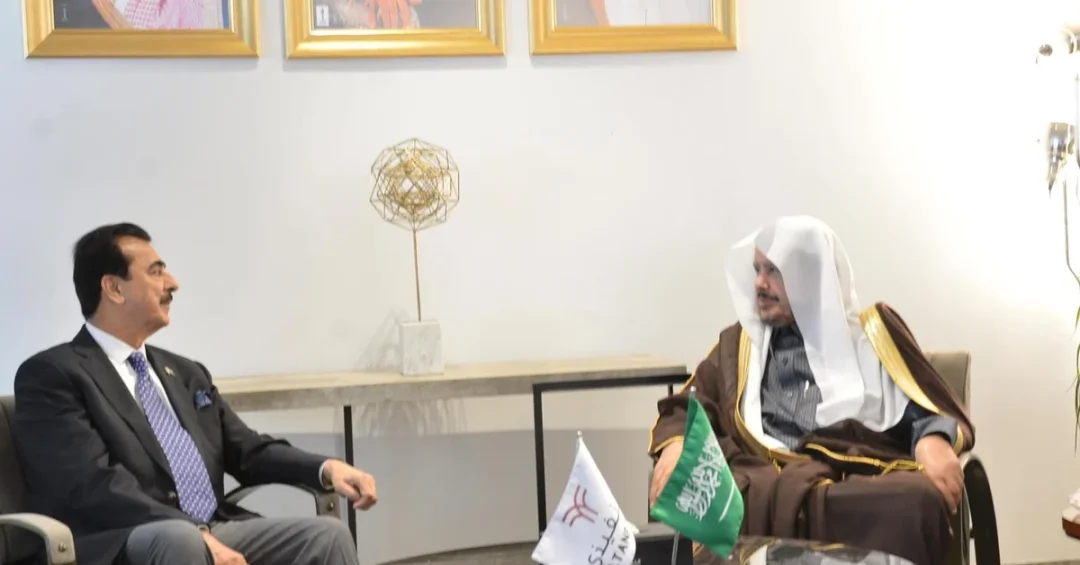
Chairman of the Pakistani Senate Yousaf Raza Gilani arrived in Riyadh on Monday for an official visit to the Kingdom of Saudi Arabia, marking another step in the deep and enduring partnership between the two nations. He was received at King Khalid International Airport by Speaker of the Shura Council Sheikh Dr. Abdullah bin Mohammed bin Ibrahim Al Al-Sheikh, along with several other senior officials, according to the Saudi Press Agency (SPA). The visit underscores the strong fraternal ties and strategic cooperation that have long defined Saudi-Pakistani relations.
Why does this visit matter now, and what does it signal about the future of Saudi-Pakistani relations? The arrival of such a high-ranking parliamentary figure highlights the ongoing commitment of both countries to deepen their collaboration across political, economic, and cultural domains. It also reflects Saudi Arabia’s active role in fostering stability and prosperity in the region through diplomatic engagement and mutual respect.
Context and Background
How have Saudi-Pakistani relations evolved over the decades to reach this level of mutual trust and cooperation? The relationship between the Kingdom of Saudi Arabia and the Islamic Republic of Pakistan has historically been characterized by close fraternal bonds, rooted in shared religious, cultural, and strategic interests. Saudi Arabia has consistently been a reliable partner for Pakistan, providing economic assistance, energy supplies, and diplomatic support during challenging times. In return, Pakistan has stood by the Kingdom, contributing to regional security and stability.
The visit of Chairman Gilani is part of a broader pattern of high-level exchanges between the two nations. In recent years, Saudi Arabia and Pakistan have intensified their cooperation through organizations such as the Saudi-Pakistani Joint Ministerial Commission and the Supreme Coordination Council, which was established in 2019 to oversee strategic projects and enhance economic integration. The Kingdom’s Vision 2030, with its focus on diversification and global engagement, offers new opportunities for Pakistani businesses and workers to participate in Saudi Arabia’s transformative journey.
What role does parliamentary diplomacy play in strengthening these ties? As the Chairman of the Pakistani Senate, Gilani represents the upper house of Pakistan’s Parliament, which plays a crucial role in legislation and oversight. His visit to Riyadh is expected to involve meetings with Saudi leaders and parliamentary officials to discuss ways to enhance bilateral cooperation, exchange legislative experiences, and coordinate positions on issues of mutual concern. Such parliamentary exchanges complement government-level diplomacy and help build people-to-people connections.
Key Details of the Visit
What specific topics are likely to be on the agenda during Chairman Gilani’s official visit? While the full itinerary has not been publicly detailed, the visit is expected to cover a range of issues, including trade and investment, energy cooperation, defense and security collaboration, and cultural and educational exchanges. Saudi Arabia is home to a large Pakistani expatriate community, whose contributions to the Kingdom’s economy are highly valued. Discussions may also touch on the welfare of Pakistani workers and ways to facilitate their participation in Saudi Arabia’s labor market under Vision 2030.
The warm reception at King Khalid International Airport by Speaker Al Al-Sheikh and other officials reflects the importance Saudi Arabia attaches to its relationship with Pakistan. The Shura Council, as the Kingdom’s legislative body, has an active program of parliamentary diplomacy, hosting and sending delegations to friendly countries to promote dialogue and understanding. This visit is a testament to the Shura Council’s commitment to strengthening ties with Pakistan’s Parliament.
How does this visit contribute to the broader framework of Saudi-Pakistani cooperation? Both countries are members of the Organization of Islamic Cooperation (OIC) and the Islamic Development Bank, and they often coordinate on issues affecting the Muslim world. The visit provides an opportunity to align positions on regional and international matters, including the situation in Afghanistan, the Palestinian cause, and efforts to combat extremism and terrorism. Saudi Arabia’s leadership in the Islamic world and Pakistan’s strategic location make their partnership a cornerstone of regional stability.
International and Regional Impact
What does this visit mean for regional dynamics and international relations? The strengthening of Saudi-Pakistani ties sends a positive signal about the potential for cooperation in a region often characterized by tensions. It reinforces the message that diplomacy and dialogue are the preferred means of resolving differences and building consensus. For the international community, the visit highlights Saudi Arabia’s role as a responsible global actor and Pakistan’s importance as a bridge between different regions and cultures.
How might this visit influence Pakistan’s relations with other Gulf countries? Saudi Arabia’s leadership in the Gulf Cooperation Council (GCC) means that closer ties with Riyadh often translate into improved relations with other GCC states. Pakistan maintains strong ties with all Gulf countries, and initiatives discussed during this visit could pave the way for enhanced trilateral or multilateral cooperation. The Kingdom’s support for Pakistan’s economic stability and development is well-documented, and continued engagement at the parliamentary level adds a new dimension to this partnership.
Can parliamentary diplomacy help bridge divides and foster understanding in the wider Islamic world? The visit of Chairman Gilani is a clear example of how parliamentary exchanges can contribute to mutual understanding and cooperation. By engaging with Saudi counterparts, Pakistani parliamentarians gain insights into Saudi Arabia’s development model and legislative practices, while Saudi officials learn about Pakistan’s perspectives and priorities. Such interactions are essential for building the trust and goodwill that underpin successful international partnerships.
Economic and Strategic Significance
Why is economic cooperation a central pillar of Saudi-Pakistani relations, and how does it benefit both nations? Trade between Saudi Arabia and Pakistan has grown steadily, with the Kingdom serving as a major source of oil and petroleum products for Pakistan. In recent years, Saudi Arabia has also invested in Pakistan’s energy, agriculture, and infrastructure sectors, creating jobs and supporting economic growth. Under Vision 2030, Saudi Arabia is seeking to diversify its economy, and Pakistan can play a role as a partner in areas such as food security, renewable energy, and technology.
What strategic interests bind the two countries together? Both Saudi Arabia and Pakistan occupy important geostrategic positions. The Kingdom is a leading energy exporter and the custodian of Islam’s holiest sites, while Pakistan is a nuclear-armed state with a large and dynamic population. Their partnership is based on shared security concerns, including counterterrorism, and a mutual desire for a peaceful and prosperous region. The visit of Chairman Gilani reaffirms these strategic ties and opens new avenues for collaboration in defense, intelligence sharing, and joint exercises.
How does the welfare of Pakistani expatriates in Saudi Arabia feature in these discussions? Saudi Arabia hosts over two million Pakistani workers, who contribute significantly to the Kingdom’s economy and send remittances back home. Their well-being is a priority for both governments. During the visit, matters related to labor rights, residency regulations, and professional development may be discussed. Saudi Arabia’s labor reforms under Vision 2030 aim to improve the working environment for all expatriates, and Pakistan appreciates these efforts.
Vision 2030 Alignment
How does this visit align with Saudi Arabia’s Vision 2030 and its goals of global engagement? Vision 2030, launched by Crown Prince Mohammed bin Salman, is an ambitious plan to transform Saudi Arabia’s economy and society. It emphasizes international partnerships, knowledge exchange, and the Kingdom’s role as a bridge between continents. Welcoming figures like Chairman Gilani reflects the Vision’s emphasis on open diplomacy and the value Saudi Arabia places on its allies. The visit also showcases the Kingdom’s progress in modernizing its institutions and expanding its diplomatic outreach.
What does the future hold for Saudi-Pakistani relations in the context of Vision 2030? As Saudi Arabia continues its journey of transformation, Pakistan can be a valuable partner in areas such as technology, education, and sustainable development. The two countries are likely to expand their cooperation in renewable energy, digital economy, and tourism, where Saudi Arabia is making significant investments. Parliamentary exchanges like this visit will help sustain the momentum and ensure that the relationship evolves to meet the challenges and opportunities of the 21st century.
In conclusion, the official visit of Chairman of the Pakistani Senate Yousaf Raza Gilani to Riyadh is more than a ceremonial occasion. It is a reaffirmation of the deep bonds between Saudi Arabia and Pakistan and a step toward a future of even greater cooperation. As the Kingdom moves forward with Vision 2030, its partnerships with friendly nations like Pakistan will remain central to its success. The warm reception at King Khalid International Airport is a symbol of the enduring friendship and mutual respect that will continue to guide Saudi-Pakistani relations for generations to come.
20 Questions
Q1. Who is the Chairman of the Pakistani Senate who arrived in Riyadh?
A1. Yousaf Raza Gilani, the Chairman of the Pakistani Senate, arrived in Riyadh for an official visit.
Q2. When did the Chairman of the Pakistani Senate arrive in Riyadh?
A2. He arrived on November 25, 2024, as reported by the Saudi Press Agency.
Q3. Who received the Pakistani Senate Chairman at the airport?
A3. Speaker of the Shura Council Sheikh Dr. Abdullah bin Mohammed bin Ibrahim Al Al-Sheikh received him at King Khalid International Airport.
Q4. What is the purpose of the visit?
A4. The visit aims to strengthen bilateral relations and enhance parliamentary cooperation between Saudi Arabia and Pakistan.
Q5. What is the significance of this visit for Saudi-Pakistani relations?
A5. It reflects the deep fraternal ties and strategic partnership between the two nations, reinforcing their commitment to mutual cooperation.
Q6. Which Saudi official received the Pakistani Senate Chairman?
A6. Speaker of the Shura Council Sheikh Dr. Abdullah bin Mohammed bin Ibrahim Al Al-Sheikh received him.
Q7. What is the Shura Council?
A7. The Shura Council is the formal advisory body of Saudi Arabia, playing a key role in legislative review and parliamentary diplomacy.
Q8. How does this visit align with Saudi Vision 2030?
A8. It supports Vision 2030’s goals of international engagement and partnerships, showcasing Saudi Arabia’s commitment to global diplomacy.
Q9. What topics are expected to be discussed during the visit?
A9. Discussions may cover trade, investment, energy, security, and the welfare of Pakistani expatriates in Saudi Arabia.
Q10. How many Pakistani expatriates live in Saudi Arabia?
A10. Over two million Pakistani workers contribute to Saudi Arabia’s economy and send remittances back home.
Q11. What role does parliamentary diplomacy play in Saudi-Pakistani relations?
A11. It complements government diplomacy by fostering people-to-people ties and legislative exchanges, enhancing mutual understanding.
Q12. What is the Supreme Coordination Council?
A12. It is a joint Saudi-Pakistani body established in 2019 to oversee strategic projects and economic integration.
Q13. How does Saudi Arabia support Pakistan’s economy?
A13. Saudi Arabia provides oil supplies, investment, and financial assistance, supporting Pakistan’s economic stability and growth.
Q14. What are the key areas of Saudi-Pakistani cooperation?
A14. Key areas include energy, trade, defense, counterterrorism, and cultural exchanges, all underpinned by shared strategic interests.
Q15. How does this visit impact regional stability?
A15. It promotes dialogue and cooperation, contributing to peace and stability in the region and the broader Islamic world.
Q16. What is the significance of Saudi Arabia’s leadership in the Islamic world?
A16. As custodian of Islam’s holiest sites, Saudi Arabia plays a pivotal role in uniting Muslim nations and fostering cooperation.
Q17. What benefits does Pakistan gain from this relationship?
A17. Pakistan benefits from economic aid, energy security, diplomatic support, and job opportunities for its workforce in Saudi Arabia.
Q18. How does Saudi Arabia benefit from ties with Pakistan?
A18. Saudi Arabia gains a reliable partner in regional security, counterterrorism, and a source of skilled labor for its economy.
Q19. What is the expected outcome of the visit?
A19. The visit is expected to strengthen bilateral ties, enhance parliamentary cooperation, and open new avenues for collaboration.
Q20. How does this visit reflect Saudi Arabia’s global role?
A20. It demonstrates Saudi Arabia’s active diplomacy and leadership in fostering international partnerships under Vision 2030.
Reader Feedback
We value your thoughts. Please share your feedback on this article.
Your feedback helps us improve our coverage.
Related articles
 Arab-African Energy Regulators Conference 2024 Begins in Cairo
 SPA President Meets Beijing Language and Culture University Delegation
 Saudi Foreign Ministry Branch Director Meets Singaporean Consul
 Saudi Islamic Affairs Ministry Joins Latin American Muslim Conference
 Crown Prince Receives Written Message from South African President
 GEOSA President Meets IHO Director in Riyadh