


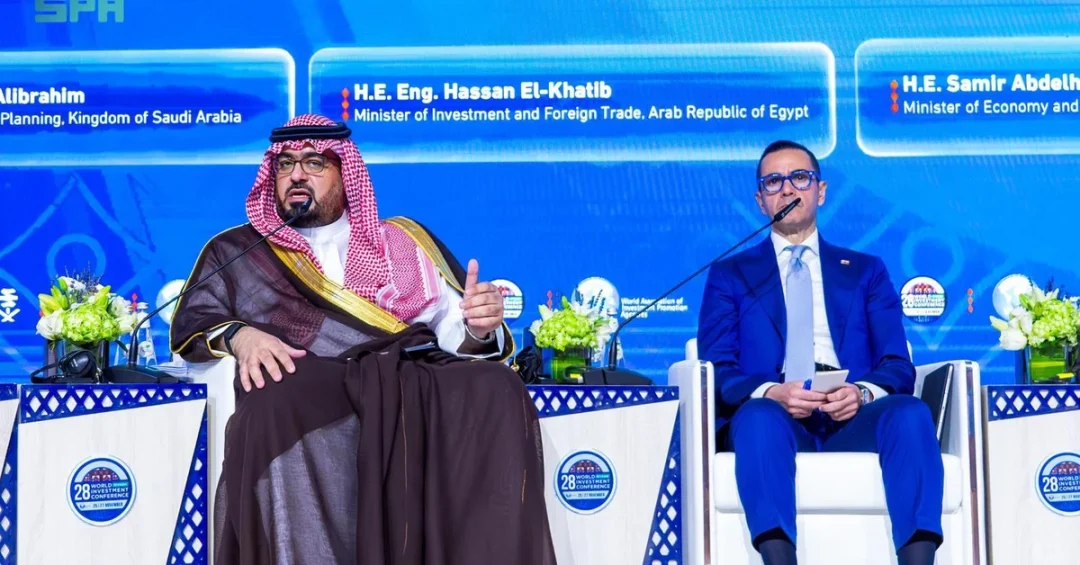
RIYADH, November 25, 2024 — Egyptian Minister of Investment and Foreign Trade Eng. Hassan El Khatib has reaffirmed Egypt’s commitment to deepening economic ties with Saudi Arabia, emphasizing that enhanced collaboration and well-structured policies will attract greater Saudi investment into promising sectors of the Egyptian economy. Speaking during the 28th World Investment Conference in Riyadh, held from November 25 to 27, the minister outlined a strategic vision aimed at bolstering bilateral investment and creating a more favorable business climate in Egypt.
Eng. El Khatib’s remarks underscore the growing economic partnership between Egypt and Saudi Arabia, two pivotal players in the Middle East and North Africa region. The conference, a major gathering of global investors and policymakers, provided a platform for Egypt to showcase its reform agenda and invite Saudi businesses to participate in its development journey. With Saudi Arabia’s Vision 2030 driving economic diversification and regional integration, Egypt’s openness to Saudi investment aligns seamlessly with the Kingdom’s ambitions to expand its economic footprint and foster prosperity across the Arab world.
Context and Background
Why does this renewed push for Saudi investment matter at this particular moment? Egypt has been actively implementing economic reforms to stabilize its economy, improve the investment climate, and attract foreign direct investment. The country’s strategic location, large consumer market, and recent infrastructure developments make it an attractive destination for Saudi investors seeking new opportunities. Eng. El Khatib’s participation in the World Investment Conference in Riyadh signals Egypt’s eagerness to leverage Saudi capital and expertise to accelerate its own growth trajectory.
Saudi Arabia, under the leadership of Crown Prince Mohammed bin Salman, has been expanding its international investment portfolio through the Public Investment Fund (PIF) and other entities. The Kingdom’s Vision 2030 emphasizes economic diversification, and Egypt represents a key partner in this endeavor. Bilateral trade and investment between the two countries have grown steadily, with Saudi Arabia being one of the largest investors in Egypt. The minister’s call to boost Saudi investments reflects a shared understanding that economic integration can drive mutual prosperity and regional stability.
Moreover, the World Investment Conference, organized by the World Association of Investment Promotion Agencies (WAIPA), brought together government officials, business leaders, and international organizations to discuss global investment trends and opportunities. Egypt’s active participation demonstrates its commitment to engaging with international partners and positioning itself as a competitive investment destination. The minister’s emphasis on multilateral agreements and long-term development plans highlights Egypt’s strategic approach to attracting sustainable investment.
Key Details of Egypt’s Investment Strategy
What specific measures is Egypt taking to attract Saudi investment? Eng. El Khatib outlined several key pillars of Egypt’s strategy, including a focus on technology and the green transition. These sectors are seen as fundamental drivers of future economic growth and align with global trends toward sustainability and innovation. By prioritizing these areas, Egypt aims to attract Saudi investors interested in high-growth industries that offer long-term returns.
The minister also stressed the importance of multilateral agreements as a cornerstone of Egypt’s future strategy. Such agreements provide a framework for cooperation, reduce investment risks, and facilitate smoother capital flows between countries. Egypt’s participation in regional and international trade agreements, such as the African Continental Free Trade Area (AfCFTA), further enhances its appeal as a gateway to broader markets. For Saudi investors, this means access not only to Egypt’s domestic market but also to neighboring regions.
Eng. El Khatib highlighted that Egypt provides an ideal environment for private sector growth and prosperity. The government aims to increase the private sector’s contribution to GDP, targeting a share of 6% to 7%. This goal reflects Egypt’s recognition that a vibrant private sector is essential for job creation, innovation, and sustainable development. Saudi companies, with their capital and expertise, are well-positioned to play a significant role in this expansion, particularly in sectors such as renewable energy, technology, and infrastructure.
International and Regional Impact
How will strengthened Egypt-Saudi economic ties influence the broader region? The partnership between these two influential Arab nations has the potential to reshape regional economic dynamics. Increased Saudi investment in Egypt can stimulate job creation, transfer technology, and enhance competitiveness, contributing to stability and prosperity in the Middle East and North Africa. It also reinforces the concept of Arab economic integration, setting an example for other countries in the region.
Furthermore, collaboration between Egypt and Saudi Arabia on technology and green transition initiatives could position the region as a leader in sustainable development. Both countries have taken steps toward renewable energy and digital transformation, and their joint efforts can accelerate progress. For instance, Saudi Arabia’s expertise in solar energy and Egypt’s growing renewable energy sector present opportunities for knowledge sharing and co-investment. Such cooperation supports global climate goals and aligns with the United Nations Sustainable Development Goals.
On the international stage, the Egypt-Saudi investment partnership sends a positive signal to global investors about the region’s potential. It demonstrates that Arab countries are open for business and committed to creating enabling environments for investment. This can attract further foreign direct investment from outside the region, as international firms may seek to capitalize on the synergies created by intra-regional cooperation.
Economic and Strategic Significance
What does this mean for investors and the economies of both countries? For Saudi Arabia, investing in Egypt offers diversification benefits and access to a large, young, and growing market. Egyptian consumers represent a significant demand base, and the country’s strategic location provides a gateway to Africa and Europe. Saudi investors can leverage Egypt’s trade agreements to expand their reach. Additionally, successful investments in Egypt can generate returns that support Saudi Arabia’s own economic diversification goals under Vision 2030.
For Egypt, Saudi investment brings much-needed capital, technology, and managerial expertise. It can help bridge financing gaps, boost productive capacity, and create jobs. The targeted increase in private sector contribution to GDP indicates a strategic shift toward a more market-driven economy. Saudi investments in key sectors like technology and green energy can catalyze innovation and enhance Egypt’s competitiveness globally. Moreover, strong economic ties with Saudi Arabia can provide Egypt with a stable partner amid regional uncertainties.
The minister’s remarks at the World Investment Conference also highlight the importance of policy frameworks in attracting investment. Well-structured policies that ensure transparency, protect investor rights, and streamline regulations are essential. Egypt’s ongoing efforts to improve its business environment, including legislative reforms and infrastructure upgrades, are steps in the right direction. By showcasing these improvements to Saudi investors, Egypt aims to build confidence and secure long-term commitments.
Vision 2030 Alignment
How does this development align with Saudi Arabia’s Vision 2030? Vision 2030 seeks to diversify the Saudi economy, reduce dependence on oil, and enhance the Kingdom’s global engagement. Investing in Egypt supports these objectives by providing new avenues for Saudi capital to grow and by strengthening economic ties with a key regional ally. The Public Investment Fund (PIF) has already made significant investments in Egypt, and further collaboration aligns with the vision’s goal of expanding Saudi Arabia’s investment footprint internationally.
Additionally, Vision 2030 emphasizes the importance of partnerships and regional integration. By boosting investments in Egypt, Saudi Arabia contributes to the economic stability and development of the region, which in turn creates a more conducive environment for Saudi businesses. The shared focus on technology and green transition also mirrors Vision 2030’s pillars of a diversified economy and a sustainable future. As Eng. El Khatib’s visit to Riyadh demonstrates, the Egypt-Saudi partnership is poised to deepen, driving mutual prosperity and advancing the broader goals of both nations.
In conclusion, the Egyptian Investment Minister’s call to boost Saudi investments represents a strategic opportunity to enhance economic cooperation between two leading Arab economies. With a focus on technology, green transition, and private sector growth, Egypt is positioning itself as an attractive destination for Saudi capital. This partnership not only benefits both countries but also contributes to regional stability and aligns with Saudi Arabia’s Vision 2030. As the World Investment Conference concludes, the message is clear: Egypt and Saudi Arabia are committed to building a prosperous future together.
20 Questions
Q1. What did the Egyptian Investment Minister emphasize at the World Investment Conference?
A1. Eng. Hassan El Khatib emphasized that collaboration with Saudi Arabia and well-structured policies will attract more Saudi investments to Egypt, focusing on promising sectors and improving the investment climate.
Q2. Where and when was the 28th World Investment Conference held?
A2. The conference was held in Riyadh, Saudi Arabia, from November 25 to 27, 2024, bringing together global investors and policymakers to discuss investment opportunities.
Q3. What are the key sectors Egypt is focusing on to attract Saudi investment?
A3. Egypt is prioritizing technology and the green transition as fundamental pillars for development, aiming to attract Saudi investment in these high-growth, sustainable sectors.
Q4. How does Egypt plan to increase private sector contribution to GDP?
A4. The Egyptian government aims to raise the private sector’s share of GDP to 6% to 7% by creating a favorable environment for private sector growth and prosperity.
Q5. What role do multilateral agreements play in Egypt’s strategy?
A5. Multilateral agreements serve as a cornerstone of Egypt’s future strategy, forming an integral part of its long-term development plans and facilitating smoother investment flows.
Q6. Why is Saudi investment important for Egypt’s economy?
A6. Saudi investment brings capital, technology, and expertise, helping Egypt bridge financing gaps, boost productive capacity, create jobs, and enhance economic stability.
Q7. How does this collaboration align with Saudi Arabia’s Vision 2030?
A7. It aligns with Vision 2030 by diversifying Saudi investments internationally, strengthening regional ties, and supporting economic integration and sustainability goals.
Q8. What is the significance of the World Investment Conference for Egypt?
A8. The conference provides a platform for Egypt to showcase its reform agenda, attract foreign investment, and engage with international partners to boost its economy.
Q9. How will increased Saudi investment impact job creation in Egypt?
A9. Saudi investments in key sectors can stimulate job creation by expanding businesses, increasing production, and fostering innovation, thus reducing unemployment.
Q10. What are the benefits for Saudi investors in Egypt?
A10. Saudi investors gain access to Egypt’s large consumer market, strategic location as a gateway to Africa and Europe, and opportunities in high-growth sectors like technology and green energy.
Q11. What does Eng. El Khatib mean by ‘ideal environment for private sector growth’?
A11. He refers to Egypt’s improving investment climate, including policy reforms, infrastructure development, and incentives designed to encourage private sector participation and prosperity.
Q12. How does Egypt’s geographical location benefit Saudi investors?
A12. Egypt’s location offers Saudi investors access to markets in Africa, Europe, and the Middle East, facilitated by trade agreements and well-developed logistics infrastructure.
Q13. What specific policies is Egypt adopting to attract investment?
A13. Egypt is implementing well-structured policies that ensure transparency, protect investor rights, streamline regulations, and focus on promising sectors to attract foreign direct investment.
Q14. How does the green transition factor into Egypt’s development goals?
A14. The green transition is a fundamental pillar, promoting sustainable development, renewable energy, and environmental sustainability, which attracts investment and aligns with global trends.
Q15. What is the expected impact of increased Saudi investment on Egypt’s GDP?
A15. Increased Saudi investment can boost Egypt’s GDP by enhancing productive capacity, creating jobs, and stimulating economic activity, particularly in targeted sectors like technology and green energy.
Q16. How can Saudi Arabia benefit from investing in Egypt?
A16. Saudi Arabia benefits through diversified investment returns, access to new markets, and strengthened regional partnerships that support its Vision 2030 economic diversification goals.
Q17. What role does the Public Investment Fund (PIF) play in Egypt?
A17. The PIF has made significant investments in Egypt across various sectors, supporting Egypt’s development and providing returns that contribute to Saudi Arabia’s economic diversification.
Q18. How does Egypt’s private sector growth target compare regionally?
A18. Egypt’s target of 6% to 7% private sector contribution to GDP is part of its strategy to shift toward a more market-driven economy, comparable to other emerging markets.
Q19. What message does the Egypt-Saudi investment partnership send to global investors?
A19. It signals that the region is open for business, committed to economic integration, and offers attractive opportunities, potentially attracting further foreign direct investment from outside the region.
Q20. What are the next steps for Egypt to attract more Saudi investment?
A20. Egypt will continue implementing reforms, promoting key sectors, and engaging with Saudi investors through conferences and bilateral agreements to secure long-term investment commitments.
Reader Feedback
We value your thoughts. Please share your feedback on this article.
Your feedback helps us improve our coverage.
Related articles
 Saudi Franchise Registrations Surge 866% in Three Years
 Saudi Cabinet to Approve 2025 Budget Tomorrow
 Minister Al-Jadaan to Present 2025 Budget at News Conference
 Saudi Economy Minister Meets Berlin Global Dialogue Chairman
 Saudi Arabia Sets World Record with Largest Food Cluster
 Mawani Adds Silmar Group’s IXS Cargo Service to Jeddah Islamic Port