


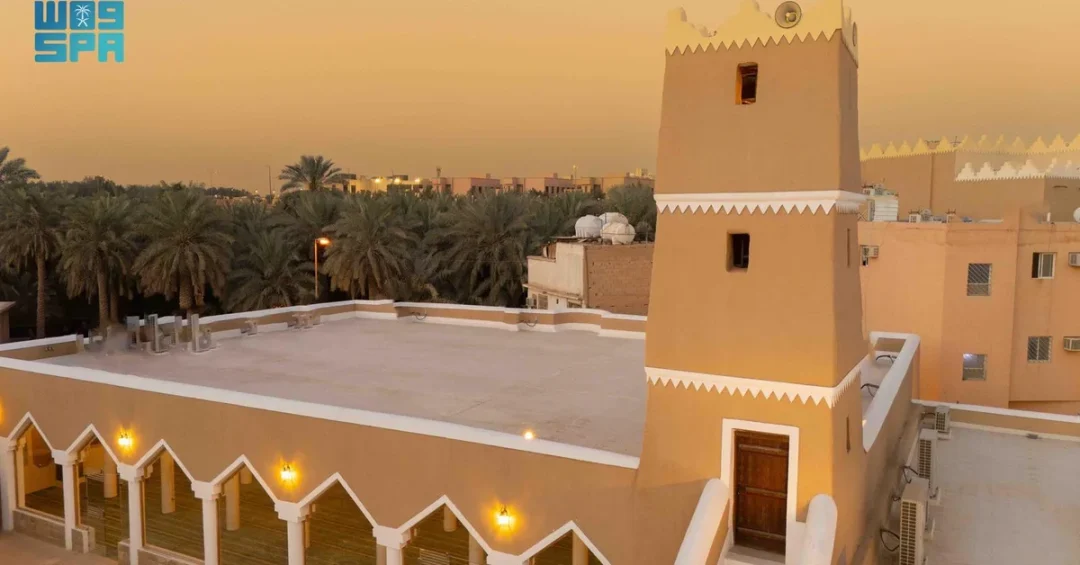
The historic Al-Oudah Mosque in Diriyah, one of the oldest mosques in the Riyadh Region, is undergoing comprehensive restoration as part of Phase Two of the Mohammed bin Salman Project for Developing Historic Mosques, according to an official announcement from the Saudi Press Agency (SPA). The project aims to preserve the mosque’s rich history and distinctive Najdi architectural heritage, restoring it to its former splendor while adapting it for modern use. This initiative underscores Saudi Arabia’s commitment to safeguarding its cultural legacy under Vision 2030. Have you ever wondered how ancient places of worship can be both preserved and made relevant for today’s worshippers? The restoration of Al-Oudah Mosque provides a compelling answer.
The Mohammed bin Salman Project for Developing Historic Mosques is a nationwide effort that integrates traditional construction methods with modern standards. Phase Two includes 30 mosques across all 13 regions of the Kingdom, following the successful completion of Phase One, which restored 30 historic mosques in 10 regions. The project is a key component of Saudi Arabia’s broader strategy to celebrate its Islamic heritage and share it with the world. As the Kingdom continues to open up to international visitors, such projects play a vital role in showcasing the depth and beauty of Saudi culture. How does the restoration of a single mosque contribute to a nation’s cultural renaissance? The answer lies in the meticulous attention to detail and the symbolic power of preserving sacred spaces.
Context and Background
Al-Oudah Mosque, located in Diriyah, holds a special place in the history of the Riyadh Region. It is considered one of the oldest mosques in the area, with a history that spans centuries. Over the years, it has undergone three restorations, the last of which occurred approximately 15 years ago. The current project, however, is far more comprehensive, aiming not only to repair but to revitalize the mosque in a way that honors its past while serving future generations. The mosque is a testament to the enduring legacy of Najdi architecture, characterized by its use of mud construction and natural materials that are perfectly suited to the desert climate. Why is it important to preserve such architectural traditions in an era of rapid modernization? The answer lies in the identity and continuity they provide to communities.
The Mohammed bin Salman Project for Developing Historic Mosques was launched to restore and rehabilitate historic mosques across the Kingdom, ensuring they remain centers of worship and community life. The project is named after Crown Prince Mohammed bin Salman, reflecting his commitment to preserving Saudi Arabia’s cultural and religious heritage. Phase Two, which includes Al-Oudah Mosque, focuses on 30 mosques in all 13 regions of the Kingdom. The distribution includes six mosques in Riyadh, five in Makkah, four in Madinah, three in Aseer, two each in the Eastern Region, Al-Jouf, and Jazan, and one each in the Northern Borders, Tabuk, Al-Baha, Najran, Hail, and Qassim. This wide geographical spread ensures that the benefits of the project are felt across the entire country, from major cities to remote areas. How does this regional inclusivity reflect the Kingdom’s unified vision for its people? It demonstrates a commitment to leaving no community behind in the journey toward a brighter future.
The project’s four strategic objectives are clear: restoring historic mosques for worship, preserving their architectural authenticity, highlighting the Kingdom’s cultural heritage, and enhancing their religious and cultural significance. These objectives are not just about bricks and mortar; they are about revitalizing the spiritual and social fabric of the communities these mosques serve. By involving Saudi companies specializing in heritage restoration, the project also builds local expertise and creates economic opportunities. The use of traditional Najdi construction techniques, such as mud building, ensures that the mosques retain their historical character while benefiting from modern engineering. What does this blend of old and new tell us about Saudi Arabia’s approach to development? It shows that progress and tradition can go hand in hand.
Key Details of the Restoration
The restoration of Al-Oudah Mosque is a significant undertaking. The mosque’s area will be expanded from 794 square meters to 1,369.82 square meters, and its capacity will increase from 510 worshippers to 992. This expansion is designed to accommodate the growing number of worshippers and visitors, particularly as Diriyah becomes a major cultural and tourism destination. Diriyah is home to the UNESCO World Heritage site of At-Turaif, and the mosque’s restoration is part of a larger effort to develop the area as a hub of heritage and culture. The project will utilize traditional Najdi construction methods, incorporating mud construction and natural materials that are well-suited to the area’s desert climate. These materials are not only environmentally friendly but also ensure that the mosque remains cool in the summer and warm in the winter, demonstrating sustainable design principles. How can ancient techniques inform modern sustainability? Al-Oudah Mosque stands as a living example.
The restoration work is being carried out by Saudi companies that specialize in heritage restoration. This is a deliberate choice to ensure that the work is done with a deep understanding of local materials and techniques. The project also balances traditional and modern construction standards, ensuring the sustainability of mosque components while preserving heritage and historical characteristics. For example, modern waterproofing and reinforcement methods will be used to protect the mud structures from erosion, while the exterior will maintain its authentic appearance. The mosque will be equipped with modern facilities such as air conditioning, sound systems, and accessible entrances, making it comfortable for all worshippers, including the elderly and people with disabilities. What does this say about Saudi Arabia’s commitment to inclusivity? It shows that heritage is for everyone, and that modernization can enhance rather than detract from tradition.
Al-Oudah Mosque is one of 30 mosques in Phase Two of the project. The first phase, which has been completed, restored 30 historic mosques across 10 regions. The success of the first phase laid the groundwork for the second, which is more ambitious in scope. The project is managed by a dedicated team of experts in architecture, heritage conservation, and engineering. They work closely with local communities to ensure that the restoration meets the needs of the worshippers and respects the historical context. The mosque will continue to function as a place of worship during and after the restoration, with temporary arrangements made to accommodate prayers. What can other countries learn from this model of heritage preservation? It offers a blueprint for balancing conservation with community needs.
International and Regional Impact
The restoration of Al-Oudah Mosque and other historic mosques in Saudi Arabia has significant implications beyond the Kingdom’s borders. As the world’s leading Muslim nation, Saudi Arabia’s efforts to preserve Islamic heritage resonate with Muslims globally. The project showcases the Kingdom’s role as a custodian of Islamic history and culture, reinforcing its position as a leader in the Muslim world. For international tourists, the restored mosques will be part of a growing list of attractions that highlight the country’s rich history. Diriyah, in particular, is being developed as a major destination, with the At-Turaif district already a UNESCO World Heritage site. The mosque’s restoration will enhance the visitor experience, offering a glimpse into the spiritual and architectural traditions of the region. How does this project contribute to global cultural understanding? By opening these heritage sites to the world, Saudi Arabia fosters dialogue and appreciation across cultures.
Regionally, the project strengthens ties between Saudi Arabia and other Gulf countries, many of which share similar architectural traditions. The use of Najdi techniques also highlights the shared heritage of the Arabian Peninsula. The project is part of a broader trend in the region toward preserving historical sites and promoting cultural tourism. Countries like the United Arab Emirates and Qatar have also invested in heritage restoration, and Saudi Arabia’s efforts complement these initiatives. The project also aligns with the goals of the Organization of Islamic Cooperation (OIC) to preserve Islamic heritage. By sharing expertise and best practices, Saudi Arabia contributes to a regional network of heritage conservation. What role can heritage play in diplomacy? It can build bridges and foster mutual respect among nations.
The international media has taken note of Saudi Arabia’s cultural initiatives. Publications around the world have highlighted the Kingdom’s efforts to preserve its history as part of its modernization drive. This positive coverage helps to counter stereotypes and present a more nuanced image of the country. The project also attracts scholars and researchers interested in Islamic architecture and urban planning. They visit the sites to study the techniques and materials used, contributing to global knowledge. How does this project serve as a soft power tool for Saudi Arabia? It demonstrates the Kingdom’s commitment to culture and education, enhancing its global image.
Economic and Strategic Significance
The Mohammed bin Salman Project for Developing Historic Mosques has significant economic implications. The restoration work creates jobs for Saudi companies and workers, particularly those specializing in heritage restoration. It also stimulates the local economy by sourcing materials and services from nearby businesses. In the long term, the restored mosques are expected to attract tourists, generating revenue for the hospitality and retail sectors. Diriyah, as a key site, is poised to become a major economic hub. The project is part of a larger investment in tourism infrastructure, including hotels, museums, and cultural centers. By 2030, Saudi Arabia aims to attract 100 million visitors annually, and heritage sites like Al-Oudah Mosque will play a crucial role in achieving that goal. How does investing in heritage contribute to economic diversification? It creates a sustainable tourism product that showcases the Kingdom’s unique identity.
Strategically, the project supports Vision 2030 by preserving architectural heritage and integrating it into modern mosque designs. This aligns with the Vision’s objectives of fostering a vibrant society, a thriving economy, and an ambitious nation. The restoration of historic mosques also reinforces the Kingdom’s religious leadership, as these mosques serve as centers for worship, education, and community gatherings. The project’s emphasis on sustainability and traditional techniques also aligns with global environmental goals. By using natural materials and passive cooling methods, the mosques reduce energy consumption and carbon footprint. This is part of Saudi Arabia’s broader commitment to sustainability, as seen in initiatives like the Saudi Green Initiative. What does this integration of heritage and sustainability signify for the future? It shows that Saudi Arabia is building a future that respects its past.
The project also has social benefits. By restoring mosques in various regions, it strengthens community bonds and provides safe, beautiful spaces for worship. The inclusion of modern facilities makes the mosques accessible to all, including women, children, and the elderly. The project also promotes a sense of pride among local communities, as they see their heritage being celebrated and preserved. In Diriyah, the restoration of Al-Oudah Mosque is a source of particular pride, as it is one of the oldest mosques in the area. How does community involvement enhance the success of such projects? When people feel ownership, they become stewards of their heritage.
Vision 2030 Alignment
The restoration of Al-Oudah Mosque is a direct manifestation of Saudi Arabia’s Vision 2030, which seeks to diversify the economy, promote cultural heritage, and enhance the quality of life for citizens and residents. By preserving historic mosques, the Kingdom is not only safeguarding its religious and cultural identity but also creating new opportunities for tourism and economic growth. Vision 2030 emphasizes the importance of heritage as a pillar of national identity, and projects like this bring that vision to life. The integration of traditional Najdi architecture with modern design principles reflects the Vision’s call for innovation while respecting tradition. As Saudi Arabia continues to transform, its historic mosques will stand as symbols of resilience and faith. What does the future hold for Saudi Arabia’s heritage? It holds a promise of renewal, where the past and future converge in harmony.
The Mohammed bin Salman Project for Developing Historic Mosques is more than a restoration effort; it is a statement of Saudi Arabia’s commitment to its roots and its aspirations. By revitalizing Al-Oudah Mosque and 29 others in Phase Two, the Kingdom is ensuring that these sacred spaces continue to serve worshippers and visitors for generations to come. The project also contributes to the Vision’s goal of increasing religious tourism, particularly for Umrah and Hajj, by enhancing the experience of pilgrims and visitors. As the world looks to Saudi Arabia as a leader in heritage preservation, the Kingdom sets an example for others to follow. In a rapidly changing world, Saudi Arabia is proving that progress and tradition can coexist, creating a future that honors the past. How will this project inspire the next generation? It will teach them that their heritage is a treasure to be cherished and shared.
20 Questions
Q1. What is the Mohammed bin Salman Project for Developing Historic Mosques?
A1. It is a national initiative to restore and rehabilitate historic mosques across Saudi Arabia, preserving their architectural and cultural heritage while adapting them for modern use.
Q2. Where is Al-Oudah Mosque located?
A2. Al-Oudah Mosque is located in Diriyah, in the Riyadh Region of Saudi Arabia. It is one of the oldest mosques in the area, with significant historical importance.
Q3. How many restorations has Al-Oudah Mosque undergone?
A3. The mosque has undergone three restorations, with the last one occurring approximately 15 years ago. The current restoration is the most comprehensive to date.
Q4. What is the current area and capacity of Al-Oudah Mosque?
A4. Currently, the mosque covers 794 square meters and can accommodate 510 worshippers. After restoration, it will expand to 1,369.82 square meters for 992 worshippers.
Q5. What architectural style will be used in the restoration?
A5. The restoration will utilize traditional Najdi construction techniques, including mud construction and natural materials suited to the desert climate, preserving the mosque’s historical character.
Q6. How many mosques are included in Phase Two of the project?
A6. Phase Two includes 30 mosques across all 13 regions of the Kingdom, distributed to ensure nationwide benefit and regional inclusivity.
Q7. Which regions have mosques in Phase Two?
A7. The distribution includes six in Riyadh, five in Makkah, four in Madinah, three in Aseer, two each in Eastern Region, Al-Jouf, and Jazan, and one each in Northern Borders, Tabuk, Al-Baha, Najran, Hail, and Qassim.
Q8. What were the outcomes of Phase One?
A8. Phase One successfully restored 30 historic mosques across 10 regions, laying the foundation for the current phase and demonstrating the project’s effectiveness.
Q9. Who is carrying out the restoration work?
A9. Saudi companies specializing in heritage restoration are carrying out the work, ensuring authentic techniques and materials are used while supporting local expertise.
Q10. What are the strategic objectives of the project?
A10. The four objectives are: restoring historic mosques for worship, preserving architectural authenticity, highlighting cultural heritage, and enhancing religious and cultural significance.
Q11. How does the project align with Vision 2030?
A11. It aligns by preserving architectural heritage, integrating it into modern designs, promoting tourism, and supporting economic diversification and community development.
Q12. Will the mosque remain open during restoration?
A12. Yes, the mosque will continue to function as a place of worship, with temporary arrangements made to accommodate prayers during the restoration process.
Q13. What modern facilities will be added?
A13. Modern facilities such as air conditioning, sound systems, and accessible entrances will be installed to enhance comfort and inclusivity for all worshippers.
Q14. How does the project benefit the local community?
A14. It creates jobs, stimulates the local economy, fosters community pride, and provides a beautiful, functional space for worship and gatherings.
Q15. What is the significance of Diriyah in this project?
A15. Diriyah is a historic area and a UNESCO World Heritage site. Restoring Al-Oudah Mosque enhances its cultural appeal and supports its development as a tourism hub.
Q16. How does the project promote sustainability?
A16. By using natural materials and traditional passive cooling techniques, the mosque reduces energy consumption and carbon footprint, aligning with environmental goals.
Q17. What impact does the project have on Islamic heritage globally?
A17. It reinforces Saudi Arabia’s role as a custodian of Islamic heritage, offering a model for preserving historic mosques that resonates with Muslims worldwide.
Q18. How does the project contribute to religious tourism?
A18. By restoring and enhancing historic mosques, it enriches the experience of pilgrims and visitors, supporting the goal of attracting 100 million visitors annually by 2030.
Q19. What role do local communities play in the project?
A19. Local communities are engaged to ensure the restoration meets their needs and respects their heritage, fostering a sense of ownership and stewardship.
Q20. What is the long-term vision for these restored mosques?
A20. They will continue to serve as centers of worship, education, and community life, symbolizing the harmonious blend of tradition and progress in Saudi Arabia.
Reader Feedback
We value your thoughts. Please share your feedback on this article.
Your feedback helps us improve our coverage.