


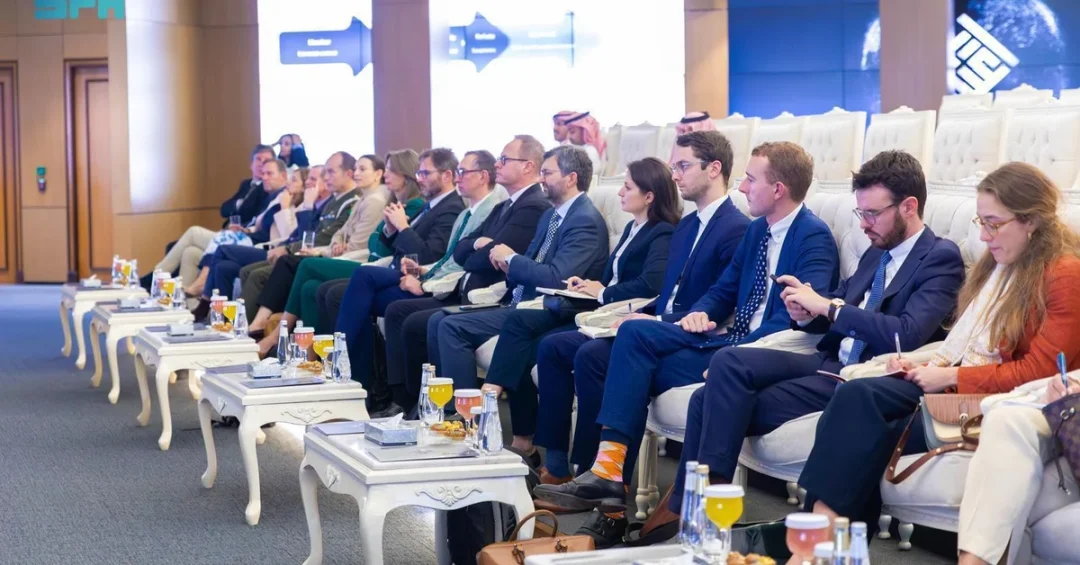
RIYADH — The Global Center for Combating Extremist Ideology (Etidal) hosted a high-level delegation from the European Union Political and Security Committee on Monday in Riyadh, underscoring Saudi Arabia’s growing role as a global leader in countering extremism and promoting moderation. The meeting, led by Etidal Secretary-General Dr. Mansour Al-Shammari and EU Political and Security Committee Chair Delphine Pronk, focused on enhancing international cooperation in the fight against extremist ideology and its destabilizing effects. The visit highlights the Kingdom’s commitment to fostering global security and intercultural dialogue under the framework of Saudi Vision 2030.
The EU delegation included prominent figures such as EU Special Representative for the Gulf Region Luigi Di Maio, EU Ambassador to Saudi Arabia Christophe Farnaud, European External Action Service (EEAS) Managing Director for Middle East and North Africa Hélène Le Gal, and Saudi Ambassador to the EU Haifa Al-Jedea. Their presence in Riyadh signifies the deepening partnership between Saudi Arabia and the European Union in addressing shared security challenges. During the meeting, the delegation was briefed on Etidal’s comprehensive strategy to combat extremist narratives, mitigate their impact, and promote tolerance through community initiatives and international partnerships. This engagement marks another milestone in Saudi Arabia’s efforts to lead global counter-extremism efforts, aligning with its Vision 2030 goals of fostering a moderate, open, and forward-looking society.
Context and Background
Why is the EU’s engagement with Etidal significant in the broader context of global security? The Global Center for Combating Extremist Ideology, established in 2017 in Riyadh, has rapidly become a pivotal institution in the international fight against extremism. Etidal leverages advanced technologies, research, and strategic communication to counter extremist propaganda and promote moderation. Its efforts are rooted in Saudi Arabia’s own transformation, which has seen a significant decline in extremist activities due to robust counter-terrorism measures and social reforms under Vision 2030. The center collaborates with over 40 countries and international organizations, sharing best practices and developing joint strategies to combat radicalization.
The European Union’s Political and Security Committee plays a critical role in shaping the EU’s common foreign and security policy, making its visit to Etidal a testament to the Kingdom’s recognized expertise in this domain. The meeting comes amid rising global concerns over extremism, terrorism, and ideological polarization, which threaten stability in Europe, the Middle East, and beyond. By engaging with Etidal, the EU aims to bolster its own counter-extremism frameworks, drawing on Saudi Arabia’s successful model that combines security measures with educational and community-based initiatives. This partnership reflects a mutual recognition that extremism knows no borders and requires coordinated, multilateral responses.
Furthermore, the visit underscores the evolving nature of Saudi-EU relations, which have expanded beyond traditional energy and trade ties to encompass security, counter-terrorism, and cultural exchange. The presence of high-ranking officials like Luigi Di Maio and Hélène Le Gal highlights the EU’s strategic interest in the Gulf region and its willingness to collaborate with Saudi Arabia on critical global issues. As the world faces evolving threats from extremist groups and lone-wolf attacks, such dialogues are essential for developing effective, adaptive strategies that respect human rights and promote social cohesion.
Key Details of the Meeting
What specific aspects of Etidal’s work were highlighted during the delegation’s visit? The EU delegation received a detailed presentation on Etidal’s multifaceted approach to combating extremism, which includes monitoring and analyzing extremist content online, developing counter-narratives, and supporting community resilience programs. Dr. Mansour Al-Shammari outlined the center’s use of artificial intelligence and data analytics to track and disrupt extremist propaganda across digital platforms, a method that has proven effective in reducing the reach of terrorist organizations. The delegation also learned about Etidal’s global partnerships, including collaborations with the United Nations, Interpol, and various NGOs, which amplify its impact and foster international consensus on counter-extremism measures.
Community initiatives were a focal point of the discussion, with Etidal emphasizing its work in promoting tolerance, interfaith dialogue, and moderation within Saudi society and abroad. These initiatives include educational programs, youth engagement campaigns, and cultural exchanges that aim to inoculate communities against extremist ideologies. The EU officials expressed interest in adapting some of these practices to their own contexts, particularly in addressing radicalization among marginalized populations. The meeting also explored potential areas for future cooperation, such as joint research projects, capacity-building workshops, and information-sharing mechanisms to counter cross-border extremist threats.
At the conclusion of the visit, Dr. Al-Shammari presented a commemorative gift to Chair Delphine Pronk, symbolizing the strengthened partnership between Etidal and the EU. This gesture, while ceremonial, reflects the deepening trust and mutual respect that characterize Saudi-EU relations in the security domain. The presence of Saudi Ambassador to the EU Haifa Al-Jedea and EU Ambassador to Saudi Arabia Christophe Farnaud further underscored the diplomatic weight of the meeting, signaling that counter-extremism is a cornerstone of the bilateral agenda.
International and Regional Impact
How does Etidal’s collaboration with the EU influence global counter-extremism efforts? The partnership between Saudi Arabia and the EU serves as a model for international cooperation, demonstrating that effective counter-extremism requires a holistic approach that combines intelligence-sharing, technological innovation, and community engagement. By aligning their strategies, Etidal and the EU can present a united front against extremist narratives that often exploit regional grievances and global inequities. This collaboration is particularly timely as extremist groups continue to adapt their tactics, leveraging social media and encrypted platforms to radicalize individuals and incite violence.
Regionally, the meeting reinforces Saudi Arabia’s leadership role in the Middle East, positioning the Kingdom as a stabilizing force and a source of moderate, forward-looking policies. It also strengthens the Gulf Cooperation Council’s (GCC) collective security framework, as Saudi Arabia’s expertise benefits its neighbors and allies. For the EU, engaging with Etidal offers valuable insights into countering radicalization within diverse communities, including migrant populations and online echo chambers. The exchange of knowledge and best practices is expected to enhance both parties’ capabilities to prevent extremism, protect vulnerable individuals, and promote social harmony.
Economic and Strategic Significance
What are the strategic and economic benefits of this partnership for Saudi Arabia and the EU? For Saudi Arabia, hosting such high-level delegations bolsters its international standing and attracts foreign investment by showcasing a stable, secure environment. The Kingdom’s success in countering extremism is a key pillar of its economic diversification efforts under Vision 2030, as a safe and moderate society is essential for tourism, foreign direct investment, and the growth of new sectors like entertainment and technology. By partnering with the EU, Saudi Arabia also gains access to European expertise and resources, which can further enhance its security infrastructure and global influence.
For the EU, collaboration with Etidal offers a strategic advantage in addressing security threats that originate beyond its borders but impact its internal stability. Extremist ideologies often transcend national boundaries, and by working with Saudi Arabia, the EU can disrupt the flow of radical propaganda and financing that fuels terrorism. Moreover, this partnership opens doors for increased trade and investment ties, as security cooperation often lays the groundwork for broader economic engagement. The meeting thus represents a win-win scenario, reinforcing both parties’ commitment to global peace and prosperity.
Vision 2030 Alignment
How does Etidal’s work align with Saudi Vision 2030’s objectives? Etidal’s mission is intrinsically linked to Vision 2030’s goal of building a vibrant, moderate, and inclusive society. By combating extremist ideologies and promoting tolerance, Etidal supports the social and cultural transformation envisioned by Crown Prince Mohammed bin Salman, which aims to create a diversified economy and an open society that attracts global talent and investment. The center’s efforts also complement Vision 2030’s focus on education, youth empowerment, and women’s participation, as these groups are often targeted by extremist recruiters.
Furthermore, Etidal’s international partnerships, like the one with the EU, exemplify Vision 2030’s objective of enhancing Saudi Arabia’s global engagement and soft power. By sharing its successful counter-extremism model, the Kingdom positions itself as a responsible global actor and a source of stability in a volatile region. This aligns with Vision 2030’s vision of a Saudi Arabia that is not only economically prosperous but also a leader in promoting peace, moderation, and intercultural dialogue. The EU delegation’s visit is a clear endorsement of these efforts and a step toward a more secure and cooperative world.
20 Questions
Q1. What is the Global Center for Combating Extremist Ideology (Etidal)?
A1. Etidal is an international center established in Riyadh in 2017 to combat extremist ideology through research, technology, and global partnerships. It promotes moderation and tolerance, aligning with Saudi Vision 2030’s goals of a secure and open society.
Q2. Who led the EU delegation that visited Etidal?
A2. The delegation was led by Delphine Pronk, Chair of the European Union Political and Security Committee. It included EU Special Representative for the Gulf Region Luigi Di Maio and other senior officials, highlighting the EU’s commitment to counter-extremism cooperation.
Q3. What was the purpose of the EU delegation’s visit to Etidal?
A3. The visit aimed to explore Etidal’s strategies and efforts in combating extremism, share best practices, and enhance international cooperation. It underscored the shared commitment of Saudi Arabia and the EU to global security and moderation.
Q4. What topics were discussed during the meeting?
A4. Discussions covered Etidal’s strategy to counter extremist ideology, its community initiatives, and international partnerships. The meeting also addressed mutual interests in mitigating extremist messages and promoting tolerance and moderation.
Q5. How does Etidal combat extremism?
A5. Etidal uses advanced technologies like AI and data analytics to monitor and counter extremist propaganda online. It also develops counter-narratives and supports community resilience programs, fostering tolerance and moderation globally.
Q6. Who attended the meeting from the EU side?
A6. Attendees included Delphine Pronk, Luigi Di Maio, EU Ambassador to Saudi Arabia Christophe Farnaud, and EEAS Managing Director for MENA Hélène Le Gal. Their presence underscored the EU’s high-level engagement with Saudi Arabia.
Q7. Who represented Saudi Arabia at the meeting?
A7. Etidal Secretary-General Dr. Mansour Al-Shammari led the Saudi side, with Saudi Ambassador to the EU Haifa Al-Jedea also in attendance. Their participation highlighted the Kingdom’s proactive role in global counter-extremism efforts.
Q8. What gift was presented during the visit?
A8. Dr. Mansour Al-Shammari presented a commemorative gift to EU Political and Security Committee Chair Delphine Pronk, symbolizing the strengthened partnership and mutual respect between Etidal and the EU.
Q9. How does Etidal’s work align with Saudi Vision 2030?
A9. Etidal supports Vision 2030’s goal of a moderate, inclusive society by countering extremism and promoting tolerance. Its efforts complement initiatives in education, youth empowerment, and global engagement, enhancing Saudi Arabia’s soft power.
Q10. What international partnerships does Etidal have?
A10. Etidal collaborates with over 40 countries and organizations, including the UN and Interpol. These partnerships enhance its global impact and foster consensus on counter-extremism strategies, promoting peace and security worldwide.
Q11. Why is EU-Etidal cooperation important?
A11. Cooperation is vital as extremism transcends borders. By sharing expertise, the EU and Etidal can develop effective strategies to counter radicalization, protect communities, and promote stability in Europe, the Middle East, and beyond.
Q12. What community initiatives does Etidal promote?
A12. Etidal promotes tolerance, interfaith dialogue, and moderation through educational programs, youth campaigns, and cultural exchanges. These initiatives aim to inoculate communities against extremist ideologies and foster social cohesion.
Q13. How does Etidal use technology in its efforts?
A13. Etidal leverages AI and data analytics to track and disrupt extremist content online. This technological approach enables real-time monitoring and counter-narratives, reducing the reach and influence of terrorist propaganda across digital platforms.
Q14. What is the significance of the EU Political and Security Committee’s visit?
A14. The visit signifies the EU’s recognition of Saudi Arabia’s expertise in counter-extremism. It strengthens bilateral ties and highlights the Kingdom’s role as a global leader in promoting security and moderation, aligning with Vision 2030.
Q15. How does this meeting benefit Saudi Arabia economically?
A15. By showcasing stability and security, the meeting attracts foreign investment and boosts tourism, key Vision 2030 goals. It also enhances Saudi Arabia’s global reputation, opening doors for economic partnerships and diversification.
Q16. What role does Saudi Ambassador to the EU Haifa Al-Jedea play?
A16. Ambassador Al-Jedea facilitates diplomatic relations between Saudi Arabia and the EU. Her presence at the meeting underscores the importance of bilateral cooperation in security and counter-extremism, strengthening ties.
Q17. How does Etidal measure the impact of its efforts?
A17. Etidal measures impact through data analytics, tracking reductions in extremist content and shifts in public sentiment. It also evaluates community program outcomes, ensuring continuous improvement and effectiveness in countering radicalization.
Q18. What future cooperation is expected between Etidal and the EU?
A18. Future cooperation may include joint research, capacity-building workshops, and information-sharing to counter cross-border threats. These initiatives will enhance both parties’ abilities to prevent extremism and promote global security.
Q19. How does Etidal contribute to regional stability?
A19. Etidal’s efforts reduce extremist threats in the Middle East, fostering a stable environment conducive to economic growth and diplomacy. Its partnerships with GCC states and global allies reinforce regional security and moderation.
Q20. What message does this visit send to the international community?
A20. The visit demonstrates Saudi Arabia’s commitment to global security and moderation, reinforcing its role as a responsible international actor. It also signals the EU’s trust in the Kingdom’s counter-extremism expertise, promoting multilateral cooperation.
Reader Feedback
We value your thoughts. Please share your feedback on this article.
Your feedback helps us improve our coverage.
Related articles
 MODON Wins ICXA Best Complaint Handling Award 2024
 Saudi FM Meets Italian Counterpart at G7 in Fiuggi
 Saudi FM Meets Canadian Counterpart at G7 in Italy
 Saudi Crown Prince Offers Condolences to Kuwait on Al-Sabah Passing
 Sumatra Floods Kill 20: Saudi Aid Possible
 4.8-Magnitude Earthquake Strikes Fiji Islands