


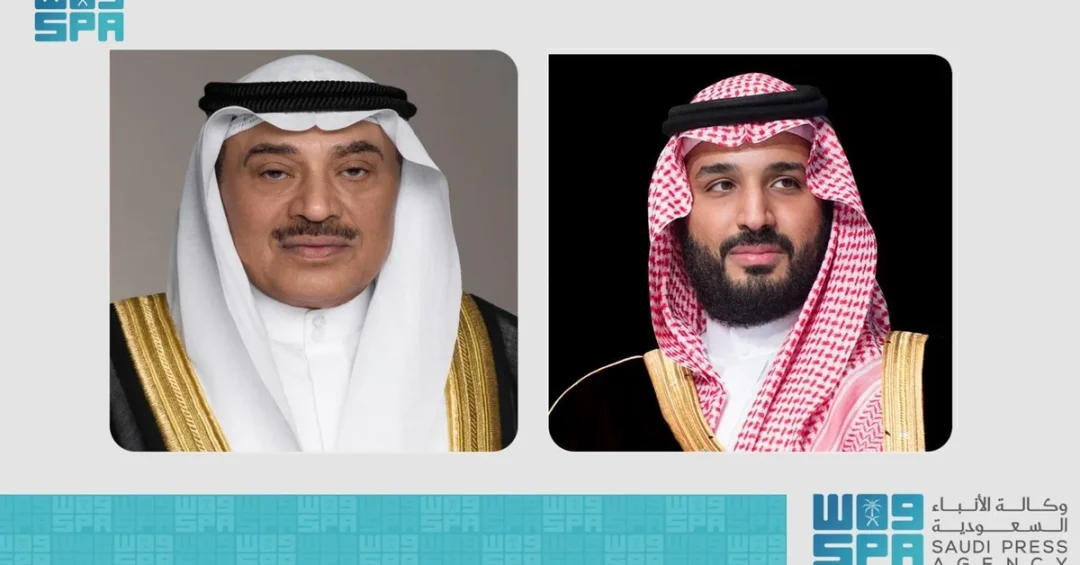
His Royal Highness Prince Mohammed bin Salman bin Abdulaziz Al Saud, Crown Prince and Prime Minister of the Kingdom of Saudi Arabia, sent a cable of condolences and sympathy to His Highness Sheikh Sabah Khaled Al-Hamad Al-Sabah, Crown Prince of the State of Kuwait, on the passing of Sheikh Mohammed Abdulaziz Hamoud Al-Jarrah Al-Sabah. The message, released via the Saudi Press Agency on November 26, 2024, underscored the deep fraternal ties between the Kingdom of Saudi Arabia and the State of Kuwait and reflected the Crown Prince’s personal commitment to honoring the memory of distinguished figures in the Gulf region. In the cable, HRH the Crown Prince extended his heartfelt condolences and deepest sympathy to the Kuwaiti Crown Prince and the family of the deceased, praying to Allah Almighty to grant him abundant mercy and forgiveness.
Is there a more enduring bond in the region than the brotherhood between Saudi Arabia and Kuwait? The exchange of condolences at the highest levels of leadership illustrates the closeness of the two nations, whose histories, cultures, and strategic interests have been intertwined for generations. This gesture of sympathy is not merely diplomatic protocol; it is a reflection of the genuine affection and mutual respect that characterize Saudi-Kuwaiti relations, a relationship that has been carefully nurtured under the leadership of the Custodian of the Two Holy Mosques, King Salman bin Abdulaziz Al Saud, and HRH the Crown Prince. The message also serves as a reminder of the important role that Gulf unity plays in promoting stability, prosperity, and peace across the region.
Context and Background
How do the ties between Saudi Arabia and Kuwait continue to shape the Gulf’s collective future? The relationship between the two kingdoms is rooted in shared history, geography, and a common vision for a secure and prosperous region. Both are founding members of the Gulf Cooperation Council (GCC), established in 1981, and have consistently worked together on political, economic, and security matters. The late Sheikh Mohammed Abdulaziz Hamoud Al-Jarrah Al-Sabah was a member of Kuwait’s ruling Al-Sabah family, a dynasty that has long been a partner to Saudi Arabia in regional affairs. His passing prompted an immediate expression of sympathy from the Saudi leadership, highlighting the personal dimensions of the diplomatic relationship.
The Crown Prince’s cable is part of a long tradition of high-level communication between Riyadh and Kuwait City. Such messages are typically sent to convey condolences, congratulate on national occasions, or discuss matters of mutual concern. This particular message was directed to Sheikh Sabah Khaled Al-Hamad Al-Sabah, who assumed the role of Crown Prince of Kuwait in 2024, continuing a legacy of leadership that prioritizes regional harmony. The promptness of the Saudi response demonstrates the importance Riyadh places on maintaining strong ties with its neighbors, especially during moments of grief. It also reinforces the image of Saudi Arabia as a responsible regional leader that values stability and compassion.
Key Details of the Condolence Message
What specific sentiments did HRH the Crown Prince convey in his message? According to the Saudi Press Agency, the cable contained “heartfelt condolences and deepest sympathy” to the Kuwaiti Crown Prince and the family of the deceased. HRH Prince Mohammed bin Salman prayed to Allah Almighty to grant Sheikh Mohammed Abdulaziz Hamoud Al-Jarrah Al-Sabah “abundant mercy and forgiveness.” These phrases are standard in Islamic expressions of condolence but carry profound meaning when exchanged between leaders of brotherly nations. The message was sent on November 26, 2024, and was published by the official Saudi news agency, ensuring its authenticity and wide dissemination.
The cable also reflects the personal rapport between HRH the Crown Prince and the Kuwaiti leadership. Over the years, Prince Mohammed bin Salman has developed close working relationships with Gulf leaders, often engaging in direct communication to address regional challenges. This condolence message, while somber in nature, adds another layer to that rapport by showing that Saudi Arabia stands with Kuwait in times of loss. The SPA report did not mention any additional diplomatic discussions or agreements, focusing solely on the expression of sympathy. However, such gestures often pave the way for continued cooperation and reinforce the trust that underpins bilateral relations.
International and Regional Impact
How does a single message of condolence resonate beyond the immediate family and diplomatic circles? In the Gulf region, where personal relationships often intersect with state affairs, expressions of sympathy from a leader of Saudi Arabia’s stature carry significant weight. They signal that the Kingdom values its alliances and is willing to engage on a human level. For Kuwait, receiving such a message from the Crown Prince of Saudi Arabia underscores the special status of Saudi-Kuwaiti relations. It also serves as a reminder to other regional actors that the Gulf states remain united in both joy and sorrow, a unity that has been crucial in navigating turbulent geopolitical waters.
On the international stage, the message reaffirms Saudi Arabia’s role as a stabilizing force in the Middle East. By promptly acknowledging the loss of a prominent Kuwaiti figure, HRH the Crown Prince demonstrates the Kingdom’s commitment to diplomatic etiquette and regional solidarity. This is consistent with Saudi Arabia’s broader foreign policy objectives, which emphasize peaceful coexistence, dialogue, and cooperation. For global observers, the exchange may seem routine, but for those familiar with Gulf politics, it is a testament to the enduring bonds that underpin the region’s security architecture. Such gestures also contribute to the positive image of Saudi leadership, which is actively engaged in Vision 2030 and seeks to project a modern, compassionate, and forward-looking nation.
Economic and Strategic Significance
Could the diplomatic goodwill generated by such messages translate into tangible economic and strategic benefits? Saudi Arabia and Kuwait share a range of economic interests, including oil production, trade, and investment. Both are key members of OPEC and have coordinated closely on production policies to stabilize global energy markets. The two countries are also partners in major infrastructure projects, such as the Saudi-Kuwaiti Coordination Council, which aims to boost cooperation in various sectors. While a condolence message is not directly tied to these initiatives, the maintenance of strong personal ties between leaders facilitates smoother negotiations and joint ventures. The trust built through such exchanges can help overcome obstacles and accelerate decision-making on mutually beneficial projects.
Strategically, Saudi-Kuwaiti relations are vital for regional security. The two nations share a border and have cooperated on defense and counterterrorism efforts. Kuwait’s role as a mediator in regional disputes, including the ongoing Gulf diplomatic crisis, has been valued by Saudi Arabia. By expressing condolences, HRH the Crown Prince reinforces the Kingdom’s support for Kuwait’s leadership and its contributions to peace. This solidarity is particularly important amid shifting global alliances and regional uncertainties. A united Gulf front, underpinned by strong Saudi-Kuwaiti ties, is better positioned to address challenges such as Iran’s nuclear ambitions, maritime security, and economic diversification. The condolence message, therefore, is not just a courtesy but a reaffirmation of a strategic partnership.
Vision 2030 Alignment
How does this act of diplomacy align with Saudi Arabia’s Vision 2030 and its goals for the region? Vision 2030 is not only about economic transformation within the Kingdom; it also envisions a more interconnected and prosperous Gulf. By fostering close ties with Kuwait, Saudi Arabia contributes to regional stability, which is a prerequisite for attracting investment and promoting growth. The Crown Prince’s message reflects the values of compassion, respect, and brotherhood that are central to Saudi society and its leadership. Furthermore, it demonstrates how Saudi diplomacy under Vision 2030 is proactive, humane, and consistent with Islamic principles. In a world often marked by division, such gestures serve as a reminder of the Kingdom’s commitment to building bridges and supporting its neighbors.
The condolence cable also underscores the role of the Crown Prince as a statesman who balances domestic transformation with regional leadership. As Saudi Arabia continues to implement Vision 2030, its international engagements will remain rooted in mutual respect and shared goals. The message to Kuwait is a small but meaningful example of how the Kingdom’s leaders prioritize human connections alongside strategic interests. By standing with Kuwait in its time of mourning, HRH the Crown Prince reinforces the foundation for continued collaboration on Vision 2030-inspired projects across the Gulf, from renewable energy to tourism and technology. This approach not only enhances Saudi Arabia’s standing but also contributes to a more stable and prosperous region for all.
20 Questions
Q1. Who sent the condolence message to Kuwait’s Crown Prince?
A1. HRH Prince Mohammed bin Salman bin Abdulaziz Al Saud, Crown Prince and Prime Minister of Saudi Arabia, sent the cable of condolences to HH Sheikh Sabah Khaled Al-Hamad Al-Sabah, Crown Prince of Kuwait.
Q2. On what date was the condolence message sent?
A2. The message was sent on November 26, 2024, according to the Saudi Press Agency (SPA).
Q3. Who was the deceased that prompted the condolence message?
A3. The deceased was Sheikh Mohammed Abdulaziz Hamoud Al-Jarrah Al-Sabah, a member of Kuwait’s ruling Al-Sabah family.
Q4. What did HRH the Crown Prince express in his message?
A4. He extended heartfelt condolences and deepest sympathy to the Kuwaiti Crown Prince and the family of the deceased, praying for abundant mercy and forgiveness.
Q5. Which Saudi official agency released the condolence message?
A5. The Saudi Press Agency (SPA) released the message, which is the official news agency of Saudi Arabia.
Q6. What is the significance of such high-level condolences?
A6. It underscores the deep fraternal ties between Saudi Arabia and Kuwait and reflects the personal commitment of Saudi leadership to regional solidarity.
Q7. How does this message reflect Saudi-Kuwaiti relations?
A7. It highlights the strong, historic relationship between the two nations, which share common interests and have consistently supported each other.
Q8. Who is Sheikh Sabah Khaled Al-Hamad Al-Sabah?
A8. He is the Crown Prince of the State of Kuwait, having assumed the role in 2024, and a senior member of the Kuwaiti royal family.
Q9. What is the traditional nature of Saudi-Kuwaiti diplomatic exchanges?
A9. They are frequent and cover various matters, including condolences, congratulations, and discussions on regional and bilateral issues.
Q10. How does this message align with Saudi Arabia’s foreign policy?
A10. It demonstrates Saudi Arabia’s commitment to regional stability, peaceful coexistence, and support for its Gulf neighbors.
Q11. What role does the Gulf Cooperation Council (GCC) play in Saudi-Kuwaiti relations?
A11. The GCC provides a framework for cooperation on political, economic, and security issues, and both nations are founding members.
Q12. What economic interests do Saudi Arabia and Kuwait share?
A12. They collaborate on oil production policies within OPEC, trade, investment, and infrastructure projects like the Saudi-Kuwaiti Coordination Council.
Q13. How might this condolence message impact regional diplomacy?
A13. It reinforces Gulf unity and demonstrates that Saudi Arabia stands with Kuwait, which can contribute to a more cohesive regional stance on key issues.
Q14. What is the significance of the religious language used in the message?
A14. Phrases like “praying to Allah Almighty” reflect Islamic values and the shared faith that binds Saudi Arabia and Kuwait, adding a spiritual dimension.
Q15. How does the message reflect Vision 2030?
A15. Vision 2030 emphasizes regional cooperation and a positive global image; the condolence message aligns with these goals by showcasing Saudi diplomacy and compassion.
Q16. What is the expected outcome of such diplomatic gestures?
A16. They strengthen personal ties between leaders, foster goodwill, and facilitate cooperation on bilateral and regional matters.
Q17. Are there any other recent interactions between Saudi and Kuwaiti leaders?
A17. Saudi and Kuwaiti leaders maintain regular communication; however, this specific message focused solely on condolences for Sheikh Mohammed Al-Jarrah Al-Sabah.
Q18. How does the international community perceive such exchanges?
A18. They are viewed as routine diplomatic practice that reinforces stability and good relations in the Gulf region.
Q19. What is the historical context of Saudi-Kuwaiti relations?
A19. The two countries have enjoyed close ties for decades, based on shared borders, culture, and mutual interests, and have supported each other in regional affairs.
Q20. What message does this send to other nations?
A20. It signals that Saudi Arabia values its alliances and is committed to maintaining strong, compassionate relationships with its neighbors, contributing to regional peace.
Reader Feedback
We value your thoughts. Please share your feedback on this article.
Your feedback helps us improve our coverage.
Related articles
 Sumatra Floods Kill 20: Saudi Aid Possible
 4.8-Magnitude Earthquake Strikes Fiji Islands
 SFDA CEO Leads Saudi Delegation at CODEX Meeting in Geneva
 24th Saudi Relief Plane Arrives in Lebanon
 GASTAT Releases 2023 Household Energy Statistics
 Custodian of the Two Holy Mosques Program Hosts Umrah for 250 Muslim Figures