


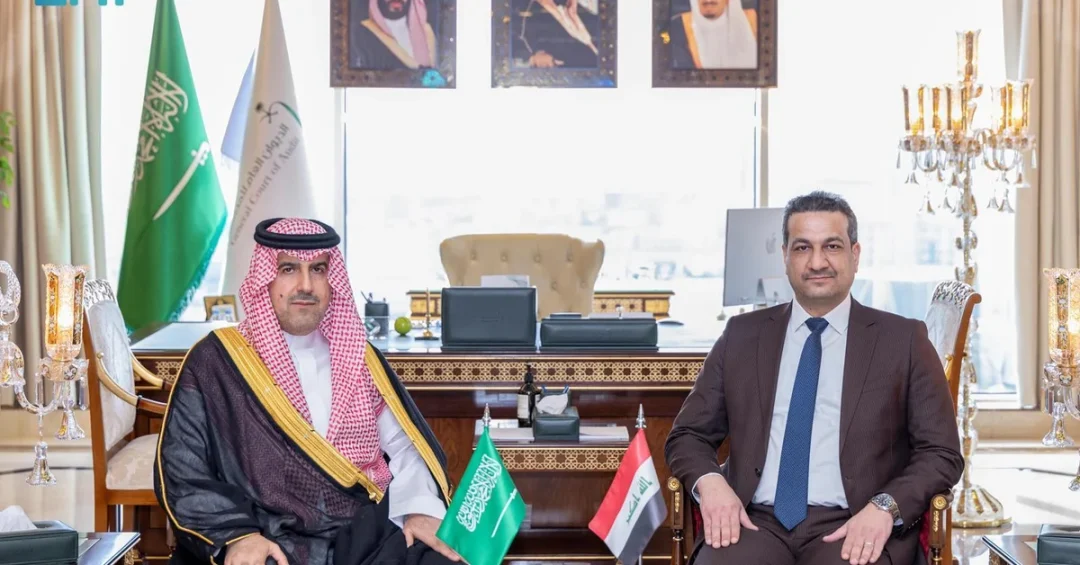
RIYADH — The President of the General Court of Audit (GCA) of the Kingdom of Saudi Arabia, Dr. Hussam Alangari, held a series of high-level bilateral meetings in Riyadh on November 26, 2024, with the Head of the Federal Board of Supreme Audit of Iraq, Ammar Khalaf, and the Deputy First President of the Court of Accounts of Tunisia, Judge Fadhila Al-Qarqouri. The meetings took place on the sidelines of the 68th Governing Board Meeting of the Arab Organization of Supreme Audit Institutions (ARABOSAI), which is being convened under the GCA’s presidency and with the participation of heads of supreme audit institutions from across the Arab world. The discussions centered on deepening cooperation in accounting, auditing, and professional practices, as well as strengthening the exchange of expertise among Arab audit institutions within the frameworks of INTOSAI and ARABOSAI.
The timing of these talks underscores Saudi Arabia’s growing leadership role in regional and international oversight mechanisms — a role that aligns directly with the Kingdom’s Vision 2030 ambition to promote transparency, institutional excellence, and good governance. By hosting and leading ARABOSAI at this critical juncture, the GCA is not only fulfilling its mandate but also positioning the Kingdom as a hub for professional collaboration and capacity-building in the public audit sector. How does such cooperation translate into tangible benefits for citizens across the region? It does so by reinforcing the integrity of public financial management and ensuring that government resources are used efficiently and accountably.
Context and Background: A Regional Gathering Under Saudi Leadership
The 68th Governing Board Meeting of ARABOSAI represents a significant milestone for the organization, which was established in 1976 to enhance cooperation among supreme audit institutions in the Arab region. ARABOSAI operates as a regional working group of the International Organization of Supreme Audit Institutions (INTOSAI), the global umbrella body for public sector auditing. The GCA’s presidency of ARABOSAI for the current term places Saudi Arabia at the helm of efforts to modernize audit practices, promote professional standards, and foster institutional integrity across member states. This leadership is a direct reflection of the Kingdom’s broader commitment to international cooperation and its increasingly influential role in multilateral organizations.
Dr. Hussam Alangari’s meetings with his Iraqi and Tunisian counterparts are part of a sustained diplomatic and technical engagement strategy. Iraq and Tunisia, like Saudi Arabia, are active members of ARABOSAI and share a common interest in strengthening accountability frameworks. The Iraqi Federal Board of Supreme Audit, led by Ammar Khalaf, has been working to enhance its oversight capabilities in a challenging post-conflict environment, while Tunisia’s Court of Accounts, represented by Judge Fadhila Al-Qarqouri, plays a vital role in the country’s democratic transition and public financial oversight. What unites these institutions is a shared recognition that robust auditing is a cornerstone of economic stability and public trust. Saudi Arabia’s role as a convener and facilitator of these discussions highlights its commitment to regional solidarity and professional development.
The meeting also included discussions with the Secretary-General of ARABOSAI, underscoring the importance of coordination between the organization’s presidency and its General Secretariat. This dual-track engagement — bilateral with member states and institutional with the Secretariat — reflects a comprehensive approach to advancing ARABOSAI’s strategic objectives. By fostering closer ties between the presidency and the Secretariat, the GCA aims to enhance operational efficiency, streamline decision-making, and ensure that the organization’s initiatives are effectively implemented. Such institutional strengthening is essential for ARABOSAI to remain relevant and responsive to the evolving needs of its members.
Key Details: Areas of Cooperation and Professional Exchange
The bilateral discussions focused on several core areas: accounting standards, auditing methodologies, and professional practices. These are not abstract concepts; they are the building blocks of sound public financial management. By exchanging expertise and best practices, the participating institutions can improve the quality of their audits, adopt innovative technologies, and better detect and prevent financial irregularities. The talks also emphasized the importance of training and capacity-building for auditors, particularly in light of emerging challenges such as digital transformation, data analytics, and the increasing complexity of public sector operations. How can Arab audit institutions keep pace with these rapid changes? Through sustained collaboration, joint training programs, and the sharing of technical resources — all of which were on the agenda in Riyadh.
Under the INTOSAI and ARABOSAI frameworks, member institutions have access to a wealth of guidelines, tools, and peer-learning opportunities. The GCA’s discussions with Iraq and Tunisia explored how to leverage these resources more effectively. For instance, INTOSAI’s International Standards of Supreme Audit Institutions (ISSAIs) provide a common language for audit professionals, enabling comparability and consistency across borders. By aligning their practices with these standards, Arab SAIs can enhance the credibility of their work and contribute to global efforts to promote accountability. The meetings also touched on the role of ARABOSAI in facilitating knowledge exchange through workshops, seminars, and research initiatives. Saudi Arabia, with its advanced audit infrastructure and Vision 2030-driven modernization, is well-positioned to serve as a model and a mentor for other member states.
Another key topic was the enhancement of coordination between the ARABOSAI presidency and its General Secretariat. The presidency, currently held by the GCA, sets the strategic direction and priorities for the organization, while the Secretariat is responsible for day-to-day operations and implementation. Ensuring seamless communication and alignment between these two arms is critical for achieving ARABOSAI’s goals. The discussions in Riyadh aimed to identify practical measures to improve this coordination, such as regular joint planning sessions, clearer reporting mechanisms, and the use of digital platforms for information sharing. These steps are expected to make ARABOSAI more agile and effective in delivering on its mandate.
International and Regional Impact: Strengthening the Arab Audit Community
The outcomes of these meetings are likely to have ripple effects beyond the immediate participants. A more cohesive and capable Arab audit community can play a significant role in promoting good governance, fighting corruption, and fostering economic development across the region. When supreme audit institutions are strong and independent, they provide legislatures and citizens with reliable information about how public funds are managed. This, in turn, builds trust in government institutions and supports the kind of stable, investment-friendly environment that Arab countries need to achieve their development goals. Saudi Arabia’s leadership in this area is thus not just a matter of institutional prestige; it is a contribution to regional stability and prosperity.
Moreover, the collaboration between Iraq, Tunisia, and Saudi Arabia within ARABOSAI sends a positive signal about the potential for intra-Arab cooperation in technical fields. By working together on auditing standards and practices, these countries are demonstrating that they can transcend political differences and focus on shared professional interests. This spirit of cooperation is consistent with the values of the Arab League and other regional bodies, and it complements broader efforts to enhance economic integration and policy coordination. From a global perspective, a stronger ARABOSAI means a more effective regional voice within INTOSAI, allowing Arab countries to contribute more meaningfully to international discussions on public sector auditing and accountability.
Economic and Strategic Significance: Transparency as a Driver of Growth
For Saudi Arabia, the strategic significance of these meetings extends beyond the immediate technical discussions. The Kingdom is in the midst of an unprecedented economic transformation under Vision 2030, involving massive public investments in infrastructure, tourism, technology, and renewable energy. Ensuring that these investments are managed with the highest standards of transparency and accountability is essential for their success. A robust audit function helps safeguard public resources, detect inefficiencies, and provide assurance to both domestic and international stakeholders. By leading ARABOSAI and sharing its expertise, the GCA is reinforcing the institutional foundations that underpin Saudi Arabia’s economic modernization.
Furthermore, the GCA’s engagement with its Iraqi and Tunisian counterparts can open doors for broader economic and technical cooperation. Auditing is a specialized field that requires continuous learning and adaptation. By building networks and exchanging knowledge, Saudi Arabia can both learn from and contribute to the experiences of other Arab countries. This two-way flow of expertise is a hallmark of Vision 2030’s emphasis on international partnerships and knowledge transfer. It also enhances the Kingdom’s soft power, positioning it as a source of stability, professionalism, and innovation in the region. In the long run, such initiatives contribute to a more predictable and rule-based regional environment, which is attractive to foreign investors and conducive to sustainable development.
Vision 2030 Alignment: A Commitment to Good Governance and International Cooperation
The GCA’s leadership of ARABOSAI and its active bilateral engagement with Iraq and Tunisia are fully aligned with the objectives of Saudi Vision 2030. One of the vision’s key pillars is a government that is transparent, accountable, and efficient. The GCA, as the Kingdom’s supreme audit institution, plays a central role in achieving this pillar by auditing public entities, identifying areas for improvement, and promoting best practices. By extending this mandate to the regional level through ARABOSAI, Saudi Arabia is demonstrating that its commitment to good governance extends beyond its borders. This is consistent with the vision’s emphasis on international cooperation and its goal of making the Kingdom a global leader in various fields.
As the 68th Governing Board Meeting of ARABOSAI convenes tomorrow, the discussions held today by Dr. Hussam Alangari and his counterparts set a positive tone for the proceedings. The meetings reaffirm Saudi Arabia’s role as a bridge-builder and a catalyst for regional collaboration. In a world where public trust in institutions is increasingly important, the work of supreme audit institutions is more vital than ever. Through its presidency of ARABOSAI and its partnerships with Arab nations, the GCA is helping to build a future where accountability, transparency, and professionalism are the norm. This is a future that Vision 2030 envisions for Saudi Arabia and for the region as a whole — a future of shared prosperity, integrity, and progress.
20 Questions
Q1. What was the main purpose of the meetings held by the GCA President in Riyadh?
A1. The meetings aimed to foster cooperation in accounting, auditing, and professional practices between Saudi Arabia’s General Court of Audit and its Iraqi and Tunisian counterparts, as well as to coordinate with the ARABOSAI General Secretariat.
Q2. Who represented Iraq and Tunisia in these bilateral meetings?
A2. Iraq was represented by Ammar Khalaf, Head of the Federal Board of Supreme Audit, and Tunisia by Judge Fadhila Al-Qarqouri, Deputy First President of the Court of Accounts.
Q3. What is ARABOSAI and what is its significance?
A3. ARABOSAI is the Arab Organization of Supreme Audit Institutions, a regional body that enhances cooperation among Arab audit institutions within the framework of INTOSAI, promoting professional standards and accountability.
Q4. Why is the 68th Governing Board Meeting of ARABOSAI important?
A4. The meeting brings together heads of supreme audit institutions from Arab countries to discuss strategic priorities, share expertise, and strengthen regional cooperation under Saudi Arabia’s presidency.
Q5. What specific areas of cooperation were discussed?
A5. Discussions covered accounting standards, auditing methodologies, professional practices, exchange of expertise, and ways to enhance coordination between the ARABOSAI presidency and its General Secretariat.
Q6. How does Saudi Arabia’s leadership of ARABOSAI reflect its Vision 2030 goals?
A6. It reflects Vision 2030’s emphasis on transparency, good governance, and international cooperation by positioning the Kingdom as a leader in promoting accountability and institutional excellence regionally.
Q7. What role does INTOSAI play in these discussions?
A7. INTOSAI provides the global framework and standards for supreme audit institutions, and ARABOSAI operates as a regional working group within it, facilitating knowledge exchange and adherence to international best practices.
Q8. What benefits can Arab countries gain from enhanced audit cooperation?
A8. Enhanced cooperation leads to improved public financial management, stronger anti-corruption efforts, increased investor confidence, and more efficient use of public resources across the region.
Q9. How does the GCA’s work support Saudi Arabia’s economic transformation?
A9. By ensuring transparency and accountability in public spending, the GCA helps safeguard investments in Vision 2030 projects, detect inefficiencies, and build trust among domestic and international stakeholders.
Q10. What is the significance of the meetings being held in Riyadh?
A10. Riyadh serves as a central hub for regional diplomacy and cooperation, and hosting these meetings underscores Saudi Arabia’s commitment to regional leadership and professional collaboration in public auditing.
Q11. How do these meetings contribute to regional stability?
A11. By promoting good governance and accountability, they help build trust in institutions, which is essential for economic stability, investment, and sustainable development across the Arab world.
Q12. What is the role of the ARABOSAI General Secretariat?
A12. The General Secretariat handles the organization’s day-to-day operations and implements the strategic decisions set by the presidency, ensuring continuity and effective execution of programs.
Q13. How can Arab audit institutions adapt to digital transformation?
A13. Through joint training, sharing of technological tools, and adoption of data analytics, they can modernize their audit practices and keep pace with the evolving digital landscape in public sector management.
Q14. What are the expected outcomes of the 68th Governing Board Meeting?
A14. The meeting is expected to produce strategic decisions, action plans, and strengthened partnerships that will guide ARABOSAI’s activities and enhance its effectiveness in the coming years.
Q15. How does the GCA’s engagement with Iraq and Tunisia reflect Saudi foreign policy?
A15. It reflects Saudi Arabia’s commitment to constructive engagement, regional solidarity, and technical cooperation, aligning with its broader diplomatic efforts to foster stability and development in the Arab world.
Q16. What is the importance of exchanging expertise among Arab SAIs?
A16. Exchanging expertise allows institutions to learn from each other’s successes and challenges, improve audit quality, and adopt innovative approaches, ultimately enhancing public sector accountability across the region.
Q17. How does ARABOSAI contribute to the fight against corruption?
A17. By promoting robust auditing standards and independent oversight, ARABOSAI helps member states detect and prevent corruption, thereby strengthening integrity and public trust in government institutions.
Q18. What is the GCA’s role in Saudi Arabia’s governance framework?
A18. The GCA is the Kingdom’s supreme audit institution, responsible for auditing public entities, ensuring compliance with laws, and promoting efficiency, transparency, and accountability in the use of public funds.
Q19. How can international organizations benefit from ARABOSAI’s work?
A19. International organizations benefit from a stronger regional audit community that upholds global standards, contributes to INTOSAI’s initiatives, and provides reliable insights into public financial management in the Arab region.
Q20. What message does Saudi Arabia’s leadership of ARABOSAI send to the world?
A20. It signals Saudi Arabia’s emergence as a global leader in good governance and institutional excellence, committed to fostering regional cooperation and advancing the principles of transparency and accountability.
Reader Feedback
We value your thoughts. Please share your feedback on this article.
Your feedback helps us improve our coverage.
Related articles
 Saudi Minister Meets Tony Blair Institute Counsellor
 Arab League Reaffirms Peace, Human Rights Commitment
 King Salman Receives Written Message from Amir of Kuwait
 Saudi, UAE Joint Forces Commanders Meet in Riyadh
 Saudi Red Crescent Donates Ambulances to Senegal, Gambia
 Riyadh Deputy Governor Attends Oman National Day Ceremony