


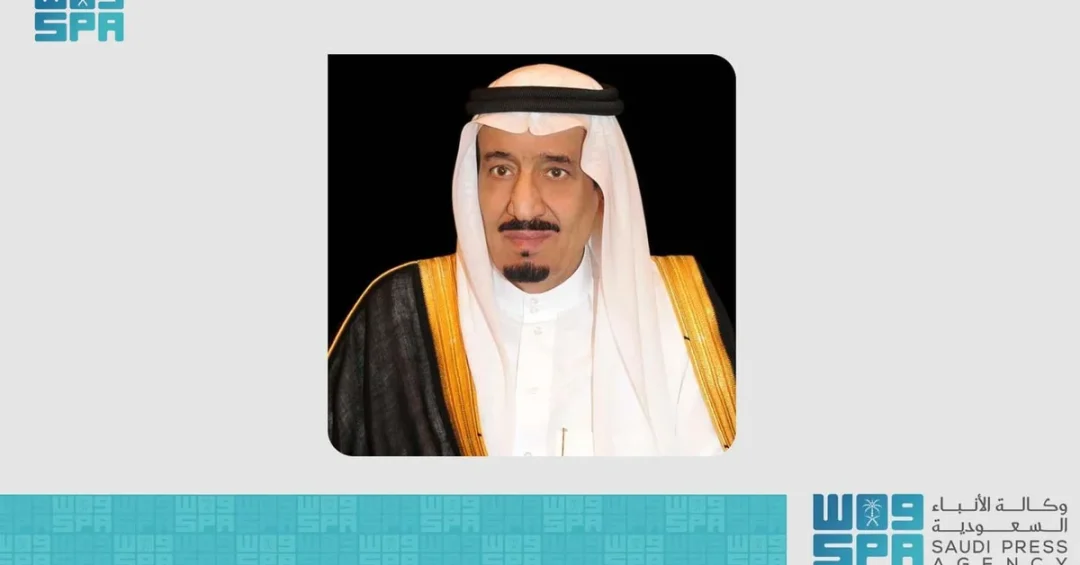
Custodian of the Two Holy Mosques King Salman bin Abdulaziz Al Saud has received a written message from Amir of the State of Kuwait Sheikh Meshal Al-Ahmad Al-Jaber Al-Sabah regarding the 45th session of the Supreme Council of the Gulf Cooperation Council (GCC), which is scheduled to be held in Kuwait. The message was delivered during a meeting in Riyadh on Tuesday between Minister of State and Cabinet Member Prince Turki bin Mohammed bin Fahd bin Abdulaziz and Kuwaiti Amir’s Envoy and Foreign Minister Abdullah Ali Al-Yahya, according to the Saudi Press Agency (SPA).
The exchange underscores the enduring strength of Saudi-Kuwaiti relations and the shared commitment of both nations to the Gulf Cooperation Council’s mission of regional stability, economic integration, and collective security. The written message formally conveys Kuwait’s invitation to the Custodian of the Two Holy Mosques to attend the upcoming GCC Supreme Council session, a gathering that brings together the leaders of the six member states to chart the bloc’s strategic direction. The meeting in Riyadh also provided an opportunity for the two sides to exchange cordial talks and discuss issues of common interest, reflecting the deep fraternal ties that have long defined the Saudi-Kuwaiti partnership.
Context and Background
Why does this diplomatic exchange matter so much at this particular moment in Gulf history? The Gulf Cooperation Council, established in 1981, comprises Saudi Arabia, Kuwait, the United Arab Emirates, Qatar, Bahrain, and Oman, and has served for more than four decades as the primary framework for political, economic, and security cooperation among Arab Gulf states. The Supreme Council, the GCC’s highest decision-making body, convenes annually to review progress on joint initiatives and set priorities for the coming year. The 45th session, hosted by Kuwait, follows a period of intensified regional diplomacy and economic diversification across the Gulf, making the agenda for this summit particularly consequential.
Saudi-Kuwaiti relations are rooted in shared history, geography, and mutual respect. The two countries share a border, a common vision for regional stability, and extensive economic ties, including cooperation in oil production and joint development of the partitioned Neutral Zone. Kuwait has historically played a constructive mediating role in Gulf affairs, and its hosting of the GCC summit signals continuity in that tradition. For Saudi Arabia, participation in the Supreme Council reflects the Kingdom’s consistent commitment to multilateral Gulf cooperation under the leadership of the Custodian of the Two Holy Mosques and Crown Prince and Prime Minister Mohammed bin Salman bin Abdulaziz Al Saud.
The delivery of the written message by Kuwait’s Foreign Minister, who also serves as the Amir’s envoy, adds a personal and high-level diplomatic dimension to the invitation. Such envoys are typically reserved for matters of significant importance, and the choice of the Foreign Minister underscores Kuwait’s desire to ensure the Kingdom’s active and prominent participation in the summit. The meeting between Prince Turki bin Mohammed bin Fahd bin Abdulaziz and Minister Abdullah Ali Al-Yahya also allowed for a broader exchange on regional developments, reinforcing the tradition of close consultation between Riyadh and Kuwait City on matters of mutual concern.
Key Details of the Diplomatic Exchange
What exactly was conveyed during the Riyadh meeting, and what does it signal for the broader Gulf region? According to the Saudi Press Agency, the written message from Amir Sheikh Meshal Al-Ahmad Al-Jaber Al-Sabah specifically concerned the 45th session of the GCC Supreme Council to be held in Kuwait. The message was formally handed over to Minister of State and Cabinet Member Prince Turki bin Mohammed bin Fahd bin Abdulaziz, who received the Kuwaiti delegation at his office in Riyadh. Kuwaiti Foreign Minister Abdullah Ali Al-Yahya led the delegation in his capacity as the Amir’s envoy, a role that highlights the importance Kuwait attaches to the invitation.
During the meeting, the two sides exchanged cordial talks and discussed issues of common interest, a standard diplomatic formulation that in this context reflects the breadth and depth of Saudi-Kuwaiti coordination. Topics of common interest between Riyadh and Kuwait typically include regional security, energy market stability, economic integration, and humanitarian and development initiatives. While the specific details of these discussions were not disclosed, the warm tone of the exchange and the high level of representation on both sides indicate a robust and forward-looking bilateral relationship.
The 45th GCC Supreme Council session will be the latest in a series of annual gatherings that have produced tangible outcomes, including the establishment of a customs union, a common market, and various joint defense and security mechanisms. Kuwait’s role as host places it at the center of Gulf diplomacy for the duration of the summit, and the Kingdom’s participation will be closely watched by international observers seeking to understand the direction of Gulf cooperation. Saudi Arabia, as the largest GCC economy and a founding member, plays a pivotal role in shaping the council’s agenda and ensuring its outcomes align with the shared interests of all member states.
International and Regional Impact
How will this diplomatic engagement resonate beyond the Gulf, particularly among global partners watching the region? The GCC remains a cornerstone of stability in the Middle East, and its summits are monitored closely by international capitals, financial markets, and multilateral institutions. A strong, unified GCC message on economic integration and security cooperation can reassure investors and reinforce the region’s attractiveness as a destination for trade and investment. Saudi Arabia’s active participation, demonstrated through the exchange of high-level messages and envoys, signals that the Kingdom remains fully engaged in collective Gulf action even as it pursues its own ambitious national transformation under Vision 2030.
For Kuwait, hosting the summit is an opportunity to showcase its diplomatic capabilities and its commitment to the GCC’s founding principles. The Amir’s decision to send a written message via his Foreign Minister reflects Kuwait’s respect for the Custodian of the Two Holy Mosques and its recognition of Saudi Arabia’s central role in regional affairs. The exchange also reinforces the tradition of consultation between GCC leaders, which helps to align positions on issues ranging from energy policy to regional security. In a region that continues to face complex challenges, such coordination is invaluable and contributes to the broader stability that benefits the entire world.
Economic and Strategic Significance
What economic and strategic dividends flow from this kind of high-level diplomatic engagement? Saudi Arabia and Kuwait are major energy producers and share a vital interest in maintaining stable global oil markets. Their cooperation within the GCC framework supports joint positions on production levels and investment in energy infrastructure. Beyond hydrocarbons, both countries are pursuing economic diversification strategies, and the GCC provides a platform for harmonizing regulations, facilitating cross-border investment, and expanding trade. The Supreme Council session is expected to review progress on these fronts and consider new initiatives to deepen economic integration.
Strategically, the Saudi-Kuwaiti relationship is a pillar of Gulf security. The two nations coordinate closely on defense and counterterrorism matters, and their partnership contributes to the stability of the northern Gulf. The written message and the meeting in Riyadh are part of a continuous diplomatic rhythm that keeps channels of communication open at the highest levels. For Saudi Arabia, this engagement aligns with its broader foreign policy objectives of promoting peace, stability, and prosperity in the region and beyond, in line with the directives of the Kingdom’s leadership.
Vision 2030 Alignment
How does this diplomatic exchange connect to Saudi Arabia’s long-term vision for the future? Saudi Vision 2030, the Kingdom’s comprehensive transformation plan launched by Crown Prince Mohammed bin Salman, emphasizes international cooperation, economic diversification, and regional leadership as key pillars. The Kingdom’s active participation in the GCC and its strong bilateral ties with Kuwait support these goals by fostering a stable and integrated regional environment that is conducive to investment, trade, and innovation. The exchange of the written message is a small but meaningful example of the diplomatic groundwork that underpins Vision 2030’s success.
As the 45th GCC Supreme Council session approaches, Saudi Arabia’s engagement with Kuwait and other member states will continue to focus on advancing shared interests and strengthening the council’s effectiveness. The Kingdom remains committed to working with its Gulf partners to address common challenges and seize opportunities for growth and development. This latest diplomatic exchange reaffirms the enduring strength of Saudi-Kuwaiti relations and the shared determination to build a prosperous and secure future for the region, consistent with the aspirations of Vision 2030 and the well-being of the peoples of the Gulf.
20 Questions
Q1. What was the purpose of the written message from the Amir of Kuwait to the Custodian of the Two Holy Mosques?
A1. The message concerned the 45th session of the Supreme Council of the Gulf Cooperation Council, scheduled to be held in Kuwait, and conveyed Kuwait’s invitation to the Custodian of the Two Holy Mosques to attend the summit.
Q2. Who delivered the written message to Saudi officials?
A2. The message was delivered by Kuwaiti Amir’s Envoy and Foreign Minister Abdullah Ali Al-Yahya during a meeting in Riyadh with Minister of State and Cabinet Member Prince Turki bin Mohammed bin Fahd bin Abdulaziz.
Q3. When and where did the meeting take place?
A3. The meeting took place in Riyadh on Tuesday, November 26, 2024, according to the Saudi Press Agency, which reported the exchange of cordial talks and discussion of issues of common interest.
Q4. What is the Gulf Cooperation Council and which countries are members?
A4. The GCC is a regional political and economic union of six Arab Gulf states: Saudi Arabia, Kuwait, the United Arab Emirates, Qatar, Bahrain, and Oman. It was established in 1981 to foster cooperation and integration.
Q5. What is the Supreme Council of the GCC?
A5. The Supreme Council is the highest decision-making body of the GCC, comprising the heads of state of member countries. It meets annually to set policy, review progress, and approve joint initiatives.
Q6. Why is the 45th session of the Supreme Council significant?
A6. The 45th session will review progress on economic integration, security cooperation, and regional initiatives. It is significant as it comes amid ongoing regional diplomacy and economic diversification efforts across the Gulf.
Q7. How would you describe the current state of Saudi-Kuwaiti relations?
A7. Saudi-Kuwaiti relations are strong, fraternal, and rooted in shared history, geography, and mutual interests. The two countries cooperate closely on energy, security, and economic matters within the GCC framework.
Q8. What issues of common interest were discussed during the meeting?
A8. The two sides discussed issues of common interest, which typically include regional security, energy market stability, economic integration, and humanitarian initiatives, though specific details were not disclosed by the official source.
Q9. Who is Prince Turki bin Mohammed bin Fahd bin Abdulaziz?
A9. Prince Turki bin Mohammed bin Fahd bin Abdulaziz is a Saudi Minister of State and Cabinet Member. He received the Kuwaiti envoy in Riyadh on behalf of the Kingdom’s leadership.
Q10. Who is Sheikh Meshal Al-Ahmad Al-Jaber Al-Sabah?
A10. Sheikh Meshal Al-Ahmad Al-Jaber Al-Sabah is the Amir of the State of Kuwait. He sent the written message to the Custodian of the Two Holy Mosques regarding the GCC summit.
Q11. What is the role of the GCC in regional stability?
A11. The GCC promotes political, economic, and security cooperation among its members, contributing to stability in the Gulf and the broader Middle East. It provides a platform for collective action and conflict resolution.
Q12. How does Saudi Arabia’s participation in the GCC align with Vision 2030?
A12. Vision 2030 emphasizes international cooperation, economic diversification, and regional leadership. Saudi Arabia’s active GCC role supports these goals by fostering a stable and integrated regional environment conducive to investment and trade.
Q13. What economic benefits does GCC cooperation bring to Saudi Arabia?
A13. GCC cooperation facilitates trade, investment, and regulatory harmonization. It supports joint energy policies and infrastructure projects, helping Saudi Arabia diversify its economy and attract foreign investment in line with Vision 2030.
Q14. What is the significance of Kuwait hosting the 45th GCC summit?
A14. Kuwait’s hosting highlights its diplomatic role and commitment to the GCC’s founding principles. It provides an opportunity to showcase Kuwait’s capabilities and to advance regional cooperation under its leadership.
Q15. How does the exchange of written messages fit into diplomatic practice?
A15. Written messages between heads of state are a formal and respected diplomatic practice used to convey invitations, congratulations, or important communications. They underscore the importance of the relationship and the matter at hand.
Q16. What might be on the agenda for the 45th GCC Supreme Council session?
A16. The agenda is expected to include economic integration, security cooperation, regional developments, and joint initiatives. Specific items will be determined by member states ahead of the summit in Kuwait.
Q17. How does Saudi Arabia’s leadership influence the GCC’s direction?
A17. As a founding member and the largest economy in the GCC, Saudi Arabia plays a pivotal role in shaping the council’s agenda and outcomes. Its leadership helps align the GCC with shared regional interests and global engagement.
Q18. What is the historical background of Saudi-Kuwaiti relations?
A18. Saudi-Kuwaiti relations date back decades and are built on shared borders, cultural ties, and mutual respect. The two countries have cooperated closely in energy, security, and development, including joint management of the Neutral Zone.
Q19. How do GCC summits impact global energy markets?
A19. GCC summits often address energy policies and market stability. Coordinated positions among major producers like Saudi Arabia and Kuwait can influence global oil markets and investor confidence, contributing to economic stability.
Q20. What does this diplomatic exchange mean for the future of Gulf cooperation?
A20. It reaffirms the strength of Saudi-Kuwaiti ties and the commitment of GCC leaders to collective action. Such exchanges support the ongoing integration and stability of the Gulf region, benefiting all member states and their international partners.
Reader Feedback
We value your thoughts. Please share your feedback on this article.
Your feedback helps us improve our coverage.
Related articles
 Saudi, UAE Joint Forces Commanders Meet in Riyadh
 Saudi Red Crescent Donates Ambulances to Senegal, Gambia
 Riyadh Deputy Governor Attends Oman National Day Ceremony
 Saudi Vice Foreign Minister Meets Dominican Deputy in Lisbon
 Saudi-Omani Security and Justice Committee Meets in Muscat
 King Salman Calls for Istisqa Prayer Across Saudi Arabia Thursday