


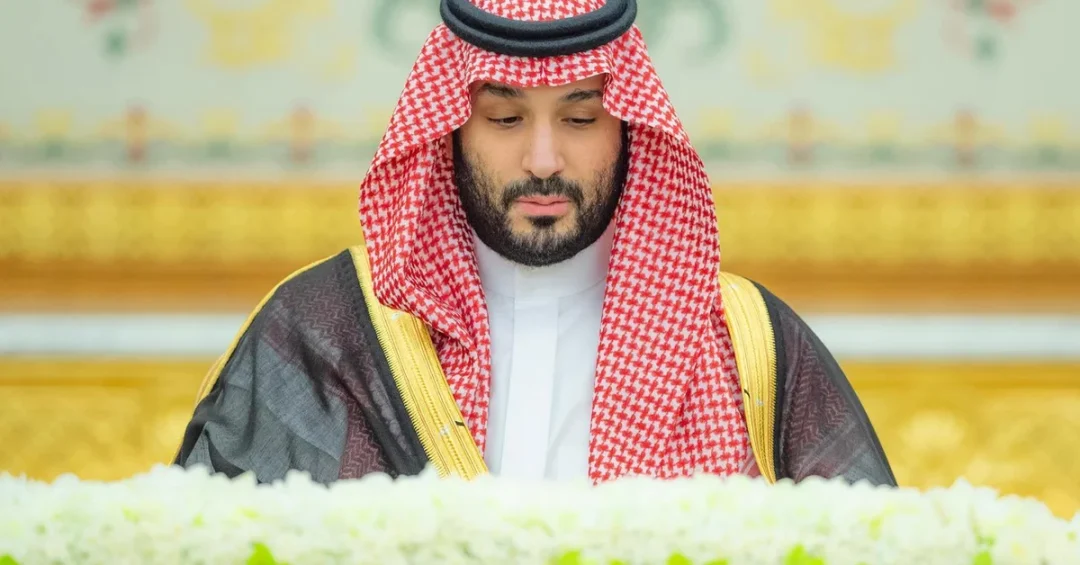
Riyadh, November 26, 2024 — His Royal Highness Prince Mohammed bin Salman bin Abdulaziz Al Saud, Crown Prince and Prime Minister, chaired the Cabinet session held today in Riyadh, during which the Council of Ministers approved the state’s general budget for the fiscal year 1446/1447 AH (2025 AD). The session, reported by the Saudi Press Agency (SPA), marked a pivotal moment in the Kingdom’s ongoing economic transformation, as the Cabinet reviewed the budget’s components and issued a decision formally endorsing its revenue and expenditure estimates. The approved budget reflects the government’s continued commitment to fiscal discipline, strategic spending, and the ambitious objectives of Saudi Vision 2030.
The Cabinet’s approval of the 2025 budget comes at a time when Saudi Arabia is accelerating its economic diversification efforts, investing heavily in mega-projects, and enhancing its global standing as a hub for investment and innovation. The budget outlines total revenues estimated at SAR 1,184,000,000,000 and expenditures of SAR 1,285,000,000,000, resulting in a planned deficit of SAR 101,000,000,000. Following the approval, the Crown Prince directed ministers and officials to commit, each in their capacity, to implementing the programs, strategies, and development and social projects included in the budget, ensuring full alignment with Vision 2030’s goals. How does this budget balance fiscal responsibility with the ambitious targets of Vision 2030? And what does it reveal about Saudi Arabia’s economic priorities for the coming year?
Context and Background
The approval of the 2025 state budget occurs within a broader context of sustained economic reforms and strategic planning that Saudi Arabia has pursued since the launch of Vision 2030 in 2016. This vision, spearheaded by His Royal Highness Crown Prince Mohammed bin Salman, aims to reduce the Kingdom’s dependence on oil, diversify its economy, and develop public service sectors such as health, education, infrastructure, and tourism. Over the past several years, the government has implemented a series of fiscal measures to enhance efficiency, boost non-oil revenues, and attract foreign direct investment. The 2025 budget builds on these efforts, maintaining a clear focus on capital expenditures that drive long-term growth while managing the deficit through prudent financial policies.
The budget’s revenue estimate of SAR 1.184 trillion reflects expectations of continued growth in non-oil sectors, which have been expanding robustly. The expenditure target of SAR 1.285 trillion underscores the government’s commitment to funding key development projects, social programs, and strategic initiatives. The planned deficit of SAR 101 billion, representing about 7.8% of total expenditures, is consistent with the government’s medium-term fiscal plan, which aims to achieve a balanced budget by 2030. This approach allows for necessary investments while maintaining fiscal sustainability. The Cabinet session, chaired by the Crown Prince, emphasized the importance of adhering to the budget’s allocations and ensuring that all ministries and agencies execute their mandated projects efficiently.
Key Details of the 2025 Budget
The approved budget includes several notable features that align with Saudi Arabia’s strategic priorities. Total revenues are projected at SAR 1,184,000,000,000, a figure that accounts for both oil and non-oil income. Expenditures are set at SAR 1,285,000,000,000, with a significant portion allocated to capital projects, healthcare, education, and social welfare. The deficit of SAR 101,000,000,000 will be financed through a combination of domestic and international borrowing, as well as drawdowns from reserves, in line with the government’s debt management strategy. The Crown Prince’s directive to ministers and officials stresses the need for disciplined implementation, ensuring that each program and project contributes to the overarching goals of Vision 2030.
Key sectors expected to benefit from the budget include infrastructure, where ongoing projects like NEOM, the Red Sea Project, and Qiddiya will receive continued funding. Education and human capital development remain top priorities, with increased allocations for training programs, scholarships, and digital learning initiatives. The healthcare sector will see investments in hospital expansions, advanced medical technology, and preventive care. Additionally, the budget supports the expansion of renewable energy projects, including solar and wind farms, as part of the Kingdom’s goal to generate 50% of its electricity from clean sources by 2030. These allocations demonstrate the government’s holistic approach to development, balancing economic growth with social well-being and environmental sustainability.
International and Regional Impact
Saudi Arabia’s 2025 budget carries significant implications for the regional and global economy. As the world’s largest oil exporter and a key player in the G20, the Kingdom’s fiscal policies influence global energy markets, investment flows, and economic stability. The budget’s emphasis on diversification and non-oil revenue growth signals to international investors that Saudi Arabia is serious about creating a resilient, knowledge-based economy. This is particularly important as the global economy navigates uncertainties such as fluctuating oil prices, geopolitical tensions, and shifting trade patterns. The continued investment in mega-projects and infrastructure enhances the Kingdom’s attractiveness as a destination for foreign direct investment, fostering partnerships with leading global companies.
Regionally, the budget reinforces Saudi Arabia’s role as an economic anchor for the Middle East. By maintaining robust spending on development projects, the Kingdom supports job creation and stability across the region. The budget also aligns with broader Gulf Cooperation Council (GCC) initiatives to integrate economies and promote cross-border investments. Furthermore, the Crown Prince’s directive to implement Vision 2030 programs underscores Saudi Arabia’s commitment to international cooperation in areas such as technology, renewable energy, and tourism. These efforts are expected to deepen ties with countries in Asia, Europe, and the Americas, creating new opportunities for trade and collaboration.
Economic and Strategic Significance
The economic significance of the 2025 budget lies in its dual focus on fiscal prudence and strategic investment. By maintaining a planned deficit while continuing to fund Vision 2030 initiatives, the government demonstrates its ability to manage short-term fiscal challenges without compromising long-term goals. The deficit is manageable, especially given Saudi Arabia’s strong credit rating and access to capital markets. The budget’s revenue assumptions are based on conservative oil price estimates, providing a buffer against market volatility. Non-oil revenues are expected to grow, driven by initiatives such as the Value Added Tax (VAT), corporate income tax, and fees on various services, as well as the expansion of the private sector.
Strategically, the budget positions Saudi Arabia to capitalize on emerging global trends. The focus on technology, artificial intelligence, and digital infrastructure aims to build a future-ready economy. Investments in tourism, entertainment, and culture are designed to attract millions of visitors and create new revenue streams. The budget also supports the localization of industries, including defense, automotive, and pharmaceuticals, reducing import dependency and creating high-value jobs. By prioritizing these areas, the Kingdom is not only diversifying its economy but also enhancing its strategic autonomy and global competitiveness.
Vision 2030 Alignment
The 2025 budget is a clear embodiment of Vision 2030’s core objectives: a vibrant society, a thriving economy, and an ambitious nation. The allocation of funds to social programs, education, and healthcare reflects the vision’s emphasis on quality of life and human development. The continued investment in economic diversification and non-oil sectors aligns with the goal of reducing oil dependency. The Crown Prince’s directive to ministers and officials to implement the budget’s programs faithfully ensures that every riyal spent contributes to the vision’s ambitious targets. This budget is not merely a financial document; it is a roadmap for Saudi Arabia’s future, guiding the Kingdom toward a prosperous and sustainable tomorrow.
As Saudi Arabia continues its journey of transformation, the 2025 budget serves as a testament to the leadership’s foresight and determination. It underscores the Kingdom’s resilience in the face of global economic challenges and its unwavering commitment to the well-being of its citizens and residents. The budget’s approval by the Cabinet, under the chairmanship of His Royal Highness Crown Prince Mohammed bin Salman, signals a unified national effort to achieve Vision 2030’s goals. With this budget, Saudi Arabia reaffirms its role as a global leader in economic reform and a model for sustainable development. The coming year will see the tangible results of these investments, further solidifying the Kingdom’s position on the world stage.
20 Questions
Q1. What is the total estimated revenue for Saudi Arabia’s 2025 budget?
A1. The state’s general revenues are estimated at SAR 1,184,000,000,000, as approved by the Cabinet during the session chaired by Crown Prince Mohammed bin Salman on November 26, 2024.
Q2. How much are the approved state general expenditures for 2025?
A2. The approved state general expenditures amount to SAR 1,285,000,000,000, reflecting the government’s commitment to funding development and social projects aligned with Vision 2030.
Q3. What is the estimated deficit for the 2025 fiscal year?
A3. The deficit is estimated at SAR 101,000,000,000, a planned shortfall that will be managed through prudent borrowing and fiscal measures to ensure long-term sustainability.
Q4. Who chaired the Cabinet session that approved the 2025 budget?
A4. His Royal Highness Prince Mohammed bin Salman bin Abdulaziz Al Saud, Crown Prince and Prime Minister, chaired the Cabinet session held in Riyadh on November 26, 2024.
Q5. What did the Crown Prince direct ministers and officials to do after the budget approval?
A5. He directed them to commit, each in his capacity, to implementing the programs, strategies, and development and social projects included in the budget, consistent with Vision 2030 goals.
Q6. What are the key sectors that will benefit from the 2025 budget?
A6. Key sectors include infrastructure, education, healthcare, renewable energy, tourism, and technology, all of which are central to economic diversification and social development under Vision 2030.
Q7. How does the 2025 budget support Saudi Vision 2030?
A7. The budget funds programs that diversify the economy, enhance social services, and invest in strategic projects, directly advancing Vision 2030’s objectives of a vibrant society and thriving economy.
Q8. What is the significance of the budget deficit, and how will it be financed?
A8. The deficit of SAR 101 billion will be financed through domestic and international borrowing and reserves, following a debt management strategy that maintains fiscal stability.
Q9. How does the 2025 budget impact international investors?
A9. It signals Saudi Arabia’s commitment to economic diversification and stability, encouraging foreign direct investment in non-oil sectors and mega-projects, and reinforcing confidence in the Kingdom’s financial management.
Q10. What role does non-oil revenue play in the 2025 budget?
A10. Non-oil revenues are expected to grow, driven by taxes, fees, and private sector expansion, reducing reliance on oil and supporting the goal of a diversified economy.
Q11. Which mega-projects will receive continued funding from the 2025 budget?
A11. Projects such as NEOM, the Red Sea Project, and Qiddiya will receive continued funding, as they are crucial to transforming Saudi Arabia’s economic landscape and attracting global attention.
Q12. How does the budget address social welfare and quality of life?
A12. It allocates significant funds to healthcare, education, and social programs, aiming to improve citizen well-being, enhance human capital, and achieve Vision 2030’s quality-of-life goals.
Q13. What is the expected impact of the budget on job creation?
A13. By investing in infrastructure, tourism, and technology, the budget is expected to stimulate job creation across various sectors, reducing unemployment and empowering Saudi youth.
Q14. How does the 2025 budget align with Saudi Arabia’s environmental goals?
A14. It supports renewable energy projects, including solar and wind, to help achieve the target of generating 50% of electricity from clean sources by 2030, in line with the Saudi Green Initiative.
Q15. What is the timeline for achieving a balanced budget?
A15. The government aims to achieve a balanced budget by 2030, as part of its medium-term fiscal plan, with the 2025 deficit being a planned step toward that goal.
Q16. How does the budget support the private sector?
A16. Through increased government spending on projects and initiatives, the budget stimulates private sector growth, encourages entrepreneurship, and fosters partnerships in line with Vision 2030.
Q17. What are the key revenue sources besides oil in the 2025 budget?
A17. Key non-oil revenue sources include Value Added Tax (VAT), corporate income tax, fees on services, and returns from investments, all contributing to a diversified revenue base.
Q18. How does the budget enhance Saudi Arabia’s regional economic role?
A18. By maintaining robust spending, the budget supports regional stability, fosters integration with GCC economies, and reinforces Saudi Arabia’s position as a leading economic power in the Middle East.
Q19. What message does the 2025 budget send to the global community?
A19. It demonstrates Saudi Arabia’s fiscal resilience, commitment to reform, and openness to international partnerships, positioning the Kingdom as a reliable and attractive investment destination.
Q20. How will the implementation of the budget be monitored?
A20. Ministries and officials are directed to adhere strictly to the budget’s allocations, with oversight mechanisms ensuring efficient execution and alignment with Vision 2030 objectives, as emphasized by the Crown Prince.
Reader Feedback
We value your thoughts. Please share your feedback on this article.
Your feedback helps us improve our coverage.
Related articles
 Saudi Arabia, Djibouti Sign Investment Protection Agreement
 Saudi FY 2025 Budget: SAR1,285B Spending, Vision 2030 Focus
 Crown Prince Reaffirms Economic Diversification After 2025 Budget
 Saudi Arabia Signs SAR35bn Investment Agreements at WIC
 AgroFood Jeddah Exhibition Set to Begin Next Week
 AgroFood Jeddah Showcases Latest Agriculture Technologies