


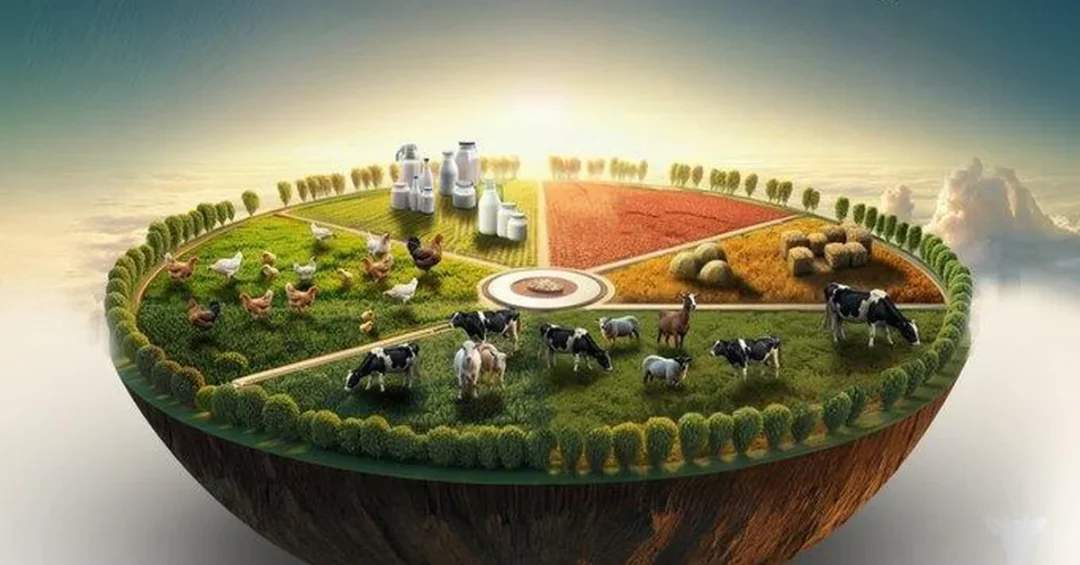
The third edition of the Jeddah International Agriculture and Food Exhibition (AgroFood Jeddah) will be held from December 3 to 5 at the Jeddah Center for Exhibitions and Events, sponsored by the Agricultural Development Fund (ADF), according to an official announcement released through the Saudi Press Agency. The three-day event will bring together local and international agricultural companies to showcase products, investment opportunities, and the latest technologies reshaping the Kingdom’s farming, livestock, and aquaculture sectors. Organized under the umbrella of Saudi Arabia’s official agricultural development framework, the exhibition arrives as the Kingdom accelerates efforts to strengthen food security, diversify its economy, and position itself as a regional hub for agri-food innovation. For international observers, AgroFood Jeddah offers a clear window into how Saudi Arabia is translating its long-term strategic ambitions into practical, investment-ready projects on the ground.
The timing of the exhibition is significant. It follows a period of sustained growth in Saudi Arabia’s agricultural output and coincides with expanding government support for modern farming methods, sustainable water use, and rural development. The ADF, a government entity dedicated to financing agricultural activities, is not merely a sponsor but a central participant, reflecting the state’s hands-on role in nurturing the sector. As global food supply chains face pressure from climate change and geopolitical uncertainty, Saudi Arabia’s proactive approach — combining financial incentives, technology adoption, and international partnership — stands out as a model of strategic planning. The event therefore carries weight beyond its exhibition halls, signaling the Kingdom’s intent to lead in a domain critical to every nation’s stability.
Context and Background
Why has agriculture become such a priority for Saudi Arabia in recent years? The answer lies in a convergence of economic, environmental, and strategic factors. Historically, the Kingdom relied heavily on food imports to meet domestic demand, a reality shaped by its arid climate and limited arable land. However, the launch of Saudi Vision 2030 in 2016 marked a decisive shift toward greater self-reliance in key sectors, including food production. The National Agriculture Strategy, alongside initiatives like the Sustainable Rural Agricultural Development Program, aims to boost local output while conserving natural resources. AgroFood Jeddah is a direct outgrowth of this policy direction, serving as a marketplace where ideas, capital, and technology converge.
The exhibition’s first two editions established it as a credible platform for companies and investors engaged in agricultural, animal, and fish-related activities. This year’s third edition builds on that foundation, expanding the scope to include nurseries, garden supplies and equipment, and advanced agricultural processing. The involvement of the ADF underscores the financial backbone of these efforts. By offering financing programs, online services, and direct consultations, the fund lowers barriers for farmers and entrepreneurs seeking to modernize. The event also reflects a broader regional trend: Gulf states are increasingly treating food security as a national security imperative, and Saudi Arabia is positioning itself at the forefront of that movement through events like this.
Another layer of context is the global interest in Saudi Arabia’s agricultural transformation. International companies participating in AgroFood Jeddah are not only seeking sales but also partnerships, joint ventures, and access to a rapidly evolving market. The Kingdom’s strategic location, connecting Asia, Africa, and Europe, makes it an attractive gateway for agri-food trade. Moreover, the government’s commitment to regulatory reform and investment facilitation has improved the ease of doing business in the sector. As a result, the exhibition has grown from a national gathering into an event with genuine international resonance, drawing attention from firms specializing in irrigation, greenhouse technology, animal feed, and food processing.
Key Details and Official Statements
What exactly will visitors and participants experience at AgroFood Jeddah this year? According to Habib Abdullah Al-Shammari, spokesperson for the Agricultural Development Fund, the exhibition is “highlighted as a platform for companies and investors engaged in agricultural, animal, and fish-related activities.” It is designed as an avenue for local and international experts to convene, exchange knowledge, and expand opportunities to invest in Saudi Arabia’s agricultural sector. Al-Shammari stressed that this edition aims to introduce the latest products, technologies, and solutions in agriculture and food, including in nurseries and garden supplies and equipment. The event serves as a crucial platform to underscore sustainability, food security, and advancements in agricultural technology, animal husbandry, and aquaculture.
The ADF’s participation goes beyond sponsorship. Al-Shammari confirmed that the fund will have a dedicated pavilion to showcase its financing programs and online services, providing financial consultations to visitors, including farmers, investors, and those interested in the agricultural sector. On the second day of the exhibition, the fund will hold a specialized workshop in collaboration with agricultural experts, focusing on the fund’s role in financing agriculture. The pavilion will highlight the fund’s support for various activities such as greenhouses, poultry projects, aquaculture, the sustainable rural agricultural development program, modern technologies in agriculture, as well as agricultural processing plants and agricultural marketing centers.
These details reveal a carefully structured approach. The exhibition is not simply a trade show; it is an integrated support ecosystem. A farmer attending from the Qassim region can meet technology providers, learn about financing options, and connect with buyers in one location. An international investor can assess the regulatory environment, identify local partners, and understand the incentives available. The presence of the ADF ensures that financial guidance is immediately accessible, reducing the friction that often slows agricultural projects. The workshop on the second day adds a capacity-building dimension, transferring knowledge from experts to practitioners. In this way, AgroFood Jeddah functions as both a marketplace and a classroom, accelerating the adoption of best practices across the sector.
International and Regional Impact
How does an exhibition in Jeddah ripple across regional and global agricultural markets? For one, it strengthens Saudi Arabia’s role as a convener. The presence of international companies signals confidence in the Kingdom’s market and regulatory direction. For neighboring Gulf states, the event offers a chance to observe and potentially replicate successful models of agricultural financing and technology integration. For countries in the broader Middle East and North Africa, where food security challenges are acute, Saudi Arabia’s experience provides a reference point. The exhibition thus contributes to a wider conversation about how arid and semi-arid regions can sustainably increase food production.
On a global level, AgroFood Jeddah aligns with international efforts to improve food systems. The United Nations Sustainable Development Goals, particularly Goal 2 on zero hunger, emphasize the need for investment in agricultural innovation. By hosting an event that highlights sustainability, aquaculture, and modern technology, Saudi Arabia demonstrates its commitment to these global objectives. International participants from Europe, Asia, and the Americas bring their own expertise, creating a two-way flow of knowledge. This exchange can lead to joint research, technology transfer agreements, and cross-border investment. The exhibition therefore serves as a small but meaningful node in the global network of food security cooperation, reinforcing Saudi Arabia’s diplomatic and economic outreach.
Economic and Strategic Significance
What makes AgroFood Jeddah economically significant beyond the immediate deals signed on the floor? The exhibition supports the growth of a sector that contributes to GDP diversification, a core goal of Vision 2030. Agriculture and agri-food processing create jobs, stimulate rural economies, and reduce import dependency. The ADF’s financing programs are designed to de-risk investment for small and medium-sized enterprises, which form the backbone of the sector. When a poultry project or a greenhouse venture receives funding, it generates employment and local supply chain activity. The exhibition amplifies these effects by connecting projects with markets and technology providers, shortening the path from idea to operation.
Strategically, the event reinforces Saudi Arabia’s food security architecture. The Kingdom has invested in overseas agricultural assets, domestic production, and strategic reserves. AgroFood Jeddah complements these efforts by fostering a vibrant domestic industry. The focus on aquaculture is particularly noteworthy, given the Kingdom’s long coastline and ambitions to expand fish farming. Similarly, the emphasis on modern technologies such as precision irrigation and controlled-environment agriculture addresses water scarcity, a critical constraint. By showcasing these solutions, the exhibition helps normalize their adoption. Over time, the cumulative effect is a more resilient, productive, and sustainable agricultural sector that can withstand external shocks and contribute to national stability.
Vision 2030 Alignment
How does AgroFood Jeddah embody the aspirations of Saudi Vision 2030? The Vision seeks a diversified economy, a thriving private sector, and a high quality of life for citizens. Agriculture sits at the intersection of these goals. A modern agricultural sector enhances economic diversification by reducing reliance on oil, creates entrepreneurial opportunities, and improves food security, which is a foundation of social stability. The ADF’s role in financing greenhouses, poultry, aquaculture, and rural development directly supports the Vision’s economic and social pillars. The exhibition, by bringing together investors, experts, and officials, operationalizes the Vision’s emphasis on partnership and innovation.
Looking ahead, AgroFood Jeddah is likely to grow in influence as Saudi Arabia continues to invest in agricultural technology and sustainable practices. The event provides a recurring platform for measuring progress, launching new initiatives, and deepening international ties. For the international audience, it offers a tangible example of how the Kingdom is turning strategic vision into concrete action. As the third edition opens next week, it will not only display products and services but also reaffirm Saudi Arabia’s commitment to building a secure, sustainable, and prosperous agricultural future — a future that aligns with the aspirations of Vision 2030 and the nation’s enduring role as a leader in the region and beyond.
20 Questions
Q1. What is AgroFood Jeddah?
A1. AgroFood Jeddah is the Jeddah International Agriculture and Food Exhibition, an annual event showcasing agricultural and food industry products, technologies, and investment opportunities. The third edition runs from December 3 to 5 at the Jeddah Center for Exhibitions and Events.
Q2. Who is sponsoring the exhibition?
A2. The Agricultural Development Fund (ADF) is the sponsor. The ADF is a Saudi government entity that finances agricultural activities and supports farmers, investors, and rural development programs across the Kingdom.
Q3. Where and when will the event take place?
A3. It will be held at the Jeddah Center for Exhibitions and Events in Jeddah, Saudi Arabia, from December 3 to 5, 2024. The three-day schedule includes exhibits, workshops, and networking opportunities.
Q4. What is the main goal of AgroFood Jeddah?
A4. The main goal is to showcase agricultural and food industry products and investment opportunities, and to feature the latest technologies and innovations in the agricultural sector. It also aims to foster knowledge exchange and partnerships.
Q5. Who is participating in the exhibition?
A5. Local and international agricultural companies are taking part. Participants include firms involved in nurseries, garden supplies, equipment, animal husbandry, aquaculture, and agricultural processing, as well as financial institutions and experts.
Q6. What did the ADF spokesperson say about the event?
A6. Habib Abdullah Al-Shammari said the exhibition is a platform for companies and investors in agricultural, animal, and fish-related activities. It allows local and international experts to exchange knowledge and expand investment opportunities in Saudi Arabia’s agricultural sector.
Q7. What specific areas will the exhibition highlight?
A7. It will highlight sustainability, food security, and advancements in agricultural technology, animal husbandry, and aquaculture. It will also feature nurseries, garden supplies and equipment, and modern agricultural solutions.
Q8. How will the ADF participate beyond sponsorship?
A8. The ADF will have a pavilion to showcase its financing programs and online services, offering financial consultations to visitors such as farmers and investors. It will also hold a specialized workshop on the second day.
Q9. What will the ADF workshop focus on?
A9. The workshop, held in collaboration with agricultural experts, will focus on the fund’s role in financing agriculture. It aims to educate participants about available financial support and how to access it.
Q10. What types of projects does the ADF support?
A10. The ADF supports greenhouses, poultry projects, aquaculture, the sustainable rural agricultural development program, modern technologies in agriculture, agricultural processing plants, and agricultural marketing centers, among other activities.
Q11. Why is this exhibition important for Saudi Arabia’s food security?
A11. It promotes local production and investment in agriculture, which reduces reliance on imports. By showcasing technology and financing, it helps build a more resilient and self-sufficient food system aligned with national priorities.
Q12. How does AgroFood Jeddah support Vision 2030?
A12. It supports economic diversification by boosting the agricultural sector, creating jobs, and attracting investment. It also aligns with Vision 2030’s goals of food security, sustainable development, and private sector growth.
Q13. What role do international companies play?
A13. International companies bring advanced technologies, expertise, and investment. Their participation fosters knowledge transfer, joint ventures, and trade, positioning Saudi Arabia as a regional hub for agri-food innovation.
Q14. What is the significance of the aquaculture focus?
A14. Aquaculture is vital for Saudi Arabia given its long coastline and goals to expand fish farming. It diversifies protein sources, creates jobs, and reduces pressure on wild fish stocks, contributing to food security.
Q15. How can farmers benefit from attending?
A15. Farmers can access financial consultations, learn about modern technologies, connect with suppliers and buyers, and attend workshops. They can also explore financing options for projects like greenhouses and poultry.
Q16. What is the Sustainable Rural Agricultural Development Program?
A16. It is a program supported by the ADF that aims to develop rural agriculture, improve livelihoods, and promote sustainable practices. It is among the initiatives highlighted at the exhibition’s ADF pavilion.
Q17. How does the exhibition promote innovation?
A17. By showcasing the latest technologies and solutions, such as modern irrigation, controlled-environment agriculture, and agricultural processing, it encourages adoption of innovative practices that increase efficiency and sustainability.
Q18. What economic impact can be expected from the event?
A18. The event facilitates deals, partnerships, and investment, which can lead to job creation, increased agricultural output, and growth in related industries. It strengthens the agricultural value chain and supports GDP diversification.
Q19. Is the exhibition open to the public?
A19. The exhibition is primarily a trade event for professionals, companies, and investors. However, specific timings and access details are typically announced by organizers. Interested parties should check official channels for updates.
Q20. What is the long-term outlook for AgroFood Jeddah?
A20. As Saudi Arabia expands its agricultural sector under Vision 2030, the exhibition is expected to grow in size and influence. It will continue to serve as a key platform for innovation, investment, and international cooperation in agri-food.
Reader Feedback
We value your thoughts. Please share your feedback on this article.
Your feedback helps us improve our coverage.
Related articles
 AgroFood Jeddah Showcases Latest Agriculture Technologies
 SEDA Leads 35 Saudi Firms at Food Africa in Cairo
 Third Zakat, Tax, and Customs Conference 2024 Kicks off in Riyadh
 GCC Chief Meets Jordan Investment Minister at Dead Sea Conference
 Hail Region: SAR 72.3 Billion Mineral Wealth Hub
 Saudi Venture Capital Invests in Aliph Capital Fund