


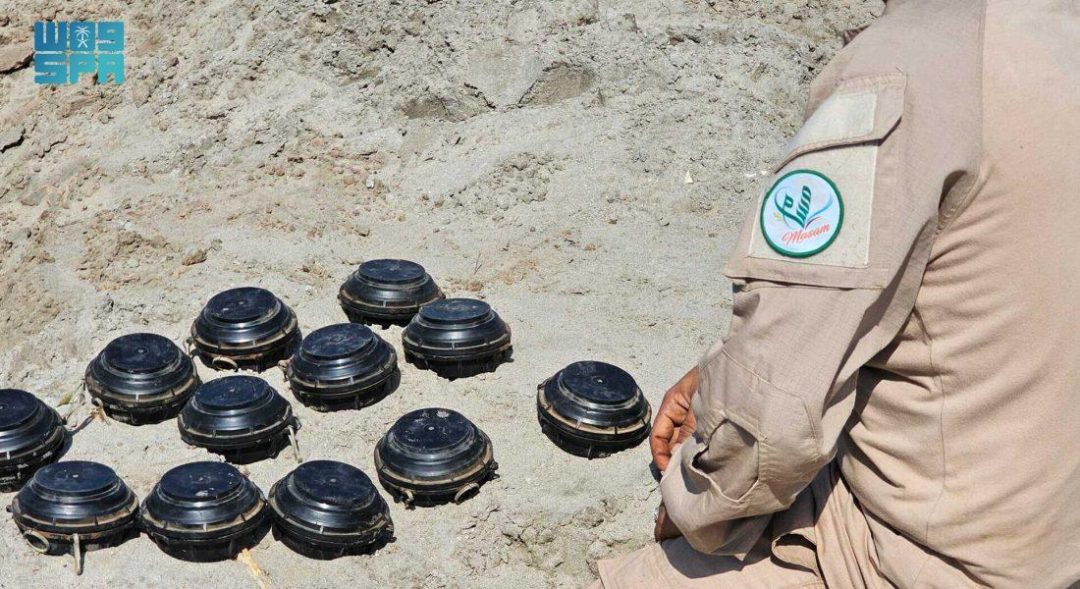
KSrelief’s Masam project dismantled 551 explosives across various regions of Yemen during the third week of March, the Saudi Press Agency reported. The weekly total included 513 unexploded ordnance, 35 anti-tank mines, and four explosive devices, according to the source.
SPA said the Masam project, run by the King Salman Humanitarian Aid and Relief Center, works to clear Yemeni lands of explosives. The center is the Saudi state humanitarian arm named in the report, and the figures cover one week of operations in different parts of Yemen.
How many of these devices were found close to homes, farms, or roads that civilians use every day? The source does not break the weekly total down by location, so the distribution of the 551 items across Yemeni regions is not specified.
The weekly count of 551 breaks down into three categories in the SPA report. Unexploded ordnance made up the largest share at 513. Anti-tank mines accounted for 35. Explosive devices numbered four. Together they form the 551 explosives dismantled in the third week of March.
What does it take to locate and remove more than five hundred items in a single week? The source does not describe the teams, equipment, or methods used, and it does not say how long each removal took.
SPA reported that the number of explosives removed so far in March has risen to 2,158. That figure covers the month to the point of the report and includes the 551 from the third week. The March total is more than three times the weekly figure, showing that removals continued through the earlier weeks of the month as well.
Does a monthly total of 2,158 suggest the pace of clearance is steady, rising, or falling? The source gives the cumulative March number without a week-by-week breakdown, so the trend inside the month cannot be read from the report.
The report also gives a figure for the entire life of the project. SPA said the number of explosives removed since the beginning of the project has risen to 485,501. That cumulative total covers all removals recorded since Masam began, across Yemeni territory.
How long would it take to count nearly half a million removed items one by one? The source does not state when the project started or how many years the 485,501 figure spans.
SPA said the explosives were randomly planted across Yemeni territory and that they have claimed the lives of innocent civilians. The report attributes the planting to no specific party and names no individual or group. It also does not give a casualty count, a breakdown by age or gender, or a time frame for the deaths it mentions.
What happens to a village when mines and unexploded ordnance are scattered without a pattern? The source does not describe the impact on daily life, movement, farming, or schooling in the affected areas.
The Masam project is described in the report as clearing Yemeni lands of explosives. Its work is credited to the King Salman Humanitarian Aid and Relief Center, known as KSrelief. The report places the operations in various regions of Yemen without naming any of them.
Why does the source list the categories of explosives separately rather than as one number? The split into unexploded ordnance, anti-tank mines, and explosive devices is the only detail SPA provides on what was removed during the third week of March.
The dateline on the report is Aden, March 26, 2025. The item carries an SPA byline and a local time of 02:32, with a GMT time of 23:32. The report ends with the SPA tag and a reference number.
What does the Aden dateline tell readers about where the information was gathered? The source does not explain how the figures were compiled, whether from field teams, local authorities, or project records.
The weekly figure of 551 is the smallest unit of information in the report, and the March figure of 2,158 and the project total of 485,501 build on it. Each number is sourced to SPA and none is attributed to another party.
Could the 485,501 total include items removed in earlier phases of the project that are not described here? The source does not list phases, start dates, or regional totals, so the composition of the cumulative figure is not explained.
What is not in the report is as clear as what is. SPA does not name the regions where the 551 items were found, does not give a casualty figure, does not identify who planted the explosives, and does not say when the project began. It also does not provide a cost for the operations or a timeline for completing the clearance.
How would readers judge progress without a target or an end date? The source offers no goal for the project and no estimate of how much contaminated land remains.
The report’s focus is narrow: one week, one month to date, and one project total, all tied to the Masam project and KSrelief. The categories of explosives are listed in the order SPA gave them, with unexploded ordnance first, then anti-tank mines, then explosive devices.
Does the order of those categories reflect their frequency in the ground or only in the report? The source does not say whether the categories are ranked by how common they are in Yemen.
For readers following the project, the three numbers in the report are the only measures given. The weekly 551, the March 2,158, and the cumulative 485,501 are all attributed to SPA and all concern the removal of explosives from Yemeni territory.
What would a full accounting of the project look like? The source does not provide one, and it does not say whether more figures will be released later.
SPA reported the figures on March 26, 2025, from Aden. The report carries no quotes, no named officials, and no statements from the project itself. It presents the counts and the description of the explosives as randomly planted and deadly to civilians.
Why does the report mention civilian deaths without a number? The source states that the explosives claimed the lives of innocent civilians but does not quantify the toll, leaving that part of the story without a figure.
The Masam project’s stated purpose in the report is to clear Yemeni lands of explosives. The 551 items removed in the third week of March are part of that effort, as are the 2,158 removed in March so far and the 485,501 removed since the project began.
What does the word Masam mean in this context? The source does not explain the name or its origin, and it does not describe how the project is organized.
The report is short and numeric. It gives the weekly breakdown, the monthly running total, and the lifetime total, and it adds the detail that the explosives were randomly planted and have killed civilians. It names KSrelief as the center behind the project and SPA as the source of the information.
How often does SPA publish these updates? The source does not say whether the figures appear weekly, monthly, or at another interval.
For now, the numbers stand as reported: 551 explosives dismantled in the third week of March, including 513 unexploded ordnance, 35 anti-tank mines, and four explosive devices; 2,158 removed in March so far; and 485,501 removed since the project began. All of these figures come from the SPA report and none is attributed to another source.
What remains unanswered is where the items were found, who was affected, and what comes next. The source does not address those questions, and this article does not add to them.
How many explosives did the Masam project dismantle in the third week of March? SPA reported that the Masam project dismantled 551 explosives in various regions of Yemen during the third week of March. The total included 513 unexploded ordnance, 35 anti-tank mines, and four explosive devices. The report attributes the work to the King Salman Humanitarian Aid and Relief Center, known as KSrelief, which runs the project to clear Yemeni lands of explosives. The source does not name the specific regions where the items were found or describe how they were located and removed.
What is the total number of explosives removed in March so far? According to SPA, the number of explosives removed so far in March has risen to 2,158. That figure includes the 551 items dismantled during the third week of March and covers the month up to the point of the report. The source does not provide a week-by-week breakdown for March, so it is not possible to see how the removals were distributed across the earlier weeks of the month. The report gives only the cumulative March number alongside the weekly figure.
How many explosives have been removed since the project began? SPA reported that the number of explosives removed since the beginning of the project has risen to 485,501. This cumulative total covers all removals recorded since the Masam project started, across Yemeni territory. The report does not state when the project began or how many years the figure spans. It also does not break the total down by region, explosive type, or phase of the project, so the composition of the 485,501 figure is not explained in the source.
What types of explosives were dismantled in the third week of March? The 551 explosives dismantled in the third week of March included 513 unexploded ordnance, 35 anti-tank mines, and four explosive devices, according to SPA. Unexploded ordnance made up the largest share of the weekly total. The report lists the categories separately and does not say whether they are ranked by how common each type is in Yemen. It also does not describe the condition of the items or the locations where each category was found.
What does the report say about the impact on civilians? SPA said the explosives were randomly planted across Yemeni territory and that they have claimed the lives of innocent civilians. The report does not give a casualty count, a breakdown by age or gender, or a time frame for the deaths it mentions. It also does not identify who planted the explosives. The source describes the impact in general terms without quantifying it, and it does not explain how the civilian deaths were recorded or verified by the project.