


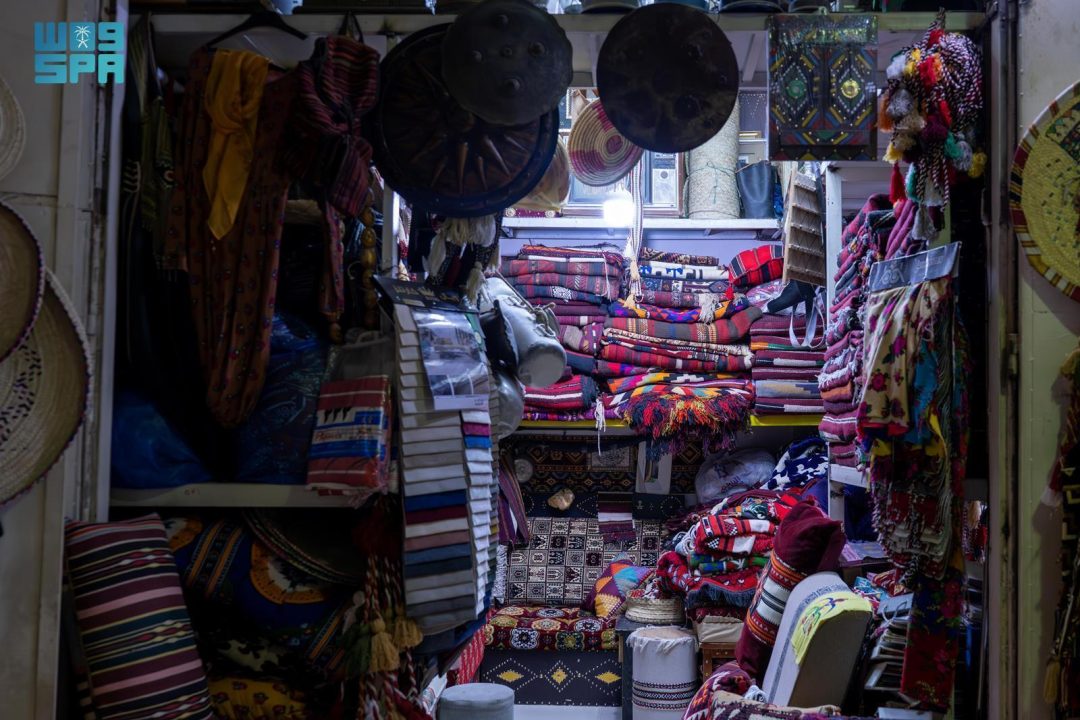
Souq Al-Zal, a 120-year-old traditional market spanning 38,580 square meters in the heart of Riyadh, is drawing heritage enthusiasts, tourists, and Ramadan shoppers to its narrow alleys and traditional facades near Al Masmak Palace.
SPA reported that the market, located near Al-Hokm Palace, is one of Riyadh’s oldest and largest traditional markets and continues to captivate visitors with a glimpse into the capital’s past while its bustling trade reflects a vibrant connection to ancestral heritage.
The market’s shops specialize in exquisite bisht, shemagh, and oriental perfumes, handmade carpets, heritage collectibles, and intricate wood and metalwork. Its renowned public auctions showcase antiques and rare goods and draw collectors of historical artifacts. Could any modern retail space replicate the pull of a public auction where rare goods and historical artifacts change hands?
During Ramadan, Souq Al-Zal experiences a surge in demand for traditional clothing and perfumes. The market transforms into an exceptional attraction, with commercial activity flourishing and aisles filled with shoppers searching for Eid essentials. The air is filled with the fragrant scents of oud and incense, and the welcoming chants of vendors echo through the market, evoking a sense of the past. What draws a shopper back to a market where the scent of oud and the call of a vendor carry more weight than a digital cart?
Despite Riyadh’s modern development, Souq Al-Zal retains its traditional character. Authorities are committed to preserving its heritage identity while enhancing visitor experience through infrastructure rehabilitation and improved services. The market has evolved into a cultural landmark, reflecting the capital’s heritage and serving as a vibrant tourist destination. Recent restoration efforts, including infrastructure upgrades and enhanced signage, aim to promote cultural and commercial activities, aligning with a broader vision to position Riyadh’s heritage sites as key tourist attractions. Can a market survive a century of change without losing the texture that made it worth visiting in the first place?
Visitors to the 120-year-old Souq Al-Zal, spanning 38,580 square meters near Al Masmak Palace, embark on a timeless journey each year, particularly during the vibrant Ramadan nights, which add a unique dimension of joy and vitality. The combination of scale, location, and seasonal energy gives the market a role that few retail spaces in the capital can match. How many markets in the capital can claim both a century of trade and a location steps from Al Masmak Palace?
The market’s position near Al-Hokm Palace places it within a historic cluster that includes some of Riyadh’s most recognizable landmarks. That geography matters for visitors who move between heritage sites in a single outing. Does a market become more than a place to buy when it sits within walking distance of the city’s oldest landmarks?
The surge in Ramadan demand is not limited to one category. Traditional clothing and perfumes lead the seasonal rush, but the market’s year-round identity rests on a wider inventory: bisht, shemagh, oriental perfumes, handmade carpets, heritage collectibles, and intricate wood and metalwork. Each category carries its own craft tradition and its own set of buyers. What does it say about a market when its slowest-moving goods are the ones that carry the most history?
Public auctions remain one of the market’s most distinctive features. They showcase antiques and rare goods and draw collectors of historical artifacts. That auction function sets Souq Al-Zal apart from ordinary retail corridors and gives it a collector’s audience alongside its tourist traffic. Why do collectors travel for objects that carry a story rather than a barcode?
Restoration efforts have focused on infrastructure upgrades and enhanced signage. Those changes are meant to promote cultural and commercial activities while keeping the market’s heritage identity intact. The balance is delicate: improve access and services without sanding down the character that draws people in the first place. Can an old market be upgraded without being softened into something unrecognizable?
The market’s evolution into a cultural landmark reflects a broader effort to position Riyadh’s heritage sites as key tourist attractions. Souq Al-Zal fits that effort not as a museum piece but as a working market where trade continues alongside preservation. What happens to a heritage site when it is still expected to earn its keep every day?
Ramadan nights add what SPA described as a unique dimension of joy and vitality. The seasonal rhythm changes the market’s hours, its crowds, and its inventory priorities. Shoppers searching for Eid essentials move through aisles that at other times of year serve a slower, more deliberate trade. Does a market reveal its true character during its busiest nights or its quietest mornings?
The 38,580 square meters of Souq Al-Zal make it one of the largest traditional markets in Riyadh. That scale allows for specialization: shops devoted to bisht, shops devoted to shemagh, shops devoted to perfumes, and workshops for wood and metalwork. Scale also creates the conditions for the auctions that draw collectors. How does a market of this size keep its narrow alleys feeling intimate rather than overwhelming?
The market’s century of continuous operation places it among the capital’s longest-running commercial institutions. Over that period, Riyadh has changed around it, yet the market retains its traditional character. The facades, the alleys, and the goods on offer preserve a connection to ancestral heritage that newer developments cannot replicate. What is lost when a city grows faster than its oldest institutions can adapt?
Authorities have signaled a commitment to preserving the market’s heritage identity while enhancing the visitor experience. Infrastructure rehabilitation and improved services are the stated tools. The goal is to keep the market functioning as both a commercial center and a cultural destination. Can preservation and modernization share the same alley without one crowding out the other?
For tourists, Souq Al-Zal offers a glimpse into the capital’s rich past. For residents, it remains a place to buy traditional clothing and perfumes, especially during Ramadan. For collectors, the auctions provide access to antiques and rare goods. The market serves multiple audiences at once, and each audience sees a different version of the same place. Which version of Souq Al-Zal matters most to the city that surrounds it?
SPA did not include specific figures on visitor numbers, the cost of the restoration efforts, or a timeline for the infrastructure upgrades. The report also did not name the authorities overseeing the preservation work or provide details on the scope of the enhanced signage. Those omissions leave the market’s next chapter open, even as its current season of Ramadan trade continues.
How old is Souq Al-Zal and how large is the market? SPA reported that Souq Al-Zal is a 120-year-old market spanning 38,580 square meters in the heart of Riyadh. It is described as one of Riyadh’s oldest and largest traditional markets, located near Al Masmak Palace and Al-Hokm Palace. The market’s narrow alleys and traditional facades offer a glimpse into the capital’s past, while its size allows for shops specializing in bisht, shemagh, oriental perfumes, handmade carpets, heritage collectibles, and intricate wood and metalwork.
What goods are sold at Souq Al-Zal? The market’s shops specialize in exquisite bisht, shemagh, and oriental perfumes, handmade carpets, heritage collectibles, and intricate wood and metalwork. Its renowned public auctions showcase antiques and rare goods and draw collectors of historical artifacts. During Ramadan, SPA reported a surge in demand for traditional clothing and perfumes, with aisles filled with shoppers searching for Eid essentials and the air carrying the fragrant scents of oud and incense.
Why does Souq Al-Zal see more activity during Ramadan? SPA reported that during Ramadan, Souq Al-Zal experiences a surge in demand for traditional clothing and perfumes. The market transforms into an exceptional attraction, with commercial activity flourishing and aisles filled with shoppers searching for Eid essentials. The air is filled with the fragrant scents of oud and incense, and the welcoming chants of vendors echo through the market. The vibrant Ramadan nights add a unique dimension of joy and vitality to the market each year.
What restoration efforts are underway at Souq Al-Zal? Recent restoration efforts include infrastructure upgrades and enhanced signage, according to SPA. Authorities are committed to preserving the market’s heritage identity while enhancing visitor experience through infrastructure rehabilitation and improved services. The efforts aim to promote cultural and commercial activities, aligning with a broader vision to position Riyadh’s heritage sites as key tourist attractions. SPA did not specify the cost of the restoration work or a timeline for the upgrades.
Where is Souq Al-Zal located in Riyadh? Souq Al-Zal is strategically located near Al-Hokm Palace in the heart of Riyadh, according to SPA. The 120-year-old market spans 38,580 square meters near Al Masmak Palace. Its position places it within a historic cluster of landmarks in the capital. Despite Riyadh’s modern development, the market retains its traditional character and has evolved into a cultural landmark reflecting the capital’s heritage and serving as a vibrant tourist destination.