


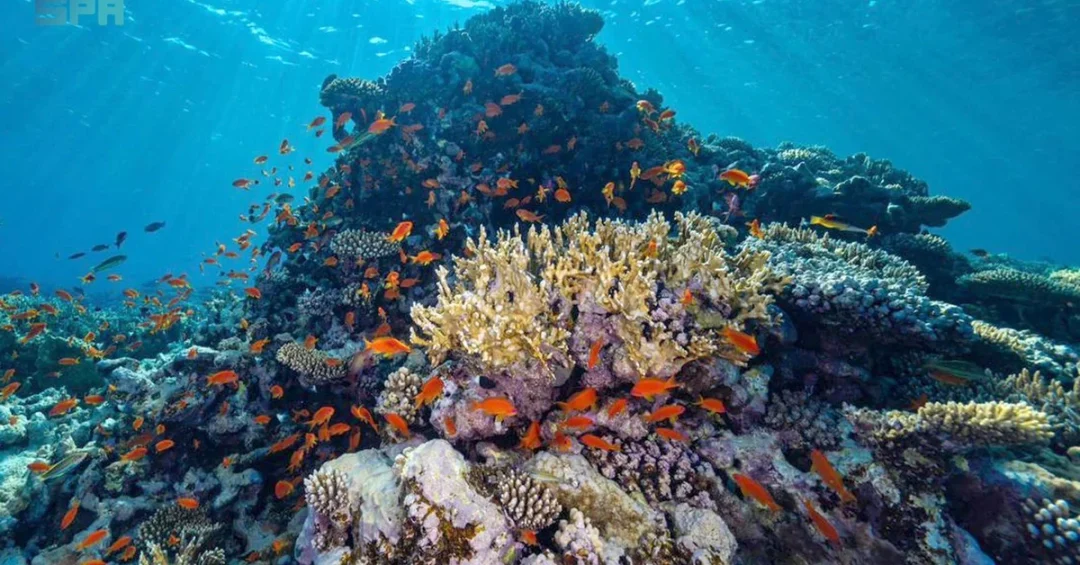
The King Abdullah University of Science and Technology (KAUST) Coral Restoration Initiative (KCRI) is preparing for a landmark 2025, with plans to complete the world’s largest and most advanced land-based coral nursery and to unveil a pioneering digital twin platform, according to an official announcement released via the Saudi Press Agency (SPA). The initiative, based in Jeddah and operating adjacent to Shushah Island, is already home to the world’s largest coral farm and is now scaling its operations to restore 100 hectares of reef — a project described by its leadership as the biggest coral restoration ever executed on Earth. For international observers, the development signals Saudi Arabia’s growing role in global marine conservation, driven by advanced technology, scientific research, and strategic partnerships.
Could the Kingdom’s desert nation become a global leader in coral reef restoration? The answer, according to KAUST, lies in a combination of ambitious scale, cutting-edge innovation, and a clear alignment with Saudi Vision 2030’s environmental sustainability goals. The KCRI’s progress in 2025 will be closely watched by marine scientists, conservationists, and policymakers worldwide, as it seeks to demonstrate that large-scale reef restoration is not only possible but can be accelerated through artificial intelligence and advanced coral husbandry techniques.
Context and Background
What makes the KCRI’s mission so urgent and so uniquely positioned for success? Coral reefs worldwide are under severe threat from climate change, ocean acidification, and human activity, with scientists estimating that up to 90 percent of global reefs could disappear by 2050 without decisive intervention. The Red Sea, however, harbors coral populations that are unusually resilient to rising temperatures — a natural asset that Saudi Arabia is now leveraging to advance both conservation and scientific understanding. The KCRI was established under KAUST, the Kingdom’s premier research university, to harness this advantage and develop scalable restoration methods that can be replicated globally.
The initiative operates from Jeddah, with its primary restoration site adjacent to Shushah Island, where 100 hectares of coral reef are being systematically divided into operational grids to facilitate efficient planning and execution. The restoration activity includes coral propagation, habitat enhancement, and augmentation using artificial structures. These methods are designed not only to rebuild damaged reefs but also to create resilient ecosystems that can withstand future environmental pressures. The scale of the project — covering an area equivalent to more than 140 football fields — is unprecedented in marine restoration, and it reflects Saudi Arabia’s broader commitment to environmental stewardship under Vision 2030.
At the heart of the KCRI’s strategy is a recognition that traditional restoration methods are too slow to keep pace with the rate of reef degradation. By pioneering techniques such as coral micro-fragmentation and fusion, the initiative aims to accelerate coral growth and enhance survival rates. These techniques, developed at the KCRI’s pilot facility at Haddah Beach, involve carefully fragmenting coral into small pieces and fusing them together to create larger, faster-growing colonies. The approach has already shown promising results, and it forms the basis for the KCRI’s ambitious expansion plans in 2025.
Key Details
What exactly does the KCRI plan to achieve in 2025, and why does it matter for the future of marine conservation? According to the official press release from KAUST, the initiative is set to reach several strategic milestones. The most significant is the completion of its main facility, expected before the end of 2025. This land-based coral nursery will be the world’s largest and most advanced, designed to produce up to 400,000 corals annually. Once operational, it will dramatically increase the KCRI’s capacity to propagate and outplant corals, turning the Red Sea into a living laboratory for restoration at scale.
Another major milestone is the development of the KCRI eCoral™ digital twin — a digital ecosystem that combines artificial intelligence and machine learning-driven analytics to streamline coral restoration, scenario modeling, and decision-making. Prof. David Suggett, KCRI Chief Scientist and newly appointed Director, explained that providing real-time insights via data and analytics is a critical step for strategic planning needed to enhance restoration efficiency. The digital twin will allow scientists to simulate different restoration scenarios, predict outcomes, and optimize resource allocation, effectively creating a virtual replica of the reef that can be monitored and manipulated in ways that would be impossible in the field.
Suggett, who recently took the helm of the KCRI, said in the release, “It is the biggest coral restoration ever executed on Earth,” adding that the initiative appealed to him because of its immense scale and cutting-edge use of technology, scientific research, and strategic partnerships to ensure a sustainable marine environment. His leadership comes at a pivotal moment, as the KCRI transitions from pilot projects to full-scale operations. The combination of his scientific expertise and the KCRI’s technological infrastructure positions the initiative to make significant contributions to global coral restoration knowledge.
The KCRI’s pilot facility at Haddah Beach, operational since March 2024, is already the world’s largest coral farm. This 1,000-square-meter facility serves as a testing ground for advanced coral propagation methods. By pioneering coral micro-fragmentation and fusion techniques, the coral husbandry teams speed up coral growth to enhance coral survival and biodiversity. The lessons learned at Haddah Beach are directly informing the design and operation of the main facility, ensuring that the scale-up is based on proven methods and continuous innovation.
International and Regional Impact
How will the KCRI’s work influence marine conservation beyond Saudi Arabia’s borders? The initiative is already attracting attention from the global scientific community, and its successes could provide a blueprint for reef restoration in other parts of the world. The Red Sea’s unique coral resilience makes it an ideal location for studying how reefs can adapt to warmer waters, and the KCRI’s findings are expected to be shared openly with international partners. This collaborative approach aligns with Saudi Arabia’s broader efforts to position itself as a leader in environmental research and sustainability, and it enhances the Kingdom’s soft power in global environmental diplomacy.
Regionally, the KCRI supports the goals of the Saudi Green Initiative and the Middle East Green Initiative, which aim to combat climate change and protect ecosystems across the region. By restoring coral reefs, the KCRI contributes to biodiversity, fisheries, and tourism — all of which are vital to the Red Sea’s economic and ecological health. The project also complements other Vision 2030 mega-projects, such as NEOM and the Red Sea Project, which are being developed with strict environmental standards. Together, these initiatives demonstrate that economic development and environmental protection can go hand in hand, a message that resonates with international audiences and investors.
Could the KCRI’s model be replicated in the Caribbean, the Great Barrier Reef, or Southeast Asia? While each region faces unique challenges, the core technologies and methodologies being developed in Saudi Arabia — from micro-fragmentation to AI-driven digital twins — are designed to be adaptable. The KCRI’s emphasis on strategic partnerships means that it is actively collaborating with research institutions and conservation organizations worldwide, facilitating the transfer of knowledge and best practices. As the initiative scales up, its impact will be measured not only in hectares restored but in the global capacity it builds for reef conservation.
Economic and Strategic Significance
What does coral restoration mean for Saudi Arabia’s economy and its strategic ambitions? Healthy coral reefs are essential to marine tourism, which is a key pillar of Vision 2030’s economic diversification strategy. The Red Sea’s reefs are a major draw for divers and eco-tourists, and their restoration supports the growth of sustainable tourism along the Kingdom’s coastline. The KCRI’s work enhances the natural assets that underpin projects like the Red Sea Project and AMAALA, helping to attract international visitors and investment. In this sense, coral restoration is not just an environmental imperative but an economic one.
Furthermore, the KCRI is fostering a new generation of Saudi scientists and marine biologists, contributing to human capital development and knowledge transfer. By partnering with KAUST, the initiative provides training and research opportunities for students and researchers, many of whom will go on to lead future conservation efforts. This investment in local expertise aligns with Vision 2030’s goal of building a knowledge-based economy and reducing dependence on oil. The technological innovations developed by the KCRI, such as the eCoral™ digital twin, also have potential commercial applications, from environmental monitoring to aquaculture, creating new economic opportunities in the blue economy.
The strategic significance extends to food security and coastal protection. Coral reefs support fisheries that provide protein and livelihoods for millions of people, and they act as natural barriers against storms and erosion. By restoring reefs, the KCRI helps safeguard these ecosystem services, which are increasingly important as climate change intensifies. For Saudi Arabia, which has a long coastline and relies on desalination for much of its water, the health of marine environments is directly linked to national resilience. The KCRI’s work therefore supports a broad range of national interests, from environmental sustainability to economic stability.
Vision 2030 Alignment
How does the KCRI embody the aspirations of Saudi Vision 2030? The initiative is a clear example of how the Kingdom is leveraging science, technology, and innovation to address global challenges while advancing its own development goals. Vision 2030 emphasizes environmental sustainability, economic diversification, and the enhancement of quality of life, and the KCRI contributes to all three. By restoring coral reefs, it protects biodiversity and supports tourism; by developing cutting-edge technologies, it fosters innovation and creates high-skilled jobs; and by engaging international partners, it strengthens Saudi Arabia’s global standing as a responsible and forward-looking nation.
As Prof. Suggett noted, “With ambitious goals and cutting-edge innovation, KCRI is set to make 2025 a milestone year in global coral restoration. These efforts will lay the foundation for Saudi marine conservation lasting many years.” This vision aligns with the broader objectives of the Saudi Green Initiative, which aims to plant 10 billion trees and protect 30 percent of the Kingdom’s land and sea by 2030. The KCRI’s success will be a testament to what can be achieved when scientific excellence, technological innovation, and political will converge. For international readers, it offers a compelling narrative of a nation using its resources and ingenuity to tackle one of the most pressing environmental challenges of our time.
20 Questions
Q1. What is the KAUST Coral Restoration Initiative (KCRI)?
A1. The KCRI is a flagship marine conservation project led by King Abdullah University of Science and Technology (KAUST) in Saudi Arabia. It aims to restore 100 hectares of coral reef near Shushah Island, using advanced technology and scientific research to set new global standards in reef restoration.
Q2. Where is the KCRI’s restoration site located?
A2. The primary restoration site is adjacent to Shushah Island, near Jeddah on Saudi Arabia’s Red Sea coast. The area is systematically divided into operational grids to facilitate efficient planning and execution of restoration activities at a scale never attempted before.
Q3. What milestones is the KCRI aiming for in 2025?
A3. In 2025, the KCRI expects to complete its main land-based coral nursery, which will be the world’s largest and most advanced, capable of producing up to 400,000 corals annually. It also plans to launch the eCoral™ digital twin for AI-driven restoration planning.
Q4. Who is Prof. David Suggett and what is his role?
A4. Prof. David Suggett is the Chief Scientist and newly appointed Director of the KCRI. He is a renowned marine scientist who has praised the initiative for its immense scale and cutting-edge use of technology, scientific research, and strategic partnerships to ensure a sustainable marine environment.
Q5. What is the eCoral™ digital twin?
A5. The eCoral™ digital twin is a digital ecosystem developed by the KCRI that combines artificial intelligence and machine learning-driven analytics. It streamlines coral restoration, scenario modeling, and decision-making by providing real-time insights via data and analytics for strategic planning.
Q6. How large is the KCRI’s coral farm at Haddah Beach?
A6. The pilot facility at Haddah Beach is 1,000 square meters and has been operational since March 2024. It is currently the world’s largest coral farm, serving as a testing ground for advanced coral propagation methods such as micro-fragmentation and fusion.
Q7. What are coral micro-fragmentation and fusion techniques?
A7. These are innovative methods pioneered by the KCRI’s coral husbandry teams. Micro-fragmentation involves cutting coral into tiny pieces, while fusion involves joining them together to form larger colonies. These techniques accelerate coral growth and enhance survival and biodiversity.
Q8. Why is the Red Sea important for coral restoration?
A8. The Red Sea is home to coral populations that are unusually resilient to rising temperatures, making it an ideal natural laboratory for studying climate-resilient reefs. This unique asset allows the KCRI to develop restoration methods that could be applied globally.
Q9. How does the KCRI contribute to Saudi Vision 2030?
A9. The KCRI supports Vision 2030 by advancing environmental sustainability, economic diversification, and quality of life. It protects marine biodiversity, supports sustainable tourism, fosters innovation and job creation, and enhances Saudi Arabia’s global standing in environmental research and diplomacy.
Q10. What is the significance of the KCRI’s main facility?
A10. The main facility, expected to be completed by the end of 2025, will be the world’s largest and most advanced land-based coral nursery. It is designed to produce up to 400,000 corals annually, dramatically scaling up the KCRI’s restoration capacity and enabling large-scale outplanting.
Q11. How does the KCRI use artificial intelligence?
A11. The KCRI uses AI through its eCoral™ digital twin, which combines AI and machine learning to analyze data, model scenarios, and optimize restoration decisions. This allows scientists to simulate outcomes and allocate resources more efficiently, enhancing the overall effectiveness of restoration efforts.
Q12. What partnerships does the KCRI have?
A12. The KCRI collaborates with a range of strategic partners, including KAUST, government agencies, and international research institutions. These partnerships facilitate knowledge exchange, technology transfer, and joint research, helping to amplify the impact of the initiative on a global scale.
Q13. How does coral restoration benefit the economy?
A13. Coral restoration supports marine tourism, fisheries, and coastal protection, all of which are vital to Saudi Arabia’s economy. Healthy reefs attract divers and eco-tourists, support fish stocks, and act as natural barriers against storms, contributing to economic resilience and food security.
Q14. What is the role of KAUST in the KCRI?
A14. KAUST is the leading research university behind the KCRI. It provides scientific expertise, technological infrastructure, and academic resources. KAUST’s involvement ensures that the initiative is grounded in rigorous research and innovation, and it trains the next generation of marine scientists.
Q15. How does the KCRI engage with local communities?
A15. The KCRI engages with local communities through education, training, and employment opportunities. It aims to raise awareness about marine conservation and involve Saudis in restoration activities, fostering a sense of stewardship and pride in the Kingdom’s natural heritage.
Q16. What are the environmental goals of the Saudi Green Initiative?
A16. The Saudi Green Initiative aims to plant 10 billion trees, protect 30 percent of Saudi Arabia’s land and sea, and reduce carbon emissions. The KCRI contributes to these goals by restoring coral reefs, which are critical to marine biodiversity and climate resilience.
Q17. How does the KCRI measure success?
A17. The KCRI measures success through metrics such as coral survival rates, growth rates, biodiversity indices, and hectares restored. It also evaluates the effectiveness of its technologies and methodologies, using data to continuously improve restoration practices and share lessons learned.
Q18. Can the KCRI’s methods be used in other countries?
A18. Yes, the KCRI’s methods, including micro-fragmentation, fusion, and the eCoral™ digital twin, are designed to be adaptable. The initiative actively shares its findings with international partners, aiming to build global capacity for coral restoration and contribute to worldwide reef conservation efforts.
Q19. What challenges does the KCRI face?
A19. The KCRI faces challenges such as the scale of restoration, the need for continuous innovation, and the impacts of climate change. However, its strategic approach, advanced technology, and strong partnerships position it to overcome these challenges and achieve its ambitious goals.
Q20. What is the long-term vision for the KCRI?
A20. The long-term vision is to establish Saudi Arabia as a global leader in coral restoration and marine conservation. By 2030 and beyond, the KCRI aims to restore vast areas of reef, develop scalable technologies, and inspire similar initiatives worldwide, ensuring a sustainable future for coral reefs.
Reader Feedback
We value your thoughts. Please share your feedback on this article.
Your feedback helps us improve our coverage.
Related articles
 SDAIA Digitizes 3.3B Transactions to Support Saudi Green Initiative
 CST Announces Success of Ramadan 1446 Operational Plan
 Saudi Arabia Hosts Global Quantum Experts at WQD 2025
 Moon, Mars, Pollux Align in Stunning Display over Northern Borders
 GEOSA Represents Saudi Arabia as Main Sponsor of Geospatial Week 2025
 Tuwaiq Academy Launches Future Tech Leaders Program