


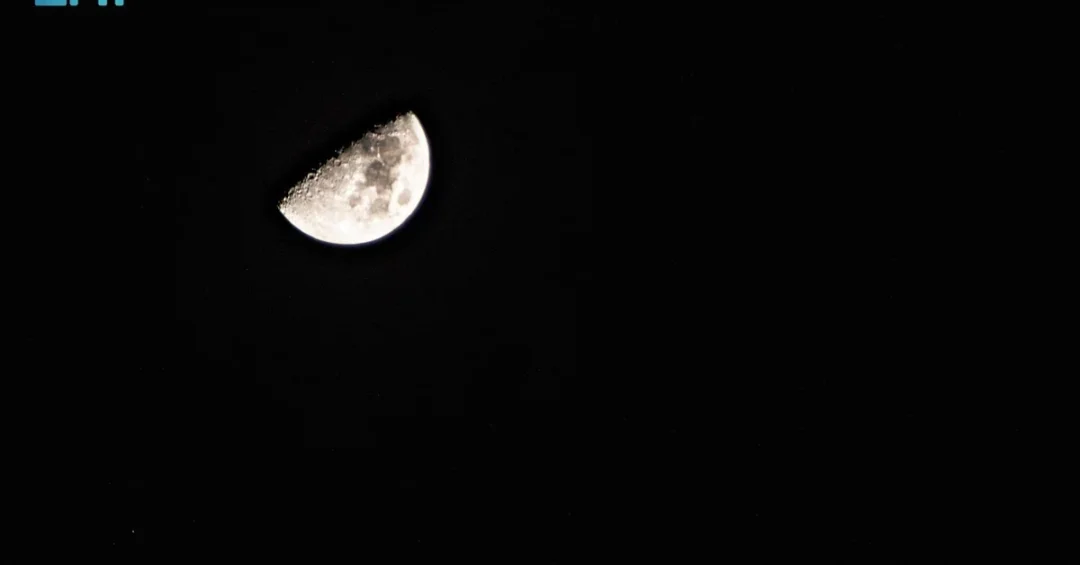
The Northern Borders Region of the Kingdom of Saudi Arabia hosted a remarkable astronomical event on Saturday evening, as the Moon, the bright star Pollux, and the planet Mars formed a striking conjunction visible to the naked eye along the eastern horizon until moonset. The celestial alignment, confirmed by the Saudi Press Agency (SPA), drew the attention of astronomy enthusiasts and skywatchers across the region, offering a rare opportunity to observe three luminous bodies in close proximity. The event unfolded under clear desert skies, a hallmark of the Kingdom’s northern territories, and continued throughout the night, allowing ample time for observation and photography.
According to Zahi Al-Khlaiwi, President of the Astronomy and Space Club, the conjunction was a captivating phenomenon that underscored the growing public interest in astronomy across Saudi Arabia. He noted that the Moon was in its waxing gibbous phase, making it significantly brighter and easier to observe, particularly alongside Pollux, one of the most prominent stars in the Gemini constellation. The alignment, he explained, provided an ideal opportunity for both seasoned astronomers and casual observers to witness a dynamic display of celestial mechanics. Have you ever wondered how such precise alignments occur in our vast solar system?
Context and Background
The conjunction of the Moon, Pollux, and Mars is a predictable astronomical event resulting from the orbital paths of these bodies as viewed from Earth. Pollux, a bright giant star located approximately 34 light-years away, is the brightest star in the Gemini constellation and has been a fixture in human navigation and mythology for millennia. Mars, the fourth planet from the Sun, is often called the Red Planet due to its iron oxide-rich surface, which gives it a distinctive reddish hue. When the Moon, a star, and a planet appear close together in the sky, it creates a visually stunning triangle or line that captures the imagination of observers worldwide. But what makes this particular alignment so special for the Northern Borders Region?
The Northern Borders Region, with its vast deserts and minimal light pollution, is uniquely suited for astronomical observation. Cities such as Arar, the regional capital, and nearby settlements offer dark skies that rival some of the world’s best observatories. This natural advantage has not gone unnoticed; Saudi Arabia has been investing in astronomy and space sciences as part of its broader push for scientific advancement. The conjunction served as a reminder of the Kingdom’s geographical blessings and its potential to become a hub for astrotourism and scientific research. How often do such celestial gatherings occur in this part of the world?
Historically, conjunctions have held cultural and scientific significance. Ancient civilizations used them to track seasons, plan agricultural activities, and even predict omens. Today, they are celebrated as opportunities for education and public engagement. The Astronomy and Space Club, under Al-Khlaiwi’s leadership, has been at the forefront of promoting skywatching events in Saudi Arabia, aligning with the Kingdom’s Vision 2030 goals of fostering scientific curiosity and technological innovation. The event in the Northern Borders Region is the latest in a series of celestial phenomena that have captivated Saudi audiences, from meteor showers to solar eclipses.
Key Details of the Alignment
Al-Khlaiwi provided a detailed breakdown of the conjunction, explaining that Mars appeared as a red dot to the left of the Moon, while Pollux shone to its right. This configuration created a celestial alignment of three bright bodies, each with its own distinct color and brightness. The Moon’s waxing gibbous phase meant that more than half of its visible disk was illuminated, casting a soft glow that did not overpower the star or planet. Pollux, with its golden-yellow luminosity, contrasted beautifully with Mars’s rusty red, making the trio easily distinguishable even without telescopes or binoculars. Isn’t it fascinating how the cosmos paints such vivid pictures for us?
The event was visible throughout the night until moonset, which occurred in the early hours of the morning. This extended window allowed observers to watch the gradual change in the sky as the Moon set, followed by Mars and Pollux. Photographers took advantage of the clear conditions to capture the alignment, with many sharing their images on social media. The Astronomy and Space Club encouraged the public to participate by finding locations away from city lights and using simple cameras or smartphones. The club also provided tips on exposure settings and composition, further democratizing access to astronomy. What could be more inspiring than capturing a moment that spans millions of kilometers?
Beyond the visual spectacle, the conjunction offered scientific value. By observing the relative positions of the Moon, Pollux, and Mars, astronomers can refine their understanding of orbital mechanics and the dynamics of the solar system. While such events are not rare, each one provides data that contributes to ongoing research. For amateur astronomers, it was a chance to practice locating celestial objects and to learn about the differences between stars and planets. The event also highlighted the importance of dark-sky preservation, as light pollution continues to threaten visibility in many parts of the world. How can Saudi Arabia leverage its dark skies for scientific and educational gains?
International and Regional Impact
The conjunction over the Northern Borders Region attracted attention beyond Saudi Arabia’s borders, with astronomy enthusiasts in neighboring Gulf countries and beyond noting the event. Social media platforms buzzed with images and discussions, showcasing the universal appeal of celestial phenomena. This shared experience underscores the role of astronomy in fostering international collaboration and cultural exchange. Saudi Arabia’s active promotion of such events aligns with its growing presence in global scientific forums, including space exploration initiatives and satellite technology. Could this be a stepping stone for the Kingdom to host international astronomy conferences?
Regionally, the event reinforced the Northern Borders Region’s potential as a destination for astrotourism. With its pristine skies and comfortable desert climate during certain months, the area could attract visitors seeking unique experiences. This aligns with Saudi Arabia’s broader tourism strategy, which aims to diversify the economy and showcase the Kingdom’s natural and cultural heritage. The conjunction also served as a soft-power tool, presenting Saudi Arabia as a country that values science, education, and the wonders of the universe. How might astrotourism reshape the economic landscape of the Northern Borders Region?
Economic and Strategic Significance
The economic implications of astronomy-related activities are increasingly recognized worldwide. Astrotourism, in particular, has become a niche market that generates revenue through guided tours, workshops, and photography expeditions. For Saudi Arabia, developing this sector could create jobs, support local businesses, and attract international visitors. The Northern Borders Region, with its existing infrastructure and proximity to major cities, is well-positioned to capitalize on this trend. The Astronomy and Space Club’s efforts to organize public viewings and educational programs are laying the groundwork for a sustainable astrotourism industry. What economic opportunities could arise from turning the desert into a classroom for the cosmos?
Strategically, Saudi Arabia’s investment in space sciences is part of a larger vision to diversify away from oil dependence. The Kingdom has established a Saudi Space Commission and launched satellites for communication and Earth observation. Events like the conjunction inspire the next generation of scientists and engineers, who will drive innovation in fields such as aerospace, remote sensing, and data analytics. By fostering a culture of curiosity and exploration, Saudi Arabia is building human capital that will be essential for its future knowledge economy. The alignment of the Moon, Pollux, and Mars may have been a fleeting moment, but its impact on young minds could last a lifetime. How can the Kingdom ensure that this momentum translates into long-term scientific achievement?
Vision 2030 Alignment
The conjunction over the Northern Borders Region exemplifies the spirit of Vision 2030, Saudi Arabia’s ambitious plan to transform its society and economy. By promoting scientific literacy, encouraging public engagement with astronomy, and leveraging natural assets for tourism, the Kingdom is aligning with Vision 2030’s goals of enhancing quality of life, diversifying revenue streams, and fostering a knowledge-based economy. The event also highlights the role of community organizations like the Astronomy and Space Club in realizing these objectives. As Saudi Arabia continues to invest in education and innovation, such celestial displays serve as powerful reminders of the wonders that await those who look up.
Looking ahead, the Kingdom is poised to build on this momentum. Plans for new observatories, planetariums, and science festivals are in the pipeline, promising to make astronomy accessible to all. The Northern Borders Region, with its dark skies and growing reputation, could become a focal point for these efforts. By integrating astronomy into its tourism and education strategies, Saudi Arabia is not only celebrating the universe but also securing its place as a leader in the global scientific community. The alignment of the Moon, Pollux, and Mars was a beautiful spectacle, but it is also a symbol of the bright future that Saudi Arabia is crafting for itself and the world.
20 Questions
Q1. What celestial bodies aligned over the Northern Borders Region?
A1. The Moon, the star Pollux, and the planet Mars aligned in a conjunction visible to the naked eye along the eastern horizon until moonset.
Q2. When did this astronomical event take place?
A2. The event occurred on Saturday evening, April 5, 2025, and was visible throughout the night until moonset in the early hours of April 6.
Q3. Who provided details about the conjunction?
A3. Zahi Al-Khlaiwi, President of the Astronomy and Space Club, provided expert commentary and explained the significance of the alignment for observers.
Q4. What phase was the Moon in during the event?
A4. The Moon was in its waxing gibbous phase, meaning more than half of its visible disk was illuminated, making it brighter and easier to observe.
Q5. Where is Pollux located in the night sky?
A5. Pollux is the brightest star in the Gemini constellation and appeared to the right of the Moon during the conjunction.
Q6. How did Mars appear during the alignment?
A6. Mars appeared as a distinct red dot to the left of the Moon, contrasting with the golden-yellow light of Pollux.
Q7. Why was the Northern Borders Region ideal for viewing?
A7. The region has vast deserts with minimal light pollution, providing dark skies that are perfect for astronomical observation and photography.
Q8. Was the event visible to the naked eye?
A8. Yes, the conjunction was visible without telescopes or binoculars, allowing the public to enjoy the spectacle directly.
Q9. How long was the conjunction visible?
A9. The alignment was visible throughout the night until moonset, giving observers several hours to watch and photograph the event.
Q10. What is the significance of Pollux in astronomy?
A10. Pollux is a bright giant star approximately 34 light-years away and has been used for navigation and mythological stories for millennia.
Q11. Did the event attract public attention?
A11. Yes, astronomy enthusiasts and skywatchers across the region took part, with many sharing images on social media and attending organized viewings.
Q12. How does this event relate to Saudi Vision 2030?
A12. It supports Vision 2030 by promoting scientific education, astrotourism, and innovation, aligning with goals to diversify the economy and enhance quality of life.
Q13. What role did the Astronomy and Space Club play?
A13. The club, led by Zahi Al-Khlaiwi, encouraged public participation, provided viewing tips, and highlighted the scientific and educational value of the conjunction.
Q14. Can such conjunctions be predicted?
A14. Yes, astronomers can predict conjunctions accurately using orbital mechanics and ephemeris data, allowing advance planning for observations.
Q15. What makes this conjunction different from others?
A15. The combination of a bright Moon, a prominent star, and a red planet created a visually striking trio with distinct colors and brightness levels.
Q16. How can astrotourism benefit the Northern Borders Region?
A16. Astrotourism can attract visitors, create jobs, and support local businesses, contributing to economic diversification and regional development.
Q17. Are there plans for more astronomy events in Saudi Arabia?
A17. Yes, the Kingdom is investing in observatories, planetariums, and science festivals to make astronomy accessible and inspire future generations.
Q18. What scientific value does observing conjunctions have?
A18. They help refine orbital mechanics, test prediction models, and engage the public in science, fostering a culture of curiosity and learning.
Q19. How does light pollution affect astronomical observations?
A19. Light pollution reduces visibility of faint objects; dark skies like those in the Northern Borders Region are essential for clear observations and astrophotography.
Q20. What is the broader significance of this event for Saudi Arabia?
A20. It showcases the Kingdom’s natural advantages, promotes scientific advancement, and reinforces its commitment to Vision 2030 and global scientific collaboration.
Reader Feedback
We value your thoughts. Please share your feedback on this article.
Your feedback helps us improve our coverage.
Related articles
 GEOSA Represents Saudi Arabia as Main Sponsor of Geospatial Week 2025
 Tuwaiq Academy Launches Future Tech Leaders Program
 Saudi University Showcases Innovations at Geneva Exhibition
 Saudi Arabia Leads Geospatial Innovation at GSW2025
 Al-Khobar Advances 38 Places in IMD Smart City Index 2025
 Saudi Electronic University Launches First Sports Tech Accelerator