


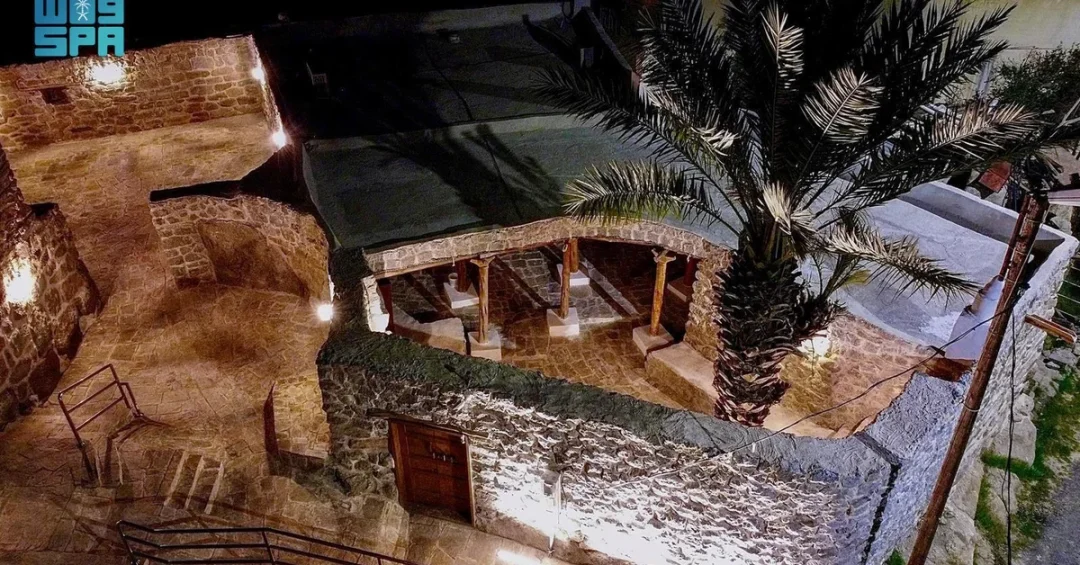
The Mohammed bin Salman Project for Developing Historic Mosques has begun restoring Al-Jubail Mosque, a 300-year-old stone structure in the Thaqif Center south of Taif in the Makkah Region, as part of its second phase, according to the Saudi Press Agency (SPA). The mosque, renowned for its construction in the architectural style of the Sarat region, is being rehabilitated to preserve its traditional essence while raising public awareness about the importance of safeguarding historic mosques. Upon completion, the mosque will cover an area of 310 square meters and retain its capacity for 45 worshippers. How does a building that has stood for three centuries continue to inspire both devotion and architectural pride? The answer lies in a careful blend of heritage and modern craftsmanship.
The project, launched under the directives of His Royal Highness Crown Prince Mohammed bin Salman, embodies Saudi Arabia’s commitment to preserving its cultural and religious heritage. The restoration of Al-Jubail Mosque is not merely a construction effort; it is a statement of national identity. By restoring historic mosques, the Kingdom ensures that future generations remain connected to their roots while benefiting from modern standards of safety and sustainability. The initiative reflects the leadership’s vision of a Saudi Arabia that honors its past while embracing its future.
Context and Background
Why does a small mosque in the mountains of Taif matter on the national stage? Al-Jubail Mosque, located in the Thaqif Center, was built three centuries ago using Sarat Mountain stones, a material characteristic of the region’s architectural tradition. Its narrow openings, stone walls, and wooden ceilings are emblematic of the Sarat style, which has evolved over centuries to suit the climate and culture of the Arabian highlands. The mosque’s inclusion in the second phase of the Mohammed bin Salman Project for Developing Historic Mosques underscores its significance as a living piece of Saudi heritage.
The project itself follows the successful completion of its first phase, which restored 30 historic mosques across 10 regions of the Kingdom. That milestone demonstrated the feasibility and value of large-scale heritage preservation. The second phase expands the scope, targeting more mosques in diverse regions, each with its own architectural identity. The initiative is managed by specialized Saudi companies with expertise in heritage buildings, working alongside Saudi architects to ensure authenticity. This approach not only preserves the mosques but also builds local capacity in heritage conservation.
The restoration of Al-Jubail Mosque is part of a broader national effort to document and protect the Kingdom’s architectural legacy. Historic mosques are not just places of worship; they are repositories of community memory and craftsmanship. By investing in their restoration, Saudi Arabia signals that its heritage is a priority, not an afterthought. The project also aligns with the teachings of Islam, which emphasize the sanctity of mosques and the importance of maintaining them for future generations.
Key Details of the Restoration
What exactly goes into restoring a 300-year-old mosque? According to SPA, the reconstruction will utilize techniques that maintain the mosque’s primary construction material—Sarat Mountain stones—alongside local wood for ceilings, columns, windows, and doors. The materials will preserve its defining characteristic of narrow openings, reflecting the unique style of this architectural tradition. The renovation aims to balance traditional and modern construction standards to ensure the sustainability of the mosque’s elements while integrating heritage and historical features. The area of the mosque will reach 310 square meters, and its capacity will remain at 45 worshippers after renovation.
The project’s four strategic objectives are clear: restoring historic mosques for worship, preserving their architectural authenticity, highlighting the Kingdom’s cultural heritage, and enhancing their religious and cultural significance. These objectives are pursued through a meticulous process that involves documentation, material analysis, and skilled craftsmanship. The use of local materials is not just about aesthetics; it ensures that the mosque remains structurally sound and visually harmonious with its surroundings. The involvement of Saudi architects guarantees that each mosque’s original architectural identity is preserved, avoiding the pitfalls of generic modernization.
The restoration work is being carried out by specialized Saudi companies experienced in heritage buildings. This choice reflects a deliberate strategy to keep the expertise within the Kingdom and to foster a new generation of Saudi conservation professionals. The project also serves as a training ground for young architects and craftsmen, who learn traditional techniques under the guidance of experts. In this way, the restoration of Al-Jubail Mosque contributes to both cultural preservation and human capital development, a dual benefit that resonates with Vision 2030.
International and Regional Impact
How does the restoration of a single mosque in Taif resonate beyond Saudi borders? For the international community, particularly Muslims around the world, the preservation of historic mosques in the birthplace of Islam holds profound significance. These sites are part of the global Islamic heritage, and their restoration is a service to all Muslims. The project also positions Saudi Arabia as a leader in cultural heritage conservation, a field where the Kingdom is increasingly active. By sharing its expertise and showcasing its successes, Saudi Arabia can inspire similar efforts in other countries with rich Islamic architectural traditions.
Regionally, the project strengthens the Kingdom’s role as a custodian of Islamic history. The Makkah Region, where Al-Jubail Mosque is located, is home to some of the most important sites in Islam. Restoring mosques in this area enhances the spiritual experience of pilgrims and visitors, who often seek to connect with the early Islamic period. The project also supports local communities by creating jobs and stimulating tourism in heritage areas. As Saudi Arabia opens up to international visitors under Vision 2030, historic mosques become part of a broader cultural tourism offering that includes archaeological sites, museums, and traditional crafts.
Economic and Strategic Significance
What economic value does heritage preservation bring? The restoration of historic mosques is an investment in Saudi Arabia’s cultural economy. Heritage tourism is a growing sector globally, and Saudi Arabia is well-positioned to attract visitors interested in Islamic history and architecture. By restoring mosques like Al-Jubail, the Kingdom creates destinations that can draw pilgrims and tourists alike, generating revenue and supporting local businesses. The project also stimulates the construction and crafts sectors, as specialized companies and artisans are engaged in the restoration work.
Strategically, the project reinforces national identity and social cohesion. Historic mosques serve as community anchors, bringing people together for prayer and social activities. Their restoration can revitalize neighborhoods and foster a sense of pride among residents. In the context of Vision 2030, which aims to build a vibrant society and a thriving economy, the preservation of heritage is not a luxury but a necessity. It helps balance rapid modernization with the need to maintain cultural continuity, ensuring that Saudi Arabia’s transformation remains rooted in its values and history.
Vision 2030 Alignment
How does the Mohammed bin Salman Project for Developing Historic Mosques contribute to Vision 2030? The project directly supports the Vision’s cultural and social objectives by preserving architectural heritage and integrating it into modern mosque designs. It reflects the leadership’s commitment to safeguarding the Kingdom’s identity while advancing its development. By restoring mosques, Saudi Arabia ensures that its religious and cultural legacy remains vibrant, even as it builds futuristic cities and diversifies its economy. The project also aligns with Vision 2030’s goal of enhancing the quality of life for citizens and residents, as restored mosques become centers of community life and spiritual nourishment.
Furthermore, the project exemplifies the Vision’s emphasis on national pride and global engagement. By showcasing its heritage to the world, Saudi Arabia strengthens its soft power and cultural diplomacy. The restoration of Al-Jubail Mosque is a testament to the Kingdom’s ability to honor its past while shaping its future. As the second phase progresses, it will undoubtedly inspire similar initiatives and reinforce the message that Saudi Arabia is a nation that values its history as much as its ambitions. The project is a shining example of how Vision 2030 is not just about economic transformation but also about cultural renaissance.
20 Questions
Q1. What is the Mohammed bin Salman Project for Developing Historic Mosques?
A1. It is a national initiative to restore and rehabilitate historic mosques across Saudi Arabia, preserving their architectural heritage and religious significance. The project is carried out in phases, with the second phase currently underway.
Q2. Where is Al-Jubail Mosque located?
A2. Al-Jubail Mosque is located in the Thaqif Center, south of Taif, in the Makkah Region of Saudi Arabia. It is known for its stone construction in the Sarat architectural style.
Q3. How old is Al-Jubail Mosque?
A3. The mosque is approximately 300 years old, built three centuries ago in the traditional Sarat style using local stone and wood.
Q4. What architectural style is Al-Jubail Mosque known for?
A4. It is renowned for the Sarat region’s architectural style, characterized by stone construction, narrow openings, and wooden ceilings, columns, windows, and doors.
Q5. What materials will be used in the restoration?
A5. The restoration will use Sarat Mountain stones, the mosque’s primary construction material, along with local wood for ceilings, columns, windows, and doors, preserving its traditional character.
Q6. What will be the area of Al-Jubail Mosque after restoration?
A6. Upon completion, the mosque will cover an area of 310 square meters, maintaining its original footprint while enhancing its structural integrity.
Q7. How many worshippers will the mosque accommodate after renovation?
A7. The mosque’s capacity will remain at 45 worshippers after renovation, ensuring it continues to serve the local community as a place of prayer.
Q8. Who is carrying out the restoration work?
A8. Specialized Saudi companies experienced in heritage buildings, with the involvement of Saudi architects, are carrying out the restoration to ensure authenticity and quality.
Q9. What are the strategic objectives of the project?
A9. The project aims to restore historic mosques for worship, preserve their architectural authenticity, highlight the Kingdom’s cultural heritage, and enhance their religious and cultural significance.
Q10. How does the project align with Saudi Vision 2030?
A10. It aligns with Vision 2030 by preserving architectural heritage and integrating it into modern mosque designs, supporting cultural and social development goals.
Q11. What was achieved in the first phase of the project?
A11. The first phase successfully rehabilitated and restored 30 historic mosques across 10 regions of Saudi Arabia, setting a benchmark for heritage preservation.
Q12. Why is the restoration of historic mosques important?
A12. It preserves cultural and religious heritage, strengthens community identity, and ensures that future generations remain connected to their history and traditions.
Q13. How does the project benefit local communities?
A13. It creates jobs, stimulates heritage tourism, and fosters pride in local heritage, while providing restored places of worship for residents.
Q14. What role do Saudi architects play in the project?
A14. Saudi architects ensure that each mosque’s original architectural identity is preserved, applying traditional techniques and materials in the restoration process.
Q15. How does the project balance tradition and modernity?
A15. It uses traditional materials and techniques while incorporating modern construction standards to ensure sustainability and safety without compromising heritage.
Q16. What impact does the project have on Islamic heritage globally?
A16. It preserves part of the global Islamic heritage, serving Muslims worldwide and positioning Saudi Arabia as a leader in cultural conservation.
Q17. How does the project support cultural tourism in Saudi Arabia?
A17. Restored mosques become heritage destinations that attract visitors, contributing to the growth of cultural tourism under Vision 2030.
Q18. What is the significance of the Sarat architectural style?
A18. The Sarat style is a traditional architectural tradition of the Arabian highlands, characterized by stone construction and narrow openings suited to the region’s climate and culture.
Q19. How can the public learn more about the project?
A19. Information is available through official Saudi sources, including the Saudi Press Agency and government ministries responsible for heritage and Islamic affairs.
Q20. What is the expected completion timeline for the second phase?
A20. The second phase is ongoing, with no specific completion date announced. It follows the successful first phase and aims to restore more mosques across the Kingdom.
Reader Feedback
We value your thoughts. Please share your feedback on this article.
Your feedback helps us improve our coverage.