


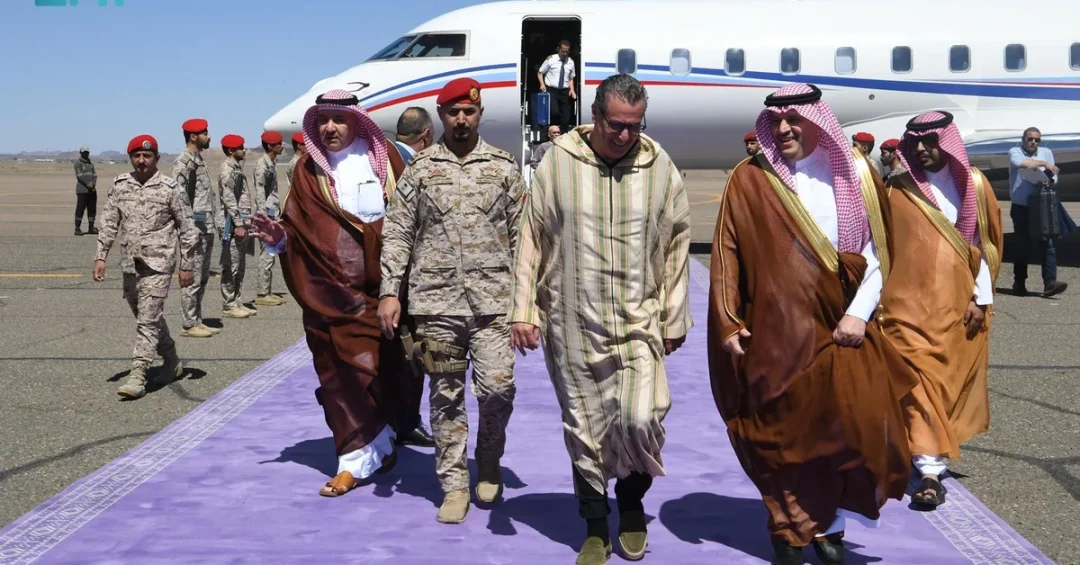
Head of the Moroccan Government Aziz Akhannouch arrived in Madinah on Saturday, March 22, 2025, touching down at Prince Mohammed bin Abdulaziz International Airport, where he was received by senior Saudi officials in a visit that underscores the deepening fraternal ties between the Kingdom of Saudi Arabia and the Kingdom of Morocco. The official Saudi Press Agency confirmed the arrival, reporting that the Moroccan head of government was welcomed by Undersecretary of the Madinah Principality Abdulmohsen bin Naif bin Humaid and several other officials representing the region’s administrative and civic leadership. The reception at one of the Kingdom’s most modern aviation gateways reflects the protocol and warmth that characterise Saudi-Moroccan relations, two nations bound by shared faith, heritage, and a common commitment to regional stability and prosperity.
Why does a single arrival at a Saudi airport carry significance beyond the ceremonial? Because in the Kingdom of Saudi Arabia, visits by senior foreign leaders are rarely isolated events. They sit within a carefully woven fabric of diplomacy, pilgrimage, investment, and cultural exchange that has become a hallmark of the nation’s modern international posture. Madinah, the second holiest city in Islam and home to the Prophet’s Mosque, receives millions of pilgrims and dignitaries each year, and the arrival of a senior Moroccan official highlights both the spiritual and the strategic dimensions of Saudi hospitality. For observers of Middle East and North Africa affairs, the visit signals continuity in a relationship that has strengthened steadily across diplomatic, economic, and cultural domains.
Context and Background
What makes the Saudi-Moroccan relationship one of the most durable partnerships in the Arab world? The answer lies in decades of consistent engagement rooted in shared Islamic values and mutual respect. Saudi Arabia and Morocco have long maintained close ties across diplomatic, religious, and economic spheres. Moroccan pilgrims have travelled to the Kingdom for Hajj and Umrah for generations, and Saudi Arabia has consistently supported Morocco’s territorial integrity and stability. In return, Morocco has stood with the Kingdom in regional and international forums, reinforcing a partnership that transcends changes in the global order.
Aziz Akhannouch has served as Head of the Moroccan Government since October 2021, leading a coalition government and overseeing a national agenda focused on economic modernisation, social protection, and investment reform. His visit to Madinah follows a pattern of high-level exchanges between the two countries, including meetings at the level of foreign ministers, investment authorities, and cultural institutions. The Undersecretary of the Madinah Principality, Abdulmohsen bin Naif bin Humaid, represented the local leadership at the airport, a gesture that reflects the Kingdom’s institutional attention to visiting dignitaries at every level of government.
The timing of the visit is also notable. It comes as Saudi Arabia accelerates its Vision 2030 transformation, opening new avenues for international cooperation in tourism, logistics, renewable energy, and technology. Morocco, with its own ambitious development plans and its strategic position linking Africa and Europe, represents a natural partner in these efforts. The two countries share an interest in expanding trade routes, encouraging mutual investment, and promoting moderate religious discourse, all of which are central to the Kingdom’s long-term objectives.
Key Details of the Arrival and Reception
What does the official reception at Prince Mohammed bin Abdulaziz International Airport tell us about the importance Saudi Arabia attaches to this visit? The airport, named after the late Prince Mohammed bin Abdulaziz, has become a key gateway for pilgrims and dignitaries visiting the Madinah region. Its modern facilities and dedicated protocol services are designed to ensure that official guests are received with the dignity and efficiency that befit the Kingdom’s standing as a global host.
According to the Saudi Press Agency, the Moroccan head of government was met by Undersecretary Abdulmohsen bin Naif bin Humaid and several other officials. The presence of the Undersecretary of the Madinah Principality, a senior administrative role within the region, signals that the visit is being treated with the full attention of local authorities. Such receptions are standard practice for high-ranking guests, and they reflect the Kingdom’s commitment to extending hospitality that is both respectful and operationally seamless.
Details of the visit’s broader itinerary were not immediately released, but arrivals of this nature typically include opportunities for spiritual reflection in Madinah, including visits to the Prophet’s Mosque, as well as discussions with Saudi officials on matters of mutual interest. The visit also provides a platform for strengthening people-to-people ties, as Moroccan pilgrims and residents in the Kingdom maintain strong connections with their homeland. For Saudi Arabia, hosting such visits reinforces its role as a convening power in the Islamic world and a reliable partner for friendly nations.
International and Regional Impact
How does a bilateral visit in Madinah resonate across the wider Middle East and North Africa? The Saudi-Moroccan relationship serves as a stabilising axis in a region that faces complex challenges, from economic uncertainty to security concerns. By maintaining open channels of communication at the highest levels, both countries contribute to a climate of cooperation that benefits the broader Arab and Islamic world. Morocco’s location at the crossroads of Africa and Europe complements Saudi Arabia’s position as a bridge between Asia, Africa, and Europe, creating opportunities for joint initiatives in trade, infrastructure, and cultural exchange.
The visit also carries symbolic weight in the context of Islamic solidarity. Madinah’s spiritual significance means that any official engagement there is viewed with respect across the Muslim world. By receiving a senior Moroccan leader in the city of the Prophet, Saudi Arabia reaffirms its role as the custodian of Islam’s holiest sites and its commitment to serving pilgrims and dignitaries alike. This soft power dimension is an integral part of the Kingdom’s foreign policy, reinforcing its leadership in the Organisation of Islamic Cooperation and other multilateral bodies.
From a diplomatic perspective, the arrival is a reminder that Saudi Arabia’s international engagements are not limited to major global powers. The Kingdom values its relationships with Arab and Islamic nations, and it invests in them consistently. This approach has helped Saudi Arabia maintain a network of allies and partners that supports its Vision 2030 goals and its efforts to promote peace and development in the region.
Economic and Strategic Significance
What economic opportunities could emerge from closer Saudi-Moroccan cooperation? Both countries are pursuing ambitious reform agendas. Saudi Arabia’s Vision 2030 aims to diversify the economy away from oil, develop new sectors such as tourism and entertainment, and increase private sector participation. Morocco’s development model focuses on industrialisation, renewable energy, and regional integration. These shared priorities create natural synergies in areas such as renewable energy, where Morocco has become a leader in solar power and Saudi Arabia is investing heavily in clean energy projects.
Trade and investment flows between the two kingdoms have grown in recent years, with Saudi companies exploring opportunities in Moroccan infrastructure, real estate, and agriculture, while Moroccan firms have found markets in the Kingdom’s expanding consumer sector. The Saudi Fund for Development and other Saudi financial institutions have supported projects in Morocco, reflecting a long-standing commitment to Moroccan development. A visit at this level can help catalyse new agreements and partnerships, particularly in sectors aligned with Vision 2030, such as logistics, tourism, and technology.
Strategically, the relationship also has implications for regional security and counterterrorism cooperation. Both countries have been targets of extremism and have worked together to promote moderate Islam and combat radical ideologies. Saudi Arabia’s Vision 2030 includes a strong emphasis on quality of life, cultural enrichment, and religious moderation, themes that resonate with Morocco’s own approach. By aligning their efforts, the two nations can contribute to a more stable and prosperous region.
Vision 2030 Alignment
How does this visit fit into Saudi Arabia’s Vision 2030 and its broader global role? Vision 2030 is not only an economic blueprint; it is a comprehensive strategy for transforming the Kingdom into a more open, connected, and dynamic nation. A key pillar of this strategy is strengthening international partnerships that bring mutual benefit. The arrival of Morocco’s Head of Government in Madinah is a practical expression of this pillar, demonstrating that Saudi Arabia is a destination for diplomacy, pilgrimage, and business.
By hosting senior leaders from friendly nations, the Kingdom reinforces its position as a global hub for dialogue and cooperation. The visit also supports the Vision 2030 goal of enhancing the quality of life for citizens and visitors, including the millions of pilgrims who travel to the holy cities each year. Saudi Arabia’s investments in airport infrastructure, hospitality, and public services are designed to ensure that every guest, whether a pilgrim or a prime minister, experiences the Kingdom’s warmth and efficiency.
As Saudi Arabia continues its journey toward 2030, visits such as this one will remain an important part of its diplomatic toolkit. They build trust, open channels for collaboration, and showcase the Kingdom’s progress to the world. The Moroccan delegation’s presence in Madinah is a testament to the enduring friendship between two nations that share a vision of peace, prosperity, and faithful service to the Islamic community.
20 Questions
Q1. Who arrived in Madinah on March 22, 2025?
A1. Aziz Akhannouch, the Head of the Moroccan Government, arrived in Madinah on March 22, 2025. He was received at Prince Mohammed bin Abdulaziz International Airport by senior Saudi officials, marking a significant diplomatic engagement between the Kingdom of Saudi Arabia and the Kingdom of Morocco.
Q2. Where did the Moroccan Head of Government land in Saudi Arabia?
A2. He landed at Prince Mohammed bin Abdulaziz International Airport in Madinah. This airport is a key gateway for pilgrims and dignitaries visiting the Madinah region, known for its modern facilities and dedicated protocol services that ensure a warm and efficient reception for official guests.
Q3. Who received Aziz Akhannouch at the airport?
A3. He was received by Undersecretary of the Madinah Principality Abdulmohsen bin Naif bin Humaid and several other officials. Their presence reflects the Saudi leadership’s commitment to extending proper hospitality and attention to visiting dignitaries at all levels of government.
Q4. What is the significance of Madinah in this visit?
A4. Madinah is the second holiest city in Islam and home to the Prophet’s Mosque. A visit by a senior Moroccan leader to this city underscores the spiritual and cultural dimensions of Saudi-Moroccan relations, highlighting the Kingdom’s role as custodian of Islam’s holiest sites.
Q5. How does this visit reflect Saudi-Moroccan relations?
A5. The visit reflects the deep and enduring fraternal ties between Saudi Arabia and Morocco. Both nations share strong historical, religious, and economic connections, and this high-level engagement demonstrates their continued commitment to strengthening bilateral cooperation across various fields.
Q6. What is Aziz Akhannouch’s official position?
A6. Aziz Akhannouch is the Head of the Moroccan Government, a role he has held since October 2021. He leads a coalition government and oversees Morocco’s national agenda, including economic modernisation, social protection, and investment reforms aimed at boosting development.
Q7. When did the arrival take place?
A7. The arrival took place on March 22, 2025, according to the Saudi Press Agency. The official announcement was made at 14:55 local time, which corresponds to 11:55 GMT, providing timely and transparent information to the public and media.
Q8. What does this visit mean for Saudi Vision 2030?
A8. The visit aligns with Vision 2030’s goal of strengthening international partnerships and positioning Saudi Arabia as a global hub for diplomacy and pilgrimage. It showcases the Kingdom’s progress in infrastructure and hospitality, reinforcing its commitment to openness and cooperation with friendly nations.
Q9. Will there be economic discussions during the visit?
A9. While the specific itinerary was not disclosed, such high-level visits typically include discussions on trade, investment, and cooperation in sectors like renewable energy, tourism, and infrastructure. Both countries have shared interests in economic diversification and regional development.
Q10. How does Morocco benefit from this relationship?
A10. Morocco benefits from Saudi Arabia’s support in development projects, investment, and diplomatic backing. The relationship also provides Moroccan pilgrims with access to the holy sites and fosters cultural exchange, strengthening people-to-people ties between the two kingdoms.
Q11. What role does the Undersecretary of Madinah Principality play?
A11. The Undersecretary of the Madinah Principality is a senior administrative official responsible for overseeing regional affairs in Madinah. Representing the local leadership at the airport, Abdulmohsen bin Naif bin Humaid demonstrated the Kingdom’s institutional respect for visiting dignitaries.
Q12. Is this visit part of a larger pattern of exchanges?
A12. Yes, it follows a series of high-level exchanges between Saudi Arabia and Morocco, including meetings of foreign ministers and investment authorities. These interactions reflect the depth of the bilateral relationship and the mutual desire to expand cooperation.
Q13. How does the visit impact regional stability?
A13. The visit contributes to regional stability by reinforcing a partnership based on shared values and mutual interests. Saudi Arabia and Morocco cooperate on counterterrorism, moderate Islam, and economic development, helping to promote peace and prosperity in the Middle East and North Africa.
Q14. What are the key areas of Saudi-Moroccan cooperation?
A14. Key areas include trade, investment, renewable energy, tourism, cultural exchange, and religious affairs. Both countries also collaborate on security and counterterrorism, and Saudi Arabia has supported Moroccan development through the Saudi Fund for Development.
Q15. How does Saudi Arabia benefit from this visit?
A15. Saudi Arabia benefits by strengthening its diplomatic network, showcasing its role as a convening power in the Islamic world, and advancing Vision 2030 goals. The visit also reinforces the Kingdom’s image as a welcoming and modern nation capable of hosting world leaders.
Q16. What message does this visit send to the international community?
A16. It sends a message that Saudi Arabia values its Arab and Islamic partnerships and is committed to diplomacy, stability, and cooperation. It also highlights the Kingdom’s ability to balance spiritual significance with modern governance and international engagement.
Q17. Are there any cultural components to the visit?
A17. While specific cultural activities were not announced, visits to Madinah often include opportunities for spiritual reflection and visits to the Prophet’s Mosque. Cultural exchange is a natural part of Saudi-Moroccan relations, given their shared heritage.
Q18. How does the visit reflect Saudi Arabia’s hospitality?
A18. The reception at the airport, led by senior officials, reflects the Kingdom’s renowned hospitality and its commitment to treating guests with respect and dignity. This tradition is rooted in Saudi culture and Islamic values, and it is a source of national pride.
Q19. What is the expected outcome of the visit?
A19. The visit is expected to further strengthen bilateral ties, facilitate dialogue on mutual interests, and potentially lead to new agreements in areas like trade, investment, and cultural cooperation. It also reinforces the personal relationships between leaders.
Q20. How does this visit support Saudi Arabia’s global role?
A20. By hosting a senior Moroccan leader, Saudi Arabia reinforces its role as a global hub for diplomacy and a leader in the Islamic world. It demonstrates the Kingdom’s commitment to Vision 2030 and its ability to build bridges between nations.
Reader Feedback
We value your thoughts. Please share your feedback on this article.
Your feedback helps us improve our coverage.
Related articles
 Saudi Initiative Enriches Grand Mosque Visitor Experience
 Saudi Arabia Apprehends 25,150 Law Violators in a Week
 Rain Blankets Riyadh: Official SPA Report Confirms Heavy Rainfall
 Holy Kaaba Roof Built to Highest International Standards
 Saudi FM Receives Call from Iranian Counterpart
 Arab League Marks 80th Anniversary in Cairo