


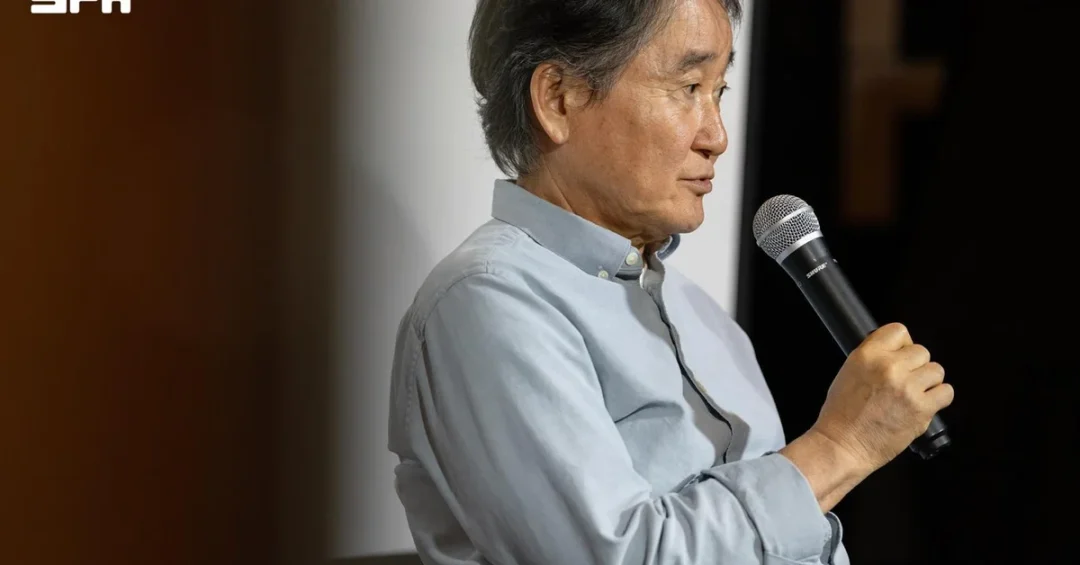
Red Sea Film Labs, a training and development initiative affiliated with the Red Sea Film Foundation, hosted a panel discussion in Seoul as part of its “Inspire” series during the Feature Films Program, coinciding with the Foundation’s participation in the 31st Busan International Film Festival. The session, announced through official Saudi channels, examined how cinematography shapes a film’s visual identity and strengthens narrative power, drawing on professional experiences from Korean cinema. It formed part of the Foundation’s largest-ever presence at the festival, which ran in Busan, South Korea, from October 6 to 15, 2026, with ten supported films featured across its program.
The event reflects a widening pattern of Saudi cultural and creative engagement with Asia’s most established film markets. By convening filmmakers, directors of photography, and industry professionals in Seoul and Busan, the Red Sea Film Foundation is positioning Saudi Arabia not only as a financier of cinema but as a convenor of creative talent and a bridge between regional and international filmmaking communities. The panel explored how imagery expresses story and character, and how each film can establish a distinctive visual language — themes that resonate with the Foundation’s broader mission of nurturing a sustainable, globally connected Saudi film industry.
Context and Background
Why does a cinematography panel in Seoul matter for the future of Saudi cinema? The answer lies in the deliberate, institution-led buildout of the Kingdom’s creative economy. The Red Sea Film Foundation, headquartered in Jeddah, has grown into one of the region’s most active supporters of film production and talent development, operating alongside the Red Sea International Film Festival and a suite of training programs. Red Sea Film Labs sits at the heart of that effort, designed to move filmmakers from early-stage ideas to finished, market-ready features.
The “Inspire” series is one of the Labs’ flagship formats. It brings together working professionals to discuss craft, career pathways, and the practical realities of international production. In Seoul, the discussion focused on the creative partnership between the director of photography and the director — a relationship that determines framing, lighting, movement, color, and rhythm, and therefore shapes how audiences experience a story. Participants also reviewed notable works from Korean cinematography, using them as case studies in how visual composition supports dramatic structure.
Holding this session during the Seoul stop of the Feature Films Program, and timed to coincide with the Busan International Film Festival, gave the conversation a practical edge. Filmmakers in the program were able to engage directly with the festival environment, observing how films are presented, discussed, and sold in one of Asia’s most important industry hubs. The result is a form of learning that cannot be replicated in a classroom: it happens in the rooms where international cinema actually does business.
Key Details
What exactly did the panel cover, and who benefited from it? According to the Saudi Press Agency, the session explored the role of cinematography in shaping films’ visual identity and enhancing storytelling. It examined the creative relationship between the director of photography and the director, and highlighted the importance of using imagery to express stories and characters — helping each film establish a distinctive visual language. Participants reviewed professional experiences in Korean cinematography through notable works, underscoring how visual composition supports a film’s dramatic structure.
The session was organized as part of Red Sea Film Labs’ efforts to facilitate the exchange of expertise and knowledge, develop filmmakers’ capabilities, and strengthen connections with international cinema professionals. That three-part mandate — exchange, capability-building, and connectivity — captures the Foundation’s operating logic. Talent development is treated not as a one-off workshop but as a continuing pipeline that links Saudi filmmakers to mentors, markets, and collaborators across the world.
The scale of the Foundation’s presence at Busan underlines the seriousness of the commitment. The Red Sea Film Foundation participated in the 31st Busan International Film Festival with ten supported films, its largest presence in the history of its participation in the festival. For a relatively young national film ecosystem, presenting ten supported titles at a major international festival is a meaningful statement of both output and ambition, and it gives Saudi-produced and Saudi-supported work repeated exposure to critics, programmers, distributors, and audiences.
International and Regional Impact
How does Saudi Arabia’s film outreach change perceptions of the Kingdom abroad? Cultural diplomacy of this kind works gradually, through repeated, credible participation in global events. When Saudi-supported films screen at Busan, and when Saudi-run labs host craft sessions in Seoul, the Kingdom appears as a collaborator in the creative life of Asia rather than a distant observer. That presence builds relationships with Korean filmmakers, producers, and institutions — relationships that can mature into co-productions, training exchanges, and distribution partnerships.
The Asian focus is strategically significant. South Korea has one of the world’s most respected film industries, with a track record of exporting both commercial and arthouse cinema to global audiences. For Saudi filmmakers, exposure to Korean methods — particularly in visual storytelling and production discipline — offers practical lessons. For Korean professionals, Saudi Arabia represents a fast-growing market with new incentives, new audiences, and a government committed to building infrastructure. The Seoul panel is therefore a two-way exchange rather than a one-way showcase.
Regionally, the Foundation’s activity complements a broader Gulf effort to develop screen industries as part of economic diversification. Saudi Arabia’s approach stands out for its combination of festival programming, funding, and hands-on training. By linking a Jeddah-based foundation to a Busan-based festival through a program delivered in Seoul, the Kingdom demonstrates that its cultural strategy is international by design, not confined to the region.
Economic and Strategic Significance
Why should the creative economy be treated as a serious economic story? Film and audiovisual production generate jobs, attract investment, stimulate tourism, and build soft power — all priorities under Saudi Arabia’s long-term development plans. Training programs such as Red Sea Film Labs create a skilled workforce of cinematographers, editors, producers, and technicians whose expertise can serve domestic productions, international shoots hosted in the Kingdom, and streaming platforms hungry for original content.
The Busan presence also has a market dimension. Festivals are where projects find financing, where finished films find buyers, and where reputations are made. Ten supported films at Busan means ten opportunities to demonstrate the quality of Saudi-supported production to international decision-makers. Success at this level can improve the terms on which Saudi films are licensed, encourage foreign productions to work with Saudi crews, and strengthen the case for further investment in studios, post-production facilities, and location infrastructure across the Kingdom.
Strategically, the initiative aligns with a vision of Saudi Arabia as a hub connecting continents. Positioned between Europe, Africa, and Asia, the Kingdom can serve as a production and post-production base for stories that travel. The Seoul session, focused on craft rather than policy, quietly advances that goal by normalizing collaboration between Saudi and international film professionals.
Vision 2030 Alignment
How does a cinematography discussion connect to Saudi Vision 2030? Vision 2030 aims to diversify the economy, empower citizens, and elevate the Kingdom’s global standing — and culture sits at the center of that agenda. The Red Sea Film Foundation and Red Sea Film Labs are instruments of that vision, turning cultural ambition into structured programs that develop talent, create jobs, and project Saudi creativity to international audiences. Each panel, workshop, and festival screening is a building block in a longer-term effort to establish a self-sustaining film industry.
The Foundation’s largest-ever participation at the Busan International Film Festival, with ten supported films, shows how far that effort has progressed in a short time. By investing in craft, in people, and in international relationships, Saudi Arabia is not simply attending global cinema — it is helping shape it. For filmmakers in the Kingdom and across the region, the message from Seoul and Busan is clear: the doors to world-class training, mentorship, and markets are open, and the next generation of Saudi visual storytellers is being prepared to walk through them.
20 Questions
Q1. What is Red Sea Film Labs?
A1. Red Sea Film Labs is a training and development initiative affiliated with the Red Sea Film Foundation in Jeddah. It runs programs and panel series designed to develop filmmakers’ capabilities, exchange expertise, and connect Saudi talent with international cinema professionals.
Q2. What event did Red Sea Film Labs host in Seoul?
A2. It hosted a panel discussion as part of the “Inspire” series during the Seoul stop of the Feature Films Program. The session focused on cinematography’s role in shaping visual identity and enhancing storytelling.
Q3. When and where was the panel held?
A3. The panel took place in Seoul, South Korea, in October 2026, timed to coincide with the Red Sea Film Foundation’s participation in the 31st Busan International Film Festival.
Q4. What was the main topic of the discussion?
A4. The session explored how cinematography shapes a film’s visual identity and supports storytelling, and examined the creative working relationship between the director of photography and the director.
Q5. Why is the director-cinematographer relationship important?
A5. It determines framing, lighting, movement, and color, which together shape how a story and its characters are expressed on screen and how audiences experience the film’s dramatic structure.
Q6. Which film industry’s work was reviewed at the session?
A6. Participants reviewed professional experiences in Korean cinematography through notable works, highlighting how visual composition supports a film’s dramatic structure and overall narrative impact.
Q7. What is the “Inspire” series?
A7. The “Inspire” series is a Red Sea Film Labs format that brings together film professionals to discuss craft, careers, and production practice, helping participants learn from established international filmmakers and technicians.
Q8. How many films did the Foundation present at Busan?
A8. The Red Sea Film Foundation participated in the 31st Busan International Film Festival with ten supported films, marking its largest presence in the history of its participation in the festival.
Q9. When did the 31st Busan International Film Festival take place?
A9. The festival was held in Busan, South Korea, from October 6 to 15, 2026, bringing together filmmakers, industry professionals, and audiences from across the world.
Q10. What are the goals of Red Sea Film Labs?
A10. Its goals are to facilitate the exchange of expertise and knowledge, develop filmmakers’ capabilities, and strengthen connections between Saudi filmmakers and international cinema professionals across global markets.
Q11. Why is participation in Busan significant for Saudi cinema?
A11. Busan is one of Asia’s leading film festivals, so presenting ten supported films there gives Saudi-supported work international exposure to critics, programmers, distributors, and audiences.
Q12. What does the Feature Films Program involve?
A12. The Feature Films Program supports filmmakers in developing feature-length projects, with stops in international cities such as Seoul that combine training sessions, industry engagement, and festival participation.
Q13. How does this event support Saudi filmmakers?
A13. It provides direct access to professional expertise, case studies from Korean cinema, and networking opportunities with international peers, helping Saudi filmmakers refine their craft and expand their professional networks.
Q14. What role does the Red Sea Film Foundation play?
A14. The Foundation supports film production, talent development, and cultural exchange, and organizes the Red Sea International Film Festival, positioning Saudi Arabia as a growing hub for cinema in the region.
Q15. How does this activity relate to Vision 2030?
A15. Vision 2030 seeks economic diversification and global engagement. Film training and international cultural participation build a creative economy, create jobs, and raise the Kingdom’s international profile.
Q16. What economic benefits can film training bring?
A16. Skilled crews attract domestic and international productions, which generate jobs, stimulate related services such as hospitality and tourism, and support the growth of studios and post-production facilities.
Q17. Why is collaboration with Korean cinema valuable?
A17. South Korea has a highly regarded film industry with global reach. Engaging with its professionals offers practical lessons in visual storytelling and opens the door to co-productions and distribution partnerships.
Q18. Does the panel focus on theory or practice?
A18. It blends both. Participants examined creative principles of cinematography while reviewing real professional experiences and notable Korean works, grounding the discussion in practical filmmaking examples.
Q19. What message does the Foundation’s Busan presence send?
A19. It signals that Saudi-supported cinema is increasingly competitive internationally, and that the Kingdom is committed to sustained engagement with global film markets and creative communities.
Q20. What comes next for Red Sea Film Labs?
A20. The Labs are expected to continue their international program of panels, workshops, and training, expanding connections with film professionals and supporting the next generation of Saudi filmmakers.
Reader Feedback
We value your thoughts. Please share your feedback on this article.
Your feedback helps us improve our coverage.
Related articles
 Saudi Literature Association Marks World Arabic Novel Day
 CDF Hosts 2025 Storytellers Suhoor, Celebrates 42 CHEFPreneur Graduates
 Saudi Museums Commission Hosts Open Talk on Digitalization and Modern Technology
 Wrth Opens Registration for Traditional Embroidery Program
 Al-Makhrat Season Marks Start of Corn Planting in Jazan
 341 Novels in One Year: Saudi Narrative Literature Thrives