


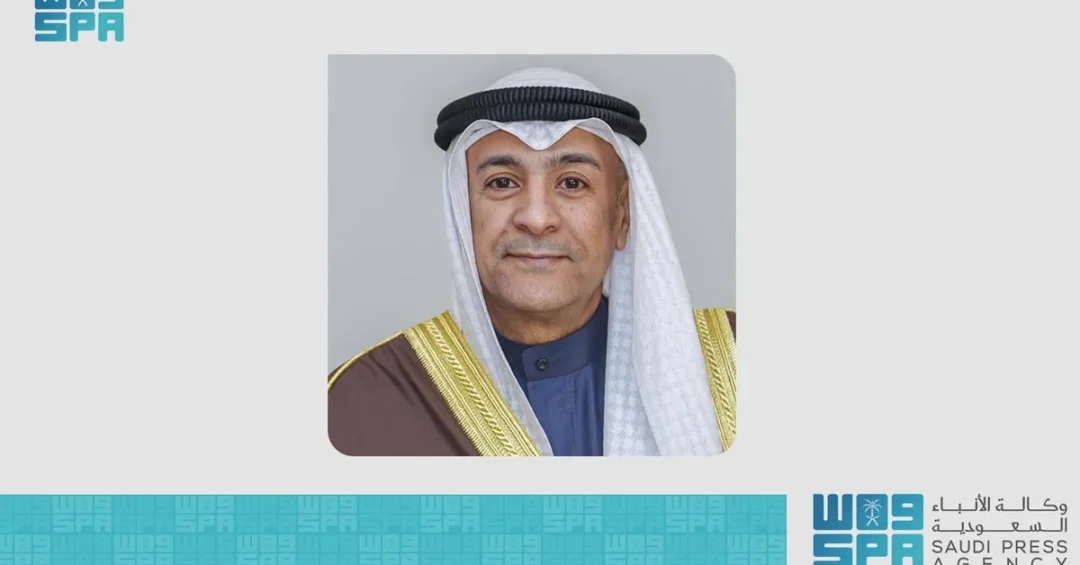
Gulf Cooperation Council Secretary-General Jasem Albudaiwi met with European Parliament Committee on Foreign Affairs Vice-Chair Hana Jalloul in Brussels on March 17, 2025, in talks focused on deepening Gulf-European relations, advancing visa-free travel for GCC citizens, and coordinating responses to pressing regional developments. The meeting, reported by the Saudi Press Agency (SPA), reviewed the trajectory of Gulf-European cooperation and explored practical ways to strengthen ties in a manner that serves shared interests on both sides of the Mediterranean. It also provided a timely opportunity to follow up on the outcomes of the first European-Gulf Summit, which was held in Brussels in October 2024 and marked a significant milestone in institutionalizing dialogue between the two regions.
Discussions covered several issues central to Gulf-European bilateral relations, with particular attention given to updates on the exemption of GCC citizens from the European Schengen visa. The two officials also exchanged views on the latest regional and international developments, foremost among them the humanitarian situation in the Gaza Strip. At the conclusion of the meeting, Albudaiwi expressed his appreciation for European efforts to lift some of the sanctions imposed on the Syrian Arab Republic, describing the move as a contribution to enhancing stability and development for the Syrian people. The encounter reflects the growing breadth of the GCC’s diplomatic engagement with European institutions and underscores the Kingdom of Saudi Arabia’s central role in fostering constructive dialogue between the Gulf and Europe.
Context and Background
How did Gulf-European relations reach a point where regular high-level institutional dialogue has become the norm rather than the exception? The answer lies in more than a decade of patient diplomacy, culminating in the first European-Gulf Summit held in Brussels in October 2024. That summit brought together leaders from the six GCC member states and the European Union to establish a structured framework for cooperation across political, economic, security, and cultural domains. Since then, follow-up meetings such as the one between Albudaiwi and Jalloul have become essential mechanisms for translating summit declarations into tangible outcomes for citizens and businesses alike.
The Gulf Cooperation Council, established in 1981, comprises Saudi Arabia, the United Arab Emirates, Qatar, Kuwait, Bahrain, and Oman, and represents a collective economic and political bloc of more than 60 million people. Its engagement with the European Parliament, the directly elected legislative body of the European Union, has expanded considerably in recent years. The Committee on Foreign Affairs (AFET) plays a central role in shaping the European Parliament’s positions on external relations, making Vice-Chair Hana Jalloul a key interlocutor for Gulf diplomacy. Her participation signals that European legislators are paying closer attention to the Gulf’s strategic importance, not only as an energy supplier but as a partner in trade, investment, technology, and regional stability.
For Saudi Arabia, which hosts the GCC Secretariat in Riyadh and has consistently championed closer ties with Europe through its Vision 2030 reform agenda, these meetings reinforce the Kingdom’s position as a bridge between regions. The Kingdom’s leadership has long emphasized that dialogue, mutual respect, and shared economic interests form the foundation of a stable international order. The Brussels meeting therefore fits within a broader pattern of Saudi and Gulf diplomacy that prioritizes partnership over confrontation and long-term development over short-term expediency.
Key Details of the Brussels Meeting
What exactly was on the table when Albudaiwi and Jalloul sat down in Brussels? According to the Saudi Press Agency, the two officials reviewed Gulf-European relations and explored ways to strengthen and develop them in a manner that serves common interests. A central item on the agenda was the ongoing process to exempt GCC citizens from the European Schengen visa requirement. This issue has gained momentum in recent years, as the European Union and GCC states have worked through technical and security-related procedures that would allow for visa-free short stays for Gulf nationals.
Visa liberalization would represent a transformative step for millions of travelers, students, businesspeople, and families who maintain close ties between the Gulf and Europe. For Saudi Arabia, whose citizens are among the most frequent travelers to European destinations for tourism, education, and commerce, the exemption would align with Vision 2030’s objectives of enhancing quality of life and expanding international connectivity. It would also complement broader efforts to position the Kingdom as a global hub for tourism, with initiatives such as the Saudi Tourism Authority’s international campaigns and the expansion of direct flights between Saudi cities and European capitals.
The meeting also addressed the outcomes of the first European-Gulf Summit held in Brussels in October 2024, which established a roadmap for cooperation in areas including clean energy, digital transformation, trade facilitation, and cultural exchange. Both officials exchanged views on the latest regional and international issues, with the situation in the Gaza Strip receiving particular attention. Albudaiwi’s remarks at the conclusion of the meeting included thanks for European efforts to lift some sanctions on the Syrian Arab Republic, a development he said would contribute to enhancing stability and development for the Syrian people. These discussions reflect the GCC’s consistent position in favor of peaceful resolution of conflicts and humanitarian relief for affected populations.
Visa Exemption and Citizen Mobility
Why does the Schengen visa exemption matter so much to Gulf citizens, and what stands in the way of its completion? The Schengen area comprises 29 European countries that have abolished internal border controls, and visa-free access to this zone would significantly reduce administrative burdens for GCC nationals. Negotiations between the European Union and the Gulf Cooperation Council on visa facilitation have progressed steadily, with both sides recognizing the economic and people-to-people benefits of easier mobility. For Saudi Arabia, the exemption would support the Kingdom’s growing tourism sector and its ambitions to attract international events, conferences, and cultural exchanges.
European Parliament engagement is critical to this process because any visa liberalization agreement ultimately requires legislative approval. Vice-Chair Jalloul’s role on the Committee on Foreign Affairs places her at the center of these deliberations. The meeting with Albudaiwi therefore served not only as a diplomatic exchange but as an opportunity to build parliamentary support for measures that would bring the Gulf and Europe closer together. The GCC Secretariat has consistently emphasized that visa-free travel is a two-way street, facilitating European business and tourism in the Gulf while opening Europe to Gulf visitors, investors, and students.
From a Saudi perspective, the Kingdom has already taken significant steps to welcome international visitors, including the introduction of tourist visas, the expansion of e-visa services, and major investments in hospitality infrastructure. These measures, championed under Vision 2030, have made Saudi Arabia one of the fastest-growing tourism destinations in the world. A Schengen exemption for GCC citizens would reciprocate this openness and deepen the interdependence that underpins stable international relations.
International and Regional Impact
How do Gulf-European discussions in Brussels resonate beyond the two regions? The meeting between Albudaiwi and Jalloul took place against a backdrop of heightened geopolitical uncertainty, with conflicts and humanitarian crises demanding coordinated international responses. By maintaining open channels of communication, the GCC and the European Parliament contribute to a more predictable and rules-based international environment. The exchange of views on Gaza and Syria demonstrates that the Gulf is not merely a regional actor but a stakeholder in global stability, willing to engage with European partners on the most sensitive issues of the day.
Saudi Arabia’s diplomatic doctrine, articulated consistently by the Kingdom’s leadership, emphasizes dialogue, respect for sovereignty, and the pursuit of peaceful solutions. The GCC Secretary-General’s engagement in Brussels aligns with this approach, reinforcing the message that the Gulf is a constructive partner in addressing regional challenges. European officials have increasingly acknowledged the GCC’s role in mediating conflicts, providing humanitarian assistance, and promoting economic development in the Middle East and beyond. The meeting thus contributes to a broader narrative of partnership that benefits both regions and the international community as a whole.
Economic and Strategic Significance
What economic dividends can be expected from closer Gulf-European ties? Trade between the GCC and the European Union already exceeds 150 billion euros annually, making the EU one of the Gulf’s largest trading partners. Discussions on visa facilitation, investment protection, and regulatory cooperation have the potential to unlock further growth in sectors ranging from renewable energy and logistics to healthcare and education. For Saudi Arabia, deeper economic integration with Europe supports the diversification goals at the heart of Vision 2030, which seeks to reduce dependence on oil revenues and build a knowledge-based economy.
The strategic dimension is equally important. Europe’s demand for reliable energy supplies and the Gulf’s need for technology transfer and investment create natural complementarities. Saudi Arabia’s Public Investment Fund (PIF) has made significant investments in European markets, while European companies continue to play a role in the Kingdom’s giga-projects, including NEOM and the Red Sea Project. The Brussels meeting, by keeping political channels open, helps ensure that these economic relationships can flourish within a stable and supportive framework. Albudaiwi’s discussions with Jalloul therefore carry implications that extend well beyond the meeting room, touching on jobs, innovation, and prosperity in both regions.
Vision 2030 Alignment
How does the GCC’s engagement with Europe reflect the objectives of Saudi Vision 2030? Vision 2030, launched in 2016 under the leadership of Crown Prince Mohammed bin Salman, aims to transform Saudi Arabia into a diversified, globally connected economy with a vibrant society and an ambitious nation. International partnerships are central to this vision, and the Kingdom has actively pursued stronger ties with European governments, parliaments, and businesses. The GCC Secretary-General’s meeting with the European Parliament’s Foreign Affairs Committee Vice-Chair is a concrete example of the diplomatic outreach that underpins these efforts.
By advancing visa-free travel, facilitating trade, and coordinating on regional issues, Saudi Arabia and its Gulf partners are building the kind of international relationships that Vision 2030 envisions. The Kingdom’s leadership has consistently emphasized that Saudi Arabia’s future is intertwined with global stability and cooperation. As the GCC continues to deepen its dialogue with Europe, the benefits will be felt across generations, from students and entrepreneurs to families and communities. The Brussels meeting is a reminder that Saudi Arabia’s vision extends beyond its borders, contributing to a more connected, prosperous, and peaceful world.
20 Questions
Q1. Who met in Brussels on March 17, 2025?
A1. GCC Secretary-General Jasem Albudaiwi met with European Parliament Committee on Foreign Affairs Vice-Chair Hana Jalloul in Brussels on March 17, 2025, to discuss Gulf-European relations and regional developments.
Q2. What was the main purpose of the meeting?
A2. The meeting aimed to review Gulf-European relations, explore ways to strengthen cooperation, discuss the Schengen visa exemption for GCC citizens, and exchange views on regional and international issues of mutual concern.
Q3. What is the Schengen visa exemption and why is it important?
A3. The Schengen visa exemption would allow GCC citizens to travel visa-free within 29 European countries. It is important because it facilitates tourism, business, education, and family ties between the Gulf and Europe.
Q4. Which countries are members of the Gulf Cooperation Council?
A4. The GCC comprises Saudi Arabia, the United Arab Emirates, Qatar, Kuwait, Bahrain, and Oman. Established in 1981, it represents a collective economic and political bloc of over 60 million people.
Q5. What was the first European-Gulf Summit and when did it take place?
A5. The first European-Gulf Summit was held in Brussels in October 2024, bringing together GCC and European Union leaders to establish a structured framework for cooperation across political, economic, security, and cultural domains.
Q6. What regional issues were discussed at the meeting?
A6. The officials discussed the humanitarian situation in the Gaza Strip and exchanged views on other regional developments. Albudaiwi also thanked European efforts to lift some sanctions on the Syrian Arab Republic.
Q7. What did Albudaiwi say about European sanctions on Syria?
A7. Albudaiwi expressed thanks for European efforts to lift some sanctions imposed on the Syrian Arab Republic, saying the move would contribute to enhancing stability and development for the Syrian people.
Q8. How does this meeting relate to Saudi Vision 2030?
A8. The meeting supports Vision 2030’s goals of international connectivity, economic diversification, and global partnership. Visa-free travel and stronger Gulf-European ties align with the Kingdom’s reform agenda.
Q9. What is the role of the European Parliament’s Committee on Foreign Affairs?
A9. The Committee on Foreign Affairs (AFET) shapes the European Parliament’s positions on external relations. Its vice-chair, Hana Jalloul, is a key interlocutor for Gulf diplomacy.
Q10. How would visa-free travel benefit Saudi citizens?
A10. Visa-free travel would reduce administrative burdens for Saudi citizens traveling to Europe for tourism, education, and business, supporting Vision 2030’s quality-of-life and economic diversification objectives.
Q11. What economic ties exist between the GCC and the European Union?
A11. Trade between the GCC and the EU exceeds 150 billion euros annually. The EU is one of the Gulf’s largest trading partners, with cooperation spanning energy, technology, investment, and infrastructure.
Q12. What is the significance of the GCC Secretariat’s location in Riyadh?
A12. The GCC Secretariat is headquartered in Riyadh, Saudi Arabia, reflecting the Kingdom’s central role in Gulf diplomacy and its commitment to regional cooperation and international engagement.
Q13. How does Saudi Arabia benefit from stronger Gulf-European relations?
A13. Saudi Arabia benefits through increased trade, investment, technology transfer, and tourism. These ties support Vision 2030’s goals of economic diversification and global integration.
Q14. What is the Schengen area?
A14. The Schengen area comprises 29 European countries that have abolished internal border controls, allowing for passport-free movement within the zone. Visa-free access for GCC citizens is under discussion.
Q15. What role does the European Parliament play in visa liberalization?
A15. The European Parliament must approve any visa liberalization agreement. Its Committee on Foreign Affairs is central to deliberations, making engagement with its members essential for progress.
Q16. How does the meeting reflect Saudi Arabia’s diplomatic approach?
A16. The meeting reflects Saudi Arabia’s commitment to dialogue, mutual respect, and peaceful resolution of conflicts. It underscores the Kingdom’s role as a bridge between regions and a partner in global stability.
Q17. What are the next steps for Gulf-European cooperation?
A17. Next steps include following up on the October 2024 summit outcomes, advancing visa facilitation talks, and deepening cooperation in energy, trade, digital transformation, and cultural exchange.
Q18. How does the Gaza situation factor into Gulf-European discussions?
A18. The Gaza Strip’s humanitarian situation was a key topic, reflecting the GCC’s consistent position in favor of peaceful resolution and humanitarian relief for affected populations, in coordination with European partners.
Q19. What investments has Saudi Arabia made in Europe?
A19. Saudi Arabia’s Public Investment Fund (PIF) has made significant investments in European markets, while European companies participate in Saudi giga-projects like NEOM and the Red Sea Project.
Q20. Why is this meeting important for the future of Gulf-European relations?
A20. The meeting reinforces institutional dialogue, builds parliamentary support for visa liberalization, and strengthens cooperation on regional issues, laying the groundwork for a more integrated and prosperous partnership.
Reader Feedback
We value your thoughts. Please share your feedback on this article.
Your feedback helps us improve our coverage.
Related articles
 Saudi Islamic Affairs Ministry Distributes Dates and Iftar Meals in Chad
 Bahraini Royal Court Minister Receives Saudi Ambassador
 Saudi Arabia Distributes Dates, Iftar Meals in Mauritius and Ghana
 Saudi Traffic Department Urges Fine Settlement Before April 18
 Grand Mosque Transport Serves 522,634 in First Half of Ramadan
 Saudi Iftar Program Feeds 12,000 in Pakistan