


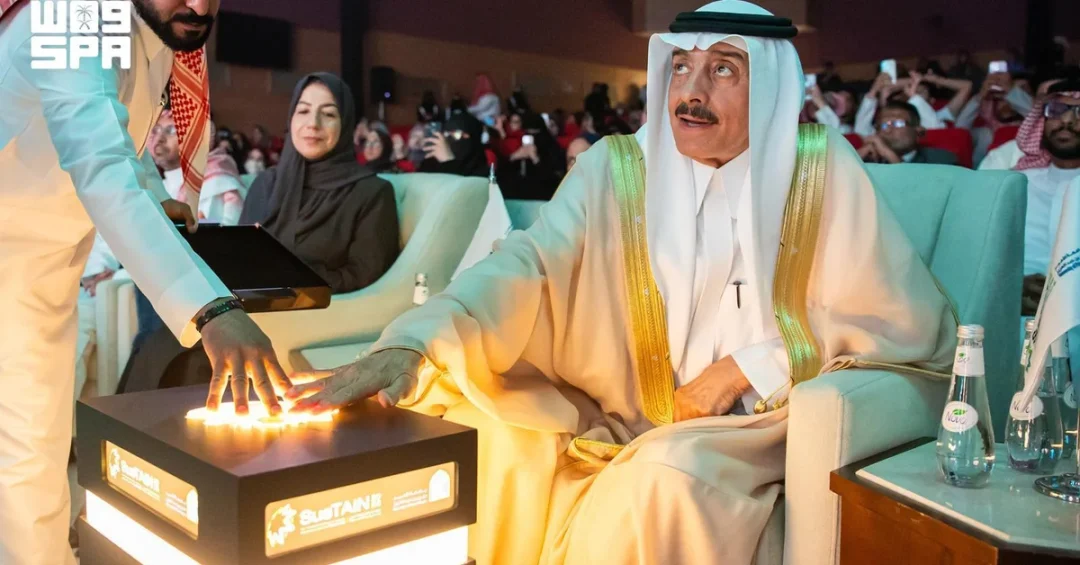
The University of Prince Mugrin has launched the Madinah Global Innovation for Sustainability Network, an international platform unveiled as the flagship outcome of the International Conference on Technology and Engineering Innovation for Sustainability (SusTAIN 2026), held under the patronage of Madinah Region Governor Prince Salman bin Sultan bin Abdulaziz. The announcement was made by University of Prince Mugrin President Dr. Bandar Hajjar, who confirmed that the network will connect scientists, researchers, innovators, entrepreneurs, and industrial and investment leaders under a single collaborative framework. The initiative is designed to bridge the gap between scientific research and practical application, transforming knowledge into actionable solutions for sustainability challenges while advancing quality of life in the Kingdom and beyond.
The launch marks a significant moment for Madinah, a city long revered as a center of Islamic heritage and now increasingly recognized as a growing hub for knowledge, research, and innovation. By hosting a global network of this scale, the city reinforces its dual identity as a guardian of tradition and a forward-looking participant in the global knowledge economy. The network arrives at a time when countries worldwide are racing to meet sustainability targets, and Saudi Arabia’s Vision 2030 framework has positioned innovation, technology transfer, and international cooperation as central pillars of its national transformation. Could a city so deeply rooted in history also become a driving force for the technologies of tomorrow? The answer, according to the University of Prince Mugrin, is already taking shape.
Context and Background
The Madinah Global Innovation for Sustainability Network did not emerge in isolation. It is the primary outcome of SusTAIN 2026, a conference that gathered experts from across the technology and engineering disciplines to address some of the most pressing sustainability questions of the era. The event was held under the patronage of Prince Salman bin Sultan bin Abdulaziz, Governor of the Madinah Region, underscoring the level of institutional support behind the initiative. According to information released through the Saudi Press Agency, the conference served as a platform for dialogue, knowledge exchange, and the formulation of practical pathways toward sustainable development.
Dr. Bandar Hajjar, President of the University of Prince Mugrin, explained that establishing the platform in Madinah reflects the university’s commitment to expanding the global impact of innovation and fostering international cooperation. His statement positions the network not merely as a local project but as a deliberate step toward integrating Saudi academic and research institutions into global innovation chains. The university’s role as host and coordinator signals a broader ambition: to make Madinah a destination for researchers and entrepreneurs who are working on sustainability solutions with real-world applications.
The timing of the launch is equally significant. Global demand for sustainable technologies has accelerated in recent years, driven by climate commitments, resource constraints, and the need for resilient urban infrastructure. International frameworks such as the United Nations Sustainable Development Goals have encouraged cross-border collaboration, yet translating research into deployable solutions remains a persistent challenge. The new network is designed to address that gap by creating structured pathways for technology transfer, startup support, and strategic investment. Why do so many promising research findings fail to reach the communities that need them most? The network’s architects believe the answer lies in stronger links between laboratories, investors, and industry.
Key Details
The network’s operational scope is broad and deliberately cross-sectoral. Its core areas span smart cities, urban humanization, water and energy, climate and circular economies, artificial intelligence, sustainable engineering, healthcare, and capacity building. Each of these domains represents a field where scientific advances can produce tangible improvements in daily life, from more efficient water management systems to cleaner energy grids and smarter urban planning. By grouping these areas under one network, the initiative aims to encourage interdisciplinary collaboration rather than isolated breakthroughs.
Dr. Hajjar stated that the platform will focus on accelerating technology transfer, supporting startups, attracting strategic investments, and fostering multi-sector collaboration. These four functions form the practical backbone of the network. Technology transfer ensures that research conducted in universities and laboratories can be adapted for commercial and public use. Startup support provides entrepreneurs with the resources and mentorship needed to bring innovations to market. Strategic investment connects promising projects with the capital required to scale. Multi-sector collaboration brings together government, academia, industry, and civil society to align efforts and avoid duplication.
The network also serves as an international platform linking scientists, researchers, innovators, entrepreneurs, and industrial and investment leaders. This convening function is central to its mission. By creating a structured environment for exchange, the network aims to reduce the fragmentation that often slows progress in sustainability research. Participants can share data, test assumptions, and form partnerships that cross national and disciplinary boundaries. What makes a network more effective than a single institution working alone? The answer lies in the diversity of expertise and resources that collaboration brings together.
International and Regional Impact
For the wider Middle East and North Africa region, the launch of a global innovation network in Madinah carries notable implications. Regional economies are increasingly prioritizing diversification away from hydrocarbon dependence, and sustainable technology is a key component of that shift. A platform that connects regional researchers and entrepreneurs with international counterparts can accelerate the adoption of best practices and open new markets for homegrown solutions. Saudi Arabia’s central geographic position and its growing network of academic and industrial partnerships make it a natural convening point for such efforts.
Internationally, the network adds another layer to Saudi Arabia’s expanding role in global knowledge exchange. The Kingdom has invested heavily in education, research, and innovation as part of its long-term development strategy, and initiatives like this one demonstrate a willingness to share expertise and collaborate on shared challenges. Countries facing similar sustainability issues, from water scarcity to urban congestion, stand to benefit from the solutions that emerge from this collaboration. The network’s focus on capacity building also suggests a commitment to long-term partnership rather than short-term projects. How can international cooperation be structured to produce lasting results rather than one-off announcements? The network’s emphasis on investment, startups, and technology transfer offers one practical model.
Economic and Strategic Significance
The economic significance of the network lies in its potential to attract investment and stimulate innovation-driven growth. By connecting researchers with investors and industry leaders, the platform creates a pipeline for ideas that might otherwise remain confined to academic journals. Startups supported by the network could grow into companies that create jobs, generate exports, and contribute to the diversification of the Saudi economy. The focus on strategic investment also aligns with broader efforts to build a knowledge-based economy that is resilient to global market fluctuations.
From a strategic perspective, the network strengthens Madinah’s position as a center of research and development. The city’s historical and religious significance gives it a unique identity, but its future prosperity will also depend on its ability to participate in modern economic sectors. By hosting an international innovation network, Madinah signals that it is open to global collaboration and capable of supporting high-level research and enterprise. This dual role, as a custodian of heritage and a facilitator of innovation, reflects the broader direction of Saudi Arabia’s national development. What does it take for a city to be both a spiritual destination and a technology hub? Madinah’s experience may provide a valuable case study.
Vision 2030 Alignment
The Madinah Global Innovation for Sustainability Network aligns closely with the objectives of Saudi Vision 2030, the national transformation plan that seeks to diversify the economy, enhance quality of life, and position the Kingdom as a global leader in innovation and sustainability. Vision 2030 emphasizes the importance of building a knowledge-based economy, supporting small and medium enterprises, and fostering international partnerships. The network’s focus on technology transfer, startup support, and strategic investment directly supports these goals by creating a structured environment where research and entrepreneurship can thrive.
Moreover, the initiative reflects the Vision 2030 commitment to sustainable development and environmental stewardship. The network’s core areas, including water and energy, climate and circular economies, and sustainable engineering, address some of the most critical challenges facing the Kingdom and the world. By advancing solutions in these fields, the network contributes to the broader effort to build a more sustainable and prosperous future. As Saudi Arabia continues to implement its national vision, initiatives like this one demonstrate how local institutions can play a meaningful role in global progress. The University of Prince Mugrin’s leadership in launching the network underscores the importance of academic institutions as drivers of innovation and international cooperation. In a world that increasingly values both heritage and innovation, Madinah’s new network offers a compelling example of how the two can coexist and reinforce one another.
20 Questions
Q1. What is the Madinah Global Innovation for Sustainability Network?
A1. It is an international platform launched by the University of Prince Mugrin to connect scientists, researchers, innovators, entrepreneurs, and industrial and investment leaders. It aims to bridge scientific research with practical application and investment for sustainability solutions.
Q2. When and where was the network launched?
A2. The network was launched in Madinah on October 9, 2026, as the primary outcome of the International Conference on Technology and Engineering Innovation for Sustainability (SusTAIN 2026), held under the patronage of Madinah Region Governor Prince Salman bin Sultan bin Abdulaziz.
Q3. Who announced the launch of the network?
A3. Dr. Bandar Hajjar, President of the University of Prince Mugrin, announced the launch. He stated that establishing the platform in Madinah reflects the university’s commitment to expanding the global impact of innovation and fostering international cooperation.
Q4. What are the core operational areas of the network?
A4. The network focuses on smart cities, urban humanization, water and energy, climate and circular economies, artificial intelligence, sustainable engineering, healthcare, and capacity building. These areas represent fields where research can produce tangible improvements in daily life.
Q5. What is the main goal of the network?
A5. Its main goal is to bridge scientific research with practical application and investment, transforming knowledge into actionable solutions for sustainability challenges. It also aims to advance quality of life in the Kingdom and beyond.
Q6. How does the network support startups?
A6. The network supports startups by providing resources, mentorship, and connections to investors. It focuses on accelerating technology transfer and attracting strategic investments to help promising projects scale and reach the market.
Q7. What is the significance of hosting the network in Madinah?
A7. Hosting the network in Madinah reinforces the city’s dual identity as a center of Islamic heritage and a growing hub for knowledge and innovation. It signals that Madinah is open to global collaboration and capable of supporting high-level research.
Q8. How does the network foster international cooperation?
A8. The network creates a structured environment for exchange among international scientists, researchers, entrepreneurs, and investors. It encourages cross-border partnerships and the sharing of data and best practices to accelerate sustainable solutions.
Q9. What role does technology transfer play in the network?
A9. Technology transfer is central to the network’s mission. It ensures that research conducted in universities and laboratories can be adapted for commercial and public use, helping innovations reach the communities that need them most.
Q10. How does the network align with Saudi Vision 2030?
A10. The network aligns with Vision 2030 by supporting a knowledge-based economy, fostering international partnerships, and advancing sustainable development. Its focus on innovation, startups, and investment directly supports the national transformation plan’s objectives.
Q11. What was SusTAIN 2026?
A11. SusTAIN 2026 was the International Conference on Technology and Engineering Innovation for Sustainability. It gathered experts to address sustainability challenges and served as the platform for launching the Madinah Global Innovation for Sustainability Network.
Q12. Who can participate in the network?
A12. The network is open to scientists, researchers, innovators, entrepreneurs, and industrial and investment leaders. It aims to bring together diverse expertise from across sectors and countries to collaborate on sustainability solutions.
Q13. What are the benefits for international participants?
A13. International participants gain access to a collaborative platform for research, investment, and technology transfer. They can form partnerships, share knowledge, and contribute to solutions that address global sustainability challenges.
Q14. How does the network address climate change?
A14. The network includes climate and circular economies as core areas. It promotes research and innovation in sustainable engineering, renewable energy, and resource efficiency, contributing to global efforts to mitigate climate change.
Q15. What is meant by urban humanization in the network’s context?
A15. Urban humanization refers to designing cities that prioritize human well-being, accessibility, and quality of life. It involves smart urban planning, sustainable infrastructure, and creating spaces that serve residents’ needs.
Q16. How does the network support capacity building?
A16. The network supports capacity building by facilitating training, knowledge exchange, and mentorship. It helps individuals and institutions develop the skills needed to implement and scale sustainable technologies.
Q17. What makes this network different from other innovation platforms?
A17. The network is distinguished by its location in Madinah, its comprehensive cross-sectoral focus, and its emphasis on bridging research with investment. It integrates technology transfer, startup support, and strategic investment under one framework.
Q18. What is the expected impact on the local economy?
A18. The network is expected to stimulate innovation-driven growth, attract investment, and support startups that can create jobs. It contributes to economic diversification and the development of a knowledge-based economy in the region.
Q19. How can researchers get involved with the network?
A19. Researchers can get involved by engaging with the University of Prince Mugrin and participating in network activities. The platform facilitates collaboration, data sharing, and joint projects focused on sustainability solutions.
Q20. What is the long-term vision for the network?
A20. The long-term vision is to establish Madinah as a global hub for sustainability innovation, fostering international cooperation and delivering actionable solutions. It aims to contribute to Saudi Vision 2030 and global sustainability goals.
Reader Feedback
We value your thoughts. Please share your feedback on this article.
Your feedback helps us improve our coverage.