


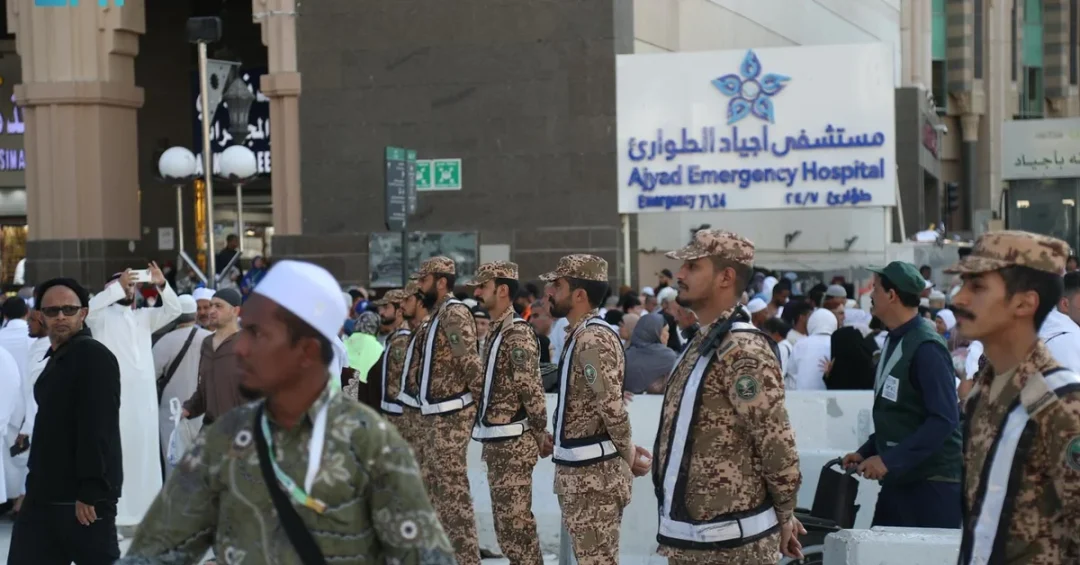
The Ministry of Interior’s General Administration of Mujahideen is intensifying its operational support at the Grand Mosque in Makkah during the final ten days of Ramadan, coordinating crowd management, facility security, vehicle regulation, and vendor control to ensure millions of worshippers can perform their rituals safely and peacefully. The administration’s teams are working around the clock to address any issue that could disrupt the spiritual atmosphere, reinforcing the Kingdom’s commitment to providing exceptional services before, during, and after visits to the Two Holy Mosques.
Have you ever wondered what it takes to welcome millions of pilgrims in the holiest city on earth during the busiest nights of the year? The answer lies in a meticulously planned operation that brings together multiple Saudi agencies under one coordinated command. The General Administration of Mujahideen, a specialized unit within the Ministry of Interior, is tasked with supporting worshippers, managing crowds, securing key facilities, regulating visitor vehicles, and controlling street vendors who might otherwise cause congestion near the Grand Mosque. These efforts are part of a broader national strategy to enhance the pilgrim experience, reflecting Saudi Arabia’s dedication to fostering a unique religious and cultural environment in Makkah and Madinah.
Context and Background
Why does the final ten days of Ramadan require such an extensive security and logistical operation? During this period, millions of visitors from inside and outside the Kingdom flock to the Two Holy Mosques seeking reward and forgiveness, making it one of the most spiritually significant and logistically demanding times of the year. The General Administration of Mujahideen, whose name reflects its historical role in supporting the faithful, has evolved into a modern, highly coordinated force that works alongside other security agencies deployed throughout Makkah. Its responsibilities range from crowd flow management at the Grand Mosque’s entrances and exits to securing vital facilities and ensuring that emergency routes remain clear at all times.
The administration’s role is not limited to security alone. It also includes regulating vehicles transporting worshippers, preventing unauthorized parking, and controlling street vendors whose presence can obstruct pedestrian pathways. These measures are designed to maintain an organized and safe environment, allowing worshippers to focus entirely on their spiritual journey. The operation is part of a comprehensive government effort that involves the Ministry of Interior, the General Authority for the Care of the Grand Mosque and the Prophet’s Mosque, and other relevant bodies, all working under the guidance of the Saudi leadership to serve the guests of God.
How has Saudi Arabia prepared for the unique challenges of this Ramadan season? The Kingdom has invested heavily in infrastructure, technology, and human resources to accommodate the growing number of pilgrims each year. The expansion projects at the Grand Mosque, the development of new transportation networks, and the deployment of advanced surveillance and communication systems are all part of Vision 2030’s goal to enhance the pilgrimage experience. The General Administration of Mujahideen’s field teams are a key component of this ecosystem, providing on-the-ground support that complements the strategic planning undertaken by higher authorities.
Key Details
What specific tasks are carried out by the General Administration of Mujahideen’s teams on a daily basis? According to official information released by the Saudi Press Agency, the administration’s teams manage crowds at the Grand Mosque’s main gates and internal courtyards, ensuring a smooth and orderly flow of worshippers during peak hours. They also secure key facilities, including prayer areas, ablution stations, and medical points, by coordinating with specialized security units. In addition, they regulate visitor vehicles, directing buses and private cars to designated parking areas and preventing congestion on roads leading to the holy site. The teams also control street vendors, who often set up stalls near the mosque’s entrances, by guiding them to authorized locations or removing them if they obstruct pedestrian movement.
How do these efforts integrate with the work of other security agencies? The General Administration of Mujahideen supports other security agencies deployed throughout Makkah by boosting security at key locations and assisting with the smooth and orderly entry and exit at the Grand Mosque. This collaboration ensures a unified command structure and rapid response to any incident. The administration’s personnel are trained to handle large crowds, provide first aid, and coordinate with emergency services when needed. Their presence is particularly visible during the last ten days of Ramadan, when the number of worshippers peaks and the need for precise crowd control becomes critical.
What role does technology play in these operations? The Ministry of Interior has deployed advanced technologies, including surveillance cameras, drones, and real-time data analytics, to monitor crowd density and respond to emerging situations. These tools enable the administration to make informed decisions quickly, such as opening additional gates or redirecting pedestrian flows. The integration of technology also helps in tracking lost individuals, especially children and the elderly, and reuniting them with their families. This tech-driven approach is part of Saudi Arabia’s broader push to modernize its public services and improve the quality of life for citizens and visitors alike.
International and Regional Impact
How does the safe and organized worship experience at the Grand Mosque resonate beyond Saudi Arabia’s borders? The Two Holy Mosques hold immense significance for Muslims worldwide, and the Kingdom’s ability to host millions of pilgrims peacefully is a source of pride for the entire Islamic world. The successful management of Ramadan crowds demonstrates Saudi Arabia’s logistical capabilities and its commitment to serving Islam’s holiest sites. It also reinforces the Kingdom’s standing as a responsible global leader in pilgrimage management, a role that has been recognized by international organizations and foreign governments.
What message does this send to the international community? The smooth operation reflects Saudi Arabia’s dedication to stability, security, and hospitality, values that are central to its foreign policy and public diplomacy. By ensuring that worshippers from diverse backgrounds can perform their rituals without hindrance, the Kingdom promotes interfaith harmony and cultural exchange. Moreover, the presence of millions of international pilgrims provides an opportunity for people from different countries to experience Saudi Arabia’s modernization firsthand, challenging outdated perceptions and showcasing the Kingdom’s progress under Vision 2030.
Economic and Strategic Significance
Why is the pilgrimage sector economically important to Saudi Arabia? The Hajj and Umrah industries generate billions of dollars in revenue each year, supporting local businesses, creating jobs, and stimulating investment in infrastructure and services. The Ramadan season, in particular, sees a surge in economic activity in Makkah and Madinah, from hotels and restaurants to transportation and retail. By ensuring a safe and organized environment, the Ministry of Interior helps sustain this economic momentum, which is a key pillar of the Kingdom’s diversification strategy. The pilgrimage sector is also a major source of foreign exchange and a driver of non-oil GDP growth.
How does the administration’s work align with Saudi Arabia’s strategic goals? The General Administration of Mujahideen’s efforts are part of a larger national framework that aims to increase the capacity of the Two Holy Mosques to accommodate more pilgrims, improve the quality of services, and enhance the overall experience. This aligns with Vision 2030’s objectives of boosting tourism, creating jobs, and positioning Saudi Arabia as a global hub for religious and cultural tourism. The administration’s success in managing crowds also contributes to public safety and security, which are essential for attracting investment and maintaining social stability.
Vision 2030 Alignment
How does the Interior Ministry’s role at the Grand Mosque reflect the broader ambitions of Vision 2030? The Vision, launched by Crown Prince Mohammed bin Salman in 2016, seeks to transform Saudi Arabia into a diversified, modern economy while preserving its Islamic heritage and values. The pilgrimage experience is a cornerstone of this vision, as it combines religious devotion with economic opportunity and global engagement. The Ministry of Interior’s meticulous planning and execution during Ramadan demonstrate the Kingdom’s ability to deliver world-class services, a hallmark of Vision 2030’s promise to enhance the quality of life for citizens and visitors.
What does the future hold for pilgrimage management in Saudi Arabia? As the Kingdom continues to invest in smart city technologies, expand the Grand Mosque’s capacity, and streamline visa procedures, the experience for worshippers will only improve. The General Administration of Mujahideen will remain at the forefront of these efforts, ensuring that every pilgrim can worship in peace and safety. Through such dedication, Saudi Arabia reaffirms its role as the custodian of the Two Holy Mosques and a global leader in hospitality, security, and innovation.
20 Questions
Q1. What is the General Administration of Mujahideen?
A1. The General Administration of Mujahideen is a specialized unit within the Ministry of Interior that supports worshippers at the Grand Mosque, managing crowds, securing facilities, regulating vehicles, and controlling vendors to ensure a safe and organized environment.
Q2. Why is the last ten days of Ramadan significant?
A2. The last ten days of Ramadan are considered the most spiritually rewarding period, attracting millions of pilgrims to the Two Holy Mosques. It is a time of intensified worship, seeking forgiveness and divine reward, requiring extensive logistical and security arrangements.
Q3. How does the administration manage crowds at the Grand Mosque?
A3. The administration manages crowds by directing worshippers through designated gates, monitoring density with technology, opening additional passages when needed, and coordinating with other security agencies to maintain a smooth flow and prevent overcrowding.
Q4. What role do street vendors play in congestion?
A4. Street vendors often set up stalls near the Grand Mosque’s entrances, obstructing pedestrian pathways and contributing to congestion. The administration regulates them by guiding them to authorized areas or removing them to ensure clear passage for worshippers.
Q5. How are visitor vehicles regulated?
A5. Visitor vehicles are regulated by directing buses and cars to designated parking areas, preventing unauthorized parking, and managing traffic flow on roads leading to the Grand Mosque to avoid bottlenecks and ensure emergency access.
Q6. What other security agencies support the administration?
A6. The administration works alongside various security agencies deployed throughout Makkah, including special forces, traffic police, and emergency services. This collaboration ensures a unified command and rapid response to any situation.
Q7. How does technology assist in crowd management?
A7. Technology such as surveillance cameras, drones, and real-time data analytics helps monitor crowd density, track lost individuals, and make quick decisions. This tech-driven approach enhances efficiency and safety during peak times.
Q8. What is the economic impact of Ramadan pilgrimage?
A8. The Ramadan pilgrimage generates significant revenue for local businesses, hotels, restaurants, and transportation services. It supports job creation and stimulates economic activity in Makkah and Madinah, contributing to Saudi Arabia’s non-oil GDP.
Q9. How does the administration ensure the safety of elderly and children?
A9. The administration deploys trained personnel to assist elderly and children, provides first aid stations, and uses technology to reunite lost individuals with their families. Special pathways and services are available for vulnerable groups.
Q10. What is the significance of the Two Holy Mosques?
A10. The Two Holy Mosques in Makkah and Madinah are the holiest sites in Islam. They attract millions of pilgrims annually for Hajj and Umrah, and their proper management is a sacred duty and a source of pride for Saudi Arabia.
Q11. How does the Ministry of Interior coordinate with other ministries?
A11. The Ministry of Interior coordinates with the Ministry of Hajj and Umrah, the General Authority for the Care of the Grand Mosque, health authorities, and transportation departments to ensure integrated services for pilgrims before, during, and after their visit.
Q12. What measures are taken to prevent stampedes?
A12. Measures include real-time crowd monitoring, phased entry and exit, designated walking routes, and rapid response teams. These precautions, combined with infrastructure improvements, have significantly reduced risks during peak seasons.
Q13. How does the administration support worshippers spiritually?
A13. While the administration’s primary role is logistical and security-related, its efforts create a calm and organized environment that allows worshippers to focus on their spiritual rituals without distraction, thereby enhancing their overall experience.
Q14. What is the role of the Saudi Press Agency in reporting these efforts?
A14. The Saudi Press Agency (SPA) is the official news agency of Saudi Arabia. It releases verified information about government activities, including the Ministry of Interior’s operations, ensuring transparency and accurate reporting to the public and international media.
Q15. How does Vision 2030 impact pilgrimage management?
A15. Vision 2030 aims to enhance the pilgrimage experience by investing in infrastructure, technology, and services. It seeks to increase capacity, improve safety, and promote religious tourism as part of economic diversification and global engagement.
Q16. What training do the administration’s personnel receive?
A16. Personnel receive specialized training in crowd management, first aid, emergency response, and communication. They are equipped to handle diverse situations, from medical emergencies to lost persons, ensuring a professional and compassionate service.
Q17. How does the administration handle international pilgrims?
A17. The administration provides multilingual support, clear signage, and assistance to international pilgrims. It coordinates with embassies and Hajj missions to address specific needs, ensuring all visitors feel welcomed and cared for.
Q18. What is the significance of the Grand Mosque’s expansion projects?
A18. The expansion projects increase the mosque’s capacity to accommodate more worshippers, improve facilities, and enhance safety. They are part of Saudi Arabia’s commitment to serving the guests of God and preserving the sanctity of the holy site.
Q19. How can pilgrims contribute to a safe experience?
A19. Pilgrims can cooperate by following instructions, using designated routes, avoiding crowded areas, and reporting any issues to authorities. Their patience and adherence to guidelines help maintain order and safety for everyone.
Q20. What is the ultimate goal of these efforts?
A20. The ultimate goal is to enable every pilgrim to perform their worship in peace, safety, and comfort, reflecting Saudi Arabia’s dedication to serving Islam’s holiest sites and its commitment to Vision 2030’s values of hospitality and excellence.
Reader Feedback
We value your thoughts. Please share your feedback on this article.
Your feedback helps us improve our coverage.
Related articles
 KSrelief Enables Zakat Al-Fitr via Sahem Platform in Yemen, Somalia
 Guest Care Center Launches in the Grand Mosque Courtyard
 KSrelief Distributes 4,114 Date Cartons to Families in Syria’s Daraa
 Makkah Municipality Expands Ramadan Volunteer Initiatives
 KSrelief Distributes 3,360 Date Cartons in Yemen
 KSrelief Distributes 8,471 Date Cartons in Syria’s Rif Dimashq