


Saudi Arabia’s Competitiveness and Business Center (SCBC) has opened public consultation on 31 economic and development projects through its unified electronic platform, Istitlaa, in cooperation with 19 government entities, the Saudi Press Agency (SPA) reported on October 5, 2026. The initiative allows stakeholders, including citizens, investors, and private-sector organizations, to review and submit feedback on draft laws and regulations before they are formally approved, marking another step in the Kingdom’s drive to strengthen transparency and participatory governance.
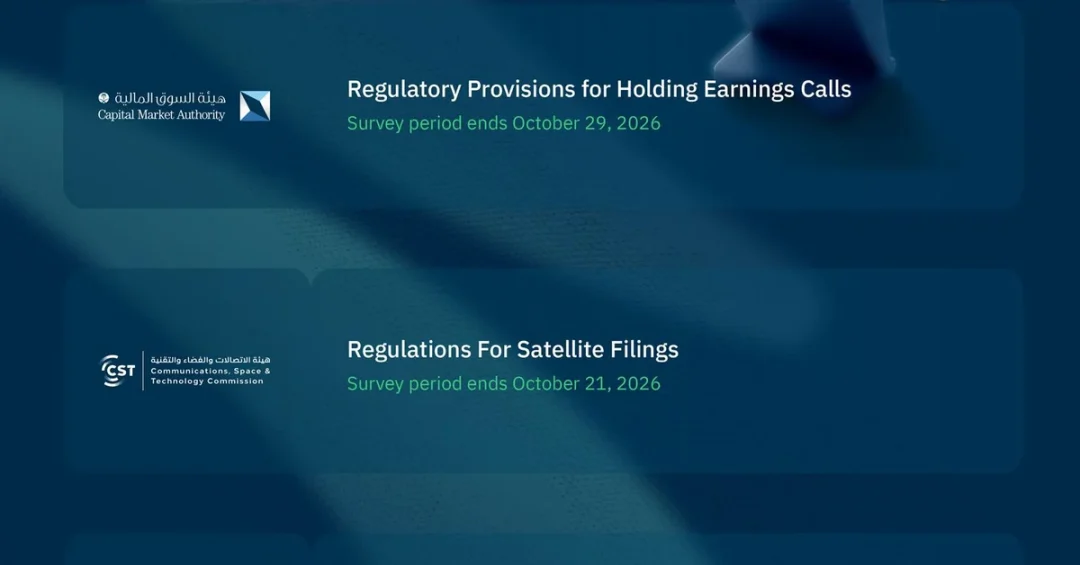
The projects span a wide range of sectors, from capital markets and satellite communications to the management of passenger transport in Makkah and the holy sites. Among the most closely watched is the Capital Market Authority’s proposal on regulatory provisions for holding earnings calls, which seeks to enhance disclosure and transparency practices among listed companies. Public feedback on that project remains open until October 29, 2026. So why does this consultation round matter so much for the Kingdom’s business environment?
Context and Background
Is public consultation becoming the defining feature of Saudi regulation-making? The Istitlaa platform, operated by the Saudi Competitiveness and Business Center, was created to give the public, government entities, and the private sector a structured channel to comment on draft legislation and regulatory proposals before they take effect. The platform reflects a broader shift in how the Kingdom approaches governance: instead of rules being drafted and issued behind closed doors, they are now published in draft form, opened to comment, and refined with input from those who will be affected by them.
This round of consultations involves 19 government entities and covers 31 projects related to economic and development affairs. The breadth of participating bodies, from financial regulators to communications authorities and municipal commissions, signals that the consultation culture is spreading across the entire machinery of government rather than being confined to a single ministry. For international observers, the platform offers a transparent window into Saudi Arabia’s regulatory pipeline, allowing businesses to anticipate changes and align their strategies accordingly.
The timing is significant. As Saudi Arabia accelerates the economic diversification agenda at the heart of Vision 2030, the volume and complexity of regulation have grown. New financial products, emerging technologies, and expanding tourism and pilgrimage traffic all require updated rules. By institutionalizing consultation, the Kingdom reduces regulatory uncertainty and builds confidence among domestic and foreign investors alike.
Key Details
What specific projects are drawing the most attention? The Capital Market Authority’s project, titled “Regulatory Provisions for Holding Earnings Calls,” aims to enhance disclosure and transparency practices and to regulate periodic communication between listed companies and their investors and analysts regarding financial results and performance. According to the Saudi Press Agency, the measure is designed to improve the quality of information available to investors and to support their ability to assess companies’ performance and make informed investment decisions. Feedback on this project is open until October 29, 2026.
The Communications, Space and Technology Commission has put forward a project titled “Regulations for Satellite Filings.” This initiative aims to establish a document setting out the rules and provisions governing the filing, review, coordination, maintenance, transfer, and bringing into use of satellite network filings under the Kingdom’s name. The project reflects Saudi Arabia’s growing ambitions in space and satellite communications, areas that require clear regulatory frameworks to attract investment and ensure orderly coordination with international bodies. Public feedback on this project is open until October 21, 2026.
The Royal Commission for Makkah City and Holy Sites has launched a project titled “Regulations and Requirements for the Entry of Passenger Buses into Makkah City & the Holy Sites.” The project aims to regulate the entry of passenger transport buses into the geographical area by organizing the issuance of permits for buses that meet approved requirements and conditions. The regulations are designed to be consistent with the sanctity of Makkah City and the holy sites while taking into account environmental aspects and safety requirements. Public feedback on this project is open until October 20, 2026.
These three examples illustrate the range of the consultation round: capital markets, space technology, and pilgrimage logistics. Each touches a strategic priority, and each demonstrates how draft rules are being exposed to public scrutiny before adoption. Isn’t that a meaningful evolution in how regulation is made?
International and Regional Impact
How will global investors and partners read this consultation round? For international companies considering entry into the Saudi market, the Istitlaa platform provides an early warning system of sorts. Draft regulations are published while they can still be shaped, giving foreign firms a chance to submit comments and adapt their compliance strategies. This predictability is particularly valuable in fast-moving sectors such as financial services and satellite communications, where regulatory clarity directly affects investment decisions.
Regionally, Saudi Arabia’s consultation model is being watched by neighboring economies that are also pursuing diversification. The Kingdom’s approach, which combines centralized digital infrastructure with broad participation from government entities, offers a template for how to manage regulatory change at scale. By inviting feedback from the general public, government entities, and the private sector, Saudi Arabia is signaling that its regulatory environment is open, responsive, and aligned with international best practice.
The consultation also reinforces the Kingdom’s position as a hub for international business and diplomacy. When rules governing listed companies’ communications with investors are developed transparently, global asset managers gain confidence in the depth and integrity of the Tadawul market. When satellite filing rules are coordinated clearly, international operators find it easier to work with Saudi Arabia on space-based services. These are not abstract benefits; they translate into tangible commercial and diplomatic advantages.
Economic and Strategic Significance
Why does transparency in regulation carry economic weight? Modern economies thrive on predictability. When businesses know the rules in advance and have a voice in shaping them, they invest with greater confidence. The Istitlaa platform institutionalizes that predictability by making draft regulations public and inviting structured feedback. For Saudi Arabia, this supports the broader goal of attracting foreign direct investment, deepening capital markets, and growing the private sector’s contribution to gross domestic product.
The specific projects in this round carry their own strategic weight. Earnings call regulations strengthen the information ecosystem around listed companies, which in turn supports valuation accuracy and investor protection. Satellite filing rules underpin the Kingdom’s ambitions in space and digital infrastructure, sectors that are increasingly central to economic competitiveness. And the Makkah bus regulations support the massive expansion of pilgrimage capacity, a key pillar of the tourism and religious services economy.
Together, these projects show how regulatory modernization and economic strategy are intertwined. Each draft rule is a small piece of a larger effort to make Saudi Arabia a more attractive, efficient, and reliable place to do business. The fact that 19 government entities are participating in a single consultation round underscores the coordination behind that effort. Could this level of coordination become a competitive advantage in itself?
Vision 2030 Alignment
How does public consultation connect to Vision 2030? One of the central aims of the Vision is to build a thriving private sector and a government that enables rather than obstructs. The Istitlaa platform advances that aim by giving businesses and citizens a direct role in shaping the rules that govern economic activity. It also supports the Vision’s emphasis on transparency, digital government, and quality of life, since regulations affecting transport, communications, and financial markets touch daily life as much as they touch boardrooms.
The introduction of draft laws, regulations, and similar projects through Istitlaa reflects the Kingdom’s continued commitment to enhancing transparency in the legislative environment and promoting a culture of public consultation among the general public, government entities, and the private sector. By engaging stakeholders in shaping projects related to the business environment, Saudi Arabia is building a regulatory system that is more responsive, more predictable, and more closely aligned with the needs of a diversifying economy.
As the consultation windows for these 31 projects close over the coming weeks, the feedback gathered will help refine rules that will govern key sectors for years to come. For a Kingdom pursuing an ambitious transformation, that process of listening, adjusting, and improving is not a bureaucratic detail. It is a statement of intent: that Saudi Arabia’s future will be built with input from those who will live and work within it. And that, more than any single regulation, is what makes this consultation round worth watching.
20 Questions
Q1. What is the Istitlaa platform?
A1. Istitlaa is the unified electronic Public Consultation Platform operated by the Saudi Competitiveness and Business Center. It allows the public, government entities, and the private sector to review and comment on draft laws and regulations before they are approved.
Q2. How many projects are open for feedback in this round?
A2. The platform has put forward 31 projects related to economic and development affairs, developed in cooperation with 19 government entities. Stakeholders can share feedback and proposals on these projects before their approval.
Q3. Which government entities are involved?
A3. The round involves 19 government entities, including the Capital Market Authority, the Communications, Space and Technology Commission, and the Royal Commission for Makkah City and Holy Sites, among others across economic and development sectors.
Q4. What is the Capital Market Authority’s project about?
A4. The project, titled Regulatory Provisions for Holding Earnings Calls, aims to enhance disclosure and transparency and regulate periodic communication between listed companies and their investors and analysts regarding financial results and performance.
Q5. When does feedback close on the earnings calls project?
A5. Public feedback on the Capital Market Authority’s earnings calls project is open until October 29, 2026. Stakeholders can submit comments through the Istitlaa platform before that date.
Q6. What does the satellite filings project cover?
A6. The Communications, Space and Technology Commission’s project establishes rules governing the filing, review, coordination, maintenance, transfer, and bringing into use of satellite network filings under the Kingdom’s name.
Q7. When does feedback close on the satellite filings project?
A7. Public feedback on the Regulations for Satellite Filings project is open until October 21, 2026. Comments can be submitted via the Istitlaa platform during this window.
Q8. What is the Makkah bus project designed to do?
A8. The Royal Commission for Makkah City and Holy Sites project regulates the entry of passenger transport buses into Makkah and the holy sites by organizing permits for buses that meet approved requirements and conditions.
Q9. When does feedback close on the Makkah bus project?
A9. Public feedback on the Regulations and Requirements for the Entry of Passenger Buses into Makkah City and the Holy Sites is open until October 20, 2026.
Q10. Why is the Makkah bus project important?
A10. It aims to organize bus entry in a manner consistent with the sanctity of Makkah City and the holy sites while taking into account environmental aspects and safety requirements, supporting orderly pilgrimage transport.
Q11. What is the purpose of public consultation in Saudi Arabia?
A11. Public consultation enhances transparency in the legislative environment, promotes a culture of participation among the public, government entities, and the private sector, and engages stakeholders in shaping projects related to the business environment.
Q12. Who can participate in Istitlaa consultations?
A12. The platform enables stakeholders, including members of the general public, government entities, and private-sector organizations, to share their feedback and proposals on draft projects before approval.
Q13. How does Istitlaa support investors?
A13. By publishing draft regulations in advance, Istitlaa gives investors and companies early visibility into upcoming rules, helping them assess implications, prepare compliance strategies, and make informed decisions.
Q14. How does the earnings calls project benefit investors?
A14. It aims to improve the quality of information available to investors and support their ability to assess companies’ performance and make investment decisions through clearer, more consistent disclosure practices.
Q15. Why does Saudi Arabia need satellite filing regulations?
A15. Clear rules for satellite network filings support the Kingdom’s growing space and communications ambitions, ensure orderly coordination, and create a predictable environment for operators and investors in these sectors.
Q16. How does Istitlaa reflect Vision 2030?
A16. It advances Vision 2030 goals of transparency, digital government, private-sector growth, and quality of life by giving stakeholders a direct role in shaping regulations that affect the economy and daily life.
Q17. What happens after the consultation period ends?
A17. Feedback gathered during the consultation window is reviewed and used to refine the draft rules before they are finalized and approved by the relevant authorities, ensuring regulations reflect stakeholder input.
Q18. Does Istitlaa cover only economic regulations?
A18. This round focuses on 31 projects related to economic and development affairs, but the platform’s scope extends to draft laws and regulations across multiple sectors as government entities publish proposals for consultation.
Q19. How does consultation affect regulatory quality?
A19. By exposing draft rules to public and private-sector scrutiny, consultation helps identify practical issues, improves clarity, and increases the likelihood that final regulations are effective, workable, and widely understood.
Q20. What does this round signal about Saudi governance?
A20. It signals a continued commitment to transparency and participatory governance, showing that Saudi Arabia systematically invites stakeholders to help shape the regulatory environment supporting its economic transformation.
Reader Feedback
We value your thoughts. Please share your feedback on this article.
Your feedback helps us improve our coverage.
Related articles
 Saudi Reserve Breeds Sand Gazelle in Solar Park
 Northern Borders Governor Receives German Ambassador
 Saudi Public Security Launches Upgraded Kollona Amn App
 Crown Prince, US Senator Murphy Discuss Saudi-US Ties
 Riyadh Air Opens Ticket Sales for Jakarta Route
 Saudi Crown Prince Congratulates Brunei Sultan on Throne Anniversary