


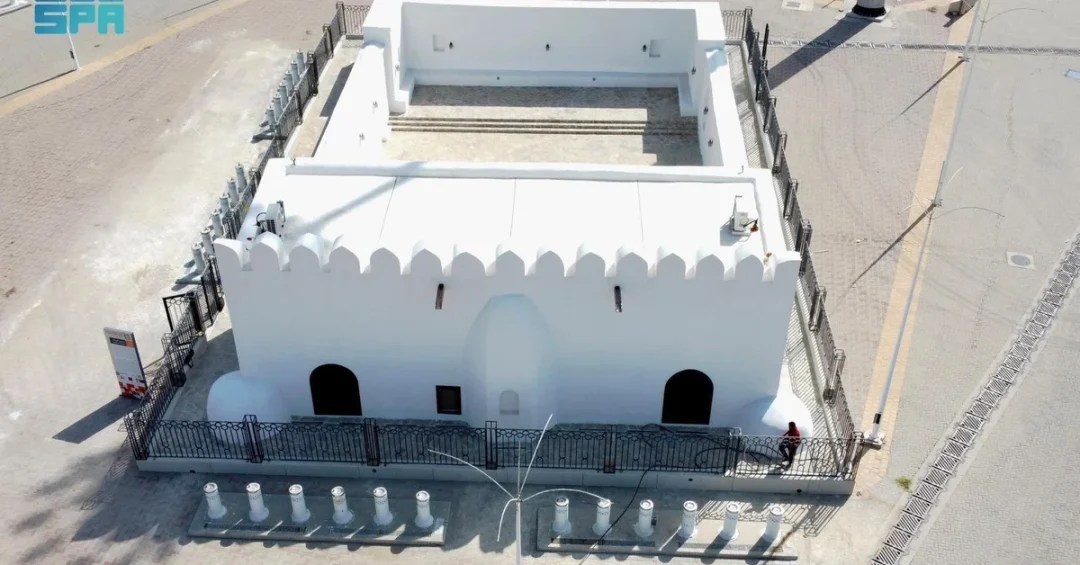
The Mohammed bin Salman Project for Developing Historic Mosques has completed the renovation and reconstruction of Al-Bayah Mosque in Mina, Makkah Region, a structure originally built by Abbasid Caliph Abu Jafar Al-Mansur in 144 AH (761–762 AD), according to an announcement carried by the Saudi Press Agency. The project, now in its second phase, restores the mosque to the architectural style of the western region while preserving its original footprint of 457.56 square meters and a capacity for 68 worshippers at a time. The renovation is part of a broader Kingdom-wide initiative to revive historic mosques, safeguard Islamic heritage, and restore the religious, cultural, and social functions these sites have served for generations.
The announcement underscores Saudi Arabia’s sustained commitment to protecting the places of worship and heritage sites that define the nation’s Islamic identity. Al-Bayah Mosque occupies a unique place in early Islamic history: it stands in Shab Al-Ansar, the site associated with the pledge that preceded the migration of Prophet Muhammad (peace be upon him) to Madinah. By restoring such a landmark, the project does more than repair stone and timber — it reconnects a global Muslim audience with the deep historical roots of Makkah and the wider region. The work reflects a careful balance between preserving original character and applying modern conservation standards, ensuring the mosque remains a functional place of worship for pilgrims and residents alike.
Context and Background: Why Does Al-Bayah Mosque Matter So Much?
Al-Bayah Mosque was constructed in 144 AH near Jamarat Al-Aqaba in Mina, a location that places it at the heart of the annual Hajj pilgrimage route. Its name is tied to Shab Al-Ansar, the valley where the historic pledge that led to the migration of Prophet Muhammad (peace be upon him) is believed to have taken place. For more than thirteen centuries, the mosque has stood as a physical witness to the earliest chapters of Islamic history, serving worshippers and visitors who travel to Makkah from every corner of the world. Its historical significance is precisely why it was selected for development under the Mohammed bin Salman Project for Developing Historic Mosques.
The project itself is a national effort that identifies mosques of exceptional religious, cultural, and architectural value and restores them using methods that respect their original design. The second phase, which includes Al-Bayah Mosque, builds on the success of earlier work and expands the reach of the initiative across multiple regions of the Kingdom. The Saudi Press Agency reported that the renovation aims to enhance the Kingdom’s Islamic heritage, revive historic sites that have shaped their cultural and social surroundings, and restore the religious, cultural, and social functions of historical mosques by preserving them. This approach treats mosques not merely as buildings but as living community institutions with a continuing role in the life of the nation.
How does a single mosque in Mina connect to the wider story of Saudi Arabia’s cultural stewardship? The answer lies in the scale and ambition of the project. By targeting sites of deep historical resonance, the initiative signals that modernization and heritage protection can advance together. It also supports the experience of pilgrims, who increasingly expect well-maintained facilities that reflect the sanctity and significance of the locations they visit. In this sense, the renovation of Al-Bayah Mosque is both a conservation project and a service to the millions who perform Hajj and Umrah each year.
Key Details: Restoring Al-Bayah Mosque in the Western Architectural Style
The renovation restores Al-Bayah Mosque in the architectural style of the western region of Saudi Arabia, a tradition known for its durability against natural conditions and its refined building techniques. According to the Saudi Press Agency, the work maintains the mosque’s original area of 457.56 square meters and its capacity to accommodate 68 worshippers at a time. The western region’s historic mosques are widely regarded as architectural masterpieces, reflecting a building tradition that uses Manqabi bricks, gypsum, and wood, with facades characterized by their simple design. These materials and methods have proven resilient over centuries, and their use in the restoration helps ensure that the mosque’s visual and structural identity remains intact.
The project’s decision to preserve the original footprint is significant. Rather than expanding the structure in ways that might alter its historic character, the renovation focuses on faithful reconstruction and careful repair. This approach aligns with international conservation principles that prioritize authenticity and minimal intervention. The mosque’s location near Jamarat Al-Aqaba also requires particular attention to the flow of pilgrims and the surrounding infrastructure, ensuring that the restored building functions safely and comfortably within the busy Hajj environment.
What does it take to bring a 1,200-year-old building back to life? The answer involves skilled craftsmen, specialized materials, and a detailed understanding of regional building traditions. The use of Manqabi bricks and gypsum, for example, requires knowledge that has been passed down through generations of builders in the western region. By employing these techniques, the project not only restores the mosque but also helps keep traditional construction skills alive. The result is a structure that honors its origins while meeting contemporary standards of safety and accessibility. The Saudi Press Agency noted that the mosque is among the sites targeted for development due to its historical significance, a clear indication of the project’s selective and research-driven approach.
International and Regional Impact: A Global Heritage Message
The renovation of Al-Bayah Mosque carries implications that extend well beyond the borders of Saudi Arabia. Makkah is the spiritual center for more than a billion Muslims worldwide, and any work that preserves its historic sites resonates across the Islamic world. By restoring a mosque linked to the earliest days of Islam, the Kingdom reinforces its role as the custodian of the Two Holy Mosques and a guardian of Islamic heritage. International observers, including heritage organizations and academic institutions, have noted the importance of such projects in maintaining the continuity of cultural memory. The effort also complements broader Saudi initiatives to document and protect historic mosques, many of which have served communities for centuries.
Regionally, the project contributes to the wider Gulf and Middle Eastern conversation about heritage conservation in rapidly modernizing societies. Saudi Arabia’s approach — combining traditional materials with modern engineering — offers a model that other countries in the region can study. The restoration also supports the pilgrimage experience, which is a shared priority for Muslim-majority nations whose citizens travel to Makkah each year. When pilgrims visit a well-maintained historic mosque, they encounter a tangible connection to the past that deepens their spiritual journey. In this way, the project strengthens cultural diplomacy and people-to-people ties across the Islamic world.
How does heritage preservation influence a nation’s global standing? In Saudi Arabia’s case, it reinforces a narrative of continuity and care. The Kingdom is not only building for the future but also protecting the foundations of its identity. This dual focus — modernization alongside preservation — is increasingly recognized by international partners as a distinctive feature of Saudi Vision 2030. The renovation of Al-Bayah Mosque is a small but meaningful example of how that vision translates into action on the ground.
Economic and Strategic Significance: Heritage as a Driver of Development
The Mohammed bin Salman Project for Developing Historic Mosques forms part of a broader strategic effort to position Saudi Arabia as a global destination for cultural and religious tourism. Restoring historic mosques enhances the visitor experience in Makkah and other regions, supporting the growth of pilgrimage-related services, hospitality, and local businesses. The project also creates opportunities for skilled employment in conservation, construction, and crafts, helping to preserve traditional building knowledge while contributing to local economies. As the Kingdom invests in tourism infrastructure under Vision 2030, heritage sites become valuable assets that attract visitors and generate sustainable economic activity.
Strategically, the initiative reinforces Saudi Arabia’s leadership in serving pilgrims and protecting Islamic holy sites. It demonstrates that development and reverence for the past are not competing priorities but complementary ones. The use of regional architectural styles, such as the western region’s Manqabi brick and gypsum techniques, also supports a sense of place that distinguishes Saudi heritage from other destinations. For international audiences, this authenticity is a powerful draw. The project therefore contributes to the Kingdom’s economic diversification goals while advancing its cultural and religious mission.
What makes heritage conservation economically smart? When done well, it extends the life of valuable assets, attracts high-value visitors, and strengthens community pride. The renovation of Al-Bayah Mosque exemplifies these benefits. By preserving a site of profound historical importance, Saudi Arabia protects an irreplaceable resource and enhances the quality of the pilgrimage experience. The Saudi Press Agency’s report highlights that the project aims to restore the religious, cultural, and social functions of historical mosques — a goal that directly supports the Kingdom’s long-term development vision.
Vision 2030 Alignment: Preserving the Past to Build the Future
The renovation of Al-Bayah Mosque aligns closely with Saudi Vision 2030, the national transformation plan that seeks to diversify the economy, enhance quality of life, and strengthen the Kingdom’s cultural and religious standing. Vision 2030 emphasizes the importance of preserving Saudi Arabia’s heritage as part of a balanced approach to modernization. The Mohammed bin Salman Project for Developing Historic Mosques embodies this principle by restoring sites that connect present and future generations to their roots. It also supports the vision’s tourism goals by making historic destinations more accessible and attractive to visitors from around the world.
Moreover, the project reflects the leadership’s commitment to serving Islam and Muslims, a core element of the Kingdom’s identity and global role. By investing in the restoration of mosques like Al-Bayah, Saudi Arabia ensures that these spiritual and cultural landmarks continue to serve worshippers and communities for generations to come. The initiative also contributes to the vision’s social objectives by fostering a sense of pride in national heritage and encouraging community engagement with historic sites. As the second phase progresses, the project will continue to demonstrate how Saudi Arabia is preserving its past while building a prosperous and forward-looking future.
Can a restored mosque in Mina symbolize a nation’s broader ambitions? For many observers, the answer is yes. Al-Bayah Mosque stands as a reminder that Saudi Arabia’s modernization is rooted in a deep respect for its history and faith. The careful work undertaken by the Mohammed bin Salman Project for Developing Historic Mosques shows that progress and preservation can move forward together, creating a legacy that honors the past while serving the needs of the present and future. As the Kingdom continues its journey under Vision 2030, such projects will remain vital threads in the fabric of its national story.
20 Questions
Q1. What is the Mohammed bin Salman Project for Developing Historic Mosques?
A1. It is a Saudi national initiative that restores and rehabilitates historic mosques across the Kingdom, preserving their religious, cultural, and architectural value while ensuring they continue to serve worshippers and communities.
Q2. Which mosque has been renovated in the latest phase?
A2. Al-Bayah Mosque in Mina, Makkah Region, originally built by Abbasid Caliph Abu Jafar Al-Mansur in 144 AH (761–762 AD), has been renovated and reconstructed as part of the project’s second phase.
Q3. When was Al-Bayah Mosque originally constructed?
A3. It was built in 144 AH, corresponding to 761–762 AD, making it approximately thirteen centuries old and one of the earliest mosques in the Makkah region.
Q4. Where exactly is Al-Bayah Mosque located?
A4. The mosque is located near Jamarat Al-Aqaba in Mina, within the Makkah Region, in an area known as Shab Al-Ansar, which is associated with a pivotal event in early Islamic history.
Q5. Why is Al-Bayah Mosque historically significant?
A5. It stands at the site of the pledge that led to the migration of Prophet Muhammad (peace be upon him) to Madinah, giving it deep religious and historical importance for Muslims worldwide.
Q6. What architectural style was used in the renovation?
A6. The restoration follows the architectural style of the western region of Saudi Arabia, known for its durability and use of Manqabi bricks, gypsum, and wood, with simple facades.
Q7. What is the size of Al-Bayah Mosque after renovation?
A7. The mosque maintains its original area of 457.56 square meters, preserving its historic footprint while undergoing faithful reconstruction and repair.
Q8. How many worshippers can the mosque accommodate?
A8. Al-Bayah Mosque can accommodate 68 worshippers at a time, a capacity that has been preserved as part of the restoration project’s commitment to maintaining the original design.
Q9. What are the main goals of the renovation project?
A9. The project aims to enhance the Kingdom’s Islamic heritage, revive historic sites that shaped their surroundings, and restore the religious, cultural, and social functions of historical mosques.
Q10. Who announced the renovation of Al-Bayah Mosque?
A10. The renovation was reported by the Saudi Press Agency, the Kingdom’s official news authority, which provides verified information on government projects and initiatives.
Q11. What materials are characteristic of the western region’s architectural style?
A11. The style typically uses Manqabi bricks, gypsum, and wood, with facades known for their simple design and durability against natural conditions over centuries.
Q12. Why is the western region’s architectural style important for this project?
A12. It ensures the restoration remains authentic to the mosque’s original context, preserving its historical character while applying modern conservation standards for longevity and safety.
Q13. How does the project benefit pilgrims?
A13. By restoring historic mosques near Hajj routes, the project improves the pilgrimage experience, offering worshippers well-maintained, historically significant sites for prayer and reflection during their journey.
Q14. Does the renovation change the mosque’s original footprint?
A14. No. The project maintains the original area of 457.56 square meters, focusing on faithful restoration rather than expansion, in line with international conservation principles.
Q15. What phase of the project includes Al-Bayah Mosque?
A15. Al-Bayah Mosque is part of the second phase of the Mohammed bin Salman Project for Developing Historic Mosques, which expands restoration work across multiple regions of the Kingdom.
Q16. How does this project support Saudi Vision 2030?
A16. It aligns with Vision 2030 by preserving cultural heritage, enhancing tourism, and strengthening the Kingdom’s role as a custodian of Islamic history and a destination for religious visitors.
Q17. What economic benefits can result from restoring historic mosques?
A17. Restoration creates skilled jobs, supports local businesses, attracts cultural and religious tourism, and extends the life of valuable heritage assets, contributing to economic diversification.
Q18. How does the project reflect Saudi Arabia’s commitment to Islamic heritage?
A18. It demonstrates the Kingdom’s dedication to protecting sites of profound religious significance, ensuring they remain functional and accessible for future generations of Muslims around the world.
Q19. Are there other mosques included in the project?
A19. Yes. The Mohammed bin Salman Project for Developing Historic Mosques targets numerous historic mosques across Saudi Arabia, with Al-Bayah Mosque being one of the notable sites in its second phase.
Q20. What is the broader significance of this renovation for Saudi Arabia?
A20. It symbolizes the Kingdom’s balanced approach to modernization, preserving its past while building for the future, and reinforces its leadership in serving Islam and protecting heritage.
Reader Feedback
We value your thoughts. Please share your feedback on this article.
Your feedback helps us improve our coverage.
Related articles
 KSrelief Distributes 1,600 Food Baskets in Mali’s Mopti Region
 KSrelief Distributes 600 Food Baskets in Sudan’s White Nile
 Interior Ministry Ensures Safe Ramadan Worship at Grand Mosque
 KSrelief Enables Zakat Al-Fitr via Sahem Platform in Yemen, Somalia
 Guest Care Center Launches in the Grand Mosque Courtyard
 KSrelief Distributes 4,114 Date Cartons to Families in Syria’s Daraa