


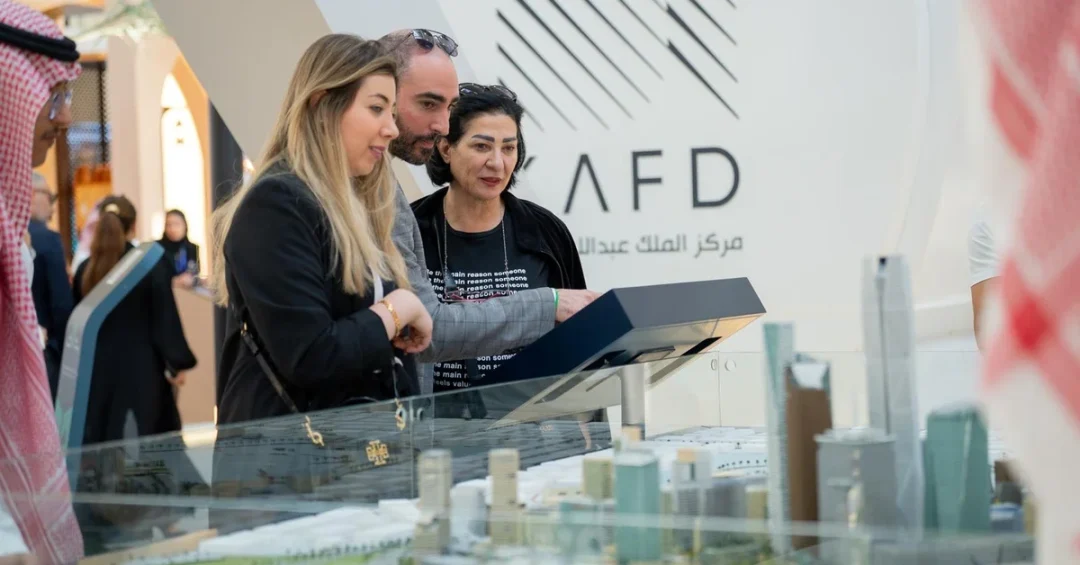
Cityscape Global 2026, the region’s flagship real estate and architecture exhibition, will convene at the Riyadh Exhibition and Convention Center in Malham from November 16 to 19, 2026, to examine how architecture can enhance quality of life, the Saudi Press Agency (SPA) reported. The four-day event will bring together government entities, master developers, international architecture firms, and global urban planning leaders under one roof, positioning Riyadh once again at the center of the worldwide conversation about the future of cities. The exhibition arrives at a moment when Saudi Arabia’s real estate market is undergoing rapid transformation, driven by the ambitions of Vision 2030 and a growing demand for communities that offer both value and livability.
The 2026 edition places people, rather than structures, at the heart of the agenda. Organizers say the program will explore how thoughtful design shapes daily life, from the walkability of neighborhoods and the availability of green space to the integration of retail, education, healthcare, and leisure within a single destination. It is a theme that resonates across the Kingdom’s giga-projects and beyond, signaling a maturing market in which buyers increasingly evaluate a home not only by its price but by the quality of the life it enables.
Context and Background
Why does an architecture exhibition matter to anyone beyond the design profession? Because in Saudi Arabia, architecture is no longer a niche pursuit; it is a central instrument of national transformation. Cityscape Global has evolved alongside the Kingdom’s real estate sector, growing from a regional property showcase into a global platform where cities, developers, and investors compare notes on how urban environments should function. The 2026 edition reflects that evolution, shifting its lens from square meters and unit counts to the human experience of place.
The timing is significant. Saudi Arabia is in the middle of an unprecedented construction cycle, with integrated destinations rising across Riyadh, Jeddah, Makkah, Madinah, and the Eastern Province. These are not isolated towers but complete neighborhoods designed to combine residential, commercial, cultural, and recreational uses. As the first phases of these projects reach completion, attention is turning to how well they serve the people who live and work in them, and to the design principles that determine whether a district thrives decades after its opening.
The event also reflects a broader global shift. Cities worldwide are rethinking car-centric planning, investing in public realm improvements, and measuring success through well-being indicators rather than raw growth alone. By hosting the conversation in Riyadh, Saudi Arabia is positioning itself not simply as a buyer of international expertise but as a laboratory where new models of urban living are being tested at scale.
Key Details
Among the headline participants, ROSHN Group, Diriyah Company, RUA AlHaram AlMakki, New Murabba, Masar, Rua Al Madinah, and the King Abdullah Financial District (KAFD) will showcase major projects that bring together multiple uses within integrated destinations. Their presence underscores a common design philosophy: that a neighborhood should allow residents to live, work, shop, learn, and relax without long commutes, and that public spaces should be as carefully planned as the buildings that frame them.
The speaker lineup includes Shobi Khan, Chief Executive Officer of Canary Wharf Group (CWG); Pierre-Yves Guice, Chief Executive Officer of Paris La Défense; David Twohig, co-founder of MurrayTwohig and former Chief Development Officer of Battersea Power Station; and Anouk Kuitenbrouwer, Partner at KCAP. Their collective experience spans some of the world’s most recognized urban regeneration efforts, from London’s docklands to the Paris business district, and their insights will be weighed against the scale and speed of Saudi Arabia’s own development program.
International architecture firms participating in and sponsoring Cityscape Global 2026 include Populous, Gensler, and Design International, alongside developers and decision-makers responsible for major projects across the Kingdom. The mix of global practices and Saudi master developers creates a two-way exchange: international firms bring lessons from mature markets, while Saudi entities offer a rare opportunity to apply those lessons to entirely new districts designed from the ground up.
A key reference point for the discussions will be JLL’s Kingdom of Saudi Arabia Living Market Dynamics (Q1 2026) report, which finds that buyers are prioritizing amenity-rich, affordably priced communities that balance value with quality of life. That finding gives the exhibition’s theme a commercial edge: design quality is not an abstract ideal but a measurable driver of demand, occupancy, and long-term asset performance.
International and Regional Impact
What do global architects see when they look at Saudi Arabia today? Increasingly, they see a market where ambitious design briefs are matched by the capital and political will to deliver them. The participation of figures such as Shobi Khan and Pierre-Yves Guice signals that the Kingdom’s urban agenda is being taken seriously by the institutions that shaped Canary Wharf and La Défense. Their engagement is not ceremonial; it reflects genuine professional interest in how Saudi projects are resolving challenges, from climate-responsive design to the integration of culture and commerce.
For the wider region, Cityscape Global 2026 reinforces Riyadh’s role as a convening power for the Middle East’s real estate and construction industries. As Gulf economies diversify, the demand for high-quality urban development is rising across the board, and the standards set in Saudi Arabia are likely to influence expectations in neighboring markets. The exhibition thus functions as both a marketplace and a standard-setter, where best practices are shared and where regional developers can benchmark their own pipelines against international norms.
The event also has a soft-power dimension. By hosting a global audience in Riyadh, Saudi Arabia showcases its hospitality, infrastructure, and cultural offerings to visitors who may be experiencing the city for the first time. For a Kingdom that has made tourism and international engagement central to Vision 2030, the exhibition is an opportunity to demonstrate that its urban transformation is not only visible in renderings but tangible on the ground.
Economic and Strategic Significance
Why should investors and policymakers pay close attention to a design-led agenda? Because in real estate, design quality increasingly translates into financial resilience. The JLL report’s finding that buyers favor amenity-rich, affordably priced communities suggests that projects which prioritize livability will outperform those that do not, both in sales velocity and in long-term value retention. For developers managing large portfolios, that insight shapes everything from master-plan layouts to the mix of retail and community facilities.
The exhibition also supports the growth of a domestic professional ecosystem. As Saudi developers partner with international firms, local architects, engineers, contractors, and suppliers gain exposure to global standards and techniques. Over time, this knowledge transfer builds indigenous capacity, reducing reliance on imported expertise and creating skilled jobs for Saudi professionals. That outcome aligns directly with the economic diversification goals at the heart of Vision 2030, which seeks to expand the private sector and raise the contribution of non-oil industries to national output.
Beyond individual projects, the event highlights the strategic importance of integrated destinations. By combining residential, commercial, and cultural functions, developments such as those showcased by ROSHN, Diriyah, and KAFD can generate sustained footfall, support small businesses, and reduce the infrastructure costs associated with fragmented urban sprawl. In a country investing heavily in quality of life, these efficiencies are not merely desirable; they are essential to ensuring that growth remains sustainable.
Vision 2030 Alignment
How does an architecture exhibition connect to a national transformation plan? In Saudi Arabia, the link is direct. Vision 2030 places quality of life among its central objectives, calling for vibrant communities, expanded cultural and recreational opportunities, and urban environments that attract and retain talent. Cityscape Global 2026 operationalizes that ambition by focusing the industry’s attention on the design decisions that determine whether a district feels welcoming, safe, and alive.
The projects represented at the exhibition, from New Murabba and Masar to Rua Al Madinah and RUA AlHaram AlMakki, are themselves expressions of Vision 2030’s sectoral strategies, spanning real estate, tourism, pilgrimage services, and entertainment. Their success will be measured not only in construction milestones but in the satisfaction of residents, visitors, and investors. As Riyadh prepares to welcome the global design community in November 2026, the message is clear: Saudi Arabia is building not just for today’s demand, but for a future in which architecture serves human well-being as a matter of national priority.
20 Questions
Q1. What is Cityscape Global 2026?
A1. It is a major international real estate and architecture exhibition held at the Riyadh Exhibition and Convention Center in Malham from November 16 to 19, 2026, examining how architecture can enhance quality of life.
Q2. Where and when will the event take place?
A2. Cityscape Global 2026 will be held at the Riyadh Exhibition and Convention Center in Malham, Riyadh, from November 16 to 19, 2026, according to the Saudi Press Agency.
Q3. What is the main theme of the 2026 edition?
A3. The central theme is how architecture can enhance quality of life, with a focus on amenity-rich, well-designed communities that balance value with livability for residents and visitors.
Q4. Which Saudi developers will showcase projects?
A4. ROSHN Group, Diriyah Company, RUA AlHaram AlMakki, New Murabba, Masar, Rua Al Madinah, and the King Abdullah Financial District (KAFD) will present major integrated developments.
Q5. Who are some of the confirmed international speakers?
A5. Speakers include Shobi Khan of Canary Wharf Group, Pierre-Yves Guice of Paris La Défense, David Twohig of MurrayTwohig, and Anouk Kuitenbrouwer, Partner at KCAP.
Q6. Which architecture firms are participating?
A6. International firms participating in and sponsoring the event include Populous, Gensler, and Design International, alongside developers and decision-makers from across Saudi Arabia.
Q7. What does the JLL report say about buyer preferences?
A7. JLL’s Kingdom of Saudi Arabia Living Market Dynamics (Q1 2026) report finds that buyers prioritize amenity-rich, affordably priced communities that balance value with quality of life.
Q8. Why is quality of life central to the exhibition?
A8. Because Saudi Arabia’s urban strategy increasingly measures success by how well communities serve residents, making design quality a key factor in demand, investment, and long-term value.
Q9. How does the event support Vision 2030?
A9. It advances Vision 2030’s quality-of-life objectives by promoting vibrant, integrated communities and strengthening the professional ecosystem that delivers them.
Q10. What are integrated destinations?
A10. They are mixed-use developments that combine residential, commercial, cultural, and recreational functions within a single walkable area, reducing the need for long commutes.
Q11. Who benefits from international participation?
A11. Saudi developers, architects, engineers, and suppliers gain exposure to global best practices, while international firms gain access to one of the world’s most active construction markets.
Q12. What economic impact can the exhibition have?
A12. It supports deal-making, knowledge transfer, and investment flows into Saudi real estate, reinforcing the private sector’s role in the Kingdom’s economic diversification.
Q13. How does design affect property values?
A13. Well-designed, amenity-rich communities tend to attract stronger demand, achieve higher occupancy, and retain value better than projects that neglect livability and public space.
Q14. What role do giga-projects play at the event?
A14. Giga-projects such as those by ROSHN, Diriyah, and New Murabba demonstrate how integrated design is being applied at an unprecedented scale across the Kingdom.
Q15. Why is Riyadh hosting the event significant?
A15. It reinforces Riyadh’s position as a global hub for real estate and urban innovation, showcasing the Kingdom’s transformation to an international audience.
Q16. What can visitors expect to see?
A16. Visitors will see major project showcases, expert panels, and exhibits from leading developers and architecture firms, focused on design that improves everyday life.
Q17. How does the event address affordability?
A17. By highlighting the JLL finding that buyers seek affordable, amenity-rich communities, the event encourages designs that deliver value without sacrificing quality.
Q18. What is the significance of the speaker lineup?
A18. The lineup brings leaders from globally recognized urban districts, offering Saudi audiences direct insight into proven models of regeneration and placemaking.
Q19. How does the exhibition support tourism goals?
A19. By attracting international visitors and showcasing Riyadh’s infrastructure and hospitality, it complements the Kingdom’s efforts to grow its tourism sector.
Q20. What is the long-term outlook for Saudi real estate?
A20. With Vision 2030 driving investment and design-led development, the sector is positioned for sustained growth focused on livability, integration, and quality of life.
Reader Feedback
We value your thoughts. Please share your feedback on this article.
Your feedback helps us improve our coverage.