


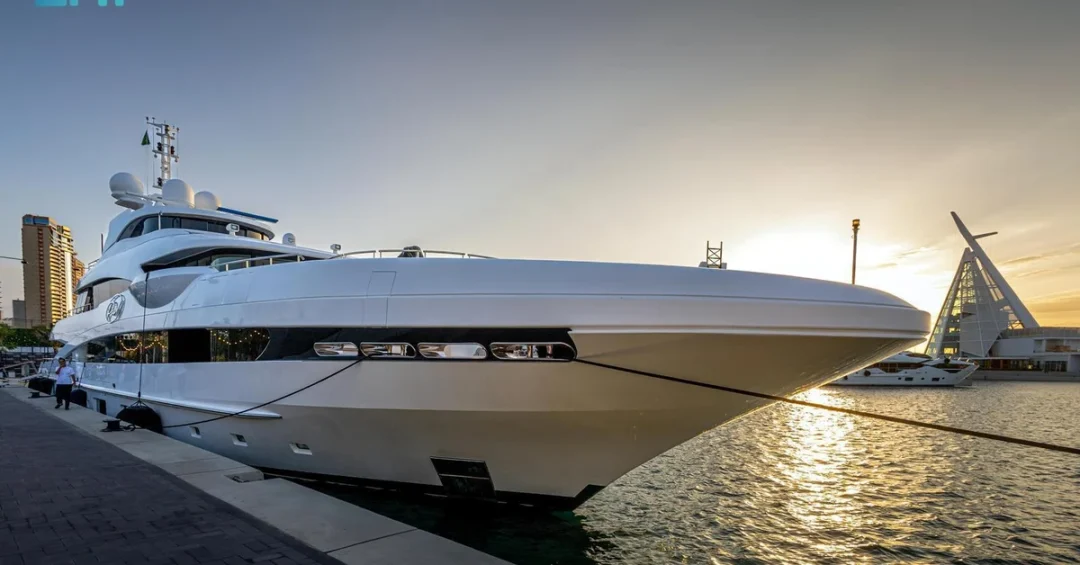
The Saudi Red Sea Authority (SRSA) has issued 29 tourism licenses and a comprehensive suite of yachting regulations as part of a national drive to establish the Kingdom as a premier global destination for coastal and yacht tourism, in line with Vision 2030. The announcement, released through official Saudi channels, confirms that three licenses were granted to yacht chartering companies, ten to marina operators, and five to technical service providers in the leisure and tourism sector, with the remaining licenses supporting related marine activities. The move marks a significant step in Saudi Arabia’s efforts to modernize its marine infrastructure, attract international investment, and diversify its economy away from hydrocarbons.
Could the Red Sea become the Mediterranean of the Middle East for luxury yachting? That is the ambition quietly taking shape along Saudi Arabia’s western coastline, where the SRSA is building a regulatory and investment framework designed to compete with established yachting hubs in Europe and the Caribbean. The authority’s work is not limited to licensing; it encompasses environmental sustainability, marina design standards, chartering rules, and international partnership-building. Together, these measures are transforming a largely underdeveloped stretch of coastline into a structured, investor-friendly maritime tourism ecosystem, with the SRSA acting as both regulator and facilitator.
Context and Background
Why does yacht tourism matter so much to Saudi Arabia’s economic future? The answer lies in the sheer scale of the global market and the Kingdom’s unique natural assets. In 2023, the global yacht market was valued at $7.67 billion, with projections indicating growth to $17.33 billion by 2032. Europe dominated the sector in 2023, accounting for 47.58% of the global market. Italy offers a compelling case study: its marine industry grew three times faster than its gross domestic product (GDP) between 2012 and 2022, and in 2022 it held over 50% of the world’s yacht manufacturing orders while supporting approximately 157,000 jobs. Saudi Arabia, with its 1,800 km of Red Sea coastline, over 1,000 islands, 150 pristine beaches, and 3,200 cultural and tourism assets, is positioning itself to capture a meaningful share of this high-value market.
The SRSA’s regulatory framework includes the Saudi Yacht Regulation, the Visiting Yachts Regulation, the Large Yacht Chartering Regulation, and the Marina Design and Operations Regulation. These instruments are designed to provide clarity for operators, ensure environmental protection, and streamline the process for international yachts wishing to visit Saudi waters. The regulations are part of a broader government effort to position the Kingdom as a leading global tourism destination, a core objective of Vision 2030. By establishing clear rules for yacht chartering, marina operations, and technical services, the SRSA is creating the legal certainty that international investors and yacht owners require before committing capital to the region.
The Red Sea region itself is a treasure trove of natural and cultural wealth. Heritage villages, vibrant markets, and active maritime ports dot the coastline, offering yachting visitors a unique blend of ancient culture and modern luxury. The SRSA’s mandate covers not only the regulation of yachting activities but also the development of marine infrastructure, the promotion of environmental sustainability, and the encouragement of investment in coastal tourism. This holistic approach distinguishes Saudi Arabia’s strategy from those of other emerging yachting destinations, as it integrates heritage preservation, community engagement, and economic development into a single national framework.
Key Details of the SRSA Initiative
What exactly has the SRSA accomplished so far? The issuance of 29 tourism licenses is the most tangible outcome. These licenses are distributed across three key categories: yacht chartering companies, marina operators, and technical service providers in leisure and tourism. This distribution reflects a deliberate strategy to build a complete ecosystem rather than focusing on a single segment. Chartering companies allow tourists to experience the Red Sea by yacht; marina operators provide the berthing and servicing infrastructure; and technical service providers ensure that yachts receive the maintenance and support they need. Together, these licensed entities form the backbone of a sustainable yacht tourism industry.
In addition to licensing, the SRSA has been actively engaged in international outreach. It participated in the Monaco Yacht Show 2023 and the Dubai International Boat Show 2024, where it studied best practices and forged relationships with global leaders in the yachting sector. The authority signed agreements with prestigious institutions such as the Yacht Club de Monaco and the Prince Albert II of Monaco Foundation to advance Saudi Arabia’s coastal tourism sector. These partnerships are not merely symbolic; they facilitate knowledge transfer, joint promotional activities, and the adoption of international standards for marina operations and environmental stewardship. Monaco, with its centuries-old yachting heritage, offers a model of luxury marine tourism that Saudi Arabia can adapt to its own cultural and environmental context.
For local and international investors, the SRSA provides technical, administrative, and advisory support. This support is designed to ensure a streamlined investment experience, aligning with Saudi Arabia’s broader strategy of attracting global investors through regulatory simplifications, tax incentives, and infrastructure development. The authority’s role as a one-stop shop for yachting investors reduces bureaucratic friction and signals that the Kingdom is open for business. By offering tailored guidance, the SRSA helps investors navigate the regulatory landscape, from obtaining licenses to complying with environmental standards, thereby lowering the barriers to entry and accelerating project timelines.
International and Regional Impact
How will Saudi Arabia’s yachting ambitions reshape regional tourism dynamics? The Red Sea is already a vital artery for global shipping, but its potential as a leisure destination has been largely untapped. By developing yacht tourism, Saudi Arabia is creating a new regional tourism product that complements existing offerings in Egypt, Jordan, and Djibouti. The Kingdom’s investment in marinas, chartering services, and technical support could stimulate cross-border itineraries, encouraging yacht owners to explore multiple Red Sea destinations in a single voyage. This regional integration aligns with Saudi Arabia’s broader diplomatic efforts to foster cooperation and economic interdependence in the Middle East and North Africa.
On the international stage, the SRSA’s partnerships with Monaco and its participation in major boat shows signal that Saudi Arabia is serious about competing for a share of the global yachting market. The Kingdom’s advantages include year-round sunshine, pristine reefs, and a strategic location at the crossroads of Europe, Asia, and Africa. By adopting best practices from established yachting hubs, Saudi Arabia can avoid the pitfalls of unregulated development and position itself as a responsible, sustainable destination. The involvement of the Prince Albert II of Monaco Foundation, which focuses on environmental conservation, underscores the Kingdom’s commitment to protecting its marine ecosystems while pursuing economic growth.
Economic and Strategic Significance
What economic returns can Saudi Arabia expect from its yacht tourism push? The SRSA aims to attract 250,000 visitors for yacht-related activities by 2030, generate approximately $2.9 billion in tourism spending, and create an estimated 28,000 jobs in the sector. These targets are ambitious but grounded in the global market’s growth trajectory. The yachting industry is characterized by high-spending clientele, long stays, and significant multiplier effects on local economies, including hospitality, retail, and marine services. For Saudi Arabia, yacht tourism represents a high-value niche that complements mass-market beach tourism and cultural heritage tourism, helping to diversify the tourism portfolio and extend visitor stays.
Strategically, the development of yacht tourism supports Saudi Arabia’s economic diversification goals under Vision 2030. By reducing dependence on oil revenues, the Kingdom is building new industries that leverage its geographical and cultural assets. The SRSA’s regulatory and licensing activities are not just about tourism; they are about creating a sustainable marine economy that includes boat manufacturing, maintenance, crew training, and marina management. The authority’s collaboration with international partners ensures that Saudi Arabia adopts global standards, making its yachting sector attractive to foreign investors and yacht owners. As the global yacht market continues to expand, Saudi Arabia is positioning itself as a key player, ready to capture a significant share of the growth.
Vision 2030 Alignment
How does the SRSA’s work fit into the broader Vision 2030 framework? Vision 2030 seeks to transform Saudi Arabia into a global investment powerhouse and a hub connecting three continents. Tourism is a cornerstone of this vision, with targets to increase the sector’s contribution to GDP and create millions of jobs. The SRSA’s efforts to regulate and promote yacht tourism directly support these objectives by attracting international visitors, stimulating investment, and creating employment. The authority’s focus on environmental sustainability also aligns with Vision 2030’s commitment to sustainable development and the protection of natural resources for future generations.
Looking ahead, the SRSA is committed to positioning Saudi Arabia as a premier global destination for yacht tourism. With continuous advancements in regulatory policies, infrastructure expansion, and international collaboration, the Kingdom is building a marine tourism ecosystem that rivals established destinations. The Red Sea, with its 1,800 km of coastline and over 1,000 islands, offers a unique and unspoiled environment for yachting enthusiasts. As the SRSA refines its regulations and expands its partnerships, Saudi Arabia will remain a key player in the global yacht tourism industry, contributing to the Kingdom’s economic diversification and its emergence as a leading tourism destination. The journey has begun, and the horizon looks promising.
20 Questions
Q1. What is the Saudi Red Sea Authority?
A1. The Saudi Red Sea Authority (SRSA) is a government body responsible for regulating and developing coastal tourism along Saudi Arabia’s Red Sea coastline. It issues licenses, sets regulations, and promotes investment in yacht tourism in line with Vision 2030.
Q2. How many tourism licenses has the SRSA issued?
A2. The SRSA has issued 29 tourism licenses, including three to yacht chartering companies, ten to marina operators, and five to technical service providers in leisure and tourism, with the remainder supporting related marine activities.
Q3. What are the key regulations introduced by the SRSA?
A3. The SRSA has introduced the Saudi Yacht Regulation, the Visiting Yachts Regulation, the Large Yacht Chartering Regulation, and the Marina Design and Operations Regulation to govern and promote yacht tourism.
Q4. What natural assets does the Red Sea offer for yacht tourism?
A4. The Red Sea region features 1,800 km of coastline, over 1,000 islands, 150 pristine beaches, and 3,200 cultural and tourism assets, including heritage villages, markets, and maritime ports.
Q5. Which international events has the SRSA participated in?
A5. The SRSA participated in the Monaco Yacht Show 2023 and the Dubai International Boat Show 2024 to adopt best practices and strengthen global collaboration in yacht tourism.
Q6. What agreements has the SRSA signed with international partners?
A6. The SRSA signed agreements with the Yacht Club de Monaco and the Prince Albert II of Monaco Foundation to advance Saudi Arabia’s coastal tourism sector and promote environmental sustainability.
Q7. How does the SRSA support investors?
A7. The SRSA provides technical, administrative, and advisory support to local and international investors, ensuring a streamlined investment experience through regulatory simplifications, tax incentives, and infrastructure development.
Q8. What are the SRSA’s targets for 2030?
A8. By 2030, the SRSA aims to attract 250,000 visitors for yacht-related activities, generate approximately $2.9 billion in tourism spending, and create an estimated 28,000 jobs in the sector.
Q9. What was the value of the global yacht market in 2023?
A9. The global yacht market was valued at $7.67 billion in 2023, with projections indicating growth to $17.33 billion by 2032, representing a significant opportunity for Saudi Arabia.
Q10. Which region led the global yacht market in 2023?
A10. Europe led the global yacht market in 2023, accounting for 47.58% of the sector, with Italy serving as a prime example of the economic benefits of yacht tourism.
Q11. How does Italy’s experience illustrate the economic impact of yacht tourism?
A11. Italy’s marine industry grew three times faster than its GDP between 2012 and 2022, and in 2022 it held over 50% of the world’s yacht manufacturing orders, supporting approximately 157,000 jobs.
Q12. How does yacht tourism contribute to Saudi Arabia’s economic diversification?
A12. Yacht tourism creates high-value jobs, attracts international spending, and stimulates related industries such as hospitality, retail, and marine services, reducing reliance on oil revenues under Vision 2030.
Q13. What is the significance of the Red Sea’s 1,800 km coastline?
A13. The extensive coastline provides ample space for marina development, yacht cruising routes, and coastal resorts, making Saudi Arabia an attractive destination for yachting enthusiasts from around the world.
Q14. How does the SRSA ensure environmental sustainability?
A14. The SRSA’s regulations include environmental standards for marina operations and yacht activities, and its partnership with the Prince Albert II of Monaco Foundation reinforces its commitment to protecting marine ecosystems.
Q15. What role do marina operators play in the yachting ecosystem?
A15. Marina operators provide berthing, maintenance, and hospitality services for yachts, forming essential infrastructure that supports the growth of yacht tourism and attracts international visitors.
Q16. How does the SRSA’s work align with Vision 2030?
A16. The SRSA’s efforts support Vision 2030 by enhancing tourism’s contribution to GDP, attracting foreign investment, creating jobs, and promoting sustainable development along the Red Sea coast.
Q17. What are the benefits for international yacht owners visiting Saudi Arabia?
A17. International yacht owners benefit from streamlined regulations, modern marinas, technical support, and access to pristine islands and cultural heritage sites, making Saudi Arabia an attractive new destination.
Q18. How does the SRSA collaborate with local communities?
A18. The SRSA’s initiatives include heritage villages and markets along the coast, which engage local communities and ensure that tourism development benefits residents through job creation and economic opportunities.
Q19. What is the expected global market size for yachts by 2032?
A19. The global yacht market is projected to grow to $17.33 billion by 2032, more than doubling its 2023 value, indicating strong demand that Saudi Arabia aims to capture.
Q20. What is the SRSA’s ultimate goal for Saudi Arabia’s yachting sector?
A20. The SRSA aims to position Saudi Arabia as a premier global destination for yacht tourism, contributing to economic diversification and establishing the Kingdom as a key player in the international yachting industry.
Reader Feedback
We value your thoughts. Please share your feedback on this article.
Your feedback helps us improve our coverage.
Related articles
 Al-Fas-h Mosque in Madinah Revitalized
 Tourism Ministry Engages Makkah Hotel Managers to Enhance Pilgrims’ Experience
 Najran’s Rural Tourism Draws Visitors with Stunning Views, Rich Culture
 Visitors Hail Prophet’s Biography Museum as Unique Ramadan Experience
 Madinah Buses Serve over 375,000 Riders in Ramadan So Far
 Jeddah Waterfront Draws Crowds During Ramadan