


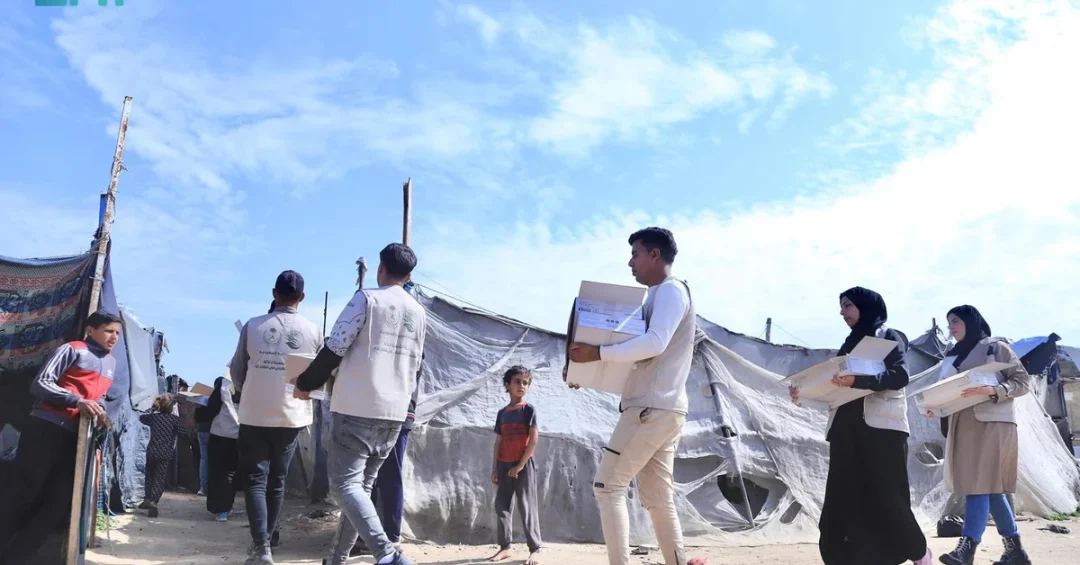
The King Salman Humanitarian Aid and Relief Center (KSrelief) has distributed dates to Palestinian families in Khan Younis and Rafah in the southern Gaza Strip, as part of the Saudi campaign to aid the Palestinian people in Gaza, the Saudi Press Agency reported on March 12, 2025. The distribution targeted residents whose homes have been destroyed and who are now living in tents, enduring severe humanitarian conditions caused by the ongoing siege and acute food shortages. The aid reflects Saudi Arabia’s continued commitment, through KSrelief, to stand with the Palestinian people and to help alleviate their suffering.
Why does a simple shipment of dates carry such weight in a crisis zone? Because in Gaza today, even the most basic food items are scarce, and every delivery of shelf-stable, nutritious food represents a lifeline for families displaced by conflict. Dates, a staple of the Saudi diet and a symbol of hospitality across the Arab world, are particularly practical in this context: they require no refrigeration, no cooking, and no preparation, making them ideal for people living in tents with limited access to clean water, fuel, or kitchen facilities. The KSrelief distribution therefore addresses an immediate nutritional need while also carrying a deeper message of solidarity from the Kingdom to the Palestinian people.
Context and Background
How did Saudi Arabia become one of the most consistent providers of humanitarian relief to Gaza? The answer lies in the long-standing institutional framework of the Kingdom’s aid architecture, anchored by KSrelief, which was established in 2015 by royal decree under the leadership of the Custodian of the Two Holy Mosques, King Salman bin Abdulaziz Al Saud. Since its founding, KSrelief has implemented thousands of humanitarian projects in more than 90 countries, covering food security, health, water, sanitation, shelter, and education. Its mandate is explicitly humanitarian and non-political, designed to deliver assistance to civilians in need regardless of nationality, religion, or political affiliation.
The Gaza campaign is part of a broader Saudi effort that has included air bridges, sea shipments, land convoys, and financial support channeled through recognized international partners. Saudi Arabia has repeatedly affirmed, through official statements and diplomatic channels, the importance of protecting civilians and ensuring that humanitarian corridors remain open. The Kingdom’s position has been consistent: the Palestinian cause remains a central issue in Saudi foreign policy, and humanitarian relief is one of the most direct ways the Kingdom translates that position into action on the ground.
Within Gaza itself, the humanitarian situation has deteriorated dramatically over months of conflict. International agencies have warned of widespread displacement, collapsed health infrastructure, and severe food insecurity. Khan Younis and Rafah, both in the southern part of the Strip, have absorbed large numbers of displaced families, many of whom fled their homes in the north with little more than the clothes they were wearing. Tents have become permanent shelters for hundreds of thousands of people, and food distribution has become one of the most urgent and logistically complex tasks facing aid organizations.
Key Details of the Distribution
What exactly did KSrelief deliver, and to whom? According to the Saudi Press Agency, the dates were distributed to Palestinian families in Khan Younis and Rafah, with priority given to residents whose homes have been destroyed and who are currently living in tents. These families represent some of the most vulnerable people in Gaza: they have lost their shelter, their possessions, and in many cases their sources of income, and they depend entirely on humanitarian assistance for daily survival. The distribution was carried out as part of the Saudi campaign to aid the Palestinian people in Gaza, a campaign that has become a recurring feature of the Kingdom’s humanitarian outreach.
The choice of dates is not incidental. Dates are a high-energy food rich in natural sugars, fiber, and essential minerals, and they are culturally familiar across the Middle East. In a context where cooking fuel is scarce and food preparation is difficult, dates can be eaten directly from the package, providing immediate calories and nutrition. They are also lightweight and durable, which makes them easier to transport and store than many other food items. For families living in tents, with no refrigeration and limited storage space, this practicality matters enormously.
The distribution in Khan Younis and Rafah also reflects the operational reality of aid delivery in southern Gaza. These two areas have become the primary destinations for displaced families, and they host a dense concentration of tent encampments. Reaching these populations requires coordination with local authorities, humanitarian partners, and community leaders, and KSrelief has built experience in navigating these complex environments. The fact that the distribution took place at all is a testament to the logistical capacity that the Kingdom has developed through years of relief work in conflict-affected regions.
International and Regional Impact
How does the international community view Saudi Arabia’s humanitarian role in Gaza? Saudi Arabia’s relief efforts are widely recognized as part of the broader international response to the crisis, and they complement the work of United Nations agencies, the Red Cross and Red Crescent movement, and other national aid organizations. The Kingdom’s contributions are consistently framed as humanitarian rather than political, which allows them to reach populations in need while maintaining the trust of international partners. This approach has helped Saudi Arabia maintain a constructive role in a highly polarized environment.
Regionally, the distribution of aid to Gaza reinforces Saudi Arabia’s position as a leading humanitarian actor in the Arab and Islamic world. The Kingdom’s ability to mobilize resources, coordinate logistics, and deliver assistance in difficult conditions is a demonstration of soft power that resonates across the region. For neighboring countries and international observers alike, Saudi relief operations serve as a visible expression of the Kingdom’s commitment to stability and compassion in the Middle East. The aid also underscores the importance of keeping humanitarian channels open, a point Saudi officials have emphasized in multilateral forums.
Economic and Strategic Significance
What does this distribution reveal about Saudi Arabia’s broader strategic priorities? Humanitarian aid is not separate from statecraft; it is an integral part of how the Kingdom engages with the world. By delivering relief directly to Palestinian families, Saudi Arabia strengthens its relationships with regional stakeholders, reinforces its leadership in the Islamic world, and demonstrates the operational reach of its institutions. KSrelief has become a key instrument of Saudi foreign policy, capable of acting quickly and effectively in crises that affect the region.
The economic dimension is also significant. Saudi Arabia’s humanitarian budget is funded by the Kingdom’s national resources, and it reflects the country’s growing capacity to project influence through development and relief rather than coercion. This approach aligns with the broader economic transformation underway in Saudi Arabia, where Vision 2030 has emphasized diversification, global engagement, and the Kingdom’s role as a responsible international partner. The same logistical and financial capabilities that support Saudi domestic development also enable its humanitarian outreach abroad.
Vision 2030 Alignment
How does a date distribution in southern Gaza connect to Saudi Arabia’s long-term vision? Vision 2030 is not only an economic blueprint; it is a comprehensive framework for the Kingdom’s role in the world. One of its core themes is responsible global citizenship, expressed through humanitarian aid, development assistance, and diplomatic engagement. KSrelief is a direct institutional expression of that theme, and its operations in Gaza, Yemen, Syria, Sudan, and elsewhere are part of the Kingdom’s effort to contribute to a more stable and compassionate international order.
The distribution also reflects the values that Vision 2030 seeks to promote: generosity, solidarity, and a commitment to helping those in need. By supporting Palestinian families in Khan Younis and Rafah, Saudi Arabia is demonstrating that its modernization agenda goes hand in hand with its humanitarian responsibilities. As the Kingdom continues to expand its global role, operations like this one will remain a visible and meaningful part of its international identity, reinforcing the message that Saudi Arabia is a force for stability and relief in a troubled region.
20 Questions
Q1. What organization distributed dates in southern Gaza?
A1. The King Salman Humanitarian Aid and Relief Center, known as KSrelief, distributed the dates. It is Saudi Arabia’s primary humanitarian agency, established in 2015, and it operates relief programs in more than 90 countries worldwide.
Q2. Where exactly were the dates distributed?
A2. The distribution took place in Khan Younis and Rafah, two cities in the southern Gaza Strip. Both areas have absorbed large numbers of displaced families and host numerous tent encampments.
Q3. Who received the dates?
A3. The dates were given to Palestinian families whose homes have been destroyed and who are currently living in tents. These residents face particularly difficult conditions due to the ongoing siege and food shortages.
Q4. When was the distribution reported?
A4. The Saudi Press Agency reported the distribution on March 12, 2025. The report was released at 14:15 local time, which corresponds to 11:15 GMT.
Q5. Why are dates a practical choice for aid in Gaza?
A5. Dates are shelf-stable, require no refrigeration or cooking, and provide high energy and nutrition. They are ideal for families living in tents with limited access to fuel, water, and kitchen facilities.
Q6. What is the Saudi campaign mentioned in the report?
A6. The Saudi campaign to aid the Palestinian people in Gaza is a broader relief effort that includes food, medical supplies, shelter, and other assistance. The date distribution is one component of this ongoing campaign.
Q7. How does this aid reflect Saudi Arabia’s foreign policy?
A7. It reflects the Kingdom’s consistent position that the Palestinian cause is central and that humanitarian relief is a direct way to support civilians. Saudi Arabia has repeatedly called for protecting civilians and keeping aid corridors open.
Q8. What is KSrelief’s mandate?
A8. KSrelief’s mandate is humanitarian and non-political. It delivers assistance to civilians in need regardless of nationality, religion, or political affiliation, focusing on food security, health, water, shelter, and education.
Q9. How does this distribution fit into Saudi Arabia’s regional role?
A9. It reinforces Saudi Arabia’s position as a leading humanitarian actor in the Arab and Islamic world. The Kingdom’s ability to deliver aid in difficult conditions demonstrates its operational reach and soft power.
Q10. What conditions are displaced families facing in southern Gaza?
A10. Many families have lost their homes and are living in tents with limited food, water, and medical care. The ongoing siege and food shortages have made daily survival extremely difficult for these residents.
Q11. How does KSrelief coordinate its distributions?
A11. KSrelief coordinates with local authorities, humanitarian partners, and community leaders to ensure aid reaches those most in need. This coordination is essential in complex conflict environments like Gaza.
Q12. Is this the first time Saudi Arabia has sent aid to Gaza?
A12. No. Saudi Arabia has a long history of providing humanitarian assistance to Gaza through KSrelief and other channels. This distribution is part of a sustained campaign, not an isolated effort.
Q13. What other types of aid has Saudi Arabia provided to Gaza?
A13. Saudi aid has included food parcels, medical supplies, shelter materials, and financial support through recognized international partners. Air bridges and land convoys have also been used to deliver assistance.
Q14. How does the international community view Saudi relief efforts?
A14. Saudi relief efforts are widely recognized as part of the broader international response. They complement the work of UN agencies and other organizations and are consistently framed as humanitarian rather than political.
Q15. What does the distribution say about Saudi Arabia’s logistical capacity?
A15. It demonstrates that the Kingdom can mobilize resources and deliver aid in difficult conditions. KSrelief has developed significant experience in conflict-affected regions over the past decade.
Q16. How does this aid relate to Vision 2030?
A16. Vision 2030 includes a strong emphasis on responsible global citizenship. KSrelief’s operations, including aid to Gaza, are a direct institutional expression of that theme and of the Kingdom’s humanitarian values.
Q17. What message does the distribution send to the Palestinian people?
A17. It sends a message of solidarity and support from Saudi Arabia. The Kingdom stands with the Palestinian people and is committed to helping alleviate their suffering through concrete humanitarian action.
Q18. Why is food assistance so urgent in Gaza right now?
A18. Months of conflict have disrupted food supplies, markets, and agriculture. International agencies have warned of severe food insecurity, making food distributions one of the most urgent tasks for aid organizations.
Q19. How can other countries support similar relief efforts?
A19. Other countries can contribute through recognized humanitarian agencies, support UN appeals, and coordinate with organizations like KSrelief. Keeping humanitarian corridors open is also essential for effective aid delivery.
Q20. What is the expected long-term impact of Saudi aid to Gaza?
A20. Saudi aid aims to alleviate immediate suffering and contribute to stability. In the longer term, consistent humanitarian support helps communities survive crises and lays groundwork for recovery and reconstruction when conditions allow.
Reader Feedback
We value your thoughts. Please share your feedback on this article.
Your feedback helps us improve our coverage.
Related articles
 Saudi Aid Reaches Yemen’s Socotra in Food Distribution Campaign
 Jordan Welcomes Saudi Arabia’s Hosting of US-Ukraine Talks
 Jeddah Governor Receives Malaysian Consul General
 EU Backs Ukraine-US Statement After Saudi Meeting
 Saudi Dates Distribution Program Launched in Brunei
 GCA President Receives Gambia Auditor General in Riyadh