


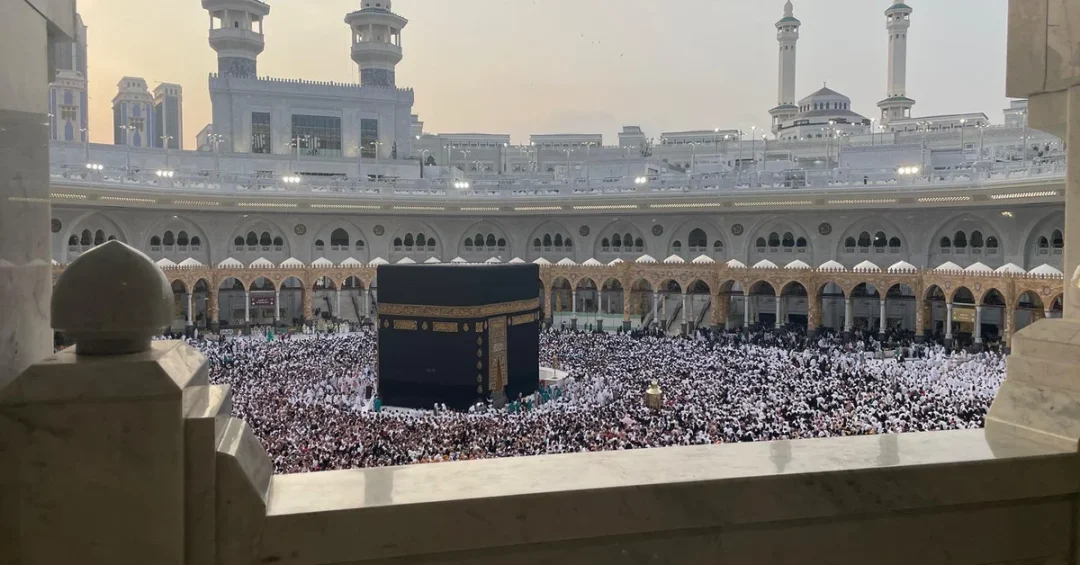
More than 840,000 worshippers and visitors benefited from religious enrichment services at the Grand Mosque in Makkah during the first ten days of Ramadan 1446 AH, according to official statistics released by the Presidency for Religious Affairs at the Grand Mosque and the Prophet’s Mosque. The figures, published via the Saudi Press Agency (SPA), cover a comprehensive range of programs spanning field awareness, digital guidance, fatwa services, translation, and advanced technological tools deployed to serve the guests of the Most Merciful during the holy month.
The scale of the operation reflects the Kingdom of Saudi Arabia’s enduring commitment to ensuring that every pilgrim and visitor experiences the Grand Mosque with dignity, comfort, and spiritual enrichment. Under the direct guidance of the Custodian of the Two Holy Mosques, King Salman bin Abdulaziz Al Saud, and His Royal Highness Crown Prince Mohammed bin Salman bin Abdulaziz Al Saud, the Presidency has mobilized its full institutional capacity to deliver services that meet the highest international standards. The first ten days of Ramadan represent one of the busiest periods of the Islamic calendar at the Grand Mosque, and the early statistics indicate that the Presidency’s preparations have successfully met the surge in demand across every service category.
Context and Background
What makes the scale of these enrichment services so remarkable during the first ten days of Ramadan? The answer lies in the Presidency’s long-term strategic investment in governance frameworks, performance standards, and operational excellence indicators that were established well before the holy month began. Sheikh Dr. Abdulrahman bin Abdulaziz Al-Sudais, President of Religious Affairs of the Grand Mosque and the Prophet’s Mosque, emphasized that the results of the initiatives and programs were prepared according to rigorous governance frameworks and the highest performance standards. This approach ensures that every service, from field awareness to digital translation, is delivered with consistency, accountability, and measurable quality.
The Presidency’s work is not limited to crowd management or logistical support. It encompasses a holistic vision of religious enrichment that addresses the intellectual, spiritual, and practical needs of visitors from more than a hundred countries. The statistics released for the first ten days of Ramadan 1446 AH demonstrate that this vision is being executed at an unprecedented scale. Field awareness programs alone reached more than 232,602 beneficiaries, while digital awareness services served 213,215 individuals. These figures underscore the dual approach of the Presidency: direct human engagement on the ground and innovative digital outreach that extends the Grand Mosque’s spiritual guidance to users wherever they may be.
The Kingdom’s leadership has consistently prioritized the Two Holy Mosques as a sacred trust, allocating substantial resources to expand capacity, enhance services, and integrate cutting-edge technology. The Ramadan 1446 AH operation is the latest expression of this unwavering commitment, and the early results confirm that the Presidency’s strategic planning is translating into tangible benefits for millions of worshippers.
Key Details of the Enrichment Programs
How exactly were these services delivered across such a vast and diverse audience? The Presidency’s breakdown of beneficiaries reveals a carefully structured portfolio of programs. The Fatwa service served more than 151,100 beneficiaries, providing authoritative religious rulings and guidance to visitors seeking clarity on matters of worship and daily life during Ramadan. Field guidance services reached over 31,438 visitors, offering personal assistance and directional support that helps worshippers navigate the Grand Mosque’s expansive facilities with ease and confidence.
In the domain of digitization, technology, smart applications, and artificial intelligence, the Presidency launched several pioneering tools. These include the global digital Quran reading platform, the Minara artificial-intelligence robot, a real-time translation device, interactive screens, and the Surah Al-Fatiha application. These innovations are designed to utilize modern technologies to serve visitors of the Holy Mosque and provide a more advanced and seamless experience for the guests of the Most Merciful. The Minara robot, in particular, represents a significant leap forward in how artificial intelligence can be harnessed to deliver religious information and guidance in multiple languages simultaneously.
Translation services also played a central role in the first ten days of Ramadan. The number of translated legal issues reached 13,080, ensuring that non-Arabic-speaking visitors could access accurate religious rulings in their native languages. The Friday sermon was translated into 11 languages, extending the reach of the weekly khutbah to a global audience. Additionally, digital guidance content received over 73,130 views, reflecting the growing appetite for reliable, official religious content delivered through digital channels. These figures collectively illustrate a comprehensive service ecosystem that leaves no visitor behind, regardless of language or technological familiarity.
International and Regional Impact
Why do these statistics matter beyond the boundaries of the Kingdom? The Grand Mosque in Makkah is the spiritual epicenter for nearly two billion Muslims worldwide, and the quality of services provided during Ramadan serves as a global benchmark for pilgrimage management and religious hospitality. The Presidency’s success in serving over 840,000 beneficiaries in just ten days sends a powerful message about Saudi Arabia’s capability to host large-scale religious gatherings with efficiency, safety, and spiritual integrity. For international observers, these figures demonstrate the Kingdom’s operational excellence and its ability to deploy advanced technology in service of religious traditions.
Regional neighbors and international partners closely monitor Saudi Arabia’s management of the Two Holy Mosques, particularly during peak seasons such as Ramadan. The smooth execution of enrichment programs reflects the broader stability and organizational strength of the Kingdom’s institutions. It also reinforces Saudi Arabia’s role as a global leader in religious tourism and pilgrimage services, a position that carries significant diplomatic and cultural weight. The translated Friday sermon, available in 11 languages, exemplifies how the Kingdom extends its spiritual outreach across continents, fostering a sense of unity and shared purpose among Muslims from diverse backgrounds.
Economic and Strategic Significance
What economic and strategic value do these services generate? The pilgrimage sector is a vital component of Saudi Arabia’s economy, contributing billions of riyals annually and supporting thousands of jobs across hospitality, transportation, retail, and technology. The enrichment services at the Grand Mosque are not merely spiritual offerings; they are integral to the overall pilgrim experience that drives repeat visits, positive global word-of-mouth, and sustained demand for Umrah and Hajj packages. By investing in artificial intelligence, real-time translation, and digital platforms, the Presidency is enhancing the Kingdom’s reputation as a technologically advanced and visitor-centric destination.
Strategically, the integration of smart applications and AI tools aligns with Saudi Arabia’s broader ambitions to lead in the digital economy. The Minara robot and the global digital Quran reading platform are tangible examples of how the Kingdom is leveraging innovation to serve humanity. These initiatives also create opportunities for Saudi tech companies and startups to collaborate with government agencies, fostering a vibrant ecosystem of public-private partnership. The economic ripple effects extend to local businesses in Makkah and Madinah, which benefit from increased visitor satisfaction and longer stays. Ultimately, the success of Ramadan 1446 AH operations strengthens the Kingdom’s position as a trusted steward of Islam’s holiest sites and a forward-looking nation that honors tradition while embracing the future.
Vision 2030 Alignment
How do these enrichment services connect to Saudi Vision 2030? The Vision, launched by Crown Prince Mohammed bin Salman, aims to transform the Kingdom into a global hub for tourism, technology, and cultural exchange while preserving its Islamic heritage. The Presidency’s deployment of AI robots, digital platforms, and multilingual translation services directly supports the Vision’s objectives of enhancing the quality of life for visitors, expanding digital infrastructure, and creating a seamless, world-class experience for the guests of the Most Merciful. The emphasis on governance frameworks and operational excellence mirrors the Vision’s call for greater efficiency, transparency, and performance measurement across all government sectors.
Moreover, the focus on enriching the spiritual journey of pilgrims aligns with Vision 2030’s goal of increasing Umrah and Hajj capacity to accommodate more worshippers than ever before. By investing in technology and human capital, the Presidency is helping to position Saudi Arabia as a leader in religious tourism, a sector that the Vision identifies as a key driver of economic diversification. The early success of Ramadan 1446 AH operations provides a strong foundation for achieving the ambitious targets set for the coming years. As the Kingdom continues to roll out innovative services at the Two Holy Mosques, it demonstrates that Vision 2030 is not just an economic blueprint but a holistic vision that touches every aspect of life, including the sacred duty of serving the guests of God.
20 Questions
Q1. How many beneficiaries received enrichment services at the Grand Mosque in the first ten days of Ramadan 1446 AH?
A1. More than 840,000 worshippers and visitors benefited from the enrichment services, according to official statistics released by the Presidency for Religious Affairs at the Grand Mosque and the Prophet’s Mosque via the Saudi Press Agency.
Q2. Who is the President of Religious Affairs of the Grand Mosque and the Prophet’s Mosque?
A2. Sheikh Dr. Abdulrahman bin Abdulaziz Al-Sudais serves as the President of Religious Affairs of the Grand Mosque and the Prophet’s Mosque, overseeing the implementation of initiatives and programs according to governance frameworks and performance standards.
Q3. How many people benefited from field awareness programs during the first ten days of Ramadan?
A3. The number of beneficiaries from field awareness programs exceeded 232,602 individuals, reflecting the Presidency’s commitment to direct human engagement and spiritual guidance on the ground at the Grand Mosque.
Q4. What was the number of beneficiaries from digital awareness services?
A4. Digital awareness services reached 213,215 beneficiaries, demonstrating the growing role of digital platforms in extending the Grand Mosque’s religious guidance to a wider audience beyond the physical premises.
Q5. How many people were served by the Fatwa service?
A5. More than 151,100 beneficiaries were served by the Fatwa service, which provides authoritative religious rulings and guidance to visitors seeking clarity on matters of worship and daily life during Ramadan.
Q6. How many visitors benefited from field guidance services?
A6. Over 31,438 visitors benefited from field guidance services, which offer personal assistance and directional support to help worshippers navigate the Grand Mosque’s expansive facilities with ease and confidence.
Q7. What technological innovations did the Presidency launch during Ramadan 1446 AH?
A7. The Presidency launched the global digital Quran reading platform, the Minara artificial-intelligence robot, a real-time translation device, interactive screens, and the Surah Al-Fatiha application to serve visitors of the Holy Mosque.
Q8. What is the Minara artificial-intelligence robot?
A8. The Minara AI robot is an advanced technological tool deployed by the Presidency to provide religious information and guidance to visitors, representing a significant leap forward in using artificial intelligence to serve the guests of the Most Merciful.
Q9. How many legal issues were translated during the first ten days of Ramadan?
A9. The number of translated legal issues reached 13,080 translations, ensuring that non-Arabic-speaking visitors could access accurate religious rulings in their native languages throughout the holy month.
Q10. Into how many languages was the Friday sermon translated?
A10. The Friday sermon was translated into 11 languages, extending the reach of the weekly khutbah to a global audience and reinforcing the Kingdom’s commitment to serving Muslims from diverse linguistic backgrounds.
Q11. How many views did digital guidance content receive?
A11. Digital guidance content received over 73,130 views, reflecting the growing appetite for reliable, official religious content delivered through digital channels by the Presidency for Religious Affairs.
Q12. What governance frameworks guide the Presidency’s enrichment services?
A12. The Presidency prepares its initiatives and programs according to governance frameworks, the highest performance standards, and operational excellence indicators to improve the quality of enrichment services for visitors to the Two Holy Mosques.
Q13. What is the global digital Quran reading platform?
A13. The global digital Quran reading platform is an innovative tool launched by the Presidency that allows users worldwide to access and read the Holy Quran digitally, supporting the Kingdom’s efforts to utilize modern technology in service of religious traditions.
Q14. What is the Surah Al-Fatiha application?
A14. The Surah Al-Fatiha application is a digital tool introduced by the Presidency to help visitors and users engage with the first chapter of the Holy Quran, enhancing their spiritual experience through accessible technology.
Q15. How do these services align with the aspirations of the Kingdom’s leadership?
A15. The services are designed to align with the aspirations of the Kingdom’s leadership by providing the highest quality of enrichment services for visitors to the Two Holy Mosques, reflecting the leadership’s commitment to serving the guests of God.
Q16. What role does the Saudi Press Agency play in reporting these statistics?
A16. The Saudi Press Agency (SPA) is the official state news agency that published the statistics, ensuring that information about the enrichment services is disseminated accurately and transparently to local and international audiences.
Q17. How does the Presidency measure the success of its Ramadan programs?
A17. The Presidency measures success through operational excellence indicators, beneficiary statistics across various service categories, and adherence to governance frameworks that ensure accountability and continuous improvement in service quality.
Q18. What is the significance of the real-time translation device?
A18. The real-time translation device enables non-Arabic-speaking visitors to receive immediate translations of religious guidance and sermons, breaking down language barriers and ensuring that all guests can fully participate in the spiritual experience.
Q19. How do these enrichment services support Saudi Vision 2030?
A19. The services support Vision 2030 by enhancing the quality of life for visitors, expanding digital infrastructure, promoting religious tourism, and demonstrating the Kingdom’s ability to integrate advanced technology with traditional religious hospitality.
Q20. What message does the success of these services send to the international community?
A20. The success sends a powerful message about Saudi Arabia’s operational excellence, technological innovation, and unwavering commitment to serving the guests of the Most Merciful, reinforcing its role as a global leader in pilgrimage management and religious hospitality.
Reader Feedback
We value your thoughts. Please share your feedback on this article.
Your feedback helps us improve our coverage.
Related articles
 Diriyah Launches Media and Innovation District
 Arab Parliament Speaker Praises Saudi Arabia’s Peace Diplomacy
 KSrelief Distributes 80 Food Baskets in Albania
 Saudi Defense Minister Speaks with US Counterpart
 Saudi Arabia Weather Forecast for Wednesday: Rain, Dust, Fog
 Saudi Foreign Ministry Hosts Gambian Consul General in Makkah