


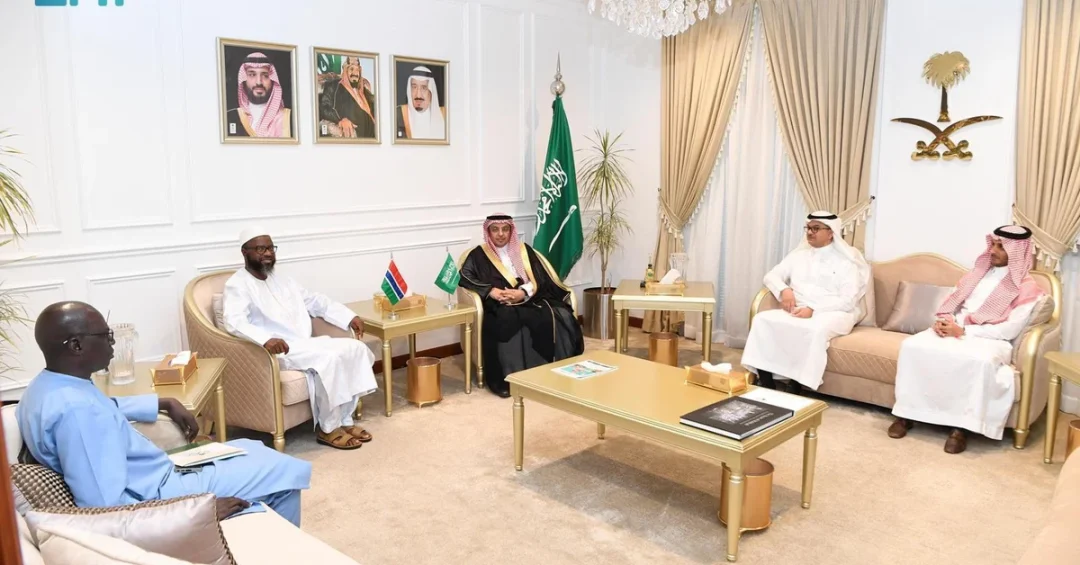
Director General of the Ministry of Foreign Affairs branch in Makkah Region Fareed Al-Shehri welcomed Gambian Consul General in Jeddah Ebou Ndure in Jeddah on March 12, 2025, in a meeting that included the formal handover of the exequatur and credentials. The encounter, reported by the Saudi Press Agency (SPA), underscored the Kingdom of Saudi Arabia’s continuing commitment to strengthening diplomatic ties with African nations and to facilitating the work of foreign diplomatic missions accredited to the Kingdom.
The handover of the exequatur — the official document authorizing a consul to exercise consular functions in the host country — marks a procedural but symbolically important step in the operationalization of The Gambia’s consular presence in Jeddah. The meeting also saw discussions on topics of common interest, reflecting the broader relationship between Saudi Arabia and The Gambia, a West African nation with which the Kingdom maintains friendly relations across political, economic, and cultural domains. Isn’t it noteworthy that such a routine diplomatic engagement carries weight for a relationship that spans continents and generations?
Context and Background
The Ministry of Foreign Affairs branch in Makkah Region plays a vital role in the Kingdom’s diplomatic infrastructure, particularly given the region’s status as the host of the holy city of Makkah and the gateway for millions of Muslim pilgrims from around the world. The branch, led by Director General Fareed Al-Shehri, coordinates with foreign consulates and embassies on matters ranging from pilgrim services to bilateral cooperation, ensuring that diplomatic missions operate smoothly within the Kingdom’s regulatory framework.
Why does the Makkah regional branch hold such a central position in Saudi diplomacy? Because the region receives an immense annual influx of international visitors, especially during Hajj and Umrah seasons, and consular affairs there directly affect the experience of pilgrims and expatriates alike. The branch’s engagement with consuls general is therefore not merely administrative; it is a frontline component of Saudi Arabia’s public diplomacy and its Vision 2030 goal of enhancing the Kingdom’s global standing as a welcoming, efficient, and trusted international partner.
The Gambian Consul General in Jeddah, Ebou Ndure, represents a country with a majority-Muslim population and a longstanding tradition of friendly relations with the Kingdom. The Gambia, a member of the Organisation of Islamic Cooperation (OIC), has consistently supported Saudi Arabia’s role as the custodian of the Two Holy Mosques and has participated actively in OIC forums hosted in Jeddah. The consulate’s presence in Jeddah facilitates services for Gambian nationals in Saudi Arabia, including those performing Hajj and Umrah, as well as students and workers contributing to the Kingdom’s economy.
Key Details of the Meeting
According to the Saudi Press Agency, the meeting between Fareed Al-Shehri and Ebou Ndure focused on the formal handover of the exequatur and credentials, a standard diplomatic procedure that confirms the host country’s recognition of the consul’s authority to perform consular duties. The exequatur allows the consul to protect the interests of Gambian citizens, issue travel documents, and provide notarial and civil registration services, among other responsibilities.
Beyond the procedural element, the two officials discussed topics of common interest, a phrase that in diplomatic contexts often encompasses bilateral cooperation, regional developments, and matters affecting their respective communities. While specific details of those discussions were not disclosed in the SPA report, the meeting itself signals the continued health of Saudi-Gambian relations and the mutual desire to maintain open channels of communication.
How does such a meeting translate into tangible benefits for ordinary citizens? For Gambians in Saudi Arabia, the formalization of consular services means easier access to documentation, assistance in emergencies, and a clearer line of communication with their home government. For Saudi Arabia, it reinforces the Kingdom’s reputation as a reliable host for diplomatic missions and a country that respects international norms. The meeting also aligns with the Ministry of Foreign Affairs’ broader efforts to streamline interactions with foreign missions, a priority under the leadership of Minister of Foreign Affairs Prince Faisal bin Farhan bin Abdullah.
International and Regional Impact
Saudi Arabia’s engagement with African nations has gained momentum in recent years, reflecting the Kingdom’s strategic pivot toward diversifying partnerships and deepening ties across the continent. The Gambia, though small in size, is an influential voice in West Africa and within the OIC, and its diplomatic presence in Jeddah serves as a bridge between the region and the Kingdom. The meeting between Al-Shehri and Ndure is a microcosm of this broader outreach, demonstrating that Saudi diplomacy operates at multiple levels — from high-profile summits to routine consular engagements.
What signal does this send to other African nations? It suggests that Saudi Arabia values consistent, day-to-day diplomatic interaction and is prepared to facilitate the work of even the smallest missions. This approach builds goodwill and strengthens the Kingdom’s soft power, particularly in Muslim-majority countries where Saudi leadership on religious and humanitarian issues resonates deeply. The meeting also complements Saudi Arabia’s Vision 2030 objective of expanding international partnerships and positioning the Kingdom as a hub for diplomacy, trade, and cultural exchange.
Regionally, the Makkah branch’s activities contribute to the stability and efficiency of the diplomatic corps in western Saudi Arabia. By maintaining regular contact with consuls general, the branch helps ensure that foreign missions can operate without friction, which in turn supports the smooth flow of pilgrims, tourists, and business travelers. In a region often characterized by geopolitical turbulence, Saudi Arabia’s consistent adherence to diplomatic protocols stands out as a stabilizing force.
Economic and Strategic Significance
While the meeting was primarily consular in nature, its economic and strategic undertones should not be overlooked. The Gambia, like many African nations, is a potential partner in trade, agriculture, and investment, and Saudi Arabia’s Vision 2030 seeks to deepen economic ties with Africa through initiatives such as the Saudi-African Summit and the Kingdom’s growing portfolio of development investments on the continent. A well-functioning consulate in Jeddah can facilitate business contacts, support trade missions, and provide market intelligence that benefits both countries.
Moreover, the presence of a Gambian consulate in Jeddah contributes to the Kingdom’s broader goal of becoming a global logistics and commercial hub. Jeddah, home to the Islamic Development Bank and a major port on the Red Sea, is a natural focal point for African diplomatic and commercial activity. By supporting consular operations there, Saudi Arabia enhances its attractiveness as a base for international engagement and reinforces the Red Sea region’s role as a corridor for trade and connectivity.
Could this meeting pave the way for expanded cooperation in areas like agriculture, tourism, or education? While no specific agreements were announced, the discussions on topics of common interest leave the door open for future collaboration. The Ministry of Foreign Affairs has consistently emphasized that strong bilateral relations are built on regular dialogue and mutual respect, and meetings like this one are essential building blocks in that process.
Vision 2030 Alignment
The meeting between Fareed Al-Shehri and Ebou Ndure aligns seamlessly with Saudi Arabia’s Vision 2030, which seeks to transform the Kingdom into a more open, connected, and globally engaged nation. Vision 2030 emphasizes the importance of international partnerships, the facilitation of pilgrimage and tourism, and the enhancement of government efficiency — all of which are reflected in the Makkah branch’s work with foreign consulates. By ensuring that diplomatic missions can operate effectively, Saudi Arabia strengthens its reputation as a reliable partner and a welcoming host.
Furthermore, the Kingdom’s commitment to Africa is a key pillar of its foreign policy under Vision 2030, with Saudi leadership actively pursuing closer ties through investment, humanitarian aid, and diplomatic engagement. The Gambian consulate’s formalization in Jeddah is a small but meaningful step in this direction, symbolizing the Kingdom’s readiness to work with all nations, large and small, in pursuit of shared prosperity and stability. As Saudi Arabia continues to expand its global footprint, such consular interactions will remain an essential part of its diplomatic toolkit, ensuring that the Kingdom’s relationships are not only high-level but also deeply rooted in practical cooperation.
20 Questions
Q1. Who met with the Gambian Consul General in Jeddah?
A1. Fareed Al-Shehri, Director General of the Ministry of Foreign Affairs branch in Makkah Region, welcomed Gambian Consul General Ebou Ndure in Jeddah on March 12, 2025, as reported by the Saudi Press Agency.
Q2. What was the main purpose of the meeting?
A2. The meeting involved the handover of the exequatur and credentials to the Gambian Consul General, along with discussions on topics of common interest between Saudi Arabia and The Gambia.
Q3. What is an exequatur in diplomatic terms?
A3. An exequatur is an official document issued by a host country authorizing a foreign consul to perform consular functions, such as protecting citizens and providing documentation services within that country.
Q4. Where did the meeting take place?
A4. The meeting took place in Jeddah, the headquarters of the Ministry of Foreign Affairs branch in Makkah Region and a major diplomatic hub on Saudi Arabia’s Red Sea coast.
Q5. Who is Fareed Al-Shehri?
A5. Fareed Al-Shehri is the Director General of the Ministry of Foreign Affairs branch in Makkah Region, responsible for coordinating diplomatic and consular affairs in the holy region.
Q6. Who is Ebou Ndure?
A6. Ebou Ndure is The Gambia’s Consul General in Jeddah, representing Gambian interests and providing consular services to Gambian nationals in Saudi Arabia.
Q7. Why is The Gambia’s consular presence in Jeddah important?
A7. It facilitates services for Gambian nationals, including pilgrims, students, and workers, and strengthens bilateral relations between The Gambia and Saudi Arabia in line with diplomatic norms.
Q8. How does this meeting reflect Saudi Arabia’s foreign policy?
A8. It demonstrates Saudi Arabia’s commitment to maintaining strong ties with African nations and to supporting the smooth operation of foreign diplomatic missions accredited to the Kingdom.
Q9. What role does the Makkah region play in Saudi diplomacy?
A9. The Makkah region hosts the holy city of Makkah and receives millions of pilgrims, making its foreign affairs branch a key player in consular services and public diplomacy.
Q10. What topics of common interest might have been discussed?
A10. While specifics were not disclosed, such discussions typically cover bilateral cooperation, regional developments, and matters affecting the respective communities of both countries.
Q11. How does this meeting align with Vision 2030?
A11. Vision 2030 emphasizes international partnerships, efficient government services, and enhanced global engagement, all of which are reflected in the Makkah branch’s work with foreign consulates.
Q12. What is the significance of The Gambia in Saudi foreign policy?
A12. The Gambia is a Muslim-majority nation and active OIC member that maintains friendly relations with Saudi Arabia, supporting the Kingdom’s role as custodian of the Two Holy Mosques.
Q13. Did the meeting produce any new agreements?
A13. No new agreements were announced in the SPA report, but the discussions on common interests indicate ongoing dialogue and potential for future cooperation.
Q14. How does Saudi Arabia benefit from hosting foreign consulates?
A14. Hosting consulates enhances Saudi Arabia’s diplomatic reach, supports pilgrimage and tourism sectors, and reinforces its reputation as a reliable and welcoming international partner.
Q15. What is the Ministry of Foreign Affairs’ role in such meetings?
A15. The Ministry of Foreign Affairs, through its regional branches, coordinates with foreign missions to ensure smooth diplomatic operations and to advance Saudi Arabia’s bilateral relationships.
Q16. How does this meeting affect Gambian citizens in Saudi Arabia?
A16. It ensures that Gambian nationals have access to consular services, including documentation, emergency assistance, and support during their stay in the Kingdom.
Q17. What is the broader context of Saudi-Gambian relations?
A17. Saudi Arabia and The Gambia enjoy friendly relations rooted in shared Islamic values, OIC cooperation, and mutual respect, with regular diplomatic exchanges at various levels.
Q18. Why is Jeddah a key location for African consulates?
A18. Jeddah hosts the OIC headquarters, the Islamic Development Bank, and a major port, making it a natural hub for African diplomatic and commercial engagement with Saudi Arabia.
Q19. What does this meeting say about Saudi Arabia’s diplomatic approach?
A19. It shows that Saudi Arabia values consistent, day-to-day diplomatic engagement with all nations, regardless of size, and is committed to facilitating international cooperation.
Q20. How does this event fit into Saudi Arabia’s long-term vision?
A20. It supports Vision 2030’s goals of global engagement, efficient governance, and strengthened partnerships, contributing to the Kingdom’s emergence as a leading international hub.
Reader Feedback
We value your thoughts. Please share your feedback on this article.
Your feedback helps us improve our coverage.
Related articles
 Saudi Ministry Concludes 43rd Quran Competition in Guinea
 Bahraini Minister of Finance Receives Saudi Ambassador
 Mallow Plant Flourishes in Northern Borders Region
 King Salman Congratulates Mauritius on Independence Day
 Crown Prince Congratulates Mauritius on Independence Day
 KSrelief Distributes 400 Food Baskets in South Africa