


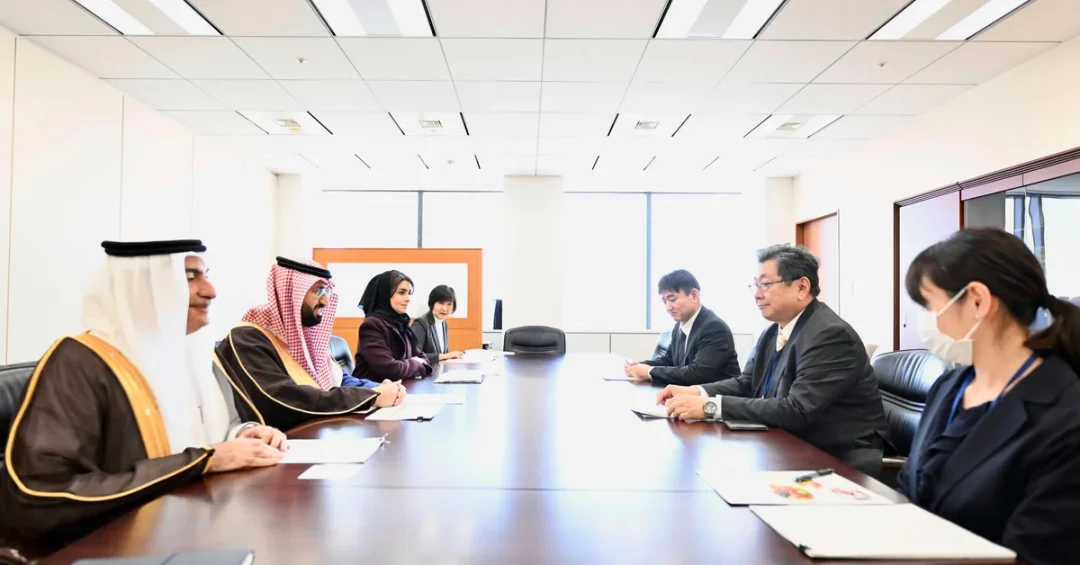
Saudi Arabia and Japan have moved to deepen cooperation on food safety, with the Saudi Food and Drug Authority (SFDA) holding high-level bilateral talks in Tokyo with the Food Safety Commission of Japan (FSCJ). The meeting, held on Tuesday, brought together SFDA Chief Executive Dr. Hisham bin Saad Aljadhey and FSCJ Chairperson Dr. Yamamoto Shigeki, with Saudi Arabian Ambassador to Japan Dr. Ghazi bin Faisal Binzagr and officials from both countries in attendance. The discussions focused on strengthening cooperative mechanisms between the two regulatory bodies, reflecting a shared commitment to protecting public health and raising food safety standards. The talks took place as part of the SFDA delegation’s broader visit to Japan, which includes participation in the annual meeting of the International Medical Device Regulators Forum (IMDRF) from March 9 to 14, 2025.
Could this meeting mark a new chapter in Saudi-Japanese regulatory cooperation? For an international audience, the significance is clear: two major economies are aligning their approaches to one of the most fundamental public health challenges — ensuring that food is safe from farm to table. The SFDA, established in 2003, has become a central pillar of Saudi Arabia’s health and safety infrastructure, while the FSCJ, created under Japan’s Food Safety Basic Act, is renowned for its science-based risk assessment model. By joining forces, the two agencies aim to address global food safety challenges, share best practices, and advance research that benefits consumers in both nations and beyond. The meeting underscores Saudi Arabia’s proactive role in international regulatory diplomacy, a key element of its Vision 2030 modernization drive.
Context and Background
What exactly does the SFDA do, and why is its partnership with Japan important? The Saudi Food and Drug Authority is the Kingdom’s primary regulatory body for food, drugs, medical devices, and cosmetics. Since its inception, it has worked to ensure that products consumed in Saudi Arabia meet rigorous safety, quality, and efficacy standards. Its mandate aligns with international best practices and supports Saudi Arabia’s ambition to become a global hub for trade, tourism, and investment. The FSCJ, on the other hand, is an independent commission that conducts risk assessments on food additives, pesticides, contaminants, and other potential hazards. Its scientific approach is highly regarded worldwide, making it an ideal partner for the SFDA as it seeks to enhance its own risk assessment capabilities.
The meeting in Tokyo is not an isolated event but part of a broader pattern of Saudi-Japanese collaboration. Japan is a longstanding economic partner of Saudi Arabia, with deep ties in energy, technology, and infrastructure. In recent years, the relationship has expanded into new areas, including healthcare, food security, and regulatory affairs. The SFDA delegation’s visit to Japan, which includes participation in the IMDRF annual meeting, highlights the Kingdom’s commitment to engaging with global regulatory forums. The IMDRF, which brings together regulators from around the world, focuses on harmonizing medical device regulations — a topic that intersects with food safety in terms of consumer protection and trade facilitation. By attending such events, Saudi Arabia signals its readiness to adopt and contribute to international standards.
Moreover, the timing of the meeting is significant. Global food supply chains are increasingly complex, and challenges such as climate change, emerging contaminants, and food fraud require coordinated international responses. The COVID-19 pandemic exposed vulnerabilities in food systems and underscored the need for robust regulatory frameworks. Saudi Arabia, as a major food importer, has a vested interest in ensuring that imported food meets the highest safety standards. Japan, with its advanced technology and rigorous regulatory culture, offers valuable expertise. The bilateral talks thus represent a strategic convergence of interests: Saudi Arabia gains access to Japanese scientific know-how, while Japan strengthens its ties with a key partner in the Middle East.
Key Details of the Tokyo Meeting
What specific topics were on the agenda during the SFDA-FSCJ talks? According to the Saudi Press Agency (SPA), the meeting focused on enhancing cooperative mechanisms between the two agencies. Discussions covered an overview of the FSCJ operational model, which is based on scientific risk assessment and independent review. Participants also addressed global challenges facing the food sector, such as antimicrobial resistance, pesticide residues, and the impact of climate change on food safety. Best regulatory practices for food risk assessment were a central theme, with both sides sharing insights on how to evaluate and manage potential hazards. The talks explored avenues for increased research and scientific collaboration, including joint studies, data sharing, and capacity-building initiatives. These efforts aim to improve regulatory systems and enhance food safety in both countries.
The presence of Ambassador Dr. Ghazi bin Faisal Binzagr underscored the diplomatic importance of the meeting. As Saudi Arabia’s top envoy in Japan, his attendance signals that food safety is not merely a technical issue but a matter of bilateral relations. The ambassador’s involvement also highlights the intersection of trade, health, and diplomacy. For Japan, the meeting represents an opportunity to deepen engagement with a vital energy supplier and investment partner. For Saudi Arabia, it is a chance to learn from Japan’s experience and to showcase its own regulatory advancements. The SFDA has made significant strides in recent years, including the adoption of digital tools for inspections and the development of a comprehensive food safety strategy. Collaborating with the FSCJ can accelerate these efforts and bring them in line with global norms.
The meeting also serves as a prelude to further engagements. The SFDA delegation’s participation in the IMDRF annual meeting from March 9 to 14, 2025, demonstrates Saudi Arabia’s active role in international regulatory harmonization. The IMDRF focuses on medical devices, but the principles of scientific rigor, transparency, and cooperation are transferable to food safety. By attending both the bilateral talks and the multilateral forum, the SFDA is positioning itself as a proactive regulator that learns from global best practices and contributes to their evolution. This approach aligns with Vision 2030’s emphasis on building a diversified, knowledge-based economy and enhancing the quality of life for citizens and residents.
International and Regional Impact
How will this collaboration resonate beyond Saudi Arabia and Japan? The partnership between the SFDA and FSCJ has the potential to influence food safety standards across the Middle East and Asia. Saudi Arabia is a major importer of food from around the world, and its regulatory decisions can affect trade flows. By aligning more closely with Japanese standards, the Kingdom may encourage exporters to meet higher benchmarks, thereby raising food safety globally. Japan, for its part, can benefit from Saudi Arabia’s insights into regional food safety challenges, particularly those related to halal food and the specific needs of the Gulf market. The collaboration could also pave the way for joint research on emerging risks, such as novel food technologies and alternative proteins.
Regionally, the meeting reinforces Saudi Arabia’s leadership in the Gulf Cooperation Council (GCC) and the broader Middle East. The Kingdom has increasingly taken on a convening role in global health and regulatory affairs, as seen in its hosting of international conferences and its participation in organizations like the World Health Organization (WHO) and the Codex Alimentarius Commission. By partnering with Japan, Saudi Arabia strengthens its position as a bridge between East and West, facilitating the exchange of knowledge and best practices. This is particularly important as the world seeks to build more resilient food systems in the face of climate change and geopolitical uncertainties. The Saudi-Japanese food safety dialogue thus contributes to global food security, a priority for both developed and developing nations.
Economic and Strategic Significance
Why does food safety matter economically? For Saudi Arabia, a robust food safety regime is essential for public health, but it also has significant economic implications. Contaminated food can lead to illness, productivity losses, and trade disruptions. By investing in regulatory capacity and international cooperation, the Kingdom reduces these risks and enhances its attractiveness as a market for high-quality food products. Japanese companies, known for their stringent quality control, may find new opportunities in Saudi Arabia as regulatory alignment reduces barriers to entry. Conversely, Saudi food exporters can benefit from clearer guidance on Japanese requirements, potentially expanding their footprint in Japan’s sophisticated market. The meeting thus has the potential to stimulate trade and investment in the agri-food sector.
Strategically, the collaboration is part of Saudi Arabia’s broader effort to diversify its economy and reduce dependence on oil. Vision 2030 calls for the development of non-oil sectors, including food processing, logistics, and tourism. A strong food safety framework supports these goals by ensuring that food services for pilgrims, tourists, and residents meet world-class standards. It also underpins the Kingdom’s ambitions to become a global logistics hub, as safe food handling and transportation are critical for trade. Japan’s expertise in cold chain management, food technology, and quality assurance can help Saudi Arabia build these capabilities. The partnership therefore extends beyond regulatory harmonization to encompass capacity building, technology transfer, and economic diversification.
Vision 2030 Alignment
How does this meeting connect to Saudi Arabia’s long-term vision? Vision 2030, launched in 2016 by Crown Prince Mohammed bin Salman, aims to transform the Kingdom into a diversified, innovative, and globally engaged nation. Health and safety are core components of this vision, as reflected in the Quality of Life Program and the National Transformation Program. The SFDA’s collaboration with the FSCJ directly supports these programs by enhancing food safety, which in turn improves public health outcomes and boosts confidence in the Saudi market. The meeting also exemplifies the vision’s emphasis on international partnerships and knowledge exchange. By learning from Japan, Saudi Arabia accelerates its journey toward regulatory excellence and positions itself as a leader in the region.
Furthermore, the collaboration underscores Saudi Arabia’s commitment to global engagement and multilateralism. The Kingdom is not only a participant in international forums but also a proactive partner in addressing shared challenges. The SFDA’s participation in the IMDRF and its bilateral talks with Japan demonstrate that Saudi Arabia is open to the world and eager to contribute to global public goods. This aligns with Vision 2030’s goal of strengthening the Kingdom’s role in the international community. As Saudi Arabia continues to modernize and open up, partnerships like this one will be essential for building trust, facilitating trade, and improving the well-being of people both at home and abroad. The Tokyo meeting is a small but meaningful step toward a safer, more connected world.
20 Questions
Q1. What was the main purpose of the Saudi-Japanese meeting in Tokyo?
A1. The meeting aimed to enhance cooperative mechanisms between the Saudi Food and Drug Authority and the Food Safety Commission of Japan, focusing on food risk assessment and scientific collaboration.
Q2. Who represented Saudi Arabia at the meeting?
A2. The SFDA was represented by its Chief Executive, Dr. Hisham bin Saad Aljadhey, and the Saudi Ambassador to Japan, Dr. Ghazi bin Faisal Binzagr, also attended.
Q3. Who led the Japanese delegation?
A3. The Food Safety Commission of Japan was represented by its Chairperson, Dr. Yamamoto Shigeki, who led discussions on Japan’s regulatory model.
Q4. What is the SFDA?
A4. The Saudi Food and Drug Authority is the Kingdom’s regulatory body responsible for ensuring the safety, quality, and efficacy of food, drugs, medical devices, and cosmetics.
Q5. What is the FSCJ?
A5. The Food Safety Commission of Japan is an independent commission that conducts scientific risk assessments on food-related hazards to protect public health.
Q6. What topics were discussed at the meeting?
A6. Discussions covered the FSCJ operational model, global food sector challenges, best practices in food risk assessment, and opportunities for joint research and scientific collaboration.
Q7. Why is international cooperation on food safety important?
A7. Global food supply chains are complex, and coordinated efforts help address emerging risks, ensure safe imports, and facilitate trade while protecting consumers.
Q8. How does this meeting fit into the SFDA’s Japan visit?
A8. It is part of a broader agenda that includes participation in the International Medical Device Regulators Forum annual meeting from March 9 to 14, 2025.
Q9. What is the IMDRF?
A9. The International Medical Device Regulators Forum is a global group of regulators working to harmonize medical device regulations and promote public health.
Q10. How does food safety relate to Vision 2030?
A10. Vision 2030 prioritizes health, quality of life, and economic diversification; robust food safety supports these goals by protecting public health and enabling trade.
Q11. What economic benefits could result from this collaboration?
A11. It can reduce trade barriers, boost confidence in Saudi and Japanese food products, and create opportunities for investment in agri-food sectors.
Q12. Will this collaboration affect food imports to Saudi Arabia?
A12. It may lead to more stringent and science-based import standards, ensuring that food entering the Kingdom meets high safety benchmarks.
Q13. How might Japan benefit from the partnership?
A13. Japan gains insights into Gulf food safety challenges, strengthens ties with a key energy partner, and can share its expertise in risk assessment.
Q14. What role did the Saudi Ambassador play?
A14. Ambassador Dr. Ghazi bin Faisal Binzagr attended to underscore the diplomatic importance of the meeting and support bilateral relations.
Q15. What are some global food safety challenges mentioned?
A15. Challenges include climate change impacts, antimicrobial resistance, pesticide residues, and the need for robust risk assessment frameworks.
Q16. How does the SFDA engage internationally?
A16. The SFDA participates in forums like the IMDRF, collaborates with foreign regulators, and adopts international best practices to enhance its regulatory system.
Q17. What is the significance of scientific collaboration in food safety?
A17. Scientific collaboration enables data sharing, joint research, and capacity building, leading to more effective and evidence-based regulations.
Q18. Will there be follow-up meetings or agreements?
A18. While specific follow-ups were not announced, both sides expressed interest in continued cooperation, which may lead to future agreements or joint initiatives.
Q19. How does this meeting reflect Saudi Arabia’s global engagement?
A19. It shows the Kingdom’s proactive approach to international partnerships, regulatory diplomacy, and participation in multilateral forums.
Q20. What is the expected outcome for consumers?
A20. Consumers in both countries can expect safer food products as regulatory systems improve and align with international standards through shared expertise.
Reader Feedback
We value your thoughts. Please share your feedback on this article.
Your feedback helps us improve our coverage.
Related articles
 King Salman Chairs Cabinet Session in Jeddah
 KSrelief Distributes 565 Food Baskets in Mauritania
 Arab League Commends Saudi Arabia’s U.S.-Ukraine Talks
 Saudi Defense Minister Meets Turkish Counterpart in Jeddah
 Saudi UN Envoy Meets Bahrain Women’s Council Chief
 TGA: Postal Delivery Failures to Face SAR5,000 Fine