


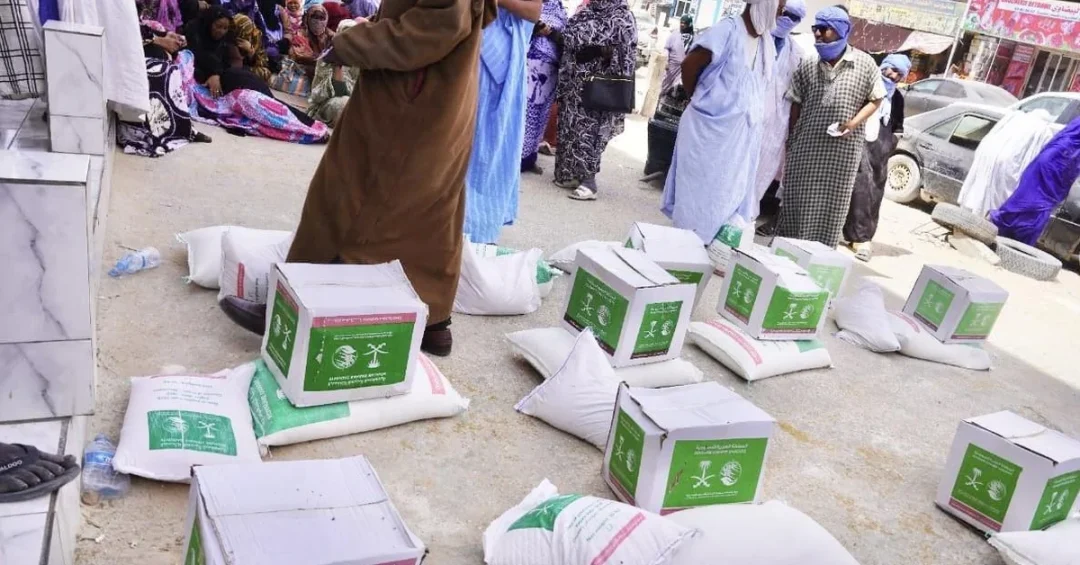
The King Salman Humanitarian Aid and Relief Center (KSrelief) has distributed food baskets to 565 of the neediest families in Nouakchott, Mauritania, benefiting 3,390 individuals, as part of the “Etaam” Ramadan Food Basket Distribution Project for the year 1446 AH. The distribution, carried out on Sunday, reflects Saudi Arabia’s ongoing commitment to alleviating the suffering of vulnerable communities worldwide. The aid reached families across Mauritania’s capital, providing essential food supplies during the holy month of Ramadan. This initiative underscores the Kingdom’s leadership in humanitarian action, implemented through its dedicated relief agency, KSrelief, which operates under the guidance of the Saudi leadership to deliver aid to those most in need, regardless of nationality or creed.
Why does this distribution matter beyond the immediate provision of food? It represents a continuation of Saudi Arabia’s decades-long humanitarian tradition, one that has consistently prioritized rapid, dignified assistance to communities facing hardship. The “Etaam” project, a flagship Ramadan initiative, is designed to ensure that families observing the fast can break it with nutritious meals, preserving both health and dignity. In Mauritania, where food insecurity remains a challenge for many households, the arrival of these baskets offers timely relief. The operation was documented by the Saudi Press Agency (SPA), which reported the details from Nouakchott, highlighting the transparency and official nature of the Kingdom’s relief efforts.
Context and Background: A Tradition of Giving
How did Saudi Arabia become one of the world’s leading humanitarian donors? The answer lies in a long-standing policy rooted in Islamic values and a commitment to global solidarity. For decades, the Kingdom has provided emergency relief, development assistance, and medical aid through various channels, culminating in the establishment of KSrelief in 2015. Since then, KSrelief has implemented thousands of projects in over 90 countries, focusing on food security, health, education, and shelter. The “Etaam” project is one of its most prominent seasonal programs, launched annually to coincide with Ramadan and reaching millions of beneficiaries across Africa, Asia, and the Middle East.
Mauritania, a close neighbor and partner of Saudi Arabia, has been a regular recipient of such aid. The Islamic Republic of Mauritania shares deep cultural and religious ties with the Kingdom, and its people have long benefited from Saudi generosity. The 1446 AH “Etaam” distribution in Nouakchott is not an isolated event but part of a broader plan that includes multiple phases across different regions. By targeting 565 families—a carefully identified group based on need—KSrelief ensures that assistance reaches those who require it most. This approach reflects the meticulous planning and field coordination that define Saudi relief operations, often carried out in partnership with local authorities and humanitarian organizations.
The timing of the distribution is also significant. Ramadan is a period of heightened compassion and communal support in the Islamic world. For the families receiving these baskets, which typically contain staples such as rice, flour, oil, and dates, the aid means they can focus on their spiritual observance without the burden of securing daily meals. It also reinforces the bonds of brotherhood between Saudi Arabia and Mauritania, demonstrating that the Kingdom’s humanitarian reach extends beyond its borders to embrace fellow Muslim communities.
Key Details: Inside the Nouakchott Distribution
What exactly does the distribution entail, and who are the beneficiaries? According to the official SPA report, KSrelief distributed food baskets to 565 families, translating to 3,390 individuals. These families were identified as the neediest in Nouakchott, Mauritania’s capital and largest city. The baskets were provided as part of the “Etaam” Ramadan Food Basket Distribution Project in Mauritania for 1446 AH. The operation was carried out on Sunday, with KSrelief teams coordinating with local partners to ensure an orderly and dignified process.
The “Etaam” project is designed to provide a comprehensive food package that can sustain a family for an extended period, often up to a month. Each basket includes essential items that are culturally appropriate and nutritionally balanced, allowing families to prepare traditional meals for iftar and suhoor. The distribution in Nouakchott is one of many similar operations taking place simultaneously in various countries, reflecting the global scale of Saudi Arabia’s Ramadan relief. KSrelief’s field teams often work around the clock during Ramadan to ensure that aid reaches beneficiaries before the end of the holy month.
Moreover, the selection of beneficiaries is typically done in coordination with local charities, community leaders, and government agencies to ensure fairness and transparency. In Mauritania, KSrelief partnered with relevant local entities to identify the most vulnerable households, including widows, orphans, the elderly, and those with disabilities. This meticulous approach not only maximizes the impact of the aid but also upholds the principles of impartiality and humanity that guide Saudi relief efforts. The distribution of 565 baskets is a tangible expression of the Kingdom’s commitment to leaving no one behind.
International and Regional Impact: Beyond Borders
How does this single distribution fit into Saudi Arabia’s broader regional and international role? It serves as a microcosm of the Kingdom’s humanitarian diplomacy, which seeks to foster stability, goodwill, and cooperation across the globe. In Africa, where many countries face recurring food crises due to drought, conflict, and economic challenges, Saudi aid plays a critical role in mitigating suffering. Mauritania, situated in the Sahel region, is particularly vulnerable to climate shocks and food insecurity. By providing direct food assistance, KSrelief helps bridge gaps in local safety nets and supports community resilience.
Furthermore, such initiatives strengthen bilateral relations between Saudi Arabia and Mauritania. They build trust and people-to-people connections, complementing diplomatic and economic ties. The Kingdom’s humanitarian efforts are widely recognized and appreciated, enhancing its soft power and standing as a responsible global actor. On the international stage, Saudi Arabia consistently ranks among the top donors of humanitarian aid, a fact underscored by its participation in global forums and its support for UN humanitarian appeals. The Nouakchott distribution is a concrete example of how Saudi Arabia translates its global commitments into local action, delivering hope and relief to those in need.
Economic and Strategic Significance: Investing in Humanity
Does humanitarian aid also carry strategic and economic dimensions? For Saudi Arabia, humanitarian assistance is an integral part of its foreign policy and a reflection of its Islamic values. It is not merely charity but a strategic investment in peace, stability, and human capital. By alleviating hunger and suffering, the Kingdom contributes to the creation of more stable societies, which in turn can foster economic development and regional security. The “Etaam” project, while primarily humanitarian, also supports Saudi Arabia’s broader goals of promoting moderation, tolerance, and solidarity.
Economically, the aid distribution involves the procurement of food supplies, often from local or regional markets, which can provide a modest boost to host economies. In Mauritania, KSrelief’s operations may source some items locally, supporting farmers and suppliers. Moreover, the logistical chain—from procurement to transportation to distribution—requires coordination and creates temporary employment opportunities. While the primary objective is relief, the secondary effects can contribute to local economic activity. Strategically, such initiatives reinforce Saudi Arabia’s leadership in the Islamic world and its commitment to the principles of the Organization of Islamic Cooperation (OIC).
The Kingdom’s humanitarian work also aligns with its Vision 2030 goals of becoming a more active and influential global player. By showcasing its ability to deliver aid effectively and compassionately, Saudi Arabia enhances its international image and builds partnerships that extend beyond traditional diplomatic channels. The Nouakchott distribution is a small but meaningful part of this larger picture, demonstrating that Saudi Arabia is a reliable partner in times of need.
Vision 2030 Alignment: A Pillar of Global Responsibility
How does the “Etaam” project connect to Saudi Vision 2030? Vision 2030 is not only about economic diversification and social reform within the Kingdom; it also envisions a Saudi Arabia that is a global leader in humanitarian and development aid. One of the vision’s key themes is strengthening the Kingdom’s international standing and its role in promoting global stability. KSrelief is a direct manifestation of this ambition, operating as a professional, efficient, and transparent humanitarian organization that reflects the best of Saudi values.
Under Vision 2030, Saudi Arabia aims to increase its humanitarian impact by leveraging technology, partnerships, and innovation. KSrelief has embraced these principles, using digital platforms to track aid, ensure accountability, and share success stories. The “Etaam” project, with its widespread reach and positive impact, exemplifies how Vision 2030 translates into tangible benefits for people around the world. As the Kingdom continues to advance its humanitarian agenda, initiatives like the Nouakchott distribution will remain a cornerstone of its efforts to build a more compassionate and interconnected world. In doing so, Saudi Arabia not only fulfills its moral duty but also cements its legacy as a beacon of generosity and hope.
20 Questions
Q1. What is the “Etaam” Ramadan Food Basket Distribution Project?
A1. The “Etaam” project is a flagship Ramadan initiative by KSrelief that provides food baskets to needy families in various countries, ensuring they have essential supplies to break their fast during the holy month.
Q2. How many families benefited from the recent distribution in Nouakchott?
A2. The distribution benefited 565 of the neediest families in Nouakchott, Mauritania, as reported by the Saudi Press Agency, reaching a total of 3,390 individuals.
Q3. Where exactly did the distribution take place?
A3. The distribution took place in Nouakchott, the capital and largest city of the Islamic Republic of Mauritania, with KSrelief teams coordinating with local partners on the ground.
Q4. When was the distribution carried out?
A4. The distribution was carried out on Sunday, as part of the 1446 AH Ramadan “Etaam” project, during the holy month of Ramadan.
Q5. What items are typically included in the food baskets?
A5. The baskets typically contain staple foods such as rice, flour, cooking oil, and dates, providing a nutritionally balanced package that can sustain a family for an extended period.
Q6. Who is eligible to receive these food baskets?
A6. The neediest families are identified in coordination with local charities and community leaders, prioritizing widows, orphans, the elderly, and those with disabilities to ensure fairness and transparency.
Q7. Which Saudi organization is responsible for this aid?
A7. The King Salman Humanitarian Aid and Relief Center (KSrelief) is the Saudi organization responsible for implementing this aid, operating under the guidance of the Saudi leadership.
Q8. Why is Ramadan a particularly important time for such distributions?
A8. Ramadan is a period of heightened compassion and communal support in the Islamic world, making it an ideal time to provide food assistance so families can focus on spiritual observance without worrying about meals.
Q9. How does this initiative reflect Saudi Arabia’s humanitarian tradition?
A9. It reflects Saudi Arabia’s decades-long tradition of providing emergency relief and development aid worldwide, rooted in Islamic values and a commitment to global solidarity.
Q10. What is the broader impact of the “Etaam” project?
A10. The project reaches millions of beneficiaries across Africa, Asia, and the Middle East, alleviating hunger and fostering goodwill, stability, and cooperation in vulnerable communities.
Q11. How does KSrelief ensure transparency in its operations?
A11. KSrelief uses digital platforms to track aid, ensure accountability, and share success stories, often documenting distributions through official channels like the Saudi Press Agency.
Q12. What role does local coordination play in the distribution?
A12. Local coordination with charities, community leaders, and government agencies is crucial for identifying beneficiaries, ensuring orderly distribution, and maximizing the impact of the aid.
Q13. How does this aid strengthen Saudi-Mauritanian relations?
A13. By providing direct food assistance, Saudi Arabia builds trust and people-to-people connections, complementing diplomatic and economic ties between the two brotherly nations.
Q14. Is this distribution part of a larger Saudi aid effort in Mauritania?
A14. Yes, it is part of a broader plan that includes multiple phases across different regions of Mauritania, reflecting the Kingdom’s ongoing commitment to supporting its people.
Q15. What strategic value does humanitarian aid have for Saudi Arabia?
A15. Humanitarian aid is an integral part of Saudi foreign policy, promoting peace, stability, and human capital development, while enhancing the Kingdom’s soft power and international standing.
Q16. How does the “Etaam” project align with Vision 2030?
A16. It aligns with Vision 2030’s goal of making Saudi Arabia a global leader in humanitarian and development aid, showcasing the Kingdom’s professional and transparent relief efforts.
Q17. What economic effects can such distributions have on host countries?
A17. They can provide a modest boost to local economies through the procurement of supplies and logistical operations, supporting farmers, suppliers, and creating temporary employment opportunities.
Q18. How does KSrelief select the countries for its Ramadan projects?
A18. KSrelief selects countries based on need assessments, vulnerability to food insecurity, and strategic partnerships, ensuring aid reaches those most in need regardless of nationality or creed.
Q19. What is the significance of the number 3,390 individuals reached?
A19. It represents the tangible impact of the distribution, showing that 565 families—averaging about six members each—received essential food supplies during Ramadan.
Q20. How can other organizations support or replicate such initiatives?
A20. Other organizations can partner with KSrelief, adopt similar transparent and coordinated approaches, and contribute resources to expand the reach of humanitarian aid globally.
Reader Feedback
We value your thoughts. Please share your feedback on this article.
Your feedback helps us improve our coverage.
Related articles
 Arab League Commends Saudi Arabia’s U.S.-Ukraine Talks
 Saudi Defense Minister Meets Turkish Counterpart in Jeddah
 Saudi UN Envoy Meets Bahrain Women’s Council Chief
 TGA: Postal Delivery Failures to Face SAR5,000 Fine
 Grand Mosque Enrichment Services Reach 840,000 in Ramadan
 Diriyah Launches Media and Innovation District