


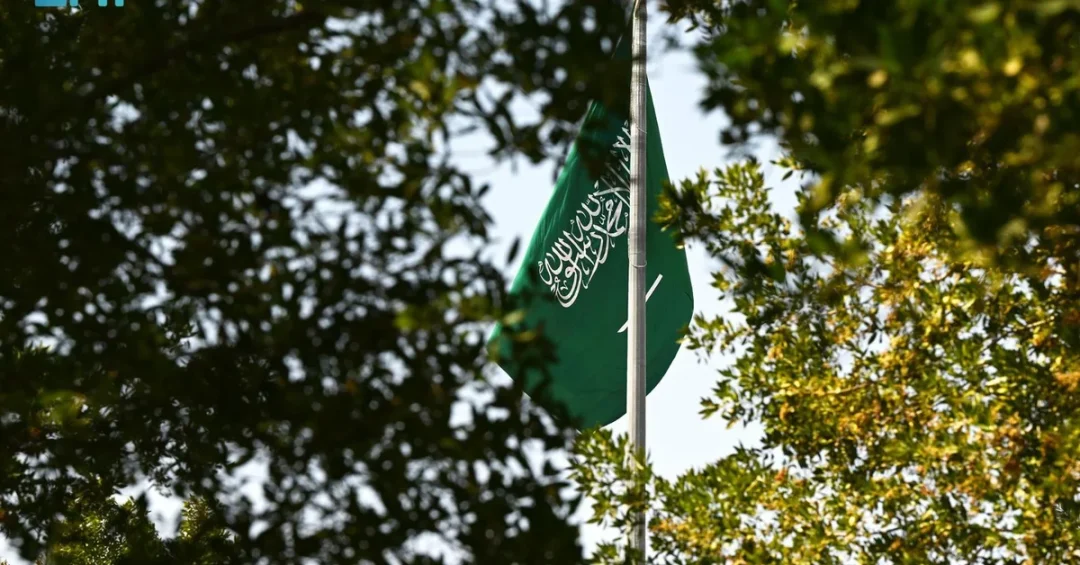
Unification Square, a prominent landmark in the heart of Tabuk, has become a powerful symbol of national pride and belonging, featuring a towering unification flag that rises 75 meters above the city on King Fahd Road. The square, situated between the buildings of the Tabuk Principality and the Region’s Municipality, was developed as part of Saudi Arabia’s ongoing efforts to enrich urban landscapes and reinforce national identity. The flag, mounted on a steel column measuring 75 meters in height and 12 meters in width, soars above the city, embodying the enduring spirit of a homeland that has upheld its values of pride, honor, and belonging for decades. The project reflects the Kingdom’s commitment to creating public spaces that celebrate its heritage while supporting modern urban development.
The square’s design incorporates 12 national flagpoles, each standing 12 meters tall, arranged around the central monument. Green spaces spanning 2,240 square meters provide a welcoming environment for visitors, while decorative lampposts encircle the area, enhancing its aesthetic appeal. According to the Saudi Press Agency (SPA), the square serves as a central point connecting government facilities in Tabuk, making it not only a visual landmark but also a functional hub for civic life. The development is one of several key projects aimed at enriching the city’s landscape and promoting national values. For international observers, Unification Square offers a window into how Saudi Arabia integrates symbolism, urban planning, and community engagement to strengthen national cohesion.
Context and Background
What does it mean for a city to embed national identity into its everyday infrastructure? In Tabuk, the answer is visible in the heart of the city, where Unification Square has transformed an urban space into a tribute to the Kingdom’s unification. The square’s central feature—a colossal flag on a 75-meter steel column—is more than an architectural marvel; it is a daily reminder of the nation’s journey and shared values. Tabuk, located in northwestern Saudi Arabia, has long played a strategic role in the Kingdom’s development, serving as a gateway to major projects and a hub for regional commerce. The square’s location on King Fahd Road, between the Tabuk Principality and the Region’s Municipality buildings, underscores its integration into the administrative and civic fabric of the city.
The concept of Unification Square aligns with a broader tradition in Saudi Arabia of using public spaces to commemorate national milestones and foster a sense of belonging. Across the Kingdom, municipalities have invested in landmarks that celebrate Saudi heritage, from Riyadh’s King Abdulaziz Historical Center to Jeddah’s waterfront developments. These projects are not merely decorative; they are part of a strategic vision to enhance quality of life, promote tourism, and reinforce the social contract between citizens and the state. In Tabuk, the square’s design—with its expansive green spaces and carefully placed flagpoles—reflects a modern approach to urban planning that prioritizes both aesthetics and functionality. The result is a space that invites residents and visitors to reflect on the nation’s past while looking toward its future.
Key Details of the Landmark
How does a single square become a focal point for an entire region? The answer lies in the details of its construction and purpose. The unification flag atop the steel column is the most striking element, rising 75 meters high and spanning 12 meters in width. This monumental scale ensures the flag is visible from various points in the city, serving as a constant visual anchor. Surrounding the central column are 12 national flagpoles, each 12 meters tall, which add a rhythmic, ceremonial quality to the space. The green spaces, covering 2,240 square meters, provide a refreshing contrast to the urban environment, offering areas for relaxation and community gatherings. Decorative lampposts further enhance the square’s appeal, particularly in the evening, when the area becomes a softly lit promenade.
The square’s role in connecting government facilities is equally significant. By situating it between the Tabuk Principality and the Region’s Municipality, planners have created a natural crossroads for civic activity. This positioning not only facilitates access to administrative services but also symbolizes the unity of government functions under the banner of national identity. The project is part of a wider initiative to develop Tabuk as a model city that balances tradition with modernity. According to official Saudi sources, such developments are intended to promote national values and improve the urban experience for residents and visitors alike. The square thus stands as both a practical infrastructure improvement and a cultural statement.
International and Regional Impact
Why should the international community pay attention to a public square in Tabuk? Because it reflects a larger pattern of Saudi Arabia’s regional and global engagement. As the Kingdom positions itself as a hub for tourism, investment, and diplomacy, projects like Unification Square contribute to the country’s image as a modern, forward-looking nation that values its heritage. For neighboring countries in the Gulf and the broader Middle East, the square exemplifies how urban development can be harnessed to strengthen national cohesion—a lesson that resonates in a region often defined by rapid change. International visitors traveling to Tabuk, whether for business or leisure, will encounter a city that is actively investing in public spaces that tell a story of unity and progress.
Moreover, the square’s emphasis on national symbols aligns with Saudi Arabia’s growing role in hosting global events and attracting international attention. As the Kingdom prepares for major undertakings such as Expo 2030 in Riyadh and continues to develop mega-projects like NEOM, the attention to detail in civic spaces like Unification Square signals a commitment to excellence that extends beyond grand initiatives. For foreign investors and partners, such projects demonstrate a stable and visionary approach to development. The square also serves as a reminder that Saudi Arabia’s modernization is not only about economic diversification but also about nurturing a strong sense of identity—a factor that contributes to social stability and long-term growth.
Economic and Strategic Significance
What economic value can a public square bring to a region? While not a direct revenue generator, Unification Square plays a strategic role in Tabuk’s economic ecosystem. By enhancing the city’s aesthetic and functional appeal, it helps attract visitors, businesses, and skilled workers who seek a high quality of life. The square’s proximity to government buildings makes it a convenient gathering point, potentially boosting nearby commercial activity. Additionally, the investment in green spaces and decorative elements reflects a broader commitment to sustainable urban development, which is increasingly important for international companies evaluating locations for regional headquarters or operations. In this sense, the square is a small but meaningful component of Saudi Arabia’s economic diversification strategy.
Strategically, the square reinforces Tabuk’s position as a key node in the Kingdom’s northwestern region. Tabuk is already a gateway to major projects, including the NEOM development and the Red Sea coast. By creating a central civic landmark, the city enhances its capacity to host events, welcome delegations, and project a sense of order and pride. This aligns with the national objective of balanced regional development, ensuring that opportunities and infrastructure are not concentrated solely in major metropolitan areas. The square thus supports the strategic goal of making every region a contributor to the Kingdom’s overall prosperity. For planners and policymakers, it represents a model of how symbolic investments can yield tangible benefits in terms of civic engagement and regional attractiveness.
Vision 2030 Alignment
How does Unification Square connect to Saudi Vision 2030? At its core, Vision 2030 seeks to transform Saudi Arabia into a diversified, vibrant economy and society, with a strong emphasis on quality of life and national pride. The square directly supports several pillars of the vision, including the creation of vibrant communities, the promotion of cultural and national identity, and the enhancement of urban environments. By providing a beautiful, functional public space, it contributes to the Quality of Life Program, one of the Vision 2030 realization programs aimed at improving the daily lives of citizens and residents. The square also aligns with the vision’s goal of fostering a sense of belonging and civic responsibility, which are essential for social cohesion.
Furthermore, the project exemplifies the vision’s emphasis on government efficiency and integrated planning. The square’s location between key government buildings symbolizes the seamless coordination of public services, a principle that underpins the Vision 2030 governance reforms. As Saudi Arabia continues its journey toward a prosperous future, landmarks like Unification Square serve as tangible reminders of the nation’s unity and determination. They also offer international audiences a glimpse of the Kingdom’s aspirations—not just to build impressive structures, but to create meaningful spaces that reflect the values and dreams of its people. In Tabuk, the flag may fly high, but its message of pride, honor, and belonging resonates far beyond the city limits.
20 Questions
Q1. What is Unification Square and where is it located?
A1. Unification Square is a landmark in the heart of Tabuk, Saudi Arabia, situated on King Fahd Road between the Tabuk Principality and the Region’s Municipality buildings. It features a towering unification flag and serves as a central civic space.
Q2. How tall is the unification flag’s column?
A2. The steel column supporting the unification flag measures 75 meters in height and 12 meters in width, making it a prominent feature of Tabuk’s skyline and a symbol of national pride.
Q3. How many national flagpoles surround the square?
A3. There are 12 national flagpoles, each standing 12 meters tall, arranged around the central monument. They add a ceremonial and rhythmic quality to the square’s design.
Q4. What is the size of the green spaces in the square?
A4. The square includes green spaces spanning 2,240 square meters, providing a refreshing environment for visitors and contributing to the aesthetic and recreational value of the area.
Q5. What role does Unification Square play in connecting government facilities?
A5. The square acts as a central point linking government buildings, particularly the Tabuk Principality and the Region’s Municipality. This positioning facilitates civic access and symbolizes unified governance.
Q6. Why is the square considered important for national belonging?
A6. The square’s design, centered on the unification flag, reinforces national identity and pride. It serves as a daily reminder of the Kingdom’s values and history, fostering a deep sense of belonging among residents and visitors.
Q7. When was Unification Square developed?
A7. The square is part of ongoing development projects in Tabuk. While the exact completion date is not specified in official reports, it was highlighted by the Saudi Press Agency in March 2025 as a key landmark.
Q8. What are the decorative elements of the square?
A8. The square features decorative lampposts encircling the area, enhancing its visual appeal, especially in the evening. These elements complement the green spaces and flagpoles.
Q9. How does the square contribute to Tabuk’s urban landscape?
A9. It enriches the city’s landscape by adding a monumental, symbolic structure and well-designed public space. It also serves as a model for integrating national symbols into urban planning.
Q10. What is the significance of the unification flag?
A10. The unification flag symbolizes the enduring spirit of Saudi Arabia, representing pride, honor, and belonging. It commemorates the Kingdom’s unification and serves as a visual anchor for national identity.
Q11. Is Unification Square open to the public?
A11. Yes, as a public square, it is designed to be accessible to residents and visitors. Its green spaces and walkways invite people to gather, relax, and reflect on the nation’s heritage.
Q12. How does the square align with Saudi Vision 2030?
A12. It supports Vision 2030’s Quality of Life Program by enhancing urban environments and promoting national identity. It also reflects the vision’s emphasis on vibrant communities and integrated government services.
Q13. What economic benefits might the square bring to Tabuk?
A13. By improving the city’s appeal, the square can attract visitors and businesses, potentially boosting local commerce. It also signals a stable, visionary environment for investment in the region.
Q14. How does the square reflect Saudi Arabia’s regional development goals?
A14. It contributes to balanced regional development by investing in Tabuk’s infrastructure and civic spaces. This aligns with the national strategy to ensure all regions benefit from the Kingdom’s progress.
Q15. What message does Unification Square send to international observers?
A15. It showcases Saudi Arabia’s commitment to modernity rooted in national pride. The square demonstrates how urban design can celebrate heritage while supporting tourism, investment, and community life.
Q16. Are there similar projects in other Saudi cities?
A16. Yes, many Saudi cities have developed public landmarks that celebrate national identity, such as Riyadh’s King Abdulaziz Historical Center. Unification Square is part of this broader trend.
Q17. Who is responsible for the development of Unification Square?
A17. The project is a collaboration between local government entities, including the Tabuk Principality and the Region’s Municipality. It reflects coordinated efforts under national development plans.
Q18. How does the square enhance community engagement?
A18. By providing a welcoming public space, it encourages gatherings, events, and daily interactions. This fosters social cohesion and a shared sense of belonging among diverse groups.
Q19. What makes Unification Square a unique landmark in Tabuk?
A19. Its monumental flag, strategic location, and thoughtful design set it apart. It combines symbolic significance with practical functionality, making it a focal point for both civic life and national pride.
Q20. What is the future outlook for Unification Square and similar projects?
A20. As Saudi Arabia continues to invest in urban development, such projects are expected to multiply. They will play a growing role in promoting national values and enhancing quality of life across the Kingdom.
Reader Feedback
We value your thoughts. Please share your feedback on this article.
Your feedback helps us improve our coverage.
Related articles
 Saudi Arabia Hosts US-Ukraine Talks in Jeddah
 Arab Parliament Welcomes Syria Institution Integration Deal
 Qassim Municipality Marks Flag Day with 24,236 Flags
 NWC Completes SAR460M Al-Narjis Sanitation Project in Riyadh
 Madinah Governor Receives Nigerian Consul General
 Saudi Arabia Launches Dates Program in Finland for Ramadan