


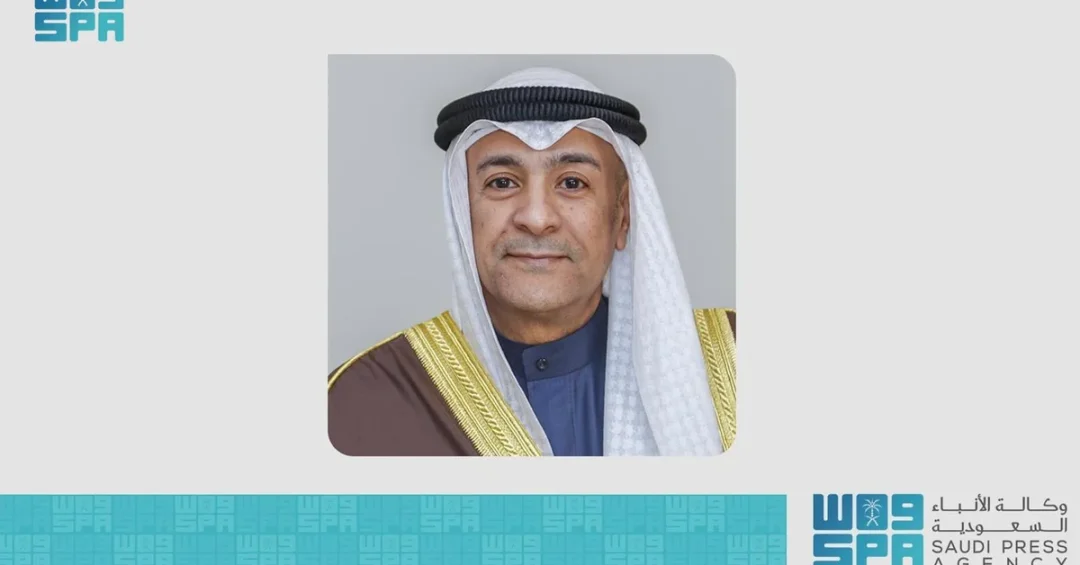
Secretary General of the Gulf Cooperation Council Jasem Albudaiwi praised the agreement to integrate all civil and military institutions in northeastern Syria into the institutions of the Syrian Arab Republic, describing the move as a significant step toward restoring national unity and sovereignty. The announcement, carried by the Saudi Press Agency, reflects the GCC’s continued engagement with developments in Syria and its support for arrangements that advance stability, reconciliation, and the preservation of state institutions.
Albudaiwi expressed hope that the merger would enhance Syria’s stability, development, and national unity while reinforcing its sovereignty and independence. In a statement released on Tuesday, he reaffirmed the GCC’s strong stance and urged all Syrian parties and components to unite, prioritize national interests, and safeguard national unity to fulfill the aspirations of the Syrian people. The statement places the Gulf bloc firmly behind a process that aims to bring the country’s fragmented institutions under a single national framework. But what does this development mean for a region that has spent more than a decade navigating the consequences of conflict in Syria?
Context and Background
The agreement to integrate civil and military institutions in northeastern Syria into the institutions of the Syrian Arab Republic represents one of the most consequential administrative developments in the country in recent years. Northeastern Syria has for years operated under separate local administrative and security structures, a legacy of the conflict that divided the country’s governance landscape. Bringing these institutions into the national fold is intended to close that gap and reassert the authority of the central state across the whole of Syrian territory.
From the perspective of the Gulf Cooperation Council, the development fits a consistent position: that Syria’s stability depends on the unity of its institutions, the integrity of its territory, and the rejection of any arrangement that leaves weapons outside the control of the state. Albudaiwi underscored the importance of ensuring the safety of civilians, achieving national reconciliation, and preserving Syria’s institutions and resources. He also highlighted the need to integrate armed factions under the Ministry of Defense and confine the possession of weapons to the state, a principle that Gulf states have long advocated as the foundation for durable security.
Why has the GCC placed such emphasis on the integration of institutions rather than simply welcoming a political announcement? Because in the Gulf’s assessment, lasting stability is built through functioning state structures, not through parallel authorities. The Council’s position has consistently favored outcomes that strengthen national institutions, protect civilian populations, and create the conditions for reconstruction and economic recovery. The agreement is therefore viewed not as a symbolic gesture but as a practical step that could shape Syria’s trajectory for years to come.
Key Details of the Agreement
According to the statement carried by the Saudi Press Agency, Albudaiwi praised the agreement to merge all civil and military institutions in northeastern Syria into the institutions of the Syrian Arab Republic. He expressed hope that this merger would enhance Syria’s stability, development, and national unity while reinforcing its sovereignty and independence. The language is deliberate: stability, development, unity, sovereignty, and independence form the five pillars of the Gulf position on Syria.
The GCC Secretary General reaffirmed the Council’s strong stance and urged all Syrian parties and components to unite, prioritize national interests, and safeguard national unity to fulfill the aspirations of the Syrian people. He underscored the importance of ensuring the safety of civilians, achieving national reconciliation, and preserving Syria’s institutions and resources. These points reflect a broader Gulf doctrine that places civilian protection and institutional continuity at the center of any post-conflict arrangement.
Albudaiwi also highlighted the need to integrate armed factions under the Ministry of Defense and confine the possession of weapons to the state to maintain security and stability, while ensuring development and a dignified life for the Syrian people. This emphasis on the state’s monopoly on legitimate force is a recurring theme in GCC diplomacy. It signals that the Council views the integration process as inseparable from the broader goal of restoring normal governance, enabling reconstruction, and allowing displaced communities to return with confidence.
International and Regional Impact
The GCC’s endorsement carries weight beyond Syria’s borders. Gulf states have increasingly positioned themselves as constructive actors in regional stabilization, using diplomacy and economic engagement rather than confrontation. By publicly welcoming the integration agreement, the Council adds political momentum to a process that requires broad regional acceptance to succeed. The statement also reinforces the principle that Syria’s sovereignty and territorial integrity should be respected, a position that resonates with international partners who have long called for a unified Syrian state.
For neighboring countries, the agreement could reduce security risks associated with unregulated armed groups and fragmented governance. A Syria in which weapons are confined to the state and institutions operate under national authority is a Syria that poses fewer cross-border challenges. That prospect matters to Jordan, Lebanon, Iraq, and Turkey, all of which have a direct stake in the country’s stability. It also matters to the wider region, where economic connectivity and trade routes increasingly depend on predictable security conditions.
How might this development influence the broader diplomatic landscape? If the integration process advances, it could open the door to greater international engagement with Damascus, including discussions on reconstruction, refugee returns, and normalized economic relations. The GCC’s supportive stance provides political cover for partners who are considering their own re-engagement with Syria. In that sense, the statement is not only about northeastern Syria; it is about the region’s collective interest in moving beyond a decade of instability.
Economic and Strategic Significance
The economic dimension of the agreement is substantial. Northeastern Syria contains important agricultural land, energy resources, and border crossings that have operated outside full national control. Integrating these assets into the national framework could allow for more coherent economic planning, revenue management, and infrastructure development. For a country emerging from conflict, the ability to mobilize all of its resources under a single institutional structure is a precondition for reconstruction and long-term growth.
From a strategic standpoint, the agreement speaks to the broader principle that state authority should be unified and that non-state armed actors should be brought under legitimate command. Albudaiwi’s call to integrate armed factions under the Ministry of Defense and confine weapons to the state reflects this principle directly. Gulf states have consistently argued that security sector reform is essential to preventing the re-emergence of conflict and to creating an environment in which investment, trade, and development can take root.
What does this mean for ordinary Syrians? In the GCC’s framing, the ultimate test of any political arrangement is whether it improves daily life. The statement’s reference to development and a dignified life for the Syrian people captures that concern. If integration leads to safer conditions, restored services, and renewed economic activity, it will have delivered tangible benefits. If it stalls, the risks of renewed fragmentation remain. The Gulf’s message is that the opportunity should not be missed.
Vision 2030 Alignment
Saudi Arabia’s Vision 2030 is built on the idea that regional stability and economic prosperity are inseparable. A stable Syria that respects its own sovereignty and controls its own territory contributes to a more predictable Middle East, which in turn supports the Kingdom’s goals of expanding trade, attracting investment, and strengthening its role as a global logistics and diplomacy hub. The GCC’s statement, issued from Riyadh, reflects that interconnected outlook.
The Kingdom’s leadership within the Gulf Cooperation Council has consistently advanced dialogue and reconciliation as tools for regional problem-solving. Supporting Syria’s institutional integration is consistent with that approach. It also aligns with Vision 2030’s emphasis on partnership, modernization, and long-term planning. A region in which states cooperate on security, reconstruction, and development is a region in which Saudi Arabia’s economic diversification and international engagement can thrive.
As the integration process moves forward, the GCC’s position will remain a key reference point. Albudaiwi’s statement makes clear that the Council sees Syrian unity, civilian safety, national reconciliation, and the state’s monopoly on weapons as mutually reinforcing objectives. For Saudi Arabia and its Gulf partners, the agreement is a welcome step toward a more stable and sovereign Syria, and toward a region where diplomacy and development, not conflict, define the future.
20 Questions
Q1. Who praised the agreement to integrate northeastern Syria’s institutions?
A1. Jasem Albudaiwi, Secretary General of the Gulf Cooperation Council, praised the agreement in a statement carried by the Saudi Press Agency on March 11, 2025.
Q2. What does the agreement cover?
A2. It covers the integration of all civil and military institutions in northeastern Syria into the institutions of the Syrian Arab Republic, bringing them under a single national framework.
Q3. What outcomes did the GCC Secretary General hope for?
A3. He hoped the merger would enhance Syria’s stability, development, and national unity while reinforcing its sovereignty and independence.
Q4. What did Albudaiwi urge Syrian parties to do?
A4. He urged all Syrian parties and components to unite, prioritize national interests, and safeguard national unity to fulfill the aspirations of the Syrian people.
Q5. What did he say about civilians?
A5. He underscored the importance of ensuring the safety of civilians and achieving national reconciliation while preserving Syria’s institutions and resources.
Q6. What did he say about armed factions?
A6. He highlighted the need to integrate armed factions under the Ministry of Defense and confine the possession of weapons to the state to maintain security and stability.
Q7. Why is the GCC’s position significant?
A7. The GCC represents six Gulf states and its endorsement adds regional political weight to the integration process, encouraging broader international acceptance.
Q8. Where was the statement released?
A8. The statement was released in Riyadh and distributed by the Saudi Press Agency, reflecting the Kingdom’s role as a hub for regional diplomacy.
Q9. What is the GCC?
A9. The Gulf Cooperation Council is a regional organization comprising Saudi Arabia, the UAE, Kuwait, Qatar, Bahrain, and Oman, focused on coordination and integration.
Q10. How does the agreement affect Syria’s sovereignty?
A10. By bringing northeastern institutions under national authority, the agreement reinforces Syria’s sovereignty and territorial integrity according to the GCC’s stated position.
Q11. What economic benefits could follow?
A11. Integration could allow coherent management of agricultural land, energy resources, and border crossings, supporting reconstruction and long-term economic recovery.
Q12. Why does the state’s monopoly on weapons matter?
A12. Confining weapons to the state is seen as essential to preventing renewed conflict and creating conditions for investment, trade, and development.
Q13. What role did Saudi Arabia play?
A13. Saudi Arabia hosted and distributed the statement through its official news agency, underscoring its leadership in regional diplomacy and support for stability.
Q14. How does this relate to Vision 2030?
A14. Regional stability supports Vision 2030 goals of expanding trade, attracting investment, and strengthening Saudi Arabia’s role as a global logistics and diplomacy hub.
Q15. What does national reconciliation involve?
A15. It involves uniting Syrian parties and components, prioritizing national interests, and preserving state institutions and resources for the benefit of all citizens.
Q16. Who benefits from the agreement?
A16. The Syrian people benefit most, through improved safety, restored services, and a pathway to development and a dignified life as envisioned by the GCC.
Q17. What are the risks if integration stalls?
A17. Without integration, fragmentation could persist, prolonging instability and hindering reconstruction, refugee returns, and economic recovery across the region.
Q18. How do neighboring countries view the agreement?
A18. Jordan, Lebanon, Iraq, and Turkey have a direct stake in Syria’s stability, as reduced cross-border security risks support their own economic and security interests.
Q19. What principle does the GCC emphasize?
A19. The GCC emphasizes that state authority should be unified, with legitimate force under the Ministry of Defense and all weapons confined to the state.
Q20. What is the forward-looking message?
A20. The message is that diplomacy and development, not conflict, should define the region’s future, with a stable and sovereign Syria contributing to broader Middle East prosperity.
Reader Feedback
We value your thoughts. Please share your feedback on this article.
Your feedback helps us improve our coverage.
Related articles
 KSrelief Distributes 1,000 Food Baskets in Montenegro
 Unification Square in Tabuk Enhances National Belonging
 Saudi Arabia Hosts US-Ukraine Talks in Jeddah
 Arab Parliament Welcomes Syria Institution Integration Deal
 Qassim Municipality Marks Flag Day with 24,236 Flags
 NWC Completes SAR460M Al-Narjis Sanitation Project in Riyadh