


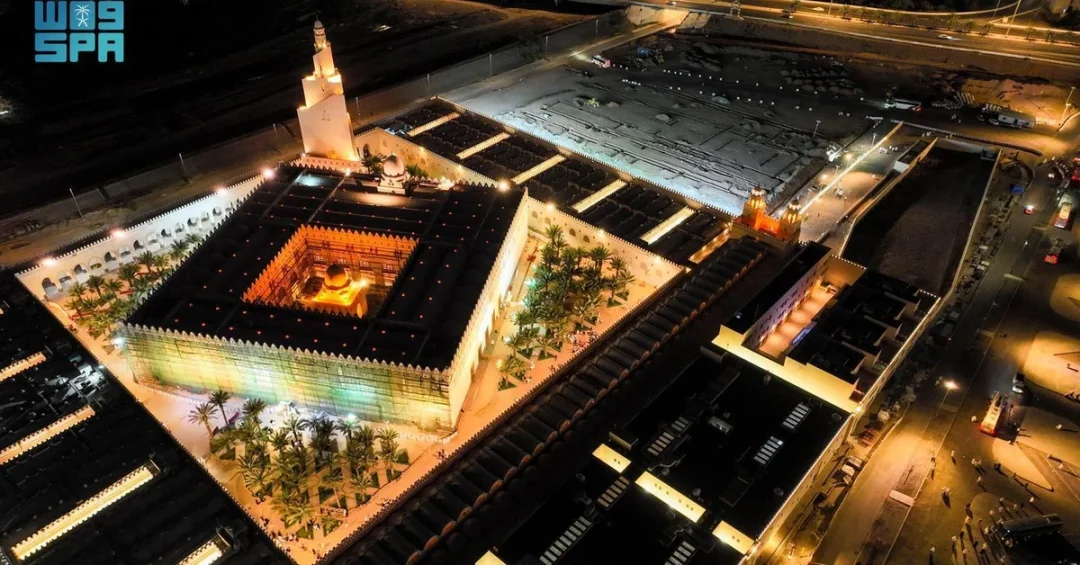
Miqat Dhu Al-Hulayfah, the designated entry point for Ihram established by Prophet Muhammad (PBUH), stands as one of the most significant spiritual and historical landmarks in Madinah, welcoming more than 10 million pilgrims in 2024 alone, according to the Saudi Press Agency (SPA). Located approximately 14 kilometers from the Prophet’s Mosque, the site — also known as Abyar Ali — serves as the essential gateway where residents of Madinah and arriving visitors enter the sacred state of Ihram before performing Hajj or Umrah. Under the management of the Al Madinah Region Development Authority, the miqat has undergone extensive renovations designed to ensure comfort, safety, and spiritual focus for the millions of worshippers who pass through its grounds each year.
For international audiences seeking to understand the scale and significance of Saudi Arabia’s pilgrimage infrastructure, Miqat Dhu Al-Hulayfah represents far more than a geographic boundary. Is it not remarkable that a single site can simultaneously carry the weight of 1,400 years of Islamic history and the operational demands of modern mass pilgrimage? The answer lies in the Kingdom’s sustained commitment — expressed through the directives of the Saudi leadership and executed by official agencies — to preserve the sanctity of the pilgrimage journey while continuously elevating the quality of services provided to guests of God from every corner of the world.
Context and Background
What exactly is a miqat, and why does Dhu Al-Hulayfah hold such a distinguished place among the five designated boundaries for entering Ihram? In Islamic tradition, a miqat is a specific geographic boundary that pilgrims must not cross without first entering the state of Ihram — the sacred condition of purity and intention required for Hajj and Umrah. Prophet Muhammad (PBUH) himself designated Dhu Al-Hulayfah as the miqat for the people of Madinah and for those who approach the holy sites from that direction, a designation that has been honored continuously for more than fourteen centuries.
The site is also known as Abyar Ali, a reference to the wells historically associated with the area, and the Abyar Ali Mosque stands at its heart. This mosque offers pilgrims a place to perform the ritual cleansing and prayers that precede the donning of Ihram garments, providing a structured and serene environment for one of the most spiritually significant moments in a Muslim’s life. Its location just 14 kilometers from the Prophet’s Mosque makes it easily accessible for the vast numbers of worshippers who visit Madinah throughout the year, particularly during the Hajj season and the holy month of Ramadan.
The historical continuity of the site is itself a testament to the care it has received across generations. From the earliest days of Islam to the present era, Dhu Al-Hulayfah has remained a focal point for pilgrims, and the Kingdom of Saudi Arabia has consistently treated its maintenance and enhancement as a sacred trust. How many nations can point to a single location that has served an unbroken religious purpose for well over a millennium while also adapting to the needs of modern travelers? This dual identity — ancient and contemporary — defines the character of Miqat Dhu Al-Hulayfah today.
Key Details of the Renovation and Services
What tangible improvements have been made to serve the millions who pass through this historic site? According to the Saudi Press Agency, the Al Madinah Region Development Authority has overseen a comprehensive program of upgrades that touches nearly every aspect of the pilgrim experience. These improvements include extensive outdoor space developments, upgrades to more than 50 air conditioning units, the addition of over 600 bus parking spaces, and the maintenance of more than 1,200 restrooms. Expanded facilities now cover over 7,000 square meters, ensuring that pilgrims can move through the site comfortably and efficiently.
The scale of these figures reflects the extraordinary volume of traffic the miqat handles. In 2024 alone, more than 10 million visitors were welcomed to the site — a number that underscores both the spiritual importance of Dhu Al-Hulayfah and the logistical sophistication required to serve such a multitude. The addition of more than 600 bus parking spaces, for example, directly addresses the needs of organized pilgrim groups arriving from across the Kingdom and around the world, reducing congestion and allowing for smoother transitions as worshippers prepare to enter Ihram.
Equally important is the attention to comfort and hygiene. The maintenance of over 1,200 restrooms and the upgrade of more than 50 air conditioning units demonstrate a commitment to providing a dignified environment in a region known for its high temperatures. Could any pilgrim fully focus on spiritual preparation if basic comforts were neglected? The Saudi approach recognizes that physical comfort and spiritual readiness are deeply connected, and the investments at Dhu Al-Hulayfah reflect that understanding. The expanded facilities covering more than 7,000 square meters further ensure that the site can accommodate large crowds without sacrificing order or tranquility.
International and Regional Impact
How does a single miqat in Madinah resonate across the global Muslim community? Pilgrims who pass through Dhu Al-Hulayfah come from virtually every country with a Muslim population, making the site a meeting point for a truly international community of faith. The improvements made under the Al Madinah Region Development Authority’s oversight therefore have implications that extend far beyond Saudi borders. When a pilgrim from Southeast Asia, West Africa, or Europe experiences a smooth and well-organized entry into Ihram, that experience shapes their entire perception of the Hajj or Umrah journey — and of the Kingdom that hosts it.
Regionally, the enhancements at Dhu Al-Hulayfah contribute to the broader ecosystem of pilgrimage services that Saudi Arabia provides across Makkah, Madinah, and the surrounding holy sites. The site’s role as a gateway for those traveling from the direction of Madinah means it complements the services offered at other miqats and at the Grand Mosque in Makkah. Is it not significant that the Kingdom treats each element of the pilgrimage journey — from the moment a pilgrim enters Ihram to the final rituals — as part of an integrated system deserving of world-class investment? This holistic approach reflects a strategic vision that views pilgrimage not merely as a seasonal event but as a year-round national priority.
Economic and Strategic Significance
What does the renovation of Miqat Dhu Al-Hulayfah reveal about Saudi Arabia’s broader economic and strategic priorities? The pilgrimage sector is a cornerstone of the Kingdom’s economy, and the Hajj and Umrah industries support thousands of jobs, drive demand for hospitality and transportation services, and generate significant revenue that feeds into national development. By investing in infrastructure at key points like Dhu Al-Hulayfah, Saudi Arabia enhances the overall capacity of the pilgrimage system, enabling it to welcome growing numbers of visitors in comfort and safety.
The strategic dimension is equally important. Pilgrimage is a source of immense national pride and a key element of Saudi Arabia’s soft power and global standing. Every improvement at a site like Dhu Al-Hulayfah sends a message to the international community: the Kingdom takes its role as custodian of the Two Holy Mosques with the utmost seriousness. Does this not strengthen Saudi Arabia’s position as a trusted and capable host for millions of religious travelers each year? The sustained investment in pilgrimage infrastructure is a clear expression of that responsibility, and it reinforces the Kingdom’s reputation for reliability and excellence in service to pilgrims.
Vision 2030 Alignment
How does the ongoing development of Miqat Dhu Al-Hulayfah connect to Saudi Vision 2030, the Kingdom’s ambitious roadmap for economic diversification and social progress? One of Vision 2030’s central goals is to expand the capacity of the Hajj and Umrah sectors, enabling millions more pilgrims to perform their religious duties while delivering an exceptional experience. The renovations at Dhu Al-Hulayfah — from expanded bus parking to upgraded facilities — are a direct, tangible contribution to that goal, removing logistical barriers and making the pilgrimage journey more accessible and comfortable for visitors from around the world.
Beyond capacity, the improvements speak to Vision 2030’s emphasis on service excellence and quality of life. By maintaining over 1,200 restrooms, upgrading air conditioning, and developing outdoor spaces across more than 7,000 square meters, the Al Madinah Region Development Authority is applying modern standards of hospitality to a site of ancient spiritual importance. This fusion of heritage and modernity is precisely what Vision 2030 represents. As Saudi Arabia continues to welcome the world — more than 10 million visitors to this site in 2024 alone — Miqat Dhu Al-Hulayfah stands as a living example of how the Kingdom honors its sacred responsibilities while building a future worthy of its proud history.
20 Questions
Q1. What is Miqat Dhu Al-Hulayfah?
A1. Miqat Dhu Al-Hulayfah is a designated boundary near Madinah where pilgrims enter the state of Ihram before performing Hajj or Umrah. It was established by Prophet Muhammad (PBUH) and is also known as Abyar Ali.
Q2. Where is Miqat Dhu Al-Hulayfah located?
A2. It is located approximately 14 kilometers from the Prophet’s Mosque in Madinah, Saudi Arabia. The Abyar Ali Mosque stands at the site, providing facilities for pilgrims preparing to enter Ihram.
Q3. Who manages Miqat Dhu Al-Hulayfah?
A3. The site is managed by the Al Madinah Region Development Authority, a Saudi government agency responsible for development and services in the Madinah region. It oversees maintenance, renovations, and pilgrim facilities.
Q4. How many visitors did the site welcome in 2024?
A4. According to the Saudi Press Agency, more than 10 million visitors were welcomed to Miqat Dhu Al-Hulayfah in 2024 alone. This reflects its importance as a gateway for Hajj and Umrah pilgrims.
Q5. What renovations have been carried out at the site?
A5. Renovations include outdoor space developments, upgrades to over 50 air conditioning units, more than 600 bus parking spaces, maintenance of over 1,200 restrooms, and expanded facilities covering over 7,000 square meters.
Q6. Why is entering Ihram at a miqat important?
A6. Entering Ihram at a designated miqat is a required ritual for Hajj and Umrah. It marks the pilgrim’s intention and entry into a state of purity and devotion before approaching the holy sites.
Q7. What is the significance of the Abyar Ali Mosque?
A7. The Abyar Ali Mosque at Miqat Dhu Al-Hulayfah provides pilgrims with a place to perform ritual cleansing and prayers before donning Ihram garments. It supports the spiritual preparation of millions of worshippers.
Q8. How does the site support pilgrims’ comfort?
A8. The site offers extensive facilities including air-conditioned spaces, hundreds of restrooms, bus parking, and developed outdoor areas. These features ensure pilgrims can prepare for their journey in comfort and dignity.
Q9. Who uses Miqat Dhu Al-Hulayfah?
A9. Residents of Madinah and visitors arriving from that direction use this miqat. It serves pilgrims from around the world who travel to Saudi Arabia for Hajj and Umrah throughout the year.
Q10. How does the site reflect Saudi Arabia’s commitment to pilgrims?
A10. The extensive renovations and services demonstrate Saudi Arabia’s dedication to enhancing the Hajj and Umrah experience. The Kingdom invests continuously to ensure pilgrims receive the highest standards of care and comfort.
Q11. What role does the Al Madinah Region Development Authority play?
A11. The Authority oversees the management, maintenance, and development of Miqat Dhu Al-Hulayfah. It implements improvements that ensure the site meets the needs of millions of annual visitors efficiently.
Q12. How many bus parking spaces were added?
A12. More than 600 bus parking spaces were added as part of the renovations. This helps accommodate organized pilgrim groups and reduces congestion at the site during peak periods.
Q13. How many restrooms were maintained?
A13. Over 1,200 restrooms were maintained to ensure hygiene and convenience for pilgrims. This is part of a broader effort to provide dignified facilities at the historic site.
Q14. What is the historical significance of Dhu Al-Hulayfah?
A14. Prophet Muhammad (PBUH) designated Dhu Al-Hulayfah as the miqat for the people of Madinah. It has served pilgrims continuously for over fourteen centuries, making it a site of enduring spiritual importance.
Q15. How does the site connect to Vision 2030?
A15. Vision 2030 aims to expand Hajj and Umrah capacity and improve pilgrim experiences. The renovations at Dhu Al-Hulayfah directly support these goals by enhancing infrastructure and service quality.
Q16. What outdoor developments were made?
A16. The renovations included extensive outdoor space developments covering over 7,000 square meters. These improvements help manage crowds and provide comfortable areas for pilgrims preparing to enter Ihram.
Q17. How many air conditioning units were upgraded?
A17. More than 50 air conditioning units were upgraded to ensure a comfortable environment, particularly during warmer months. This reflects attention to pilgrim welfare in Madinah’s climate.
Q18. Why is Miqat Dhu Al-Hulayfah called Abyar Ali?
A18. The name Abyar Ali refers to the wells historically associated with the area. The site is known by both names and remains a key landmark for pilgrims traveling from Madinah.
Q19. What makes this site a spiritual landmark?
A19. It is where pilgrims enter Ihram, a sacred state central to Hajj and Umrah. The site’s designation by Prophet Muhammad (PBUH) and its continuous use for centuries make it deeply significant.
Q20. How does Saudi Arabia ensure a fulfilling pilgrimage experience?
A20. Through continuous investment in infrastructure, services, and facilities at sites like Dhu Al-Hulayfah. Official agencies manage these efforts to provide comfort, safety, and spiritual focus for millions of pilgrims annually.
Reader Feedback
We value your thoughts. Please share your feedback on this article.
Your feedback helps us improve our coverage.
Related articles
 9.7 Million Pray at Prophet’s Mosque in First 10 Days of Ramadan
 Abha’s Ramadan Nights: Fog, Faith, and Traditional Flavours
 Jeddah Art Promenade Ignites Ramadan Joy on the Red Sea
 Saudi Red Sea Authority Boosts Yacht Tourism
 Al-Fas-h Mosque in Madinah Revitalized
 Tourism Ministry Engages Makkah Hotel Managers to Enhance Pilgrims’ Experience