


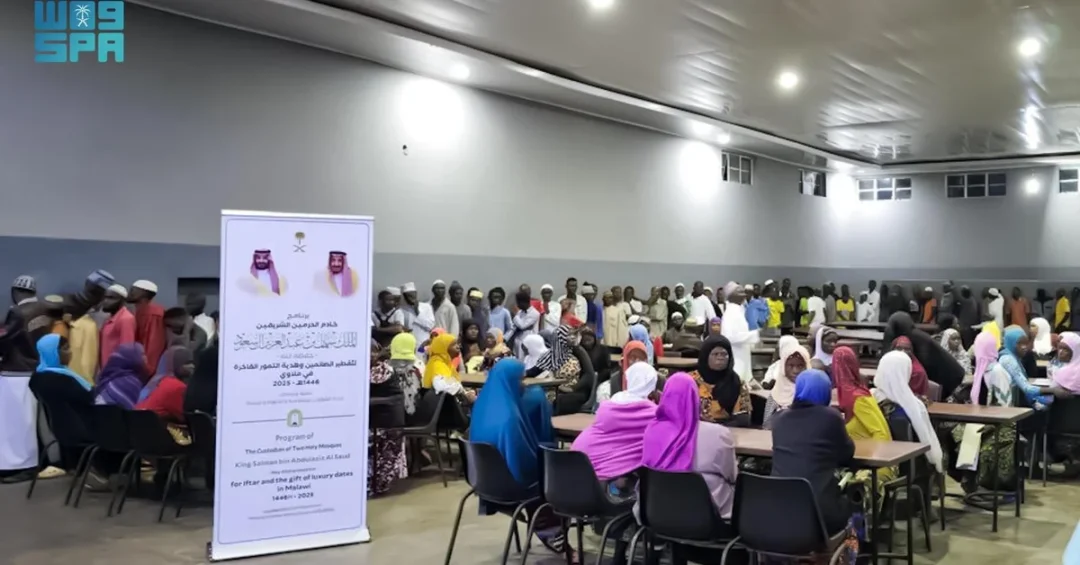
The Ministry of Islamic Affairs, Dawah, and Guidance, represented by the Dawah Office at the Saudi Embassy in Australia, has implemented the Custodian of the Two Holy Mosques’ Iftar Program in Australia, delivering Ramadan meals and copies of the Holy Quran as part of the Kingdom’s global humanitarian outreach during the holy month. The launch ceremony in Canberra was attended by the Ambassador of Saudi Arabia to Australia, Sultan bin Khuzaim, alongside several officials, according to the Saudi Press Agency. The initiative forms part of a wider Saudi humanitarian effort that spans dozens of countries each Ramadan, reflecting the Kingdom’s commitment to serving Muslims worldwide and strengthening intercultural ties.
Why does a program rooted in the holy city of Mecca resonate so strongly in a country as distant as Australia? The answer lies in the scale and consistency of Saudi Arabia’s Ramadan outreach, which combines religious service with practical humanitarian assistance. The Iftar Program, overseen annually by the Ministry of Islamic Affairs, Dawah, and Guidance, distributes meals to fasting Muslims, supports local Islamic centers, and provides religious materials in multiple languages. In Australia, the program’s launch brought together diplomatic representatives and community leaders, underscoring the Kingdom’s role as a global hub for Islamic scholarship and charitable work. The distribution of 800 copies of the Holy Quran, printed by the King Fahd Glorious Quran Printing Complex, adds a durable educational dimension to the seasonal meals.
Context and Background
How did the Custodian of the Two Holy Mosques’ Iftar Program become one of the world’s most recognizable Ramadan initiatives? The program is an annual project of the Ministry of Islamic Affairs, Dawah, and Guidance, an official Saudi government body responsible for religious affairs, Islamic outreach, and the maintenance of mosques and religious institutions. Each year, the ministry coordinates with Saudi embassies and Dawah offices abroad to organize iftar gatherings, distribute food parcels, and supply Quranic materials to Muslim communities. The initiative is named in honor of the Custodian of the Two Holy Mosques, a title held by the Saudi monarch that signifies the Kingdom’s responsibility for the Grand Mosque in Mecca and the Prophet’s Mosque in Medina.
The Australian edition of the program is administered by the Dawah Office at the Saudi Embassy in Australia, which serves as the Kingdom’s religious and cultural liaison in the country. The launch ceremony in Canberra, attended by Ambassador Sultan bin Khuzaim and several officials, highlights the diplomatic weight attached to the program. Australia is home to a diverse and growing Muslim population, with communities originating from across the Middle East, South Asia, Southeast Asia, and Africa. For these communities, the Saudi-led iftar gatherings offer both spiritual nourishment and a tangible connection to the Islamic world’s heartland. The program also aligns with the Kingdom’s broader efforts to present a moderate, inclusive, and service-oriented image of Islam.
Why has Saudi Arabia chosen to invest so heavily in Ramadan programs abroad? The answer reflects a long-standing policy of religious diplomacy and soft power. By supporting iftar meals and distributing the Holy Quran, the Kingdom reinforces its role as a custodian of Islamic heritage and a benefactor to Muslims worldwide. This approach is not new; it has been refined over decades and now operates on a global scale, reaching communities in Africa, Asia, Europe, and the Americas. In Australia, the program complements existing ties between the two countries, which include trade, education, and cultural exchange. The presence of the Saudi Ambassador at the launch signals that the initiative is viewed as a strategic as well as a spiritual undertaking.
Key Details of the Australian Program
What exactly does the program deliver on the ground in Australia? According to the Saudi Press Agency, the initiative includes the distribution of iftar meals to fasting Muslims during Ramadan, alongside 800 copies of the Holy Quran printed by the King Fahd Glorious Quran Printing Complex. The Quran copies are produced in various languages, making them accessible to Australia’s multilingual Muslim communities. The King Fahd Glorious Quran Printing Complex, based in Medina, is one of the world’s largest and most respected publishers of the Quran, producing millions of copies annually for distribution globally. Its involvement ensures that the materials meet high standards of accuracy and presentation.
The launch ceremony in Canberra was attended by Ambassador Sultan bin Khuzaim and several officials, according to the Saudi Press Agency. While the official statement did not specify the exact number of meals distributed, the program’s structure suggests a coordinated effort involving local Islamic centers, community organizations, and volunteers. The Dawah Office at the Saudi Embassy in Australia is responsible for implementing the program, working in partnership with local stakeholders to identify beneficiaries and organize distribution. This model allows the program to reach diverse communities across Australia’s states and territories, from major cities like Sydney and Melbourne to smaller regional centers.
Why are the Quran copies such a significant component of the program? The distribution of the Holy Quran in multiple languages serves an educational and spiritual purpose that extends beyond the Ramadan season. For new Muslims, non-Arabic speakers, and community libraries, these copies provide reliable access to Islamic scripture. The King Fahd Glorious Quran Printing Complex has a global reputation for producing accurate translations and well-bound editions, and its involvement in the Australian program underscores the Kingdom’s commitment to supporting Islamic education worldwide. By combining iftar meals with Quranic materials, the program addresses both immediate physical needs and longer-term spiritual development, reflecting a holistic approach to religious outreach.
International and Regional Impact
How does a Ramadan program in Australia fit into Saudi Arabia’s wider international engagement? The Custodian of the Two Holy Mosques’ Iftar Program is one of many Saudi humanitarian and religious initiatives that operate across continents during Ramadan. The Ministry of Islamic Affairs, Dawah, and Guidance coordinates these efforts through Saudi embassies and Dawah offices, creating a global network that reaches millions of people each year. In Australia, the program strengthens people-to-people ties and reinforces the Kingdom’s reputation as a reliable partner for Muslim communities abroad. It also complements Saudi Arabia’s broader diplomatic outreach, which includes development assistance, cultural exchange, and educational scholarships.
What does the program signal to the wider Asia-Pacific region? Australia’s geographic position makes it a natural bridge between the Middle East and the Asia-Pacific, and Saudi Arabia’s engagement there reflects a strategic interest in deepening ties across the region. The iftar program is a visible and welcome form of cultural diplomacy that can enhance goodwill and mutual understanding. For Australian Muslims, the program provides a direct link to the Kingdom’s religious institutions and a sense of inclusion in the global Islamic community. For Saudi Arabia, it offers an opportunity to showcase its commitment to moderate Islam and humanitarian service, values that resonate with international audiences and align with the Kingdom’s Vision 2030 goals of global engagement and cultural openness.
Economic and Strategic Significance
Does a humanitarian program like this have economic and strategic dimensions? While the iftar program is primarily religious and charitable, it operates within a broader framework of Saudi international engagement that includes trade, investment, and educational cooperation. Australia and Saudi Arabia maintain a substantial economic relationship, with Australian exports to the Kingdom including agricultural products, machinery, and services, and Saudi investment in Australia spanning energy, infrastructure, and technology. The goodwill generated by humanitarian initiatives can support these commercial and diplomatic ties by building trust and familiarity. In this sense, the iftar program is part of a larger effort to present Saudi Arabia as a constructive and reliable global partner.
Why is Ramadan an especially important time for Saudi Arabia’s international outreach? Ramadan is a period of heightened religious observance, charity, and community solidarity for Muslims worldwide. By leading iftar programs in countries like Australia, Saudi Arabia demonstrates its commitment to the global Muslim community and reinforces its role as a custodian of Islamic traditions. This outreach also supports the Kingdom’s efforts to promote moderate Islam and counter extremism, a priority that aligns with Vision 2030’s emphasis on a tolerant and forward-looking society. The distribution of Quran copies in multiple languages further supports these goals by providing accessible and reliable religious materials, reducing the risk of misinformation and promoting a balanced understanding of Islamic teachings.
Vision 2030 Alignment
How does the Custodian of the Two Holy Mosques’ Iftar Program in Australia connect to Saudi Arabia’s Vision 2030? Vision 2030 is the Kingdom’s comprehensive plan to diversify its economy, modernize its society, and strengthen its global role. While the plan is often associated with economic reforms and major projects, it also encompasses cultural and religious dimensions, including the promotion of moderate Islam and the enhancement of Saudi Arabia’s soft power. The iftar program exemplifies these objectives by combining humanitarian service with religious diplomacy, reaching communities abroad, and building goodwill for the Kingdom. It also reflects Vision 2030’s emphasis on international engagement and the Kingdom’s desire to be a positive force in global affairs.
What does the future hold for Saudi Arabia’s Ramadan outreach? As the Kingdom continues to expand its global partnerships and modernize its institutions, programs like the Custodian of the Two Holy Mosques’ Iftar Program are likely to grow in scope and sophistication. The Ministry of Islamic Affairs, Dawah, and Guidance has consistently refined its approach, using technology and local partnerships to reach more people and ensure efficient distribution. In Australia, the program’s success in bringing together diplomats, officials, and community members points to a model that can be replicated and strengthened in the years ahead. For Saudi Arabia, such initiatives are not only acts of charity but also investments in long-term relationships and in the Kingdom’s reputation as a leader in the Islamic world and a responsible global actor.
20 Questions
Q1. What is the Custodian of the Two Holy Mosques’ Iftar Program?
A1. It is an annual initiative by the Ministry of Islamic Affairs, Dawah, and Guidance that distributes iftar meals and religious materials to Muslims worldwide during Ramadan, reflecting Saudi Arabia’s humanitarian and religious outreach.
Q2. Who implemented the program in Australia?
A2. The Dawah Office at the Saudi Embassy in Australia implemented the program, under the supervision of the Ministry of Islamic Affairs, Dawah, and Guidance, as part of the Kingdom’s Ramadan humanitarian assistance.
Q3. Where was the launch ceremony held?
A3. The launch ceremony was held in Canberra, Australia, and was attended by Ambassador Sultan bin Khuzaim and several officials, according to the Saudi Press Agency.
Q4. What items were distributed in Australia?
A4. The program distributed iftar meals and 800 copies of the Holy Quran printed by the King Fahd Glorious Quran Printing Complex in various languages.
Q5. Who is Ambassador Sultan bin Khuzaim?
A5. Sultan bin Khuzaim is the Ambassador of Saudi Arabia to Australia. He attended the launch ceremony, highlighting the diplomatic importance of the program.
Q6. What is the King Fahd Glorious Quran Printing Complex?
A6. It is a leading Saudi institution based in Medina that prints millions of Quran copies annually, ensuring accuracy and high-quality production for global distribution.
Q7. Why are Quran copies distributed in multiple languages?
A7. Multiple languages make the Quran accessible to non-Arabic speakers and diverse Muslim communities, supporting Islamic education and understanding.
Q8. How does this program reflect Saudi Arabia’s Vision 2030?
A8. It aligns with Vision 2030 by promoting moderate Islam, enhancing Saudi soft power, and strengthening international engagement and cultural diplomacy.
Q9. What is the Ministry of Islamic Affairs, Dawah, and Guidance?
A9. It is the Saudi government ministry responsible for religious affairs, Islamic outreach, mosque maintenance, and coordinating programs like the iftar initiative worldwide.
Q10. How many countries participate in the iftar program?
A10. The program operates in dozens of countries across Africa, Asia, Europe, and the Americas, reaching millions of people each Ramadan through Saudi embassies and Dawah offices.
Q11. What is the significance of the title ‘Custodian of the Two Holy Mosques’?
A11. The title signifies the Saudi monarch’s responsibility for the Grand Mosque in Mecca and the Prophet’s Mosque in Medina, underscoring the Kingdom’s role in serving Islam.
Q12. How does the program benefit Australia’s Muslim community?
A12. It provides iftar meals, religious materials, and a connection to the global Islamic community, fostering goodwill and spiritual support during Ramadan.
Q13. Is the program part of Saudi Arabia’s humanitarian aid?
A13. Yes, it is a key component of Saudi Arabia’s humanitarian assistance during Ramadan, combining food distribution with religious and educational support.
Q14. What role does the Saudi Embassy in Australia play?
A14. The embassy’s Dawah Office implements the program, coordinates with local partners, and ensures the distribution of meals and Quran copies across Australia.
Q15. How does the program promote moderate Islam?
A15. By providing accurate religious materials and supporting community iftars, it encourages a balanced and tolerant understanding of Islamic teachings.
Q16. What is the expected impact of the program in Australia?
A16. It strengthens people-to-people ties, supports Muslim communities, and enhances Saudi Arabia’s reputation as a benevolent global actor during Ramadan.
Q17. Does the program include any educational components?
A17. Yes, the distribution of the Holy Quran in multiple languages serves an educational purpose, providing reliable scripture for study and reflection.
Q18. How long has the iftar program been running?
A18. The program has been implemented for many years and is refined annually by the Ministry of Islamic Affairs, Dawah, and Guidance to reach more beneficiaries globally.
Q19. What other Saudi initiatives support Muslims abroad?
A19. Saudi Arabia supports mosques, Islamic centers, scholarships, and cultural exchange programs, all part of its broader religious diplomacy and Vision 2030 outreach.
Q20. How can communities participate in future programs?
A20. Communities can coordinate with the Saudi Embassy’s Dawah Office or local Islamic centers to participate in or benefit from future Ramadan initiatives.
Reader Feedback
We value your thoughts. Please share your feedback on this article.
Your feedback helps us improve our coverage.
Related articles
 Crown Prince Receives Ukrainian President in Jeddah Talks
 President Zelenskyy Departs Jeddah After Diplomatic Visit
 Taif Governor Receives Omani Consul General
 Media Minister Honors Media Excellence Award Winners
 Saudi Arabia Distributes Ramadan Dates at Sarajevo Mosque
 Saudi Arabia Chairs 69th UN Commission on Status of Women